

Moving from Belgium to Peru (2026): Complete Guide

Relocating from Belgium to Peru means closing out one of Europe’s most administratively precise systems — Belgian population registration, FPS Finance tax residency, and Belgian customs export declarations — and opening a Peruvian file with SUNAT (customs and tax), Migraciones (immigration), and SENASA (animal health) on arrival. This guide is written for a Belgian resident (Belgian national or long-term resident of Belgium) relocating to Peru for work, retirement, family reunification, or investment, and it covers both halves of the move: what you must do in Belgium before you leave, and what Peru requires once your shipment and your life arrive. A short closing section covers the reverse move, Peru back to Belgium.
Key takeaways
- Your Peruvian immigration status (calidad migratoria) determines your customs treatment — most household-goods relief (menaje de casa) is tied to holding a resident visa, not a tourist stay (Migraciones, cambio de calidad migratoria residente; SUNAT, menaje de casa).
- Before leaving Belgium you must report your departure to your municipality’s population service (Articles 7 and 12, Royal Decree of 16 July 1992 on population registers), and you must handle a departure-year tax filing with FPS Finance (FPS Finance, leaving Belgium; FPS Finance, tax return).
- Moving your household goods out of Belgium to a non-EU country requires an export declaration lodged with Belgian Customs (FOD Financiën / FPS Finance), based on an itemized list of the goods you are taking (FPS Finance, moving from Belgium).
- From 1 January 2026, Belgium applies a new exit tax — a 10% levy on unrealised capital gains in covered financial assets (shares, bonds, ETFs, crypto, investment-linked life insurance) at the point of emigration, with deferral options for some destinations (PwC Belgium, 2026 capital gains tax changes; EY Belgium, implications for expatriates).
- Peru’s menaje de casa relief requires at least 13 consecutive months of prior residence abroad, not having used the benefit in the prior 2 years, and shipment arriving between 1 month before and 6 months after you personally arrive — qualifying goods pay a single 12% duty on customs value instead of full tariffs (SUNAT, menaje de casa; SUNAT, trámite).
- Traveling with cash: the EU/Belgium threshold is €10,000 (declare when entering/leaving the EU); Peru’s threshold is US$10,000, with a hard ceiling of US$30,000 that cannot be carried at all outside the regulated financial system (Your Europe, carrying cash; SUNAT, ingreso y salida de dinero).
- Pets need a rabies vaccination and, for non-commercial travel to a non-EU destination like Peru, the conditions of the destination country apply — for Peru that means an official export health certificate and proof of core vaccines issued by the official veterinary authority (FASFC, departure from Belgium; SENASA, mascotas).
- Used vehicles imported into Peru generally cannot be older than 2 years from model year, must be left-hand drive, and diesel passenger vehicles are largely prohibited (SUNAT/Plataforma del Estado, importación de vehículos usados; MTC announcement).
1. Your Peru immigration status decides your customs treatment
Peru’s household-goods duty relief is not automatic for anyone who ships a container — it is linked to your immigration file with the Superintendencia Nacional de Migraciones. Foreigners settling in Peru apply for a calidad migratoria (migratory status), of which there are several categories — worker, investor, student, family relative of a resident/Peruvian citizen, permanent resident, among others — processed under Peru’s Migration Law (Legislative Decree No. 1350) and its regulations (Migraciones via Plataforma del Estado Peruano). Practically, this matters for your move because SUNAT’s menaje de casa (household-goods) relief is designed for people who are genuinely establishing residence, not visiting — it requires proof of at least 13 consecutive months of prior residence abroad and is tied to your date of arrival (SUNAT, menaje de casa). Get your visa category settled — or at least filed — before your shipment leaves Antwerp, because the customs relief timeline (goods arriving 1 month before to 6 months after you do) runs off your personal arrival date, not your shipment’s.
2. The Belgium export side: deregistration, customs, and tax exit
Customs authority. Belgium’s customs and excise administration sits inside the Federal Public Service Finance (FPS Finance / FOD Financiën / SPF Finances). Any goods leaving the EU require formal customs clearance, and for a household move this means lodging an export declaration with an itemized inventory of everything you’re taking (FPS Finance, moving from Belgium). Commercial-scale export declarations are filed through Belgium’s electronic customs systems: since 18 November 2024, the EU-wide Automated Export System (AES) replaced the older PLDA platform for export declarations — international movers typically handle this filing on your behalf as part of the shipping contract, so you mainly need to supply an accurate goods inventory (FPS Finance, AES). Separate rules apply on top of the standard goods declaration for excise goods (alcohol, tobacco), vehicles, pets, and cultural property, so flag any of these to your mover early.
Deregistering from your municipality. Before departure you must report your move abroad to the population service (bevolkingsdienst / service population) of your Belgian municipality, which updates the National Register. Under the Royal Decree of 16 July 1992 on population registers (Articles 7 and 12), this notification is a compulsory step when leaving Belgium; in practice you should book an appointment well in advance, since several large cities (Antwerp, Ghent, Brussels, Charleroi) still require an in-person visit and processing can take a few weeks (FPS Finance, leaving Belgium). Your Belgian national identification number stays linked to you for life and continues to matter for future contact with the tax authorities, pension service, and Belgian embassies.
Tax residency exit. Leaving Belgium permanently converts your status with FPS Finance from resident to non-resident, and the steps you need to take depend on your residence and income situation in the departure year — check the FPS Finance "leaving Belgium" tax-return guidance for your specific case, and expect to file a departure-year return (FPS Finance, tax return on leaving). If you hold significant financial-asset portfolios, note that Belgium introduced a capital gains/exit tax regime effective 1 January 2026: broadly, a 10% tax on capital gains in financial assets (listed/unlisted shares, bonds, ETFs, crypto-assets, investment-linked life insurance), including an exit-tax component that can apply to unrealised gains when your tax residence transfers abroad, with deferral mechanisms available for some destinations and reversal if you re-establish Belgian tax residence within 24 months. This is a new and technical regime — get personal tax advice before you leave, since it is not yet clear whether a move to Peru qualifies for automatic deferral (PwC Belgium summary; EY Belgium, implications for expatriates).
3. Ports and transit — realistic ranges, not official figures
Belgian household shipments to Peru normally route through the Port of Antwerp-Bruges (the merged Antwerp and Zeebrugge port areas, officially joined in 2022), Europe’s second-largest seaport, handling around 290 million tonnes of cargo a year via more than 300 liner services reaching some 800 destinations worldwide (Port of Antwerp-Bruges, world port). On the Peruvian side, sea freight typically arrives at the Port of Callao, Peru’s principal container port, near Lima.
The following transit estimates are freight-industry planning figures, not official government data, and vary by carrier, routing (direct vs. transshipment via a European or US hub), and season:
- Sea freight, Antwerp–Callao: roughly 5–8 weeks door-to-port, plus Peruvian customs clearance time.
- Air freight, Brussels–Lima: typically 3–7 days transit, though most household moves use sea freight for cost reasons and air only for urgent or high-value items.
Always confirm current transit times with your forwarder — congestion, transshipment hub, and Peruvian customs backlogs can add weeks.
4. The Peru import side: SUNAT, menaje de casa, and the traveler declaration
Peru’s customs and tax authority is SUNAT (Superintendencia Nacional de Aduanas y de Administración Tributaria). For a household move, the relevant regime is menaje de casa (household goods), processed as a Declaración Simplificada de Importación (DSI), a free-format simplified import declaration form provided by customs (SUNAT, trámite de menaje de casa).
Eligibility. You must prove at least 13 consecutive months of residence abroad immediately before arriving in Peru, and you must not have used the menaje de casa benefit in the 2 years prior to the declaration (Asistente Aduanero SUNAT).
Timing. The shipment must arrive as cargo within a window of 1 month before to 6 months after your personal arrival date in Peru (SUNAT, menaje de casa).
Documents. Passport or, for foreigners, your residency card; the DSI form (provided free at customs); the transport document from your carrier (bill of lading/airway bill); invoice or a sworn declaration of the goods’ value; an insurance document if the goods are insured; and — only for restricted goods — authorization from the competent sector authority, plus a power of attorney if someone else handles the process on your behalf (SUNAT, requisitos y documentos).
Tax treatment. Goods that qualify under menaje de casa pay a single flat duty of 12% on customs (CIF) value instead of the ordinary tariff-plus-VAT stack (Asistente Aduanero SUNAT).
Separately, for what you carry with you as luggage (not shipped cargo), Peru’s traveler regime allows a tax-free allowance, then a flat 12% rate for goods valued up to US$1,000 per trip (max US$3,000/calendar year), with normal import duties (ad valorem 0%, 6% or 11%) plus 18% IGV (VAT) above that — declared through the "Bienvenido al Perú" app or the paper sworn declaration of baggage and money (SUNAT, Bienvenido al Perú).
5. Pets: FASFC on departure, SENASA on arrival
Leaving Belgium. For non-commercial travel to a non-EU country like Peru, Belgium’s Federal Agency for the Safety of the Food Chain (FASFC/AFSCA) points owners to the destination country’s specific import conditions — Peru’s, in this case — and recommends the pet carry a microchip, an EU passport, and a valid rabies vaccination (whose validity period is set by the destination country, which may differ from Belgium’s own rules). For commercial pet movements, additional certification and health-check timelines apply (FASFC, departure from Belgium; FASFC, commercial and non-commercial imports). Because Peru’s exact certificate wording isn’t published on the FASFC site itself, contact FASFC (or your international mover) to confirm the specific export health certificate Peru’s authorities will accept before you travel.
Arriving in Peru. Peru’s SENASA (Servicio Nacional de Sanidad Agraria) requires an application with owner and pet details plus an original export health certificate issued by the official authority of the country of origin, listing current vaccinations — for dogs: canine parvovirus, distemper, hepatitis, leptospirosis, and rabies; for cats: feline panleukopenia and rabies. Rabies vaccination is mandatory from 3 months of age for both species, and internal/external deworming must be done within 30 days before travel. Documentation should be submitted with at least 72 hours’ notice, and pets are inspected by SENASA on arrival subject to an inspection fee (SENASA, requisitos de salida e ingreso de mascotas).
6. Vehicles, money, and what people forget
Vehicles. Peru restricts used-vehicle imports: the vehicle generally cannot be more than 2 years old (by model year), must have the steering wheel on the left, and must meet emissions and no-major-accident-history requirements under Legislative Decree No. 843 and its implementing regulations; diesel-engine passenger vehicles (most L, M and N categories, aside from M3/N3) are largely prohibited from import (SUNAT/Plataforma del Estado, requisitos vehículos usados; MTC). For most relocating households, shipping a European car to Peru is not practical given this age cap — check with SUNAT/MTC before committing.
Cash. Leaving the EU (including from Belgium): declare cash and bearer instruments of €10,000 or more to customs when crossing the EU external border, per person (Your Europe, carrying cash). Entering Peru: declare amounts of US$10,000 or more; amounts over US$30,000 cannot be carried at all and must instead move through the regulated financial system, and undeclared or falsely declared amounts are subject to seizure plus a 30% penalty on the undeclared value (SUNAT, ingreso y salida de dinero).
What people forget. Deregistering from your Belgian municipality on time (it affects your tax exit date and your right to certain Belgian benefits); keeping the 13-month proof-of-residence-abroad paper trail (rental contracts, utility bills) that SUNAT will want for menaje de casa; that Belgium’s new capital gains/exit tax regime can create tax exposure at departure even if you sell nothing, so it deserves a dedicated conversation with a Belgian tax adviser; and that Peru’s menaje de casa window is only 6 months post-arrival, so a shipment that gets stuck in transit or transshipment can blow past the deadline and lose the duty relief.
How Flyto handles your Belgium to Peru move
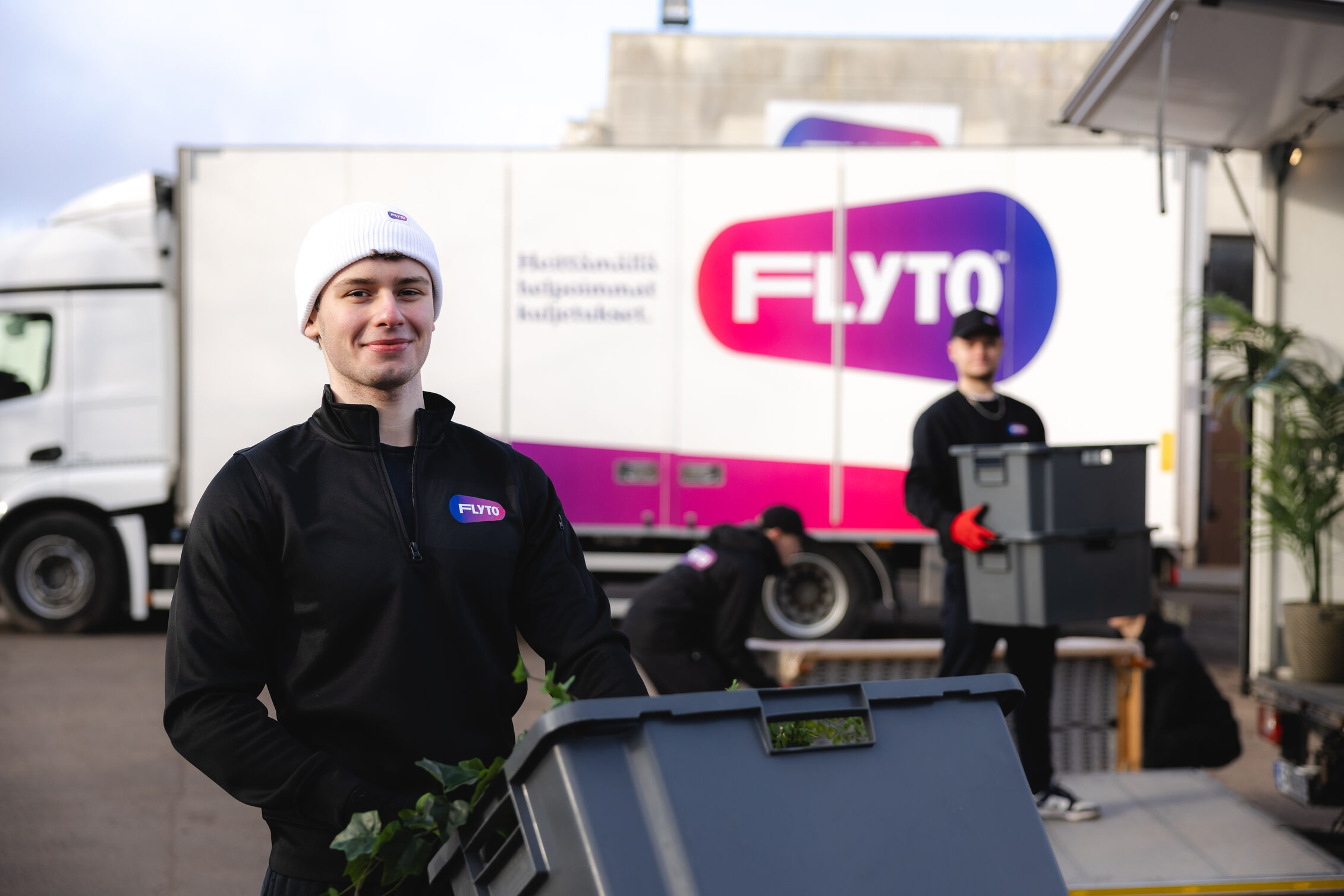
Flyto runs its own offices, warehouses, crews and vehicles across Northern, Central and Southern Europe, so the Belgian collection, packing, and export documentation on your move is handled in-house by our own teams. For the ocean leg to Callao and the ground handling in Peru, we work through a carefully vetted network of shipping partners and trusted local agents on the ground in Peru who manage customs clearance and last-mile delivery, so you get one point of contact from your door in Belgium to your new home in Peru.
Frequently asked questions
Do I need a Peruvian resident visa before I can get duty-free household goods?
You need to be genuinely establishing residence and be able to document at least 13 months of prior residence abroad; the process runs alongside your calidad migratoria application with Migraciones, so start both early (Migraciones; SUNAT).
How long do I have to declare my departure to my Belgian municipality?
Belgian law requires you to notify the population service at your municipality when you leave, and the notification is compulsory rather than optional — but book the appointment weeks in advance since processing (and in-person visits in major cities) can take time (FPS Finance).
Will I owe Belgian tax after I move to Peru?
Your tax formalities depend on your residence and income situation in the departure year, and you should expect to file a departure-year return. If you hold substantial financial assets, Belgium’s new 2026 capital gains/exit tax regime may also apply — get personalized advice, since it isn’t clear that a move to Peru qualifies for the automatic deferral available for some destinations (FPS Finance; PwC Belgium).
Can I bring my car from Belgium to Peru?
Only if it’s no more than 2 years old (by model year), left-hand drive, and not a restricted diesel category — which rules out most vehicles Belgian residents already own (SUNAT/Plataforma del Estado).
What if my shipment arrives late and misses Peru’s 6-month menaje de casa window?
You risk losing the reduced 12% duty rate and being assessed ordinary import duties and IGV instead — build in a buffer and track your shipment’s expected arrival against your own arrival date (SUNAT).
Moving back from Peru to Belgium — what changes?
The logic reverses: you’d register your return with your new Belgian municipality, and Belgium’s own duty-free import relief for personal property can apply if you import your goods within 12 months of establishing Belgian residence again, provided you owned and used the items for at least 6 months beforehand, having lived outside the EU customs territory for at least 12 continuous months (FPS Finance, moving to Belgium from a non-EU country). On the Peru side, you would settle your migratory status with Migraciones and any final SUNAT/tax obligations before departure.
Sources
- FPS Finance — Leaving Belgium
- FPS Finance — Moving from Belgium (export declaration)
- FPS Finance — Tax return when leaving Belgium
- FPS Finance — Moving to Belgium from a non-EU country
- FPS Finance — AES (Automated Export System)
- PwC Belgium — Belgium’s comprehensive capital gains tax changes, January 2026
- EY Belgium — New Belgian capital gains tax: implications for expatriates
- Port of Antwerp-Bruges — World port
- Your Europe (European Commission) — Carrying cash across the EU border
- FASFC/AFSCA — Travelling with your pet: departure from Belgium
- FASFC/AFSCA — Commercial and non-commercial pet imports
- Superintendencia Nacional de Migraciones — Cambio de calidad migratoria residente
- SUNAT — El menaje de casa (Asistente Aduanero)
- SUNAT — Trámite para el ingreso del menaje de casa
- SUNAT — Menaje de casa (bienes)
- SUNAT — Requisitos y documentos (despacho simplificado de importación)
- SUNAT — Bienvenido al Perú: bienes libres de impuesto / franquicia de viajeros
- SUNAT — Bienvenido al Perú: ingreso y salida de dinero en efectivo
- SENASA — Requisitos para la salida e ingreso de mascotas al país
- Plataforma del Estado Peruano / SUNAT — Requisitos y documentos para importar vehículos usados
- Ministerio de Transportes y Comunicaciones (MTC) — Límite de antigüedad para vehículos usados importados