

Moving from Ireland to Panama (2026): Complete Guide

Moving from Ireland to Panama is a two-sided customs and immigration process: on the Irish side you are closing out tax residency and, if shipping goods commercially, filing an export declaration through Irish Revenue’s systems; on the Panamanian side you are clearing "menaje de casa" (household goods) through the Autoridad Nacional de Aduanas (ANA) and satisfying Servicio Nacional de Migración residence requirements. This guide is written for an Irish resident — Irish or non-Irish national living in Ireland — relocating household goods, pets and possibly a vehicle to Panama, and covers both the departure formalities in Ireland and the arrival formalities in Panama, plus a short note on moving back the other way.
Key takeaways
- Your Panamanian immigration status determines your customs treatment — only those who can show intent to reside (or returning Panamanian citizens after 2+ years abroad) qualify for duty-free household goods import, up to a documented threshold of US$25,000 in used goods value (Embassy of Panama).
- Ireland has no single "leaving Ireland" form: Revenue instead asks you to update your address in myAccount/ROS, cease your PAYE employment record, and note that non-residents remain taxable on Irish-source income (Revenue — if you are leaving Ireland).
- Irish tax residence is a day-count test: 183+ days in a calendar year, or 280+ days across two consecutive years (min. 30 days each) (Revenue — tax residence).
- Commercial export shipments leaving the EU from Ireland must be declared through the Automated Export System (AES), which replaced the old AEP system on 21 March 2023 (Revenue — AES).
- Carrying €10,000 or more in cash out of Ireland (or the EU) requires a declaration to Customs, with fines up to €5,000 for non-declaration (Revenue — cash declarations).
- Dogs and cats entering Panama need a MIDA-issued import permit, a zoosanitary export certificate, and proof of rabies, distemper, parvovirus, leptospirosis and hepatitis vaccination (MIDA — perros y gatos).
- Panama’s online Declaración de Viajero (traveller declaration) is filed free of charge via the official ANA portal; as of 2026 it is required only if you’re carrying goods subject to customs duty or US$10,000+ in cash, and optional if you have nothing to declare — most relocating households will have something to declare, so plan to file it (ANA — Declaración de Viajero).
- There is no dedicated pre-departure certification for pets leaving Ireland for non-EU countries — Ireland’s Department of Agriculture, Food and the Marine tells owners to get the destination country’s requirements directly, since Ireland "does not keep this information" for non-EU countries (DAFM — Pet Travel: Outside EU).
1. How your Panama immigration status determines your customs treatment
Panama’s duty treatment of your shipment is not a fixed schedule — it is tied to your immigration category. Servicio Nacional de Migración (SNM) issues residence permits across three broad tracks: non-resident short-stay visas, temporary residence (employment contracts, investment in agriculture/forestry, family reunification, students), and permanent residence (Friendly Nations Visa, Qualified Investor Visa, pensioner/retiree visas, and other economic or family-based categories) (Migración Panamá — Permisos Migratorios). The Friendly Nations Visa, open to nationals of countries with historic ties to Panama including Ireland, requires either a qualifying professional activity or a fixed-term bank deposit and grants a provisional residence permit before permanent status; the Qualified Investor Visa grants immediate permanent residency against a real estate, securities or bank-deposit investment.
The practical consequence: household-goods duty relief and vehicle import concessions are generally only available once you can document that you are establishing residency (a pending or approved residence application) or, for returning Panamanian citizens, at least two years of prior residence abroad (Embassy of Panama — Import of Household Goods). Exact documentation requirements (proof of pending residence application vs. proof of citizenship and prior overseas residence) vary by category, so confirm the specifics with a Panama-based customs broker or immigration attorney before your shipment departs. Arriving on a tourist/non-resident basis and shipping a full household container is the scenario most likely to trigger full duty assessment, so sequencing — get your residence application filed before your goods land — matters more than almost any other single decision in an Ireland–Panama move.
2. The Ireland export side: tax exit, deregistration and export declarations
Customs and tax authority. Ireland’s customs and tax administration is Revenue (the Office of the Revenue Commissioners), covering both the tax-residency exit process and the export declaration system used when goods are shipped commercially out of the EU.
Leaving Ireland — the actual process. There is no equivalent of a single "departure form." Revenue’s own guidance for people leaving Ireland permanently tells you to: update your correspondence address via myAccount (PAYE employees) or the Revenue Online Service/ROS (self-assessed and business taxpayers) by marking that your address is no longer in the Republic of Ireland; close out your PAYE employment record if your employer doesn’t do so; and be aware that once non-resident, you remain liable to Irish tax on Irish-source income such as rental income from a property you keep in Ireland (Revenue — if you are leaving Ireland permanently).
Tax-residency exit test. Irish tax residence is determined by a day-count: you are Irish tax resident for a year if present 183 days or more in that calendar year, or 280 days or more across that year and the previous year combined (with a minimum of 30 days in each) (Revenue — how to know if you are resident for tax purposes). Note that Revenue also applies an "ordinarily resident" status that can persist for up to three tax years after you cease to be tax resident, which can keep certain foreign-employment income taxable in Ireland during that window — factor this into departure-year planning with a tax adviser.
Export declaration system. If you ship goods to Panama commercially (rather than as accompanied baggage), the shipment is an export from the EU and must be declared through the Automated Export System (AES). AES went live nationally on 21 March 2023, replacing the older Automated Entry Processing (AEP) and eManifest systems, and is now the only valid channel for Irish export declarations for goods moving — directly or indirectly — to destinations outside the EU (Revenue — Automated Export System). In practice your moving company or freight forwarder files this on your behalf as the declarant/exporter’s agent; you don’t file it yourself for a household relocation shipment.
Cash you carry with you. If you personally carry €10,000 or more in cash (including cheques, money orders and travellers’ cheques) when leaving Ireland for a non-EU destination, EU Regulation 2018/1672 requires a declaration to Irish Customs at your point of exit, using the EU Cash Declaration Form; failure to declare can result in a fine of up to €5,000 on summary conviction (and considerably more in serious cases) plus detention of the cash (Revenue — travelling with cash).
3. Ports and transit: real routes, estimated timings
Ireland’s three main freight-capable ports are Dublin Port (the country’s largest, handling the bulk of unitised trade), Rosslare Europort in Co. Wexford (Ireland’s principal direct link to continental Europe, with dedicated RoRo/RoPax berths, and a growing container/general cargo base), and Port of Cork, the main port serving the south of the country. None of these run a direct sailing to Panama — a household shipment typically moves by feeder or road/rail to a major container hub (commonly Rotterdam, Antwerp or Hamburg), then by deep-sea container line to one of Panama’s ports on the Pacific (Balboa) or Atlantic (Colón/Cristóbal/Manzanillo) side.
The following timings are freight-industry planning estimates, not official published figures, and vary by carrier, season and routing:
- Dublin/Rosslare/Cork to a European transshipment hub: roughly 1–4 days by short-sea RoRo or feeder.
- Hub to Panama by deep-sea container: roughly 3–5 weeks door-to-port, depending on service and whether Balboa or Colón is the discharge port.
- Air freight Dublin/Shannon → Tocumen (Panama City) via a European or US gateway: typically 3–7 days for cargo, once booked.
- Total realistic door-to-door timeline for a full household move: 8–12 weeks, allowing for Irish export processing, ocean transit, and Panama customs clearance (see Section 4).
Always confirm current transit times with your carrier or moving company at time of booking.
4. The Panama import side: menaje de casa and customs clearance
Panama’s customs authority is the Autoridad Nacional de Aduanas (ANA), which processes import declarations at the country’s ports and airports. For a relocating household, the operative concept is menaje de casa (household goods/personal effects). Foreigners who can document their intent to establish residency in Panama, and Panamanian citizens returning after at least two years abroad, can import used household furniture and personal belongings duty-free up to a documented customs value of US$25,000; a notarized (or Panamanian-consulate-certified) Spanish-language itemized inventory listing the items and their approximate values is required, along with proof of the applicant’s residency status/visa documentation (Embassy of Panama — Import of Household Goods). Shipments containing wood furniture or other wood articles additionally need a Quarantine Import Permit from Panama’s Ministry of Agricultural Development (MIDA) before the container is released.
Separately, Panama’s online Declaración de Viajero (traveller declaration), available free of charge through the official ANA portal, is generally filed up to 72 hours before arrival and generates a QR code presented at immigration/customs on arrival (ANA — Declaración de Viajero). As of 2026, Panama has made this declaration mandatory only for travellers carrying goods subject to customs duty or US$10,000 or more in cash or negotiable instruments — it is optional if you genuinely have nothing to declare. This policy has shifted before and could shift again, so confirm the current rule close to your travel date; in practice, anyone relocating a household (accompanied baggage worth declaring, or cash for setting up abroad) should plan to file it rather than assume it doesn’t apply. Use only the official .gob.pa portal — third-party sites charging a fee for this free government form are not official channels.
In practice, your Panama-side agent (a licensed customs broker, as most household shipments require one) files the formal customs entry with ANA and coordinates the physical inspection; budget roughly one to two weeks for clearance once the shipment lands, on top of ocean/air transit.
5. Pets: rules at both ends
Leaving Ireland. Ireland’s Department of Agriculture, Food and the Marine (DAFM) runs the Pet Travel scheme, but for destinations outside the EU it explicitly does not hold entry-requirement information — DAFM directs owners to obtain certification requirements directly from the destination country and then have those requirements certified by a private vet or an official DAFM vet as needed (DAFM — Pet Travel: Outside EU). If your pet later re-enters the EU, a fresh official veterinary health certificate signed within the preceding 10 days is required, on top of the standard microchip, rabies vaccination and (for dogs from most countries) tapeworm treatment rules used for intra-EU travel (DAFM — Pet Travel).
Arriving in Panama. Panama’s Ministry of Agricultural Development (MIDA) requires, for each dog or cat: a zoosanitary export certificate issued by the country of origin’s official veterinary authority, apostilled or consularized; a veterinary certificate of good health; and a current vaccination certificate covering rabies, distemper, parvovirus, leptospirosis and hepatitis for dogs (with feline-equivalent vaccines for cats) (MIDA — requisitos para la importación de perros y gatos). The rabies vaccine must be given at least 30 days — and after 3 months of age — before travel. Certificate validity windows are short and cited inconsistently across sources (commonly 30 days, though some airline/carrier-specific certificates require as little as 10 days) — confirm the current figure with MIDA or your vet before booking, and get certificates issued as close to travel as the rule allows. Owners must notify MIDA’s quarantine office 3–5 business days before arrival and present the original documents plus copies for a document and physical check on landing; associated MIDA fees apply for the application, phytosanitary licence and veterinary inspection.
Reverse direction (Panama → Ireland). MIDA also publishes export requirements for animals leaving Panama (MIDA — exportación de animales menores); on the Irish side, a pet arriving from a non-EU country such as Panama is treated under Ireland’s "outside EU" pet import rules, which — unlike EU-to-EU travel — can require advance notice and a more detailed veterinary/rabies-titre check depending on Panama’s official disease-risk categorisation at the time of travel; check the current listing on the Pet Travel portal before booking (Pet Travel: Outside EU).
6. Vehicles, money and things people forget
Vehicles. Importing a car into Panama is a separate, more heavily regulated process than household goods, generally requiring a clean title in your own name, left-hand-drive configuration, and clearance through ANA with a customs broker; age-based restrictions are enforced in practice but figures vary by source, so verify current rules directly with ANA or a licensed broker before shipping a vehicle rather than relying on freight-company blog estimates. Separately, a tax-free vehicle import concession exists under Panama’s retiree/pensioner visa framework for qualifying retirees (Embassy of Panama — Import of Household Goods).
Cash. Beyond the €10,000 EU exit declaration noted in Section 2, Panama also requires travellers carrying US$10,000 or more in cash or negotiable instruments to declare it on arrival or departure via ANA’s traveller declaration channel; undeclared amounts risk immediate confiscation and, in serious cases, further legal sanctions.
Things people forget.
- Cancel or transfer Irish motor tax and insurance separately from any vehicle export — these are not handled by Revenue’s "leaving Ireland" process.
- PPS-linked entitlements (child benefit, medical card, etc.) need to be separately notified to the Department of Social Protection and the HSE — Revenue’s address update does not do this for you.
- The wood-furniture MIDA quarantine permit (Section 4) is easy to miss if your shipment includes solid-wood furniture — request it before the container ships, not after arrival.
- Panama’s residency-status-linked duty relief (Section 1) means shipping goods before your residence application is filed can cost you the exemption entirely — sequence the paperwork first.
How Flyto handles your Ireland to Panama move
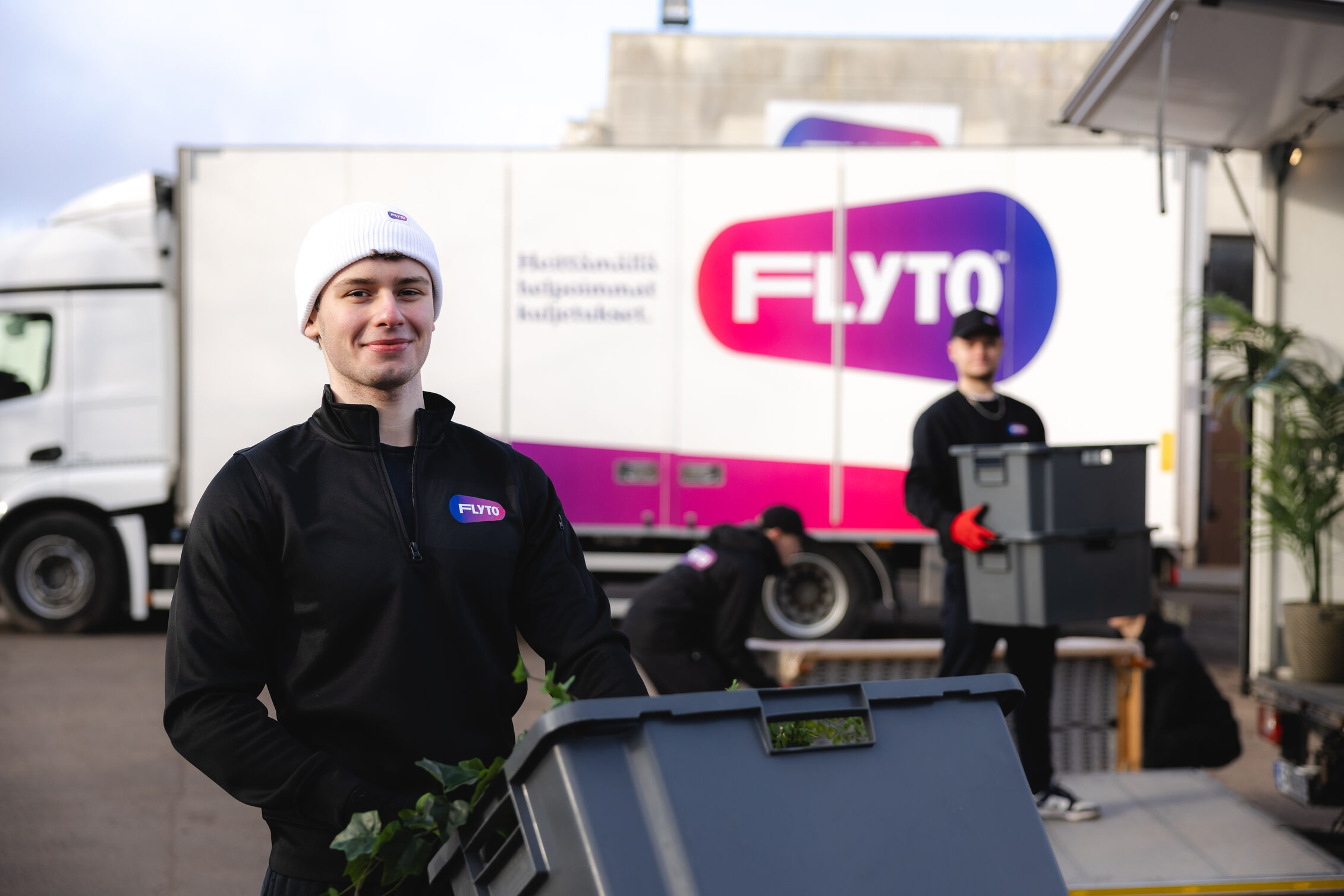
Flyto runs its own offices, warehouses, vehicles and moving teams across Northern, Central and Southern Europe, so the Irish collection, export documentation and European hub handling for your shipment stay in-house wherever our network reaches. For the ocean or air leg to Panama and the final delivery, we combine that in-house European operation with a carefully vetted network of partner carriers and subcontractors, plus trusted local partners in Panama who handle ANA customs clearance, menaje de casa filings and last-mile delivery on the ground.
Frequently asked questions
Do I need to formally deregister when leaving Ireland? There is no single deregistration form. You update your address in Revenue’s myAccount or ROS, close your PAYE employment record, and separately notify the Department of Social Protection and HSE about any benefits or medical card entitlements (Revenue — leaving Ireland).
How long can I stay tax resident in Ireland after I move? Your Irish tax residence for a given year depends on the 183-day/280-day count described in Section 2, but you can remain "ordinarily resident" — and therefore still liable on certain foreign income — for up to three further tax years, so get personalised advice on your specific departure date (Revenue — tax residence).
Can I import my household goods duty-free into Panama? Only if you can document intent to establish residency (or, as a returning Panamanian citizen, two years abroad), up to a documented US$25,000 value in used goods, with a notarized Spanish inventory (Embassy of Panama).
What visa lets me live in Panama long-term as an Irish citizen? Ireland is among the nationalities eligible for Panama’s Friendly Nations Visa, alongside Qualified Investor, Professional Foreigner, Remote Worker and other temporary/permanent categories listed by Migración Panamá (Migración Panamá — Permisos Migratorios).
Do I need to fill out anything before landing in Panama? As of 2026, Panama’s Declaración de Viajero is mandatory only if you’re carrying dutiable goods or US$10,000+ in cash, and optional if you have nothing to declare. When in doubt, file it — it’s free, submitted via the official ANA portal, generally up to 72 hours before arrival, and most relocating households have something worth declaring (ANA — Declaración de Viajero).
Can I bring my dog or cat to Panama? Yes, with a MIDA import permit, an apostilled/consularized zoosanitary export certificate, a veterinary good-health certificate, and proof of the required vaccinations (rabies, distemper, parvovirus, leptospirosis, hepatitis) with the rabies dose given at least 30 days before travel; certificate validity windows are short, so confirm the current figure with MIDA before booking, and notify MIDA’s quarantine office 3–5 business days ahead (MIDA — requisitos para la importación de perros y gatos).
Sources
- Revenue — If you are leaving Ireland permanently
- Revenue — How to know if you are resident for tax purposes
- Revenue — Tax residence (overview)
- Revenue — Automated Export System (AES)
- Revenue — Travelling with, or sending, cash
- DAFM / Pet Travel — Bringing your pet outside the EU
- DAFM — Pet Travel (overview)
- Migración Panamá — Permisos Migratorios
- Ministerio de Desarrollo Agropecuario (MIDA) — Requisitos para la importación de perros y gatos
- MIDA — Exportación de animales menores
- Embassy of Panama — Import of Household Goods
- Autoridad Nacional de Aduanas (ANA) — Declaración de Viajero
- Rosslare Europort — Freight Information