

Moving from Finland to Panama (2026): Complete Guide

Finland to Panama is a long-haul, dual-continent move: your household goods leave through Finnish Customs and the Finnish population register, cross the Atlantic (usually via a European transshipment hub), and arrive under Panama’s customs and immigration rules at Tocumen International Airport or one of the Canal-side container ports. This guide covers both halves of the corridor — what Finland requires of you as you leave, and what Panama requires of you on arrival — plus a short note on moving back the other way. It’s written for a Finland-based mover: an individual, couple, or family relocating for retirement, remote work, or a Panama residence permit.
Key takeaways
- Your Panama immigration/residency status determines your customs treatment — duty-free household-goods import in Panama is generally tied to holding (or actively applying for) residency, not to tourist status (Servicio Nacional de Migración, Embassy of Panama).
- Moving outside the EU requires a Finnish Customs (Tulli) export declaration for your removal goods, with a general inventory list and a saved MRN/exit certification — this is not needed for intra-EU moves (Tulli — moving abroad).
- Report your move to the Digital and Population Data Services Agency (DVV); a permanent move abroad removes your registered address in Finland and ends your home-municipality status (DVV — muutto ulkomaille).
- Finnish citizens’ general (unlimited) tax liability normally continues for the move year plus three more years unless you can show all essential ties to Finland are cut (Vero — tax residency).
- Panama allows duty-free import of used household goods up to B/.25,000 (US$25,000) for people establishing residency, under Cabinet Decree No. 41 of 2002 (Embassy of Panama — household goods).
- Pets need a legalized/apostilled zoosanitary export certificate, current vaccinations and advance notice to Panama’s Ministry of Agricultural Development (MIDA) before arrival (MIDA).
- Cash and monetary instruments of €10,000+ leaving the EU and US$10,000+ entering Panama must both be declared (Tulli/Suomi.fi cash declaration, Tocumen Airport — Aduana).
- Exporting a car from Finland requires removing it from traffic use for abroad at Traficom, proven by a foreign registration certificate or Customs’ export-confirmed decision (Traficom).
1. Your Panama immigration status sets your customs treatment
Panama’s duty-free allowance for household goods and, separately, the one-vehicle duty concession available to some visa categories are not automatic for every foreigner — they are attached to residence status. Panama’s immigration authority, the Servicio Nacional de Migración, runs several permanent-residency tracks relevant to Nordic movers, including the Pensionado (retiree/pensioner) category for people with a lifetime pension of at least B/.1,000 (US$1,000) per month, and categories under "Special Policies" and bilateral agreements (Migración Panamá). Citizens of EU countries, including Finland, are generally among the nationalities that can enter Panama visa-free as tourists for up to 90 days with a valid passport, onward ticket and proof of sufficient funds, but tourist status alone does not unlock the duty-free household-goods or vehicle allowances — those require applying for or holding residency (Embassy of Panama — Visas). Decide your visa category before your shipment leaves Finland: the customs paperwork on the Panama side (and whether duty is owed) depends directly on the status you can document at the time of clearance.
2. The Finland export side: customs, deregistration and tax exit
Customs (Tulli). Because Panama is outside the EU, moving your household goods there is an export from EU customs territory. Finnish Customs requires an export declaration, accompanied by a general list of the goods (e.g. "one bed, a television set, clothes, dishes, books"); you should keep the certification of exit and the shipment’s MRN (Movement Reference Number) in case you need proof later (Tulli — moving abroad). This is different from moving to another EU country, where no export declaration is required. If you (or your mover) instead need to import used goods later — for example returning items to Finland — Tulli’s private-person import declaration service, form 1161 ("declaration of removed goods imported from outside the customs and/or fiscal territory of the EU"), or a customs broker can be used, but pets, alcohol, tobacco and goods for professional/commercial use cannot go through the simplified online channel (Tulli — declaring removal goods).
Population register (DVV). You must notify the Digi- ja väestötietovirasto (DVV) of your move abroad. A move under 12 months is normally registered as temporary (you keep your Finnish home municipality); anything longer is permanent, and once registered as such you no longer have a domicile in Finland, which affects municipal voting rights and other registered-resident benefits. Notify online (via the joint DVV/Posti service, requiring Finnish bank credentials or a mobile certificate) or with a paper maastamuuttoilmoitus form (DVV — muutto ulkomaille).
Tax exit (Vero). Moving abroad does not automatically end Finnish tax residency. For Finnish citizens, the Tax Administration applies a three-year rule: you generally remain a Finnish resident taxpayer for the move year plus the three following calendar years, unless you can show you no longer have "essential ties" to Finland — a home available for your use, a spouse or minor child remaining in Finland, non-holiday real estate, ongoing Finnish social security coverage, or active employment/business in Finland. Non-citizens who move abroad permanently generally become nonresident for tax purposes from the day they move. If ties are cut, you can apply for limited tax liability status earlier (Vero — tax residency).
Cash. If you’re carrying €10,000 or more in cash (or equivalent in another currency) when you leave the EU, it must be declared to Customs at your point of departure (Tulli/Suomi.fi — cash declaration).
3. Ports and transit: real routes, industry-estimate timings
Finland’s two main gateways for a household-goods sea shipment are Vuosaari Harbour in Helsinki — the capital region’s dedicated container, RoRo and project-cargo port — and the HaminaKotka port complex on the southeast coast, one of Finland’s largest ports by cargo volume (Port of Helsinki — Vuosaari Harbour). On the Panama side, container traffic clears through Balboa on the Pacific side of the Canal or Colón, Cristóbal and Manzanillo International Terminal on the Atlantic side, all regulated by the Autoridad Nacional de Aduanas (ANA) (ANA).
There is no direct Finland–Panama sea service. In practice, a household-goods container from Vuosaari or HaminaKotka is trucked or fed by short-sea vessel to a major Northern European transshipment hub (commonly Rotterdam, Hamburg or Antwerp) and then loaded onto a transatlantic or Panama-Canal-routed liner service to Colón/Balboa. These are freight-industry planning estimates, not official published figures: full-container-load (FCL) sea freight typically runs 7–11 weeks door-to-port including the European feeder leg and onward inland transport in Panama; less-than-container-load (LCL/groupage) shipments usually add 1–3 weeks for consolidation and deconsolidation. Air freight for smaller, time-sensitive shipments typically transits in 1–2 weeks including customs clearance on both ends. Always confirm current transit windows with your carrier or moving company — schedules shift with transshipment capacity and season.
4. The Panama import side: customs process for household goods
Panama’s duty-free household-goods allowance for people establishing residency (and for returning Panamanian citizens who have lived abroad at least two years) is set at up to B/.25,000 (US$25,000) under Article 216 of Cabinet Decree No. 41 of December 11, 2002; value above that threshold is taxed, and the allowance does not apply to temporary returns that don’t involve a genuine change of residence (Embassy of Panama — household goods). To use the allowance you generally need: proof of your immigration status (residence visa or provisional resident card, or documentation of your pending application), an inventory list of the goods with approximate values, and a licensed customs broker to handle clearance through the Autoridad Nacional de Aduanas (ANA) at the port of entry (ANA). Shipments containing wood furniture or other wooden articles may need a separate quarantine/phytosanitary clearance before the container is released. Because Panama’s customs procedures for private individuals are broker-mediated and status-dependent, get your paperwork checked against ANA’s current requirements (or through a customs broker/your moving company) before the container ships from Finland.
5. Pets: rules on both ends
Leaving Finland. Exporting a pet outside the EU is handled under the Finnish Food Authority’s (Ruokavirasto) animal-export rules. Requirements are set by the destination country, so you must confirm Panama’s rules before travel; pets must be identified by microchip or tattoo, and almost without exception need a health certificate — issued by a municipal/city veterinarian for official use, or a private vet for less formal cases — confirming the animal’s origin and health. An EU pet passport is recommended for all traveling cats, dogs and ferrets even though it’s not itself sufficient for non-EU export, and the exporter bears full responsibility for meeting the destination country’s requirements (Ruokavirasto — pets and travel).
Arriving in Panama. Panama’s Ministry of Agricultural Development (MIDA) requires a Certificado Zoosanitario de Exportación (export health certificate) from Finland, legalized by apostille (or consularized at a Panamanian diplomatic mission), issued within a maximum of 30 days before travel, plus a full vaccination record. Dogs need rabies, distemper, hepatitis, leptospirosis and parvovirus vaccinations; cats need rabies, feline viral rhinotracheitis, calicivirus and panleukopenia; ferrets need rabies. Rabies vaccination must be given from 3 months of age and, for puppies/kittens, at least 30 days before travel. Pets are inspected on arrival, and requirements can change, so confirm current advance-notice rules and fees directly with MIDA (and Panama’s Ministry of Health, MINSA) before you travel (MIDA — introducción de animales menores).
6. Vehicles, money and things people forget
Vehicles. In Finland, you cannot simply drive your car away — you must have it removed from traffic use for abroad, either in person at an inspection facility that handles registrations or by mail/email to Traficom, proven with a foreign registration certificate or Finnish Customs’ export-confirmed transfer decision; this ends the vehicle’s Finnish road tax and traffic insurance validity (Traficom). In Panama, importing that same car means a clean title in your own name, an ANA vehicle import permit and a pre-shipment inspection, plus import duty assessed on ANA’s appraised value — some residence categories (e.g. Pensionado) get a duty concession on one vehicle, though Panama’s ITBM (VAT) still applies (ANA). Given the cost and paperwork on both ends, many movers choose to sell in Finland and buy locally in Panama instead.
Money. Beyond the EU’s €10,000 cash-declaration rule on departure, Panama’s customs authority also requires travelers carrying US$10,000 or more in cash or negotiable instruments to declare it on arrival at Tocumen; failing to declare can mean seizure and further legal complications (Tocumen Airport — Aduana). Panama uses the US dollar (alongside its own balboa, pegged 1:1) as legal tender, so currency conversion from euros happens once, not twice.
Things people forget. Confirm your residency category and required documents with Migración Panamá well before your goods ship — customs clearance in Panama assumes your immigration paperwork is already in motion. Keep the DVV move notification, your Tulli export MRN, and Traficom’s export confirmation together; Finnish authorities cannot backdate population-register corrections. And because there’s no direct sailing, build the Northern European transshipment leg into your timeline rather than assuming a single point-to-point transit.
How Flyto handles your Finland to Panama move
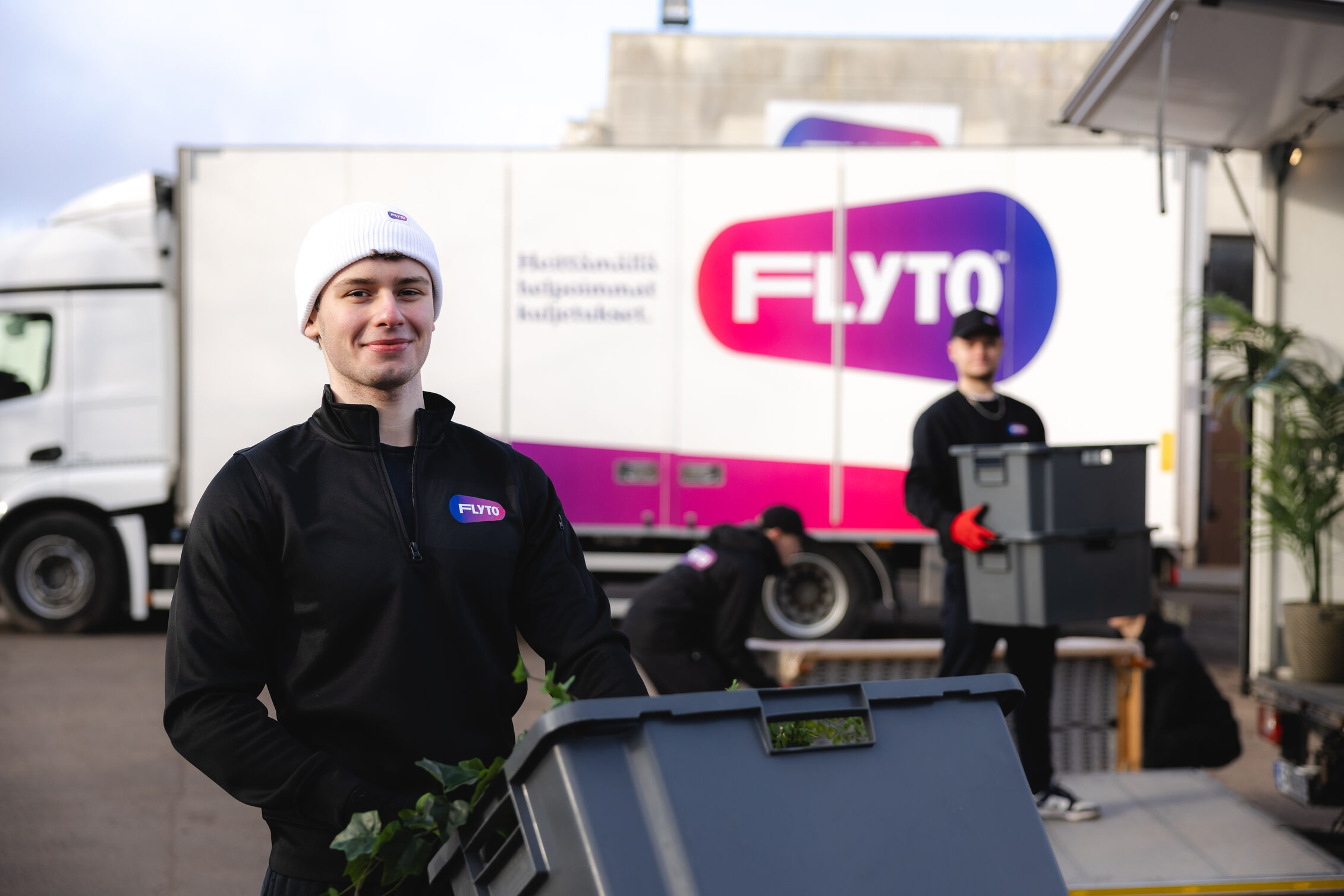
Flyto runs the Finland side with its own in-house operations — offices, warehouses, crews and vehicles across Northern, Central and Southern Europe — so your packing, export documentation and the European transshipment leg are handled directly by our teams rather than handed off blind. For the transatlantic leg and Panama clearance, we work through a carefully chosen network of freight and moving partners, plus trusted local partners in Panama who handle ANA customs clearance, residency-linked duty paperwork and last-mile delivery on the ground.
Frequently asked questions
Do I need an export declaration if I’m only shipping a few boxes, not a full household? Yes — Finnish Customs requires an export declaration for goods leaving EU customs territory regardless of shipment size, with a general inventory list attached (Tulli — moving abroad).
Can I keep my Finnish tax residency deliberately, to stay in the Finnish social security system? As a Finnish citizen you generally remain a resident taxpayer in Finland for at least the move year plus three years by default, unless you can show your essential ties are cut — it’s a trade-off to discuss with Vero or a tax adviser given your specific situation (Vero — tax residency).
Is the US$25,000 Panama household-goods allowance per person or per shipment? The Cabinet Decree sets a customs-value threshold on the used household goods being imported by someone establishing residency; confirm the current interpretation and any per-family application with a Panama customs broker or ANA before shipping, since practice can vary by case (Embassy of Panama — household goods).
Can my pet fly with me, or does it need its own cargo shipment? Either is possible depending on the airline and pet size; regardless of routing, Panama’s MIDA documentation, vaccination and health-certificate requirements apply the same way (MIDA).
What if I only have a tourist stay in Panama, not residency yet? You can still move as a visa-exempt tourist for up to 90 days, but the duty-free household-goods and vehicle allowances are tied to residency status, so goods shipped before your residency is secured or applied for may not qualify for the exemption (Embassy of Panama — Visas, Migración Panamá).
Moving back from Panama to Finland — what changes? The flow reverses: you’d need Panama export/customs clearance for your goods and vehicle, notify DVV of your return to re-register a Finnish address, and — since you likely became a nonresident or limited-tax-liable person while abroad — your Finnish general tax liability resumes based on your new residence and ties, again assessed by Vero under the same essential-ties framework used on departure.
Sources
- Tulli (Finnish Customs) — Moving abroad
- Tulli — How to declare removal goods
- DVV (Digital and Population Data Services Agency) — Muutto ulkomaille
- Vero (Finnish Tax Administration) — Tax residency, non-residency and residency under a tax treaty
- Traficom — Poista ajoneuvo ulkomaille tai Ahvenanmaalle
- Suomi.fi / Tulli — Cash declaration when traveling to/from the EU
- Ruokavirasto (Finnish Food Authority) — Pets and travel / export outside the EU
- Port of Helsinki — Vuosaari Harbour
- Servicio Nacional de Migración (Panama) — Permisos Migratorios
- MIDA (Ministerio de Desarrollo Agropecuario) — Introducción de animales menores a la República de Panamá
- Autoridad Nacional de Aduanas (ANA), Panama
- Embassy of Panama — Import of Household Goods
- Embassy of Panama — Visas
- Tocumen International Airport — Aduana