
Moving from the Netherlands to Portugal (2026): Complete Guide

Relocating from the Netherlands to Portugal is an intra-European move: both countries are full members of the EU customs union and the EU/EEA area of free movement. That single fact reshapes the whole move compared with relocating overseas — there is no customs process for your household goods, and no visa or work permit for you. What you actually need to manage is Dutch de-registration and tax exit, Portuguese residence registration, healthcare and driving-licence continuity, and the practicalities of moving a household by road across two countries. This guide is written for Dutch residents (Dutch nationals or other EU/EEA citizens living in the Netherlands) relocating to Portugal in 2026.
Key takeaways
- No customs duty, no import declaration on your household goods. The Netherlands and Portugal are both inside the EU customs union, so goods move freely between them with no duties, import VAT, or customs paperwork — this is a core feature of the EU customs union.
- You don’t need a visa or work permit. As an EU/EEA citizen you have the right to live and work in Portugal; the real task is registering your residence, not applying for permission to move (Your Europe: registering residence abroad).
- Deregister from the Dutch BRP if you’re leaving for more than 8 months (the months don’t need to be consecutive), reportable from as early as 5 days before departure at your municipality (Rijksoverheid).
- File an M-form (M-biljet) with the Belastingdienst for the tax year in which you emigrate to settle your Dutch tax residency (Belastingdienst).
- Register with Portuguese authorities within 3 months of arrival. After that you have 30 days to apply for the Certificado de Registo de Cidadão da UE (CRUE) at your local Câmara Municipal (AIMA).
- Get a NIF (Número de Identificação Fiscal) early — you need it for a bank account, a rental contract, utilities and almost every formality in Portugal (gov.pt).
- Your Dutch driving licence stays valid in Portugal until its own printed expiry date — Dutch licences always carry an expiry date (up to 10 years), so the mandatory 2-year swap-after-residence rule only catches licences with no expiry printed on them. When you do need or want to exchange it, the process is now fully online via IMT and costs €30 (gov.pt).
- Pets travel on an EU pet passport — no quarantine, since both countries are EU member states (NVWA).
1. Free movement: what actually applies to your move
Because the Netherlands and Portugal are both EU member states inside the single customs territory, there is no customs declaration, no import duty and no tax to pay on used household goods moved between them — this is a direct consequence of the EU customs union, under which the 27 member states apply a common set of customs rules (the Union Customs Code) and no duties are charged when goods move from one EU country to another. You do not need an inventory for customs, a "personal effects" exemption application, or a licensed customs broker for this leg. (Note: this only applies because both ends are EU. If you were instead moving to or from Switzerland — outside the EU/EEA customs union — or Norway/Iceland — EEA but outside the customs union — real customs declarations and duty-relief procedures for removal goods would apply; the UK is fully outside the EU/EEA and requires full customs formalities.)
For you as a person, free movement of people means an EU/EEA citizen does not need a visa or work permit to live in another member state. During the first three months you generally cannot be required to hold a residence document at all; the obligation that kicks in afterwards is registration, not permission (Your Europe).
Planning the move itself as well? Costs, transit times and how to choose a mover are covered on our page about international movers in the Netherlands.
2. Leaving the Netherlands: de-registration, tax and social insurance
- BRP de-registration. If you will be abroad for more than 8 months (the months don’t need to run consecutively), you must deregister from the Basisregistratie Personen (BRP) at your municipality, from as early as 5 days before departure. Ask for proof of de-registration, as Portugal’s registration process may ask for evidence of your move (Rijksoverheid).
- Ending Dutch tax residency. File an M-form (M-biljet) with the Belastingdienst covering the year you emigrate — this is the return used whenever a tax year is split between Dutch and foreign residency (Belastingdienst).
- Social insurance (volksverzekeringen). Once you have no Dutch income after emigrating, compulsory Dutch national insurance (AOW, Anw, Wlz) stops — you no longer pay premiums but also stop accruing AOW pension rights. If you were continuously insured in the Netherlands for at least a year before leaving, you can apply to the SVB for voluntary AOW/Anw insurance; the application must be made before departure or within 1 year of leaving (SVB).
- Healthcare. Your mandatory Dutch basisverzekering should be cancelled once you deregister and are no longer a Dutch resident. If you draw a Dutch pension or benefit, request an S1 (or 121) document from the CAK, which entitles you to healthcare in Portugal charged to the Netherlands; otherwise you’ll register directly with the Portuguese system as a resident (CAK).
- Vehicle export. To take your car with you, deregister it with the RDW, hand in the plates, and keep the "vrijwaringsbewijs" (release certificate) confirming you’re no longer liable for it in the Netherlands; you get a 14-day window to still drive it domestically on export plates while the paperwork is finalised (RDW).
3. How your household goods actually move
Removal companies typically route a Netherlands–Portugal move entirely by road, since there is no sea crossing or customs stop to plan around. A loaded truck runs from the Netherlands south through Belgium and France, down through Spain, into Portugal — a road distance of roughly 2,300–2,500 km depending on origin/destination. These are freight-industry estimates, not official figures: a dedicated (exclusive-use) truck typically takes about 3–4 driving days door-to-door; a shared groupage/consolidated load — the more common and economical option for a household move on this corridor — typically takes 7–14 days, since the truck also loads and unloads other customers’ shipments along the route. Actual timing depends on your removal company’s schedule, load consolidation, and delivery-city access restrictions (many Portuguese city centres, especially in Lisbon and Porto, have narrow streets that require a smaller shuttle vehicle for final delivery).
4. Arriving in Portugal: registration, healthcare, tax, driving
- Residence registration. As an EU citizen you can stay in Portugal for the first 3 months without formalities. Once you pass that mark, you have 30 days to apply for the Certificado de Registo de Cidadão da União Europeia (CRUE) at the Câmara Municipal (town hall) of your area of residence. It’s issued for a period of up to 5 years, subject to the validity of your ID document (AIMA).
- NIF (tax number). Get your Número de Identificação Fiscal from the Portuguese tax authority (Autoridade Tributária) as early as possible — it’s required to open a bank account, sign a lease, connect utilities, and register for almost anything else in Portugal (gov.pt).
- Healthcare enrolment. Register at your local health centre (centro de saúde) to obtain your SNS número de utente, which gives you access to Portugal’s national health service; foreign residents are typically assigned the number on their first visit to a public health facility. EU citizens transferring residence with a portable S1 document (if applicable) should present it to Social Security as part of registering (gov.pt).
- Driving licence. An EU driving licence remains valid to drive on in Portugal for as long as it’s valid at home — Dutch car licences are issued for up to 10 years (shorter after age 65/70) and always carry a printed expiry date, so there is no automatic swap deadline while yours is current. The mandatory exchange within 2 years of establishing residence only applies to EU licences that are lifetime or carry no expiry date. Whenever you do need or choose to exchange, the process (troca) is, as of January 2026, handled entirely online through IMT and costs €30 (gov.pt).
- Vehicle re-registration. If you bring your car, you can apply for exemption from Portugal’s vehicle tax (ISV) for change of residence, provided you owned the vehicle in your country of origin for at least 6 months before the transfer; the request is made online via the Portal das Finanças (Declaração Aduaneira de Veículos, DAV) within 12 months of transferring residence (gov.pt). After the DAV and ISV exemption, you request Portuguese number plates and a Certificado de Matrícula from IMT (gov.pt).
5. Moving with pets
Both the Netherlands and Portugal are EU member states, so this is a straightforward intra-EU pet movement — no quarantine required. Your dog, cat, or ferret needs to be microchipped (before the rabies vaccination, or the vaccination doesn’t count), have a valid rabies vaccination, and travel on an EU pet passport issued by a Dutch vet (NVWA). Non-commercial travel is capped at 5 pets per person/vehicle (with narrow exceptions for competitions and shows), and the pet must travel with you or someone you’ve authorised in writing (European Commission).
6. Money, banking, and things people forget
Open a Portuguese bank account once you have your NIF — it’s near-impossible without one. Multibanco and MB WAY are the everyday payment rails in Portugal; expect most bills and rent to run through direct debit. Register with Segurança Social for a NISS (social security number) alongside your NIF. Notify your Dutch bank, pension funds, and insurers of your new address, and set up mail forwarding through PostNL. Check the Netherlands–Portugal double-tax treaty implications with a tax adviser before you move, especially around the timing of your Dutch tax-residency exit and any Portuguese tax-residency start date, since Portugal’s rules for new residents have changed in recent years. Finally, plan school registration early if you’re moving with children — Portuguese public school enrolment periods are seasonal and can fill up before the school year starts.
How Flyto handles your Netherlands to Portugal move
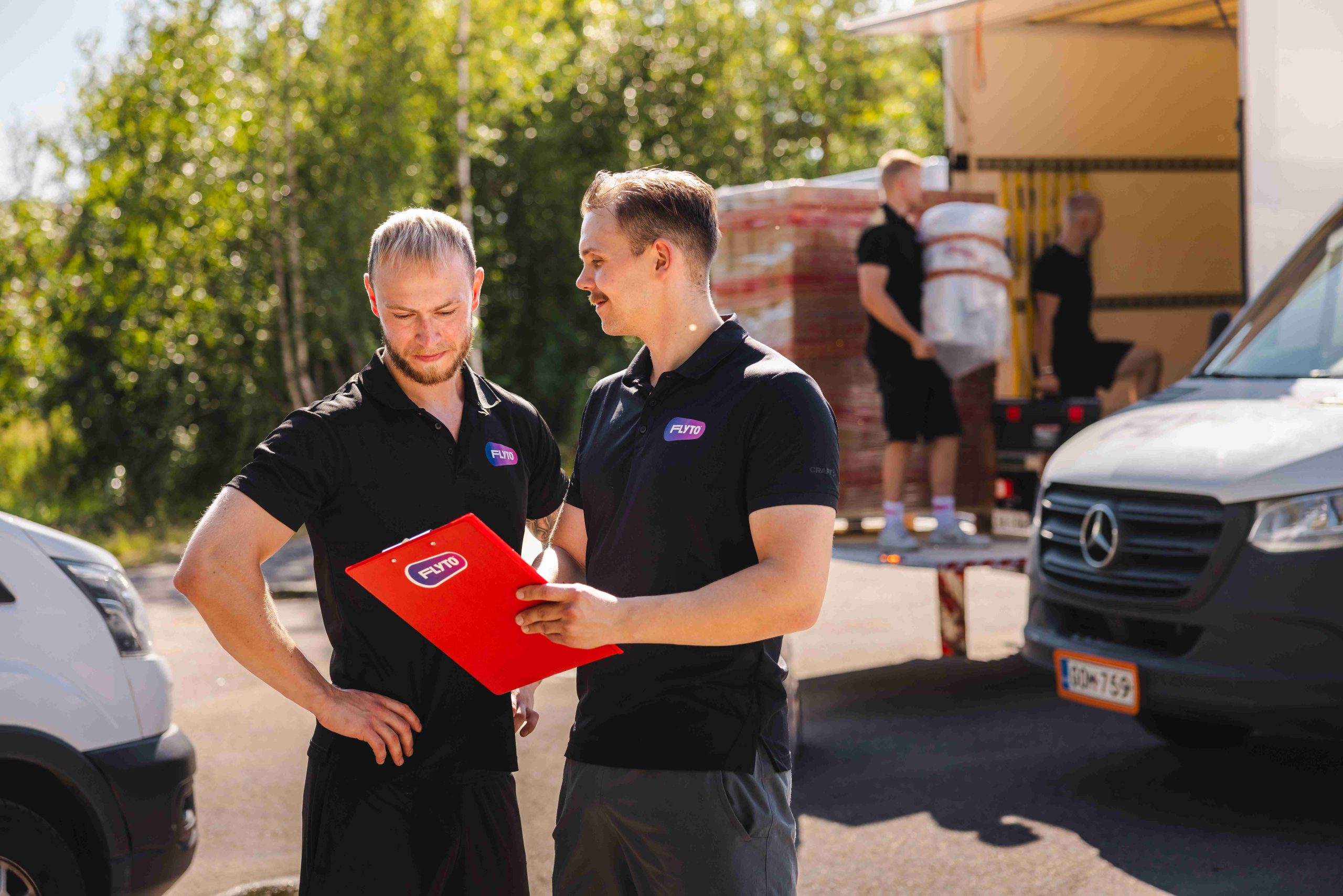
Flyto runs its own offices, warehouses, crews and vehicles across Northern, Central and Southern Europe, which means we can load, consolidate and deliver much of this corridor with our own operations rather than handing your shipment to a stranger at the border. Where it makes sense — for example the final leg into a restricted Lisbon or Porto street, or filling out a groupage load on a quiet week — we combine that in-house capacity with a carefully vetted network of partner carriers, so you get both direct accountability and flexible pricing and timing.
Frequently asked questions
Do I need a visa to move from the Netherlands to Portugal?
No. As an EU/EEA citizen you have the right to live in Portugal without a visa or work permit; you register your residence after 3 months instead (Your Europe).
Will I pay customs duty or VAT on my furniture and belongings?
No. Because both countries are inside the EU customs union, goods move between them with no customs duties, import VAT, or declarations (EU customs union).
How long can I stay in Portugal before I have to register anything?
Three months without formalities. After that you have 30 days to apply for the CRUE registration certificate at your local Câmara Municipal (AIMA).
Can I keep driving on my Dutch licence after I move?
Yes. An EU driving licence stays valid in Portugal until its own expiry date, and Dutch licences always carry one (issued for up to 10 years), so there is no automatic swap deadline while yours is current — the mandatory 2-year exchange rule only applies to EU licences that show no expiry date at all. Whenever you do need or choose to exchange, it’s now handled entirely online via IMT for €30 (gov.pt).
What happens to my Dutch health insurance when I move?
You cancel your Dutch basisverzekering once you deregister from the Netherlands. If you receive a Dutch pension or benefit, request an S1 document from the CAK before you leave; otherwise you enrol directly in the Portuguese SNS system as a resident (CAK).
Can I bring my dog or cat with no quarantine?
Yes — both countries are in the EU, so a microchipped, rabies-vaccinated pet travelling on an EU pet passport moves freely with no quarantine (NVWA).
Sources
- EU customs union in action — European Union
- Residence documents and formalities when living in another EU country — Your Europe
- Registering residence abroad after the first 3 months — Your Europe
- Wanneer moet ik mij uitschrijven bij de gemeente? — Rijksoverheid.nl
- Aangifte doen over het jaar van emigratie (M-aangifte) — Belastingdienst
- Voorwaarden voor vrijwillig verzekeren (AOW/Anw) — SVB
- Registering with the CAK / S1 procedure — Het CAK
- Voertuig exporteren — RDW
- Ik reis met mijn hond of kat binnen de EU — NVWA
- Travelling with a pet within the EU — European Commission
- Certificado de Registo para Nacionais UE — AIMA
- Pedir o Número de Identificação Fiscal (NIF) — gov.pt
- Pedir o número de utente do SNS — gov.pt
- Trocar carta de condução estrangeira por portuguesa — gov.pt
- Pedir a isenção do Imposto sobre Veículos (mudança de residência) — gov.pt
- Pedir atribuição de matrícula para um veículo importado — gov.pt