
Moving from the Netherlands to Poland (2026): Complete Guide

The Netherlands–Poland corridor is a fully intra-European Union move: both countries sit inside the EU customs union and the Schengen area, which changes the entire shape of a relocation compared with a move to a country outside the EU. There is no customs process to navigate for your furniture and boxes, and as an EU citizen you don’t need a visa or work permit to live and work in Poland. What actually needs handling is administrative: closing out your Dutch registrations correctly, opening the right Polish ones on arrival, keeping your healthcare cover continuous, and moving your car, driving licence and, if you have one, your pet. This guide is written for a resident of the Netherlands relocating to Poland and walks through each of those steps with the real government bodies and forms involved.
Key takeaways
- No customs, no duty, no import declaration. Both the Netherlands and Poland are inside the EU customs union, so household goods, cars already registered in the EU, and personal belongings move freely with no customs clearance or duty — this is a domestic-style move, not an import (EU customs union in action).
- You don’t need a visa or work permit. As an EU citizen you have the automatic right to live and work in Poland; the real formality is registering your residence after 3 months, not applying for permission to move (Your Europe: Residence rights when living abroad in the EU).
- Deregister in the Netherlands before/around your move. You must notify your Dutch municipality if you’ll be abroad more than 8 months in any 12-month period; this moves you from the BRP into the Non-residents Register (RNI) (Netherlands Worldwide: how to deregister from the BRP).
- Your Dutch tax year splits with an M-form. The year you emigrate you file a special "M" income tax return covering your resident and non-resident periods separately (Belastingdienst: filing a return for the year of emigration).
- In Poland, register your residence and get a PESEL. EU citizens staying over 3 months must register with the local voivode (province office); this triggers a PESEL number, Poland’s key personal identifier for tax, healthcare and daily life (MSWiA: Registration of residence; gov.pl: Get a PESEL ID).
- Your Dutch driving licence stays valid — exchange is optional. An EU-issued licence is recognised throughout the EU; you may voluntarily exchange it for a Polish one, but in most cases you are not required to (Your Europe: driving licence exchange and recognition).
- Bringing your car needs Dutch export steps and Polish re-registration, but a used vehicle you owned and used for at least 6 months before the move can qualify for excise-duty exemption in Poland (RDW: exporting a vehicle; Your Europe in Poland: taking a motor vehicle to Poland).
- Pets travel on an EU pet passport, not a customs form — microchip plus rabies vaccination plus the passport is all that’s required between EU countries (European Commission: travelling with a pet within the EU).
1. Free movement: what actually applies to your move
Because the Netherlands and Poland are both EU member states inside the EU customs union, there is no customs clearance, no import duty and no import declaration for household goods moving between them — the same free movement of goods that applies to any shipment within the single market applies to your belongings (EU customs union in action). This is a materially different process from moving from a non-EU country: there’s no "transfer of residence" customs relief application to file, no proof-of-ownership dossier for a customs officer, and no waiting on a customs release before your container can be delivered. Your mover will still prepare a packing inventory for insurance and logistics purposes, but it isn’t submitted to any customs authority.
The same free-movement principle applies to you as a person: as an EU citizen, you don’t need a visa, residence permit application, or work permit to move to Poland. Your right to live and work there is automatic under EU law. What replaces the "immigration" step of a non-EU move is registration — telling the right Polish authority you’ve arrived and intend to stay, covered in Section 4 (Your Europe: Residence rights when living abroad in the EU).
Note for readers on a different route: this ease only applies fully between EU customs-union countries. If either end of your move is Switzerland (outside the EU/EEA customs union — a formal customs declaration and duty relief process applies to removal goods), Norway or Iceland (EEA but outside the EU customs union — customs formalities with removal-goods relief apply), or the UK (fully outside the EU/EEA — real customs formalities apply), the process is different and closer to a non-EU move.
Planning the move itself as well? Costs, transit times and how to choose a mover are covered on our page about international movers in the Netherlands.
2. Leaving the Netherlands: what to close out
Deregister from your municipality (BRP → RNI). If you’ll live outside the Netherlands for more than 8 months in any 12-month period, Dutch law requires you to report your move abroad to your municipality (gemeente), which deregisters you from the Personal Records Database (BRP) and transfers your record to the Non-residents Records Database (RNI). You can report your departure up to 5 days before you leave, and should do so on or shortly after your actual departure date (Netherlands Worldwide: how to deregister from the BRP). This step is central to unwinding Dutch benefits, rent allowance, and tax obligations tied to residency.
Close out your Dutch income tax year with an M-form. In your year of emigration, the Belastingdienst requires an "M-form" (migration return) that splits the tax year into a resident period (worldwide income taxed) and a non-resident period (only Dutch-source income taxed) around your deregistration date (Belastingdienst: filing a tax return for the year of emigration). If you keep Dutch-source income after leaving (rental property, a Dutch pension, investments), you may continue to owe non-resident tax filings in later years.
Cancel or convert your Dutch health insurance and handle EHIC/S1. Once you move, your obligation to hold Dutch basic health insurance ends and you must cancel your policy with your insurer, effective from your moving date (CAK: health insurance abroad). If you’ll draw a Dutch pension or benefit while living in Poland, the CAK may issue you an S1 form, which lets you register with the Polish public system (NFZ) on the same basis as a local. Your Dutch EHIC becomes invalid once you’re no longer insured in the Netherlands, so you’ll need Polish (NFZ) coverage instead once you’re registered there (CAK: EHIC).
Export or deregister your vehicle. If you’re taking your car, an RDW-recognised export company (or the RDW itself) deregisters it from the Dutch vehicle register as part of export; this stops Dutch road tax, APK/MOT and insurance obligations and produces the export documentation you’ll need to re-register in Poland (RDW: exporting a vehicle).
Notify your bank, pension funds, and DigiD-linked services of your new address, and check whether any Dutch allowances (toeslagen), pension accrual, or health insurance subsidies stop or change once you’re no longer a resident.
3. How your household goods actually move
For a Netherlands–Poland move, freight typically runs by road, since both countries are connected by continuous EU highway network — there’s no sea leg or ferry crossing required (unlike, say, an Ireland–Poland or UK–Poland move). A loaded truck from the Randstad area to major Polish cities (Warsaw, Kraków, Wrocław, Poznań) covers roughly 1,100–1,300 km. As freight-industry estimates, not guarantees:
- Full-load, direct door-to-door: roughly 2–4 days transit once loaded, depending on exact origin/destination and border-crossing traffic (there are no customs stops, only the physical driving distance).
- Groupage/shared-load service (cost-efficient for smaller volumes): typically 1–3 weeks door-to-door, since your consignment is combined with others and delivered on a route schedule rather than a dedicated one.
- Actual timing depends on your specific origin and destination cities, the season (summer is peak moving season in both countries), and whether your Polish delivery address has vehicle access for a full-size truck.
Because there’s no customs hold to build into the schedule, timing is driven almost entirely by logistics — route planning, load consolidation, and destination access — rather than by paperwork.
4. Arriving in Poland: registration, healthcare, tax, driving licence
Register your residence (and get a PESEL). EU citizens intending to stay in Poland longer than 3 months must register their residence with the voivode (province governor) covering their place of residence, no later than the day after the 3-month mark. In practice this is usually done at the local Urząd Wojewódzki (voivodeship office) or its branch for foreigners’ affairs. You’ll need your passport/ID, proof of the basis for your stay (employment contract, self-employment, sufficient means and health insurance if economically inactive, or study enrolment), and a biometric photo; there’s no fee, and the outcome is a residence registration certificate valid for 10 years (MSWiA: Registration of residence; UDSC: Registration of residence of an EU citizen). This registration is what triggers your PESEL number — Poland’s national personal identifier, used for tax, healthcare, banking, employment contracts and virtually every official interaction (gov.pl: Get a PESEL ID — a service for foreigners).
Enrol in NFZ healthcare. If you’re employed in Poland, your employer registers you with the National Health Fund (NFZ) and deducts the health insurance contribution (9% of your contribution base in 2026) directly from your pay, giving you access to the public system on the same terms as Polish employees (NFZ: ubezpieczenia w NFZ). If you’re not employed (self-employed, early retiree, not yet working), registration routes differ — via ZUS for the self-employed, via a Dutch S1 form if you’re covered as a pensioner from the Netherlands, or via voluntary NFZ insurance if neither applies.
Handle your tax registration. For most people moving as employees or under civil-law contracts (not running a business), your PESEL number itself doubles as your tax identifier for Polish income tax (PIT) purposes — a separate NIP is only required if you register a business or become a VAT payer (Ministerstwo Finansów: rejestracja podatników). You become a Polish tax resident if your centre of personal/economic interests is in Poland or you spend more than 183 days there in a tax year — at that point your worldwide income is reportable in Poland.
Your driving licence stays valid — exchange is optional. A Dutch (EU-issued) driving licence is automatically recognised in Poland and remains valid until its printed expiry date; there is no obligation to exchange it. You may voluntarily exchange it for a Polish licence at your local Wydział Komunikacji (communications department), normally without a retest, using your foreign licence, a residence document, and a photo — a medical certificate is only needed if your foreign licence has already expired (Your Europe: driving licence exchange and recognition; Warszawa19115: exchanging an EU driving licence).
Re-register your car. You have 30 days from taking up residence with the vehicle in Poland to register it at your local traffic office (Wydział Komunikacji), providing the Dutch registration document, proof of ownership, Polish OC third-party liability insurance, and (if applicable) a valid roadworthiness inspection. If you owned and used the car for at least 6 months before the move and import it within 12 months of establishing Polish residence, it can qualify for excise-duty exemption — though you’ll still need to notify the tax office and obtain the exemption confirmation before registering, even when no duty is actually owed (Your Europe in Poland: taking a motor vehicle to Poland).
5. Moving with pets
Dogs, cats and ferrets travel between EU countries under the standard EU pet-movement rules — no quarantine, no customs declaration. Your pet needs: an ISO-compliant microchip, a rabies vaccination given on or after the day the chip is implanted, and an EU pet passport issued by an authorised vet recording the chip and vaccination history. The passport is what you show if checked at any point on the route (European Commission: travelling with a pet within the EU). If your pet doesn’t already have an EU pet passport, get one from your Dutch vet well before the move — for a first-ever rabies vaccination, the protection is only considered valid 21 days after the vaccination is completed, so build that window into your travel date.
6. Money, banking, and things people forget
- Keep a Dutch IBAN if useful, but open a Polish bank account (in złoty, PLN) for salary, rent and daily spending — most Polish employers and landlords expect a local account.
- Currency: Poland uses the złoty (PLN), not the euro — budget for exchange-rate movement on savings you bring over, and check your bank’s foreign-transfer fees for larger transfers.
- Dutch pension and toeslagen (benefits): confirm with the SVB/Belastingdienst which entitlements stop, continue, or need an S1/portable-document once you’re no longer Dutch-resident.
- Address changes: update your address with Dutch pension funds, insurers, and DigiD-linked services, and register your new Polish address as part of the residence registration in Section 4.
- School enrolment and childcare in Poland run on local municipal deadlines that don’t wait for your paperwork — start those applications in parallel with, not after, your residence registration.
- Mail forwarding: Dutch postal redirection (PostNL) only covers a limited period and doesn’t extend automatically abroad — set up redirection or notify key senders directly.
How Flyto handles your Netherlands to Poland move
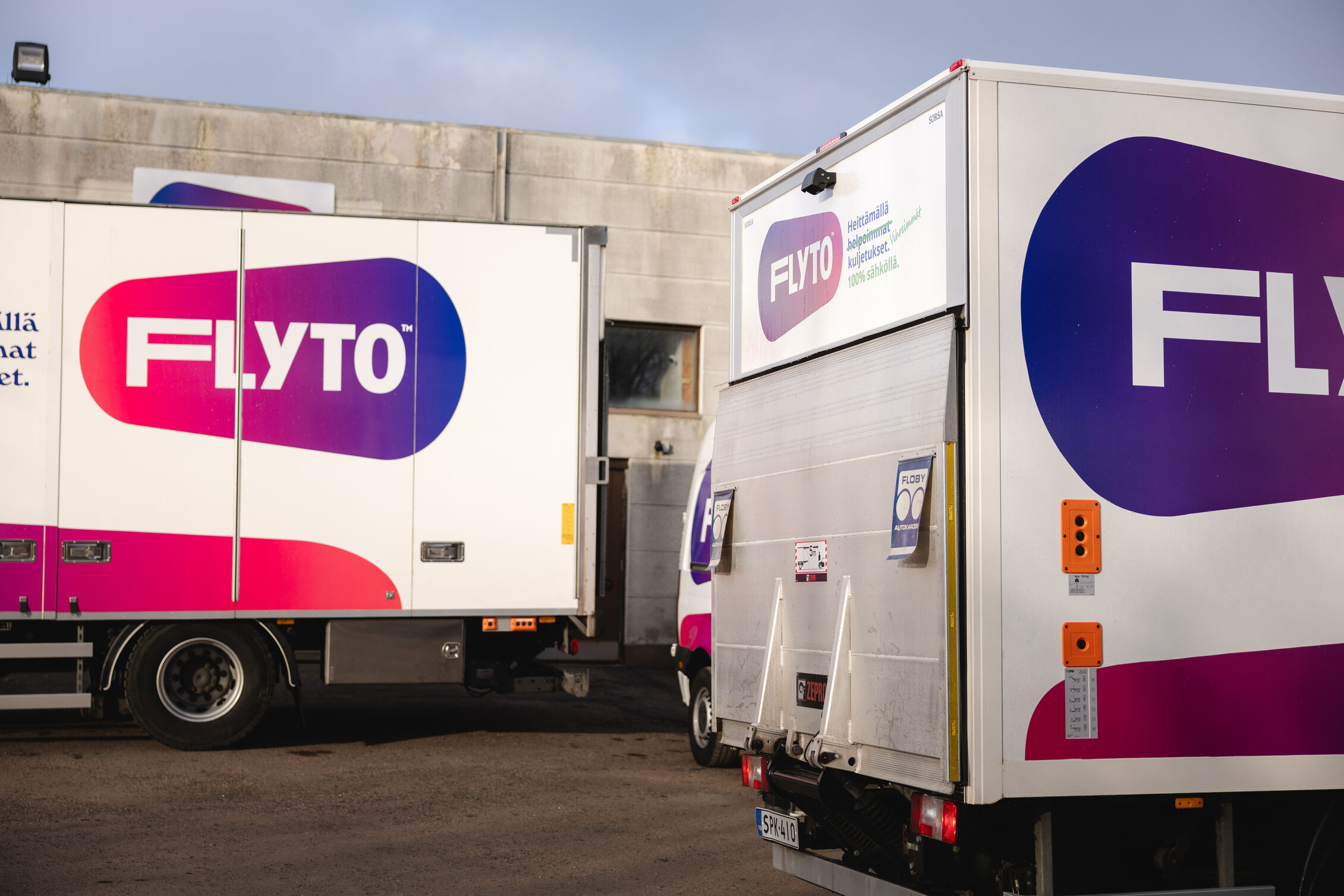
Flyto operates its own offices, warehouses, crews and vehicles across Northern, Central and Southern Europe, so a large share of a Netherlands–Poland move — collection, road transport, and delivery — runs on our in-house network rather than being handed off blind. Where it makes sense for routing, timing or destination-city access, we work through a carefully vetted network of partner carriers and local agents, so you get a single point of contact and one quote even when more than one operator is involved in getting your belongings from the Netherlands to Poland.
Frequently asked questions
Do I need a visa or work permit to move from the Netherlands to Poland?
No. As an EU citizen you have the automatic right to live and work in Poland; you register your residence after arrival rather than applying for permission beforehand (Your Europe: residence rights).
Will I pay customs duty on my furniture and belongings?
No. Both countries are in the EU customs union, so household goods move between them with no customs clearance, duty, or import declaration (EU customs union in action).
Do I have to exchange my Dutch driving licence for a Polish one?
No, exchange is optional. Your EU-issued licence remains valid in Poland until its printed expiry date; you can voluntarily exchange it without a retest (in most cases) if you prefer a Polish document (Your Europe: driving licence exchange and recognition).
What happens to my Dutch health insurance when I move?
You must cancel your Dutch basic health insurance from your moving date. If you’re moving as a pensioner drawing Dutch benefits, the CAK may issue an S1 form so you can register with NFZ in Poland on comparable terms (CAK: health insurance abroad).
How long do I have to register my residence once I arrive in Poland?
EU citizens staying longer than 3 months must register with the local voivode (province office); the application deadline is the day after the 3-month mark (MSWiA: registration of residence).
Can I bring my car without paying import tax in Poland?
Yes, if you owned and used it for at least 6 months before the move and bring it into Poland within 12 months of establishing residence, it can qualify for excise-duty exemption — though you still must notify the tax office and re-register the car locally within 30 days (Your Europe in Poland: taking a motor vehicle to Poland).
Sources
- EU customs union in action — European Union
- Your Europe: Residence rights when living abroad in the EU
- Netherlands Worldwide: how to deregister from the BRP
- Belastingdienst: filing a tax return for the year of emigration (M-form)
- CAK: health insurance abroad
- CAK: EHIC
- RDW: exporting a vehicle
- MSWiA: Registration of residence
- UDSC: Registration of residence of an EU citizen
- gov.pl: Get a PESEL ID — a service for foreigners
- Ministerstwo Finansów: rejestracja podatników (tax identifiers)
- NFZ: ubezpieczenia w NFZ
- Your Europe in Poland: taking a motor vehicle to Poland
- Your Europe: driving licence exchange and recognition
- Warszawa19115: exchanging an EU driving licence for a Polish one
- European Commission: travelling with a pet within the EU