

Moving to The Hague (2026): The Complete Relocation Guide

The Hague (Den Haag) is the Netherlands’ third-largest city — around 570,000 residents — but it does not feel like Amsterdam or Rotterdam. It is the seat of the Dutch government, home to the King’s working palace, the International Court of Justice at the Peace Palace, the International Criminal Court, Europol and Eurojust, and more than a hundred embassies and international organisations. That gives it a distinct character: more spacious and formal than the canal-tight capital, more diplomatic and residential than the port-industrial Rotterdam, with wide leafy avenues, stately townhouses, and its own stretch of North Sea coast at Scheveningen. It is also a genuinely international city — roughly half of residents have a migration background — which shapes everything from the housing market to the schools. This guide covers the practical mechanics of moving to The Hague in 2026: the truck-and-access logistics only a mover knows, where to live and what rent really costs, how to find a flat and register for your BSN, and what monthly life actually costs — with official sources throughout.
Freshness note: prices and rules verified against denhaag.nl, The Hague International Centre, HTM, Rijksoverheid/Volkshuisvesting Nederland and Dutch health-insurance data in 2026. Fees and rents move — confirm figures with the linked authorities before you rely on them.
Quick answer: moving to The Hague in 2026
What does it cost to move to The Hague? An international household move (a full home) typically lands in the low-to-mid four figures from within Europe and higher from overseas, driven mostly by volume, distance and access. The Hague’s specific access issues — car-free zones with retractable bollards, tall walk-up townhouses, embassy-street security and coastal wind at Scheveningen — add real cost, so get a fixed quote for your exact address rather than a generic estimate. Get a Flyto quote here.
How long does the move take? Road moves from within the EU are usually a few days to about two weeks door-to-door; overseas sea freight runs several weeks. The Hague-specific quirk everyone underestimates: unlike Berlin or many German cities, you cannot reserve a stretch of kerb in advance — but if your new address sits inside a pedestrian zone controlled by bollards (beweegbare palen), the truck needs an access exemption you should arrange days to weeks ahead (Gemeente Den Haag).
Key takeaways
- No paid parking permit — but no reservation either. A moving truck may park free of charge during the actual move without a permit; you simply cannot pre-book the space, and you pay for parking during breaks. Carry the job confirmation (opdrachtbevestiging) so wardens can see a move is in progress (Gemeente Den Haag — parking for movers).
- The real access catch is the bollards. Historic and central pockets are closed to traffic by retractable posts (pollers). Driving in outside the loading windows needs an ontheffing beweegbare palen: €23.50 per exemption, usually 5 working days for an incident exemption (about 8 weeks for a permanent one). Loading windows in pedestrian zones run roughly 05:00–11:30 on weekdays (Gemeente Den Haag).
- The deposit is capped at two months. Since 1 July 2023, the deposit (waarborgsom) may not exceed two months’ bare rent (kale huur) and must be returned within 14 days of the tenancy ending (Wet goed verhuurderschap — Volkshuisvesting Nederland).
- You register in person for your BSN. If you will live in The Hague for four months or more you must register in the BRP; EU/EEA/Swiss newcomers do this at the Public Service counter of the Segbroek district office, and highly-skilled migrants and researchers via The Hague International Centre. It’s free and usually processed within about four weeks (Gemeente Den Haag).
- Health insurance is mandatory within four months. Once you have a BSN you have four months to take out Dutch basic insurance; cover is backdated to your registration date, and missing the deadline triggers a CAK fine of about €480. The average 2026 basic premium is around €159/month (Government.nl, Zorgwijzer 2026).
1. The move into The Hague — logistics only a mover knows
This is the part generic ”moving to The Hague” guides skip, and it is exactly where a move goes wrong. The Hague is more spacious than Amsterdam, but its historic core, its stately townhouse streets and its exposed coastline each create access problems a full-size removal truck has to plan around. Four things determine whether move day runs smoothly.
Parking the truck: free, but you cannot reserve it
The Hague deliberately does not run a paid, bookable no-parking zone like Berlin’s Haltverbot. The city’s own guidance is blunt: you may park the moving truck during the move without paying, but you cannot reserve a space in advance (Gemeente Den Haag — parking for movers). The practical consequences:
- Parking during the move is free — but only while the move is actually happening. During the coffee break and other interruptions you pay the normal tariff.
- Make it obvious a move is underway. The city advises carrying the job confirmation (opdrachtbevestiging) and, where relevant, using the resident’s visitor-parking permit so enforcement wardens can see the vehicle is a mover, not a chancer.
- No reservation means timing is everything. Because you can’t fence off the kerb the night before, an experienced local crew arrives early, works the tram-line and one-way-street geometry, and knows which side of the street clears first. On a busy central street this is a real skill, not a formality.
The bollards: The Hague’s hidden access rule
The trap that catches international movers here is not a parking fee — it’s the pollers. Large parts of the historic centre and several inner streets are closed to cars and trucks by retractable posts (beweegbare palen), open only during set loading windows. To bring a truck in outside those windows you need an ontheffing beweegbare palen (bollard exemption), and the numbers matter (Gemeente Den Haag):
- Cost: €23.50 per exemption card.
- Lead time: an incident exemption (for a one-off event such as a move) is usually issued in about 5 working days; a permanent exemption takes roughly 8 weeks.
- Loading windows: in the pedestrian zones, loading and unloading is generally allowed only within the window hours — commonly 05:00–11:30 on weekdays. Outside those hours, no exemption means no legal access.
If your new front door is behind a poller, this single detail decides whether the truck can reach it at all. It is the first thing a Hague-savvy mover checks and the thing a van-hire booking ignores until 8 a.m. on move day.
Herenhuizen, walk-ups and the verhuislift
The streets everyone wants — the Zeeheldenkwartier, the Archipelbuurt, the Statenkwartier — are lined with tall, narrow herenhuizen (stately townhouses), many built between roughly 1890 and 1915, with steep, winding staircases and no lift (the Statenkwartier’s protected Art Nouveau stock is a classic example — Estata). Sofas, wardrobes, double beds and pianos routinely will not make the turn on those stairs. The standard Dutch solution is an exterior furniture hoist (verhuislift / ladderlift) run up the facade to lift bulky items straight in through a window or balcony. In The Hague a hoist is generally permit-free as a temporary object under the local by-law (APV art. 2:10), provided it leaves at least 1.5 m of pavement clear and doesn’t block an emergency exit; you only notify the road manager if it stands on the footway (OranjeLift — Den Haag hoist permits). A good mover assesses staircase width, floor and frontage before the day, not when the sofa is jammed on the second-floor landing.
Embassy streets and Scheveningen wind
Two more Hague-specific factors. First, the international zone — the embassy-dense streets of the Statenkwartier, Zorgvliet and Benoordenhout around the Peace Palace, the ICC and Clingendael — carries extra security: restricted-access blocks, camera-monitored streets and occasional police controls that a crew has to coordinate around rather than simply park in. Second, the coast. A facade hoist is a tall, wind-loaded ladder, and Scheveningen catches the full North Sea breeze; on gusty days a lift can be unsafe to raise, so experienced crews schedule seaside hoisting jobs for the calmer early morning and treat off-season as easier (OranjeLift). And if you’re placing a moving container on the street rather than working straight from the truck, note that a container needs a free melding at least 24 hours ahead (fine for up to nine weeks), and beyond nine weeks a paid permit of €91.50 applied for eight weeks in advance (Gemeente Den Haag).
2. Where to live — The Hague neighbourhoods by profile
The Hague’s character changes sharply from street to street, and it splits into a coastal side, a leafy diplomatic belt and a busier centre. The figures below are indicative asking rents for new lettings in 2026, drawn from market data on the Pararius and Kamer.nl portals; the citywide average sits around €24/m² per month, with rooms near €770, studios near €1,570, apartments near €2,250 and whole houses near €3,200 (cross-checked against IamExpat rental-market news). Treat them as starting points — the private sector is tight and prices move.
Best for young professionals and city life:
- Zeeheldenkwartier (~€25/m²) — the liveliest inner district: independent shops, bars and the Prins Hendrikplein, in a grid of restored herenhuizen and walk-ups. A refurbished 60 m² two-room flat commonly runs €1,400–€1,700/month. Central and full of character, but the trade-off is exactly the walk-up stairs and bollard streets above.
- Archipelbuurt / Willemspark (premium) — elegant, quiet and diplomatic, wrapped around the Peace Palace and embassies. Beautiful stately homes at some of the city’s higher rents, and worth it if you want calm and prestige over nightlife.
Best for families and the expat belt:
- Statenkwartier (premium) — protected Art Nouveau streets of 1890–1915, popular with diplomats and international families, a short tram ride from both the dunes and the centre; whole-house rents commonly run around €3,000–€4,000/month (Estata).
- Benoordenhout (premium) — leafy, affluent and green, next to the Clingendael estate and close to the international-school cluster; a classic diplomat-and-family choice.
- Wassenaar & Voorburg (the outer expat belt) — Wassenaar is villa-country: spacious, wooded, wealthy and home to the International School Wassenaar; Voorburg is a quieter, historic suburb with fast rail into the centre. Both trade city buzz for space and calm.
Best for coast and value:
- Scheveningen (~€27/m², the priciest per m²) — life by the sea: the boulevard, the harbour and the beach on your doorstep, with average rents around €2,700/month. The trade-offs are summer tourism, wind and the constant salt air.
- Bezuidenhout (mid) — beside Den Haag Centraal and the ICC, a commuter-friendly mix of 1920s–30s blocks and new-build; more affordable than the coastal districts and unbeatable for rail links.
- Segbroek (mid) — the residential west (Bomen- and Bloemenbuurt, the Vogelwijk): greener, calmer and family-oriented, and — usefully — home to the district office where EU newcomers register.
3. The Hague housing market — how flats are actually found
The Hague’s international pull keeps its rental market extremely tight: the diplomatic corps, the international courts, Europol and a large expat workforce all compete for the same private-sector stock, and good listings go fast. Here is how it works.
- Where to search: the mainstream portals are Pararius, Funda, HuurwoningenNL and Kamernet, plus expat-facing agents. Set alerts and respond within the hour.
- Deposit (waarborgsom): since 1 July 2023 it is capped at two months’ bare rent and must be returned within 14 days of the tenancy ending (Wet goed verhuurderschap — Volkshuisvesting Nederland). Older contracts may still show three months.
- Income requirement: private landlords typically want a gross income of 3 to 4 times the rent (often 3.5–4×). You can usually combine a partner’s income, though some landlords count the second income only partially (The Hague International Centre).
- Sector thresholds: below roughly €900/month is regulated social housing; the mid-segment runs to about €1,185/month; the free (private) sector starts above that with no income ceiling. Social and mid-segment homes need a housing permit (huisvestingsvergunning) (The Hague International Centre).
- Negotiate a diplomatic clause. If you may be reassigned, ask for a break clause (a ”diplomatic clause”) so you can end the lease early without penalty — common and reasonable in this city.
- Scam warning. Fake listings target newcomers who don’t yet know the market. Never pay a deposit or ”reservation” from abroad or before you have physically viewed the property and met the real landlord or agent (The Hague International Centre). If money is demanded before a viewing, walk away.
4. Registering your address and getting your BSN
Registration in the Personal Records Database (Basisregistratie Personen, BRP) is the master key to Dutch life: without the citizen service number (BSN) it produces, you can’t easily start a job, open a bank account, take out health insurance or get a DigiD. The rules for The Hague:
- The four-month test. If you will live in The Hague for four months or longer, you must register in the BRP (Gemeente Den Haag). Staying less than four months? You register as a non-resident (RNI) instead.
- Where to go. EU/EEA and Swiss newcomers bring their documents to the Public Service counter at the Segbroek district office. Recognised researchers, highly-skilled migrants and people with privileged status make an appointment at The Hague International Centre in the city hall.
- How to book. Make an appointment online at denhaag.mijnafspraakmaken.nl, or call 14070 (from abroad +31 70 353 30 00). It is free.
- What to bring. Valid ID (not a driving licence), proof of occupancy (your signed tenancy must be in effect), and — where relevant — legalised or apostilled birth, marriage or divorce certificates. All family members, including babies, must attend.
- Timing. Registration is usually processed in the BRP within about four weeks, after which your BSN arrives by post. Book your appointment as soon as you have an address.
Leaving the Netherlands rather than arriving? See our companion guide to BRP deregistration when emigrating from the Netherlands.
5. Cost of living in The Hague (2026)
The Hague is more expensive than Rotterdam but generally a shade cheaper than Amsterdam, with rent the dominant line in any budget. The current numbers:
- Rent is the big variable — see section 2. Budget from roughly €1,185/month for a modest private-sector flat up to €2,700–€4,000/month for a family home in the coastal or diplomatic districts (Pararius/Kamer.nl data via IamExpat).
- Health insurance is compulsory and a fixed monthly cost: the average 2026 basic premium is about €159/month, with the cheapest policies near €142 and the priciest around €185 (Zorgwijzer 2026).
- Public transport. The Hague runs on HTM’s tram and bus network. Pay-as-you-go with OVpay or an OV-chipkaart costs a base fare of €1.16 plus €0.201/km; a two-hour ticket is €4.85 and an all-day ticket €8.60, while monthly regional passes start around €63 (HTM fares 2026).
- Utilities and the rest. On top of rent, budget for gas, electricity and water, plus internet, municipal charges and the health premium above. Because energy tariffs shift, price your specific flat rather than assuming a fixed figure — a compact, well-insulated apartment costs far less to run than a draughty herenhuis floor.
6. Getting settled — health, transport, schools, internet
- Health insurance (zorgverzekering). Everyone who lives or works in the Netherlands must hold basic insurance, and you have four months from getting your BSN to arrange it. Cover is backdated to your registration date, so signing up late still means paying from day one — and missing the deadline entirely triggers an automatic enrolment and a CAK fine of about €480 (Government.nl; help at Zorgverzekeringslijn). Arrange it as soon as your BSN arrives.
- Transport. HTM’s trams are the backbone of the city and reach Scheveningen, the centre and the suburbs; regional trams and NS trains connect Voorburg, Wassenaar and the wider Randstad. The city is flat and cycling is genuinely practical year-round, so many residents skip a car entirely.
- International schools. The Hague has one of Europe’s densest international-education clusters. The International School of The Hague (ISH) and the European School The Hague (ESH) — both run by the Rijnlands Lyceum foundation — sit alongside the International School Wassenaar and a range of bilingual programmes, several of them government-funded and therefore far cheaper than fully private schools (The Hague International Centre; Rijnlands Lyceum). Places are competitive near Benoordenhout and Wassenaar — apply early.
- Internet. The main providers are KPN, Ziggo and Odido, with fibre now common across the city and speeds from 100 Mbit/s to well over 1 Gbit/s. Installation can take a couple of weeks after you sign, so order as soon as you have keys, and check what the building already supports.
7. How Flyto handles your move to The Hague
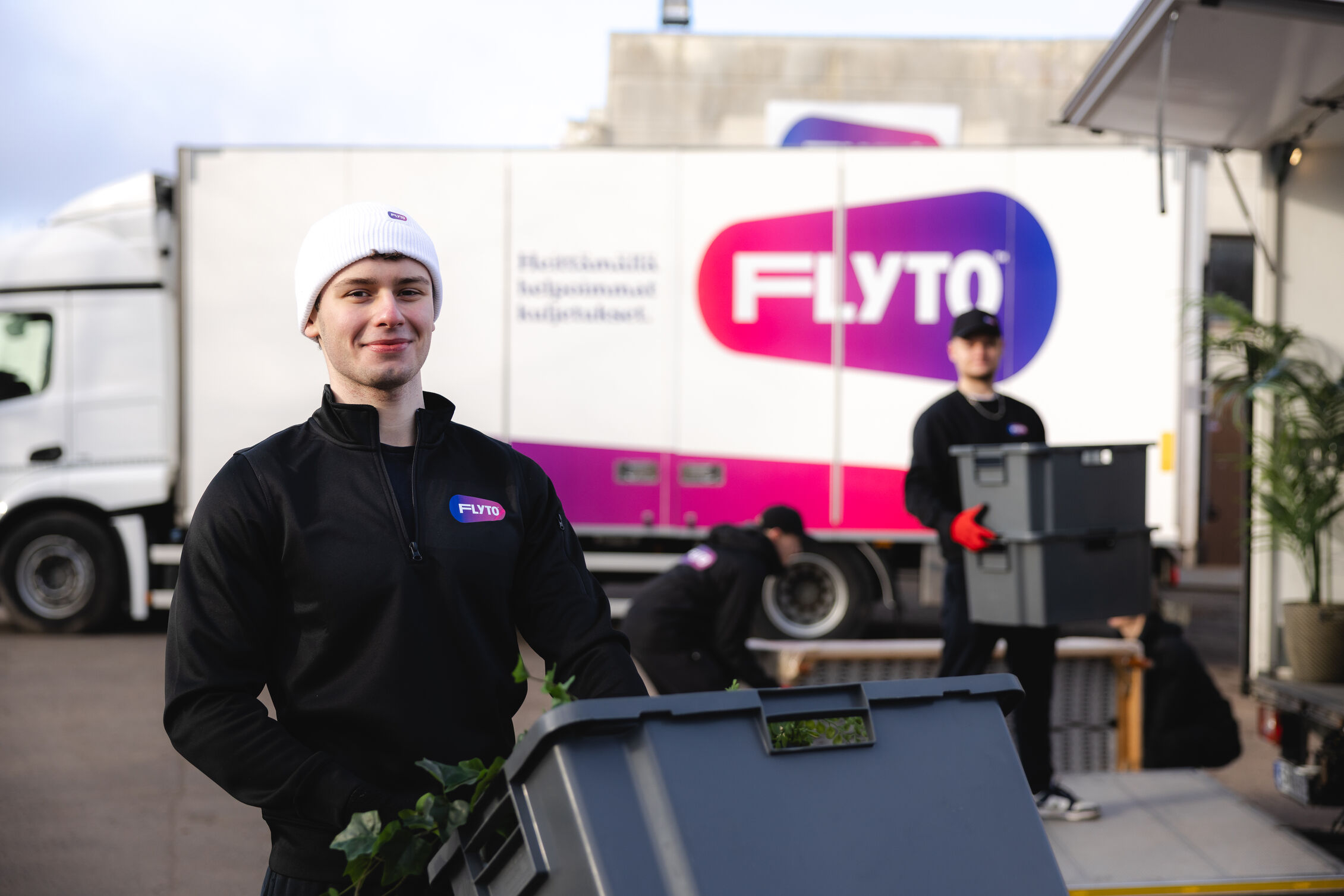
Everything in section 1 is why a Hague move rewards a mover who actually knows the city — and it’s where Flyto earns its keep. We plan for the fact that you cannot reserve the kerb, sending a crew that works the tram lines and one-way streets to get the truck as close as the street allows. We check whether your address sits behind bollards and arrange the ontheffing beweegbare palen and the right loading window before the day. We assess the herenhuis staircase in advance and bring an exterior furniture hoist when the sofa won’t make the turn — and we schedule Scheveningen hoisting for calm hours when the coastal wind allows. And we coordinate access on embassy and international-zone streets so security controls don’t stall the day. That’s the honest difference between a generic van hire and a relocation partner who has done this street by street. Get a fixed quote for your Hague move, or browse our full Netherlands moving guides and our customs guide for household goods.
Moving to The Hague? Get a fixed quote.
Tell us your addresses and volume and we’ll price the whole move — including any bollard exemption and the furniture hoist your townhouse needs. No surprises on the day.
Frequently asked questions
Do I need a parking permit for my moving truck in The Hague?
No — unlike Berlin’s paid Haltverbot, The Hague lets a moving truck park free of charge during the actual move without a permit. The catch is that you cannot reserve the space in advance, and you pay the normal tariff during breaks. Carry the job confirmation so wardens can see a move is underway. The real access issue is bollards: if your street is a pedestrian zone closed by retractable posts, you’ll need a separate bollard exemption (Gemeente Den Haag).
What is the ontheffing beweegbare palen and when do I need it?
It is an exemption to drive through the retractable bollards (pollers) that close off parts of central The Hague to traffic. If your new address is inside such a zone and you need access outside the loading windows (typically 05:00–11:30 on weekdays), you apply for the exemption: €23.50, usually issued in about five working days for a one-off move. Without it, a truck simply can’t reach a bollard-protected door legally (Gemeente Den Haag).
Will my furniture fit up a Hague townhouse staircase?
Often not. The sought-after herenhuizen in the Zeeheldenkwartier, Archipelbuurt and Statenkwartier are tall walk-ups from around 1890–1915 with steep, winding stairs and no lift. Large items usually go in via an exterior furniture hoist through a window or balcony, which in The Hague is generally permit-free as long as it leaves 1.5 m of pavement clear. A good mover checks the staircase and frontage before move day and books the hoist in advance.
How much is rent in The Hague in 2026?
Citywide asking rents average around €24/m² per month. Expect roughly €1,185/month at the low end of the private sector, €1,400–€1,700 for a refurbished two-room flat in the Zeeheldenkwartier, and €2,700–€4,000 for a family home in Scheveningen, the Statenkwartier or Benoordenhout. Scheveningen is the priciest per square metre at about €27/m² (Pararius, Kamer.nl).
How big a deposit can a Hague landlord ask for?
Since 1 July 2023 the deposit is capped at two months’ bare rent (kale huur) under the Wet goed verhuurderschap, and it must be returned within 14 days of the tenancy ending. Older contracts may still show up to three months. Private landlords also typically require a gross income of about 3–4 times the rent (Volkshuisvesting Nederland; The Hague International Centre).
Where do I register for a BSN in The Hague?
If you’ll live in the city for four months or more you must register in the BRP. EU/EEA and Swiss newcomers go to the Public Service counter at the Segbroek district office; researchers and highly-skilled migrants use The Hague International Centre. Book at denhaag.mijnafspraakmaken.nl or call 14070. It’s free, everyone in the family must attend, and your BSN follows by post within about four weeks (Gemeente Den Haag).
When do I need to arrange Dutch health insurance?
Within four months of getting your BSN. Cover is backdated to your registration date, so signing up late still means paying from arrival, and missing the deadline triggers an automatic enrolment plus a CAK fine of around €480. The average 2026 basic premium is about €159/month, with policies ranging roughly €142–€185 (Government.nl; Zorgwijzer).
Which The Hague neighbourhood is best for families with children in international school?
Benoordenhout and Wassenaar are the classic choices — leafy, calm and close to the International School of The Hague, the European School The Hague and the International School Wassenaar, several of them government-funded and therefore cheaper than private schools. The Statenkwartier is another favourite, near the dunes and well served by trams. All carry premium rents, so apply for school places early (The Hague International Centre).
Official sources
- Gemeente Den Haag — parking for movers (verhuizers)
- Gemeente Den Haag — bollard exemption (ontheffing beweegbare palen), €23.50
- Gemeente Den Haag — using public road for objects/containers (melding & permit)
- Gemeente Den Haag — 1st BRP registration for EU/EEA/Swiss newcomers (BSN)
- Gemeente Den Haag — re-registering in the BRP (already have a BSN)
- Volkshuisvesting Nederland — Wet goed verhuurderschap (deposit cap, tenant rules)
- The Hague International Centre — renting a home (deposit, income, scams)
- The Hague International Centre — international schools
- Rijnlands Lyceum — International School of The Hague & European School The Hague
- HTM — The Hague tram & bus fares 2026
- Government.nl — mandatory Dutch health insurance
- Zorgwijzer — 2026 basic health-insurance premiums
- Zorgverzekeringslijn — official health-insurance help line
- Estata — Statenkwartier neighbourhood profile & prices
- IamExpat — Netherlands rental-market news (rent data, cross-checked with Pararius & Kamer.nl)
- OranjeLift — furniture hoist permits in Den Haag
- Flyto — Moving to Amsterdam (2026)
- Flyto — Moving to Rotterdam (2026)
- Flyto — BRP deregistration when leaving the Netherlands
- Flyto — customs for household goods
- Flyto — Netherlands moving guides