

Moving from the Netherlands to Mexico (2026): Complete Guide

Relocating from the Netherlands to Mexico means clearing two separate regulatory systems, not one. On the Dutch side you deal with Douane (the Customs Administration of the Netherlands, part of the Belastingdienst) for your export declaration, your municipality and RvIG for deregistering from the Basisregistratie Personen (BRP), and the Belastingdienst again to close out your Dutch tax residency. On the Mexican side, the Agencia Nacional de Aduanas de México (ANAM) and the Instituto Nacional de Migración (INM) decide whether — and how — your household goods, vehicle, pets and cash can enter duty-free. This guide is written for Dutch residents moving to Mexico on a temporary or permanent resident visa, for work, retirement or family reasons, and closes with a short note on the reverse move.
Key takeaways
- Your Mexican immigration status (visitor, residente temporal, or residente permanente, granted by INM) is what determines whether your household goods and vehicle can enter duty-free — see the menaje de casa rules from ANAM.
- You must deregister from the Dutch BRP if you’ll live abroad more than 8 months in a 12-month period; you can report your departure up to 5 days beforehand at your municipality (RvIG).
- Dutch domestic tax liability ends on emigration; you must file an M-form for the year you leave (Belastingdienst).
- Household goods leaving the Netherlands for a non-EU country require a formal export declaration (uitvoeraangifte) and inventory list, with special rules for cars and cultural goods (Douane).
- Carrying €10,000 or more in cash out of the EU requires a declaration to Dutch Customs before you check in (Douane); Mexico requires the same above US$10,000 on arrival (ANAM).
- Dogs and cats need a microchip and valid rabies vaccination completed before leaving the EU, plus a signed veterinary health certificate for Mexican entry (NVWA, SENASICA).
- A foreign-plated vehicle can only be temporarily imported into Mexico by residente temporal holders via a Banjercito permit — residente permanente holders are not eligible (ANAM).
- Rotterdam (sea) and Amsterdam Schiphol (air) are the main Dutch gateways for household-goods freight to Mexico (Port of Rotterdam, Schiphol Cargo).
1. How your Mexican immigration status decides your customs treatment
Everything downstream — furniture, car, even how your pet’s paperwork is processed at the port of entry — is gated by which INM-issued status you hold when you arrive:
- Visitante (tourist, up to 180 days): no entitlement to duty-free household-goods import. If you’re still deciding on a visa route, don’t ship your container yet.
- Residente temporal: issued initially for up to one year, renewable up to four years maximum (SRE). Under Article 106, fraction IV of Mexico’s Customs Law (Ley Aduanera) and Article 159 of its Regulations, household goods owned by a residente temporal (or residente temporal estudiante) can enter as a duty-free temporary import tied to the visa’s validity, without needing prior customs authorization — only compliance with the requirements at the port of entry (ANAM). They can also obtain a Temporary Import Permit (TIP) for one foreign-plated vehicle.
- Residente permanente: no expiry date, and it qualifies you for a definitive duty-free import of your menaje de casa — but it explicitly disqualifies you from the vehicle TIP (ANAM).
Decide your visa route before you book your shipment: switching from temporal to permanente later can affect goods and vehicles you already imported under the earlier regime.
2. The Netherlands export side
Customs: Douane requires an export declaration for household goods leaving the Netherlands for a non-EU country, together with an inventory list of what you’re taking. Special rules apply to cars, motorcycles, and cultural goods such as art and antiques (Douane).
Deregistration: You must deregister from the BRP if you’ll be abroad more than 8 months within a 12-month period, even if you keep a Dutch address. You can report your move to your municipality up to 5 days before departure; the municipality forwards it into the BRP and your record moves to the Registratie Niet-Ingezetenen (RNI). A deregistration certificate can be requested from any of the 19 RNI counter municipalities (including Alkmaar, Amsterdam, Rotterdam and Utrecht) (RvIG).
Tax exit: Emigration ends your Dutch domestic tax liability; you become a non-resident taxpayer (buitenlands belastingplichtige). You must file an M-form (M-biljet) for the year you leave, either online via Mijn Belastingdienst with DigiD or on paper, generally due before 1 July of the following year. Dutch-source income you keep after leaving — state pension (AOW), company pension, or rental property — may still be taxable in the Netherlands (Belastingdienst).
Vehicle: If you’re taking or selling your car, report it to the RDW for export via a recognized inspection station or export company. Exporting ends your APK (roadworthiness test), insurance obligation, and road tax (mrb). This is different from schorsen (suspension), which is for a car you keep registered in the Netherlands while abroad temporarily (RDW).
3. Ports and transit
The Netherlands’ two real gateways for a move to Mexico are the Port of Rotterdam, Europe’s largest seaport with dedicated container terminals (APM Terminals Maasvlakte II, ECT Delta, Rotterdam World Gateway) (Port of Rotterdam), and Amsterdam Airport Schiphol Cargo, Europe’s fourth-largest air-cargo hub, handling roughly 1.5 million tonnes in 2024 (Schiphol Cargo).
The following are freight-industry planning estimates, not official government figures: sea freight from Rotterdam to Mexican Gulf or Pacific ports typically runs 3–6 weeks in transit, with door-to-door international household moves (packing, shipping, ANAM clearance, last-mile delivery) commonly taking 8–14 weeks overall. Air freight or excess baggage from Amsterdam to Mexico City is typically 1–3 days transit. Always confirm current timelines with your carrier or mover.
4. The Mexico import side: menaje de casa
Mexican customs processes household-goods imports as menaje de casa through the VUCEM portal (Ventanilla Única de Comercio Exterior Mexicano), under ANAM. Eligible goods are used household furnishings and utensils for daily family use, acquired at least six months before your entry date; goods previously used for commercial or industrial activity abroad, and vehicles, are explicitly excluded from this category (ANAM).
Timing: the import must take place within three months before or after your entry into Mexico, or within six months after arrival (ANAM).
Which regime applies to you (see Section 1): as a residente temporal, your goods enter as a duty-free temporary import tied to your visa’s validity under Article 106-IV of the Ley Aduanera and Article 159 of its Regulations, with no prior customs authorization required — only compliance with the requirements at your port or airport of entry. As a residente permanente (a duty-free path also applies to diplomats, border-region residents, and repatriated or deported Mexican nationals), the import is definitive and duty-free.
In practice, you present your passport, your valid residency document, and a detailed, signed inventory list at the customs office covering your point of entry. Because the exact administrative document checklist can change, confirm the current requirements directly with ANAM/VUCEM or your relocation provider before your shipment departs.
5. Pets
Leaving the Netherlands: Your dog or cat needs a microchip and a valid rabies vaccination — most non-EU destinations require this, though exact requirements vary by country, so start well in advance. Crucially, rabies vaccinations or blood-test results administered by a vet outside the EU cannot be entered into the EU pet passport, so this step must be completed in the Netherlands before departure. NVWA’s Exportassistent tool lets you look up the exact requirements and any required binding certificate for Mexico, and can legalize your pet’s travel documents if that is needed (NVWA).
Arriving in Mexico: Only dogs and cats are recognized as pets. On arrival you must request a Zoosanitary Certificate for Importation (CZI) and present an original and a copy of a health certificate — valid a maximum of 15 days from issue — issued by an official or licensed private veterinarian on letterhead, showing the vet’s license number, confirming preventive parasite treatment within the prior six months and rabies vaccination with date and validity (animals under 3 months are exempt). Your pet undergoes a physical inspection at your port of entry — SENASICA offices are located at international airports, border crossings and seaports (SENASICA).
6. Vehicles, money, and things people forget
Vehicle: Only residente temporal holders (including temporary-resident students) can bring one foreign-plated vehicle in, using Banjercito’s Temporary Import Permit (TIP, the "placa de internación" sticker). It’s valid 5 years for temporary residents (10 years for Mexican nationals permanently resident abroad), requires a refundable deposit of roughly US$200–400 depending on the vehicle’s age, and is strictly for personal use — selling, gifting or transferring the car in Mexico while under TIP is a federal offense. Residente permanente holders cannot obtain a TIP at all (ANAM).
Money: Leaving the Netherlands with €10,000 or more requires a declaration to Douane before you check in bags or clear security (at Schiphol, this means the Customs desk in departure hall 3 before you reach security). Failing to declare risks a fine of €1,000–€21,750 or imprisonment (Douane). On arrival in Mexico, amounts over US$10,000 in cash or cheques must be declared; undeclared amounts face a 20–40% fine on the excess, and undeclared sums over US$30,000 can mean 3 months to 6 years imprisonment plus forfeiture of the excess (ANAM).
Easy to forget: the RDW export report for any vehicle you’re leaving behind or selling (it ends your APK, insurance duty and road tax); the Belastingdienst M-form deadline of 1 July after your emigration year, even though you’ll already be in Mexico; the six-month acquisition rule for menaje de casa — you can’t buy new furniture right before moving and expect duty-free entry; and Douane’s separate export licensing rules if you’re shipping art or antiques.
How Flyto handles your Netherlands to Mexico move
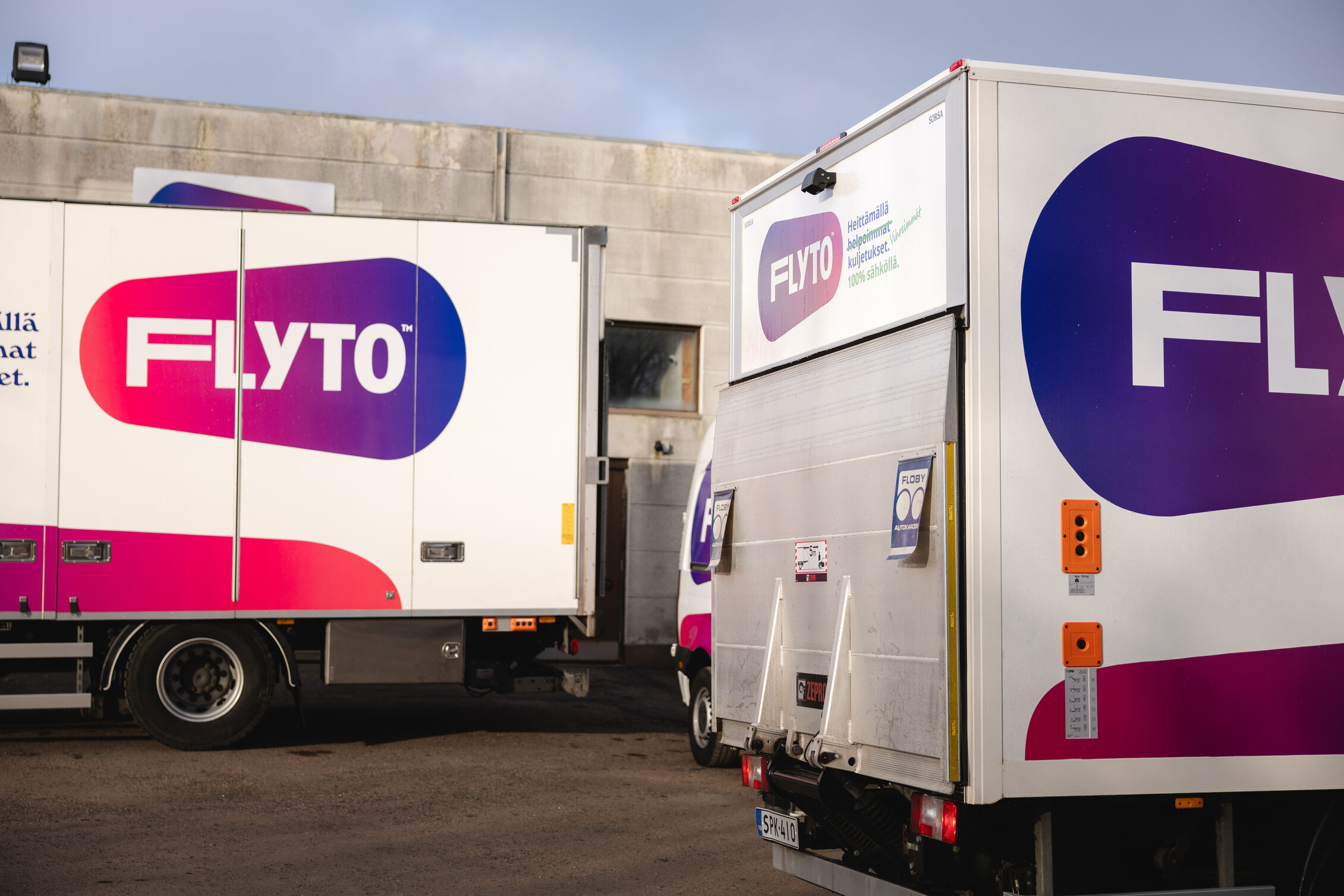
Flyto runs its own offices, warehouses, moving teams and vehicles across Northern, Central and Southern Europe, so the Dutch side of your move — export declaration paperwork, packing at origin, and the run to Rotterdam or Schiphol — is handled largely in-house. That in-house European network is complemented by a carefully chosen network of partner carriers and subcontractors for the ocean or air leg, and by trusted local partners on the ground in Mexico who handle ANAM formalities and last-mile delivery, giving you one point of contact from the Netherlands to your new home.
Frequently asked questions
Do I have to deregister from the Dutch BRP before I move?
Yes, if you’ll be abroad more than 8 months in any 12-month period. You can register your departure up to 5 days beforehand at your municipality, which forwards it to RvIG (RvIG).
Will I still pay Dutch income tax after I move to Mexico?
Your domestic tax liability ends on emigration and you become a non-resident taxpayer, but Dutch-source income such as AOW or a company pension can remain taxable in the Netherlands. You must file an M-form for your departure year (Belastingdienst).
Can I bring my furniture into Mexico duty-free?
Yes, as menaje de casa, provided it was acquired at least six months before your move, you enter within the import window, and you hold a residente temporal or residente permanente visa (ANAM).
Can I keep driving my Dutch-plated car in Mexico?
Only if you hold residente temporal status — you’ll need a Temporary Import Permit (TIP) from Banjercito. Residente permanente holders are not eligible for a TIP (ANAM).
What do I need to bring my dog or cat?
A microchip and a valid rabies vaccination completed before leaving the EU, plus a veterinary health certificate for entry into Mexico issued no more than 15 days before travel. Check NVWA and SENASICA requirements well in advance (NVWA, SENASICA).
How much cash can I carry when I leave the Netherlands?
Up to €10,000 without declaring. Above that, you must file a declaration with Dutch Customs before checking in or clearing security (Douane).
What about moving back from Mexico to the Netherlands?
Returning residents can generally import used household goods back into the Netherlands duty-free from a non-EU country, but Dutch Customs sets its own conditions and inventory requirements for that direction too — check the dedicated "moving to the Netherlands from a non-EU country" guidance before you ship (Douane). You’ll also need to re-register with a Dutch municipality on arrival and re-establish Belastingdienst tax residency.
Sources
- Douane – Spullen verhuizen vanuit Nederland
- Douane – Spullen verhuizen naar Nederland vanuit een niet-EU-land
- RvIG – Ik ga verhuizen naar het buitenland
- Belastingdienst – Emigreren? checklist
- Belastingdienst – Aangifte doen over het jaar van emigratie of immigratie (M-aangifte)
- RDW – Voertuig exporteren
- Douane – Aangifte bij €10.000 of meer
- NVWA – Mijn hond of kat mee naar een land buiten de EU
- Port of Rotterdam – official site
- Schiphol Cargo – official site
- ANAM – Menaje de casa
- ANAM – Importación temporal de vehículos
- ANAM – Declaración de dinero
- Gobierno de México (SRE) – Visa de residencia temporal
- Gobierno de México (SENASICA) – Requisitos y procedimientos para viajar a México con tu mascota