

Moving from Poland to Mauritius (2026): Complete Guide

Relocating from Poland to Mauritius means closing out formalities with Polish authorities on one end and clearing customs and immigration on a small Indian Ocean island nation on the other, with no direct shipping lane between the two and every container routed through a transshipment hub. This guide is written for a Poland-based resident — whether a returning Mauritian citizen, a foreign worker taking up an Occupation Permit, or a Premium Visa holder — planning a household move to Mauritius, and it covers both halves of the corridor: what Poland requires before you leave, and what Mauritius requires when your shipment and pets arrive. A short closing section covers the reverse move, Mauritius back to Poland.
Key takeaways
- Whether your household goods clear Mauritian customs duty-free depends entirely on your immigration status — permanent-residence arrivals, returning citizens (after at least one year abroad), and non-citizens with a work/Occupation Permit qualify; Premium Visa holders generally do not, since that visa’s own conditions require that "the applicant should not enter the Mauritius labour market" and that income come from outside Mauritius (MRA – Household & Personal Effects allowance; Passport and Immigration Office – Premium Visa).
- Poland’s customs authority is the Krajowa Administracja Skarbowa (KAS/National Revenue Administration); export declarations are filed electronically through the AES/ECS2 PLUS system via the PUESC platform (KAS – procedura wywozu; PUESC – eksport).
- Personal effects moved as part of a relocation, of an occasional/non-commercial character, can generally use a simplified or oral customs declaration where an EU-wide value threshold of €1,000 or a net-weight threshold of 1,000 kg applies (Biznes.gov.pl – export outside the EU).
- If you’re leaving Poland permanently or for over 6 months, you must report your departure (zgłoszenie wyjazdu za granicę) to your local registration office (Powroty.gov.pl).
- Unaccompanied baggage into Mauritius must arrive within 6 months of your own arrival and stay unsold for 4 years, or duty and penalties become payable retroactively (MRA allowances page).
- Dogs cannot travel in-cabin or as accompanied baggage to Mauritius; they must arrive as manifested cargo, need a Ministry of Agro-Industry import permit applied for at least 3 months ahead, and go through a minimum 5-day quarantine at the Ministry’s Réduit facility on arrival (Guidelines to Bring Dogs to Mauritius).
- Carrying cash, bearer instruments, or high-value goods worth Rs 500,000+ into or out of Mauritius requires a customs declaration; leaving the EU with €10,000+ in cash requires a declaration to Polish customs before crossing the EU’s external border (MRA – Currency Declaration; Ministry of Finance – EU cash-declaration rules).
- Changing your tax residence away from Poland can trigger Poland’s exit tax, but the levy only applies where the change causes Poland to lose its taxing right over unrealised gains on assets whose aggregate market value exceeds PLN 4 million — irrelevant for most relocating households, relevant for business owners and large shareholders (Personal Income Tax Act, Art. 30da–30db).
1. How your Mauritius immigration status determines the customs treatment
Mauritius Customs (part of the Mauritius Revenue Authority, MRA) exempts household and personal effects from duty and VAT only for three defined categories of arrival: someone taking up permanent residence for the first time, a Mauritian citizen returning after at least one year of residence abroad, or a non-citizen coming to work in Mauritius under a work/Occupation Permit (MRA allowances page). The Occupation Permit is the combined work-and-residence permit issued through the Passport and Immigration Office, in Professional, Investor and Self-Employed categories (Occupation Permit).
Anyone arriving instead on a Premium Visa — the long-stay visa (up to a year, renewable) aimed at remote workers, retirees and long-stay tourists — does not fit any of the three exempt categories, because the visa’s own qualifying conditions state that the applicant should not enter the Mauritius labour market and that the main source of income should be outside Mauritius (Premium Visa). If your move to Mauritius is on a Premium Visa rather than an Occupation Permit, confirm your goods’ customs treatment with MRA Customs before shipping, since you may face standard duty and VAT rather than the transfer-of-residence exemption. Get the immigration category settled first — it decides which customs paperwork, timeline and cost apply to everything that follows.
2. The Poland export side
Customs authority. Poland’s customs and tax administration is unified under the Krajowa Administracja Skarbowa (KAS, National Revenue Administration). Export declarations for goods leaving the EU are filed exclusively in electronic form, through the AES/ECS2 PLUS system, itself accessed via the PUESC (Electronic Customs and Tax Services Platform) portal — the system that replaced the previous AES/ECS2 setup on 31 October 2024 (KAS – procedura wywozu; PUESC – eksport).
For an ordinary household move, you are not filing a commercial export declaration yourself — this is normally done by your moving company or its customs agent. Under EU customs rules, non-commercial personal effects of an occasional character can be handled through a simplified or oral customs declaration rather than the full electronic procedure, where their value doesn’t exceed €1,000 or their net weight doesn’t exceed 1,000 kg (Biznes.gov.pl – exporting goods outside the EU). A full household shipment easily exceeds those thresholds by value, so in practice your mover will lodge a standard AES export declaration on your behalf.
Deregistration. Poland’s obowiązek meldunkowy (registration obligation) is still in force. If you are leaving Poland with the intention of settling permanently abroad, or for longer than 6 months, you must report your departure (zgłoszenie wyjazdu za granicę) to the city or municipal office responsible for your place of residence, no later than the day you leave, either in writing on the official form or electronically. Reporting a permanent departure de-registers you from both permanent and temporary residence; reporting a longer-than-6-month absence without permanent intent de-registers only the temporary registration (Powroty.gov.pl – zgłoszenie wyjazdu za granicę).
Tax residency exit. Your Polish tax residency doesn’t end automatically the day you fly out — it depends on where your "centre of vital interests" (family, main economic ties) and physical presence sit, per the Ministry of Finance’s explanatory notes on tax residency (gov.pl/web/finanse – rezydencja podatkowa). Separately, changing tax residence can trigger Poland’s exit tax (podatek od dochodów z niezrealizowanych zysków): Article 30da of the Personal Income Tax Act sets the tax at 19% of the gain (or 3% where no tax value was established), while Article 30db switches the tax off entirely where the aggregate market value of the transferred assets does not exceed PLN 4,000,000 (ustawa o PIT, Art. 30da–30db). For the overwhelming majority of relocating households this threshold is never reached; it matters mainly to business owners and significant shareholders.
3. Ports & transit — realistic routing
Poland’s container trade runs almost entirely through three Baltic seaports: Gdańsk (the largest, handling more than half of Poland’s national container volume), Gdynia, and Szczecin-Świnoujście, with Warsaw Chopin Airport as the main international air-freight gateway. There is no direct liner service between Poland and Mauritius — every sea shipment is routed via a major transshipment hub such as Jebel Ali, Colombo, or Salalah before reaching Port Louis.
Given that routing, a realistic freight-industry estimate — not an official government figure — for a full or shared container from a Baltic port to Port Louis is roughly 7–10 weeks door-to-port, plus local Mauritian customs clearance. Air freight, used mainly for smaller or urgent shipments, typically runs 1–2 weeks including origin and destination customs handling. Treat both ranges as planning estimates only; your mover’s actual routing, vessel schedule and Mauritian customs processing time will set the real dates.
4. The Mauritius import side
On arrival, Mauritius uses a self-elective red/green customs channel system. Anything dutiable above the standard traveller’s allowance, controlled or restricted goods, merchandise for sale, or currency/valuables above Rs 500,000 must go through the red channel; the green channel ("nothing to declare") remains subject to spot checks, and false declarations carry penalties (MRA – On Arrival).
For your household shipment, the process runs separately from your personal baggage declaration: if you fall into one of the three exempt categories described in Section 1, you (or your agent) satisfy the Director-General of Customs that you’re taking up permanent residence, are a returning citizen, or hold a valid work/Occupation Permit, and submit an inventory of the goods. Unaccompanied effects must land in Mauritius within 6 months of your own arrival (extendable if the Director-General accepts a justified reason), and the exemption is conditional: goods may not be sold or transferred for 4 years without notifying Customs, or duty, VAT, and penalties of up to 50% plus 0.5% monthly interest become payable retroactively (MRA – Household & Personal Effects allowance).
5. Pets
Leaving Poland. For dogs, cats and ferrets travelling to a non-EU country, the county veterinarian (powiatowy lekarz weterynarii) issues an export health certificate based on a valid veterinary check (issued within 48 hours of travel) and proof of current rabies vaccination recorded in the animal’s passport or health record; this Polish export certificate is valid for 15 days, and destination countries with their own certificate requirements — Mauritius among them — require that specific form (Główny Inspektorat Weterynarii – świadectwa dla zwierząt towarzyszących do państw trzecich).
Entering Mauritius. No dog or cat enters Mauritius without an Import Permit from the Ministry of Agro-Industry and Food Security’s Livestock and Veterinary Division, which the official guidelines say should be applied for at least 3 months before departure. Dogs need a rabies neutralising antibody titer test (RNATT) — with the blood sample drawn at least 4 weeks after the rabies vaccination and the test itself performed not less than 3 months and not more than 12 months before shipment — plus negative tests for Ehrlichia canis and Brucella canis, and (except for breeding animals) a sterilisation certificate. Critically, pets cannot travel as accompanied baggage or in the cabin: they must arrive as manifested cargo, and on landing they go into a minimum 5-day quarantine at the Ministry’s Réduit facility, extendable if a clinical issue needs attention. The application requires a covering letter explaining your status (returning citizen, expatriate on a residence/Occupation Permit, etc.), a copy of that permit, the sterilisation certificate, the vaccination record, and the laboratory test results, with an import fee of Rs 500 per animal plus a Rs 500 veterinary clearance fee (Guidelines to Bring Dogs to Mauritius, Sanitary and Phytosanitary Portal). Cats move under a closely equivalent set of guidelines published by the same Ministry; confirm the current cat-specific form before applying, since conditions are stated to be subject to change without notice.
6. Vehicles, money, and things people forget
Vehicles. Duty-free vehicle import is reserved for returning Mauritian citizens under one of several alternative conditions: having lived and worked outside Mauritius for at least 5 years immediately before returning (with no more than 150 days spent in Mauritius during that period), having stayed or worked in Mauritius for no more than 3 years in aggregate during the preceding 10 years, or having ceased working abroad on reaching retirement age; the vehicle must generally be shipped in the owner’s name within 180 days of return. Even then it isn’t fully duty-free: excise duty of 15% applies on the first Rs 1.5 million of value (the normal rate applies above that), plus 15% VAT, and the vehicle carries a 4-year duty/tax lien restricting resale (MRA – Returning Citizen: Motor Vehicles). Occupation Permit holders and Premium Visa holders are not covered by this concession — check directly with MRA Customs and the National Transport Authority before committing to ship a car.
Money. Two separate declaration regimes apply on the two ends of the move. Leaving the EU via Poland, anyone carrying €10,000 or more in cash, investment gold, or equivalent bearer instruments across the EU’s external border must file a declaration with KAS or the Border Guard, including electronically via PUESC (Ministry of Finance – EU cash rules). Arriving in or leaving Mauritius, the threshold is Rs 500,000 for cash, bearer negotiable instruments, precious stones/metals, or other high-value goods, declared on the Currency Declaration Form at the Customs counter before Immigration formalities (MRA – Currency Declaration).
What people forget. The 4-year non-disposal condition on duty-free household goods in Mauritius is easy to overlook when downsizing or replacing furniture after settling in — notify MRA before selling anything imported under the exemption. On the Poland side, don’t assume your registration deregistration and your tax-residency change happen automatically together — they are two separate processes with two different authorities, and only the departure report (Section 2) is a hard legal deadline tied to your actual moving date.
7. Moving back: Mauritius to Poland
If your move later reverses, the same two-sided logic runs in the other direction. Poland grants its own "mienie przesiedlenia" (relocation property) relief from customs duty on used household goods brought back from outside the EU, provided you owned and used them for at least 6 months before the move and don’t sell, lease, or otherwise dispose of them for 12 months after they’re cleared into free circulation; the goods still need to be declared to KAS at import, and the relief covers customs duty only — VAT and excise are assessed separately under ordinary rules (podatki.gov.pl – Mienie przesiedlenia). On the Mauritius side, you’ll need to close out your Occupation Permit or Premium Visa status with the Passport and Immigration Office and arrange an ordinary export clearance through MRA Customs for the shipment leaving the island. If pets are travelling with you, start early: bringing a dog or cat from Mauritius into the EU follows the standard third-country entry rules (microchip, rabies vaccination, and in most cases a titer test) rather than the outbound Mauritius process described in Section 5.
How Flyto handles your Poland to Mauritius move
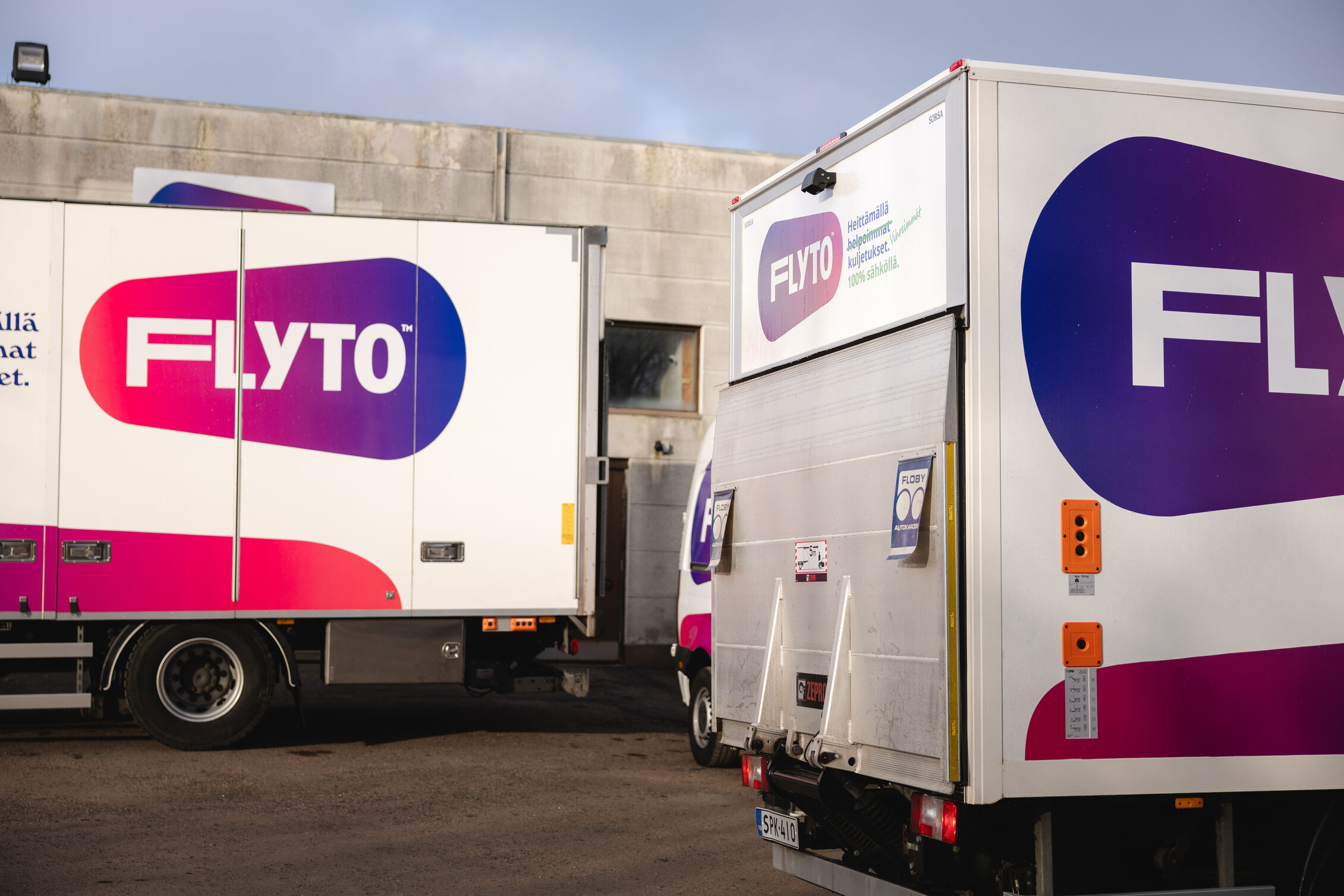
Flyto runs its own offices, warehouses, crews and vehicles across Northern, Central and Southern Europe, so the Polish collection, packing, and export documentation on your shipment stay in-house from pickup through the Baltic port. For the ocean leg and the Mauritius side, we work through a carefully chosen network of partners and subcontractors, plus trusted local partners in Mauritius who handle destination customs clearance, the transfer-of-residence application, and final delivery — giving you one point of contact for a move that no single company covers door-to-door alone.
Frequently asked questions
Do I need to deregister in Poland if I’m only going to Mauritius for a year on a Premium Visa?
Yes, if you’ll be away longer than 6 months you must still report your departure (zgłoszenie wyjazdu za granicę) even if you don’t intend to settle permanently — it’s a separate, lighter version of the same registration obligation (Powroty.gov.pl).
Will my household goods clear Mauritian customs duty-free on a Premium Visa?
Not automatically — MRA’s duty exemption is defined for permanent-residence arrivals, returning citizens, and work/Occupation Permit holders, and the Premium Visa’s own conditions bar the holder from the local labour market rather than granting settled status. Confirm your treatment with MRA Customs before shipping (MRA allowances page).
Can my dog fly with me in the cabin to Mauritius?
No. Mauritius prohibits pets as accompanied baggage or in-cabin; they must travel as manifested cargo with an approved Import Permit and go through a minimum 5-day quarantine at the Ministry’s Réduit facility on arrival (Guidelines to Bring Dogs to Mauritius).
Is there an exit tax if I just sell my flat and move?
Poland’s exit tax only switches on above a combined threshold of PLN 4,000,000 in market value of the assets whose future gains Poland would lose the right to tax on a change of residence — a typical household relocation, or a straightforward property sale before departure, falls well below that (PIT Act, Art. 30da–30db).
How long does the sea shipment actually take?
Plan on roughly 7–10 weeks port-to-port from a Baltic port to Port Louis via transshipment, as a freight-industry estimate rather than an official figure, plus Mauritian customs clearance time once it lands.
What happens if I sell my duty-free furniture in Mauritius after two years?
You must notify the Director-General of Customs first — selling or transferring exempted household effects within 4 years of import can trigger back-payment of duty and VAT plus a penalty of up to 50% and interest of 0.5% per month (MRA allowances page).
Sources
- Objaśnienia podatkowe dotyczące rezydencji podatkowej – Ministerstwo Finansów
- Ustawa o podatku dochodowym od osób fizycznych, tekst jednolity (Art. 30da–30db) – Sejm RP
- Zgłoszenie wyjazdu za granicę – Powroty.gov.pl
- Procedura wywozu – Krajowa Administracja Skarbowa (podatki.gov.pl)
- Wywóz towarów (Eksport) – PUESC
- Jak eksportować towary poza Unię Europejską – Biznes.gov.pl
- Mienie przesiedlenia – zwolnienie z cła – podatki.gov.pl
- Od 3 czerwca nowe przepisy unijne ws. przewożenia pieniędzy przez granicę – Ministerstwo Finansów
- Świadectwa weterynaryjne dla zwierząt towarzyszących przemieszczanych do państw trzecich – Główny Inspektorat Weterynarii
- Allowances – Household & Personal Effects – Mauritius Revenue Authority
- Currency Declaration – Mauritius Revenue Authority
- On Arrival – Mauritius Revenue Authority
- Returning Citizen – Motor Vehicles – Mauritius Revenue Authority
- Occupation Permit – Passport and Immigration Office
- Premium Visa – Passport and Immigration Office
- Guidelines to Bring Dogs to Mauritius – Sanitary and Phytosanitary Portal, Ministry of Agro-Industry and Food Security