

Moving from Italy to the UK (2026): Complete Guide

Italy to the UK is one of the busiest relocation corridors in Europe, but it is not a simple intra-EU move. The United Kingdom left the EU on 31 January 2020 and, at the end of the transition period on 1 January 2021, also left the EU customs union and the single market. That means this corridor works nothing like moving from Italy to, say, Germany or Spain: free movement of people ended, and household goods now cross a real customs border. This guide is for Italian (or other EU) citizens relocating from Italy to the UK and explains, with references to official Italian and UK sources, what genuinely applies to your move in 2026.
Key takeaways
- There is no automatic right to move to the UK. Since Brexit, EU citizens generally need a UK visa to live, work or study in the UK long-term; only those who already hold status under the EU Settlement Scheme (main application deadline 30 June 2021, with late applications accepted only where there are reasonable grounds for missing it) are exempt — gov.uk, EU Settlement Scheme.
- Household goods are NOT duty-free by default. The UK is outside the EU customs union, so imports are subject to customs procedures; however, genuine movers can claim Transfer of Residence (ToR) relief to import personal belongings without paying duty or import VAT — if approved in advance — gov.uk, Transfer of Residence to Great Britain.
- Apply for ToR1 before your goods travel. HMRC issues a unique reference number (URN) that must be given to your shipping agent for the customs import declaration; the guidance does not publish a fixed processing time, so apply as early as possible — gov.uk, Application for ToR1.
- Register with AIRE within 90 days of leaving Italy — it is the legal basis for de-registering from the Italian resident population and it underpins consular services (passport renewal, civil-status acts, voting from abroad) once you live in the UK, so gaps or delays are worth avoiding — Ministero degli Affari Esteri, AIRE.
- A national ID card is no longer enough to enter the UK for most EU citizens without settled/pre-settled status — carry a valid passport — gov.uk, Visiting the UK as an EU, EEA or Swiss citizen.
- NHS access on a visa isn’t automatic or free — most visa routes require paying the Immigration Health Surcharge (IHS) upfront: currently £1,035/year for most adults, £776/year for students and under-18s — gov.uk, how much you pay for the IHS.
- Vehicles need both HMRC and DVLA processes, and Italy requires a separate "radiazione per esportazione" to deregister the car from the PRA before it leaves — gov.uk, Importing vehicles into the UK; ACI/PRA, radiazione per esportazione.
- Pets travel relatively easily into the UK, but only one way — an EU pet passport issued in Italy is currently accepted for entry into Great Britain; the return leg into the EU is a separate requirement (an Animal Health Certificate, not a pet passport) that has applied to GB-resident pets since Brexit — gov.uk, Bring your pet dog, cat or ferret to Great Britain.
1. What actually applies: this is not a free-movement move
Before Brexit, an Italian citizen could move to the UK exactly as they would to any other EU country. That changed on 1 January 2021. Two separate things ended:
- Free movement of people. EU, EEA and Swiss citizens who want to live, work or study in the UK now need to qualify under the UK’s points-based immigration system — typically a Skilled Worker visa (job offer from a licensed sponsor, salary and skill-level thresholds, English at CEFR B2) or a family visa if joining a spouse/partner or other eligible relative already settled in the UK — gov.uk, Skilled Worker visa. The only broad exemption is for people who already hold status from the EU Settlement Scheme, whose main application window closed on 30 June 2021 (late applications are still accepted, but only where there are reasonable grounds for the delay) — gov.uk, EU Settlement Scheme.
- Free movement of goods. The UK is outside the EU customs union, so household goods crossing from Italy into Great Britain are subject to a customs import declaration. The good news: genuine movers of residence can claim Transfer of Residence relief, which waives customs duty and import VAT on personal belongings, vehicles and pets, provided the goods were owned/used for at least 6 months, you lived outside the UK for at least 12 consecutive months, and the goods arrive within 12 months of your move. You must apply for approval (form ToR1) before the goods are shipped and put the resulting reference number on the customs declaration — this is not automatic and missing it means paying full duty and VAT — gov.uk, ToR to Great Britain; gov.uk, ToR1 application; gov.uk, moving personal belongings to the UK — overview.
In short: expect a visa process for yourself and a real (if duty-free, if done correctly) customs process for your belongings — very different from an Italy-to-France or Italy-to-Germany move.
Planning the move itself as well? Costs, transit times and how to choose a mover are covered on our page about international movers to Italy.
2. Leaving Italy: what to close and register
- Register with AIRE within 90 days. Any Italian citizen relocating abroad for more than a year must register with the Anagrafe degli Italiani Residenti all’Estero (AIRE) at the competent Italian Consulate — this simultaneously cancels your registration in the resident population register (ANPR) in your home comune. AIRE registration is the gateway to consular services (passport renewal, driving licence matters, civil-status acts, voting from abroad) once you live in the UK. Do it promptly and keep your address updated — an incomplete or outdated AIRE record is a common cause of delays when you later need a consular service or have to prove your date of departure for tax purposes — Ministero degli Affari Esteri, AIRE.
- Formally end your Italian tax residency. Under Article 2 of the TUIR, Italian tax residency requires meeting the criteria of civil registration, domicile, or 183+ days’ physical presence/registration in Italy for most of the year — losing all of these (confirmed by AIRE registration plus genuine relocation) is what ends your worldwide-income liability in Italy. AIRE registration alone is a strong indicator but not automatically conclusive; the Agenzia delle Entrate can still challenge residency, especially for moves to jurisdictions with a more favourable tax regime — Agenzia delle Entrate, regole generali sulla residenza fiscale. It’s also worth separately updating your domicilio fiscale (tax notification address) with the Agenzia delle Entrate, since it does not update automatically with your civil residence.
- Sort out healthcare before you go. Your Italian SSN (national health service) coverage and any EHIC card are tied to Italian residence/insurance and are only valid for care within the EU/EEA/Switzerland — they give you no rights in the UK, which is outside that system. Budget for UK healthcare costs (see Section 4) rather than relying on Italian coverage once you’ve left.
- Deregister your vehicle for export. If you’re bringing a car, book an appointment through ACI’s PRA Sportello Online (sportello-online.aci.it) for "radiazione per esportazione" before the vehicle leaves Italy: you surrender the plates and libretto/CdP, pay roughly €55–60 in fees, and receive a Documento Unico certifying the vehicle is deregistered for export (it can then only travel to the border on temporary/transit plates). This can no longer be handled through Italian consulates abroad — it has to be done in Italy before you leave — ACI/PRA, radiazione per esportazione.
- Notify other bodies as relevant — employer/INPS for pension and social-security continuity, your bank, landlord, utilities, and school if you have children — none of these has a single "one-stop" portal in Italy, so handle them individually alongside the AIRE and Agenzia delle Entrate steps above.
3. How the shipment actually moves (freight-industry estimates)
Unlike an overseas move, Italy–UK household-goods shipments travel almost entirely by road and short-sea ferry or the Channel Tunnel — there’s no ocean transit time to plan around, but there is now a customs step at the UK border. A typical routing for a mover coming from, say, Milan, Rome or Naples:
- Road collection in Italy, then transit north through Italy/Switzerland or France.
- Cross-border road transit through France (and often Belgium/the Netherlands for consolidated groupage loads) toward the Channel ports.
- Channel crossing via Eurotunnel (Calais–Folkestone, roughly 35 minutes) or a RoRo ferry (Calais–Dover, Dunkirk–Dover, or a longer direct sailing such as Zeebrugge/Rotterdam–Killingholme/Hull for northern England).
- UK customs clearance, where your ToR1 reference number is presented against the import declaration, then final-mile delivery to your new address.
Indicative transit times (freight-industry estimates, not guarantees): a dedicated/exclusive-use truck from central Italy to southern England typically takes 5–8 days door-to-door including the Channel crossing; a shared/groupage load consolidated with other customers’ goods commonly takes 2–5 weeks, since the truck waits to fill up before departing and may make several UK drop-offs. Add a few extra days of buffer if your ToR1 approval or customs paperwork is still pending when the goods reach the UK border, since goods without a cleared declaration can be held. Always get transit-time and cost estimates directly from your chosen moving company rather than relying on generic figures — they vary by season, load type and exact origin/destination.
4. Arriving and settling in the UK
- Entry document. Carry a valid passport — national ID cards are no longer accepted for entry by most EU citizens without EU Settlement Scheme status — gov.uk, Visiting the UK as an EU/EEA/Swiss citizen.
- Immigration status. Your visa (e.g., Skilled Worker) should already be granted before you travel with the intention to live in the UK; it will typically already include payment of the Immigration Health Surcharge for its full duration — gov.uk, Skilled Worker visa.
- National Insurance number. Apply once you’re in the UK and have the right to work; it can take up to 4 weeks, but you can start work before it arrives if you can prove your right to work — gov.uk, Apply for a National Insurance number.
- NHS healthcare. Having paid the Immigration Health Surcharge as part of your visa gives you access to most NHS services on broadly the same basis as a resident from the date your visa starts; you still register with a local GP practice to actually use primary care, and some services (prescriptions, dental, eye tests) are charged separately — gov.uk, NHS entitlements: migrant health guide.
- Tax registration. Once you become UK tax resident (assessed under HMRC’s Statutory Residence Test), you may need to register for Self Assessment — required if you have income HMRC doesn’t already collect via PAYE, such as foreign income or self-employment — gov.uk, Register for Self Assessment.
- Driving licence. The UK and Italy have signed an agreement on the mutual recognition of driving licences for exchange purposes (Treaty Series No. 80/2024, laid before Parliament in October 2024), intended to eventually let residents exchange a full Italian licence for a GB one without a test. As of writing, DVLA’s general online exchange-checker does not list Italy as an active exchange country, so confirm the current status and your specific eligibility directly through DVLA before assuming it applies — a foreign licence can otherwise only be driven on in Great Britain for a limited period before a UK licence or test is required — gov.uk, Exchange a foreign driving licence; gov.uk, UK/Italy driving licence agreement (TS No. 80/2024).
- Bringing your car. You must notify HMRC that the vehicle has arrived (a Notification of Vehicle Arrivals, NOVA, declaration) within 14 days of permanent import, resolve any duty/VAT position (ToR relief can apply to a vehicle too), get vehicle approval, and only then register and tax it with the DVLA to get UK plates. You cannot legally drive it on UK public roads until this is done, other than to a pre-booked approval test — gov.uk, Importing vehicles into the UK.
5. Moving your pet
An EU pet passport issued in Italy is currently accepted for bringing an accompanied dog, cat or ferret into Great Britain, provided it’s filled in correctly and your pet meets entry requirements (microchip, rabies vaccination, and — for dogs — tapeworm treatment where applicable); you must present the original document, not a copy. This only covers the Italy→UK leg: once your pet is GB-resident, a pet passport can no longer be used to travel back into the EU — GB owners need an Animal Health Certificate issued by an official vet instead, a requirement that has applied since the UK left the EU, not a new rule — gov.uk, Bring your pet dog, cat or ferret to Great Britain; gov.uk, Taking your pet abroad.
6. Money, banking and things people forget
- Open your UK bank account and get a UK mobile number early — many UK landlords, employers and utility providers expect a UK account and address history you won’t have on day one.
- Budget realistically for the Immigration Health Surcharge, visa fees and any ToR1-related delays as one-off relocation costs, separate from the moving company’s quote.
- Keep proof of Italian address and AIRE registration handy — HMRC and your UK visa application may ask for evidence of your prior residence abroad to support ToR relief and immigration eligibility.
- If you’re bringing high-value items (art, jewellery, electronics), keep receipts and ownership proof — ToR relief still requires evidence the goods were genuinely yours and used for at least 6 months.
- Council tax, TV licence and GP registration are easy to overlook in the first weeks — none of them is bundled automatically with your visa or tenancy.
How Flyto handles your Italy to the UK move
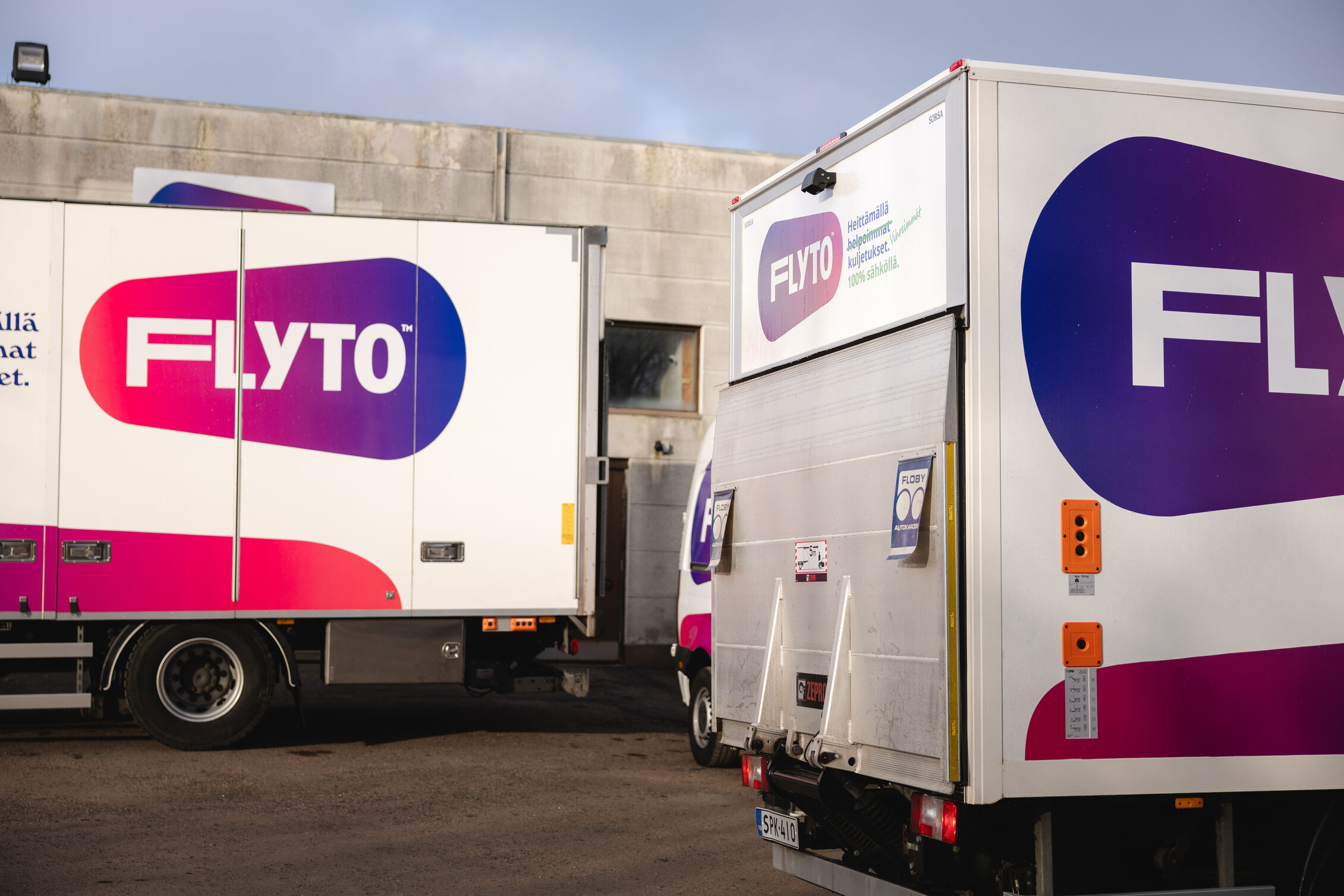
Flyto runs its own offices, warehouses, vehicles and moving crews across Northern, Central and Southern Europe, so the Italian collection and the European road/ferry leg of your shipment are typically handled in-house by our own teams. For the parts of the journey and destination services that sit outside our direct network — such as final-mile delivery in parts of the UK or specialist customs handling — we work with a carefully vetted network of partner carriers and agents, coordinated by your dedicated Flyto move manager so you deal with one point of contact throughout.
Frequently asked questions
Do I need a visa to move from Italy to the UK?
In almost all cases, yes — unless you already hold status under the EU Settlement Scheme. Free movement for new arrivals ended when the UK left the EU. Most people need a route such as the Skilled Worker visa or a family visa — gov.uk, EU Settlement Scheme.
Will I pay customs duty on my furniture and belongings?
Not if you correctly claim Transfer of Residence relief before your goods arrive — it waives duty and import VAT on genuine personal belongings. Without an approved ToR1, standard customs duty and VAT can apply — gov.uk, Transfer of Residence to Great Britain.
How long does the shipment actually take?
Because there’s no sea voyage involved, a dedicated Italy–UK truckload commonly takes around 5–8 days door-to-door via the Channel Tunnel or a ferry; shared/groupage loads often take 2–5 weeks. These are freight-industry estimates — get a specific timeline from your mover.
Can I still use my Italian driving licence in the UK?
Only temporarily as a visitor. A UK/Italy mutual-recognition agreement for licence exchange has been signed, but at the time of writing it wasn’t yet reflected as an active route in DVLA’s exchange tool — confirm current eligibility and process directly via DVLA rather than assuming it applies — gov.uk, Exchange a foreign driving licence.
What happens to my Italian healthcare cover once I move?
Your SSN registration and EHIC only give you rights within the EU/EEA/Switzerland, not the UK. In the UK, healthcare access depends on your visa’s Immigration Health Surcharge and then registering with a local GP — gov.uk, NHS entitlements: migrant health guide.
Do I still need to register with AIRE even though I’m moving within Europe?
Yes — AIRE is an Italian domestic requirement based on where you live, independent of whether the destination is inside or outside the EU. It must be done within 90 days of leaving — Ministero degli Affari Esteri, AIRE.
Sources
- gov.uk — Visiting the UK as an EU, EEA or Swiss citizen
- gov.uk — EU Settlement Scheme: settled and pre-settled status
- gov.uk — Skilled Worker visa
- gov.uk — Moving personal belongings to the UK (overview)
- gov.uk — Transfer of residence to Great Britain
- gov.uk — Application for transfer of residence relief (ToR1)
- gov.uk — Pay for UK healthcare as part of your immigration application: how much you pay
- gov.uk — NHS entitlements: migrant health guide
- gov.uk — Apply for a National Insurance number
- gov.uk — Register for Self Assessment
- gov.uk — Exchange a foreign driving licence
- gov.uk — UK/Italy agreement on mutual recognition of driving licences (TS No. 80/2024)
- gov.uk — Importing vehicles into the UK
- gov.uk — Bring your pet dog, cat or ferret to Great Britain: pet passport
- gov.uk — Taking your pet abroad
- Ministero degli Affari Esteri — Anagrafe degli Italiani Residenti all’Estero (AIRE)
- Agenzia delle Entrate — Regole generali per le persone fisiche: residenza fiscale
- ACI / PRA — Radiazione di un veicolo per esportazione all’estero