

Moving from Ireland to Poland (2026): Complete Guide

Moving from Ireland to Poland is an intra-European relocation: both countries are members of the EU customs union, so your household goods cross the border the way they would if you were simply moving between counties, not shipping "internationally" in the customs sense. This guide is written for an Irish resident — Irish citizen, EU/EEA national, or long-term Irish resident — relocating to Poland for work, family, or a lifestyle change, and it walks through what genuinely applies on this specific corridor: no customs paperwork for your belongings, but real administrative steps on both the Irish departure side and the Polish arrival side.
Key takeaways
- No customs duty, no import declaration, no tax on your household goods. Ireland and Poland are both inside the EU customs union, so goods move freely between them — there is no "personal effects" customs procedure to apply for on this route, unlike a move from outside the EU (European Commission, the EU market).
- You don’t need a visa or work permit. As an EU/EEA citizen you have the right to live and work in Poland; the only real task is registering your presence, not applying for permission to move (Your Europe, Residence rights when living abroad in the EU).
- Register your stay in Poland if you’re there over 3 months. You must apply in person to the voivode (wojewoda) office covering your address, by the day after your 3-month mark, to get a registration certificate ("zarejestrowanie pobytu obywatela UE") (Urząd do Spraw Cudzoziemców, Office for Foreigners).
- Notify Revenue when you leave Ireland by updating your address in myAccount/ROS to "not in the Republic of Ireland," which is how you formally signal a change to non-resident status (Revenue.ie, If you are leaving Ireland permanently).
- Your EHIC stops being the right cover once you actually live in Poland — it’s for temporary stays only; you need to register with Poland’s NFZ (public health fund) via employment or a voluntary agreement, or use an S1 form if applicable (Your Europe, Health insurance cover when living abroad).
- Your Irish driving licence remains valid to drive on in Poland, and EU licences can be exchanged for a Polish one without a driving test once you’re a resident (Warszawa 19115, Exchanging an EU driving licence).
- A PESEL number is the key that unlocks almost everything in Poland — healthcare, tax, banking — and is issued automatically when you register your residence, or on separate application if you need it sooner (Gov.pl, Get a PESEL ID — service for foreigners).
- Your dog or cat travels on an EU pet passport, provided it’s microchipped and its rabies vaccination is current — no tapeworm treatment is required for entry into Poland (that rule applies only when entering Ireland, Finland, Malta or Norway) (Your Europe, Travelling with pets and other animals in the EU).
1. Free movement first: what actually applies at the border
Because Ireland and Poland are both EU member states inside the single customs territory, there is no customs declaration, no duty, and no VAT charged on personal and household goods moved between them — the EU customs union means goods circulate as freely as within one country (European Commission, the EU market). This is different from moving household goods from a non-EU country, where a "Transfer of Residence" relief application is required; on the Ireland–Poland route there’s simply no such procedure to go through. Your mover doesn’t need to file an inventory with customs, and you don’t need six-months-of-ownership proof for your furniture — that requirement only exists for arrivals from outside the EU/EEA.
The one area that does still need attention is regulated goods: firearms, certain plants, and some categories of alcohol/tobacco above personal-use thresholds can still trigger checks even within the EU. For an ordinary household move — furniture, boxes, a car driven or towed across — none of that applies.
Free movement of people works the same way: as an EU/EEA national you don’t need a visa or work permit to live in Poland, and you can stay up to 3 months without registering anything at all (Your Europe, Residence rights when living abroad in the EU). The real administrative task, covered below, is registering your presence in Poland once you pass that mark and formally closing out your tax residency in Ireland — not obtaining permission to move.
Planning the move itself as well? Costs, transit times and how to choose a mover are covered on our page about international movers in Ireland.
2. Leaving Ireland: what to close out
Tax residency. You’re Irish tax resident if you spend 183 days or more in Ireland in a tax year, or 280 days or more across the current and preceding tax year combined (a year with 30 days or less in Ireland doesn’t count toward that two-year total) (Revenue.ie, How to know if you are resident for tax purposes). When you leave, update your address in myAccount (employees) or ROS (self-assessed) to show you’re no longer resident in the Republic; if you’re still employed by an Irish employer, your employer is responsible for notifying Revenue of the cessation, though you can also do it yourself under "View/Cease your Job or Pension Details" in myAccount (Revenue.ie, If you are leaving Ireland permanently). Note that "ordinary residence" for tax purposes only lapses after three consecutive tax years of non-residence — you can still owe Irish tax on Irish-sourced income (e.g. rental income) after you’ve moved.
Healthcare. The European Health Insurance Card is designed for temporary stays, not for someone actually living in another EU country — once you take up residence in Poland it stops being your correct cover (Citizens Information, The European Health Insurance Card). If you’ll be working in Poland, you register directly with the Polish system through your employer. If you’re moving without a job lined up (e.g. as a pensioner or dependant), you request an S1 form from the relevant Irish authority before you go, then register it with Poland’s NFZ on arrival — the S1 is what actually carries your entitlement across (Your Europe, Health insurance cover when living abroad).
Driving licence and car. Your Irish driving licence stays valid to drive on in Poland; you can exchange it for a Polish one at any point (see section 4). If you’re bringing your car with you long-term and it previously received a VRT-related repayment or exemption, check your specific export status and any repayment scheme deadlines with NCTS before you go, since the export window for claims is time-limited (NCTS, Export FAQ).
Other notifications. Update your address with your bank, pension provider, GP, and (if relevant) the electoral register, and consider registering your contact details with the Department of Foreign Affairs’ consular service before departure (Citizens Information, Moving abroad from Ireland).
3. How your household goods actually move
Ireland has no land border to continental Europe, so removals route by ferry + road: a groupage or dedicated truck crosses via a Dublin/Rosslare–France or Dublin–Netherlands/Belgium ferry, then continues by road through France and Germany into Poland — roughly 2,000–2,300 km door-to-door. As freight-industry estimates only (not guarantees, since ferry schedules and groupage consolidation vary):
- Dedicated/direct truck: typically 5–8 days door-to-door.
- Groupage (shared-load) service: typically 2–4 weeks, as your goods are consolidated with other shipments along the route with multiple stops.
- Self-drive/trailer: the ferry crossing itself is roughly 17–24 hours, plus 2–3 days of road driving to reach Poland.
With no customs step, these timings are driven purely by ferry capacity and road distance, not by any border process.
4. Arriving in Poland: registration, healthcare, tax, driving
Residence registration. If you’ll be in Poland more than 3 months, you must register your stay in person with the voivode (wojewoda) office covering your address, by the day after the 3-month mark. You’ll need the application form, a valid passport/ID, two recent photos, proof of health insurance, and evidence of sufficient means to support yourself; there’s no fee, and you receive a registration certificate ("Zaświadczenie o zarejestrowaniu pobytu obywatela UE") valid for 10 years (Urząd do Spraw Cudzoziemców, Office for Foreigners; Dolnośląski Urząd Wojewódzki, example regional registration page). Which office you use depends on where you’ll actually live, so confirm the correct voivodeship office for your address before applying.
PESEL number. Get your PESEL — Poland’s personal ID number — either automatically when you register your residence for a stay over 30 days, or by separate application at a municipal office if you need it before that. You’ll need it for almost everything: NFZ healthcare enrolment, tax, banking, even signing a lease (Gov.pl, Get a PESEL ID — service for foreigners).
Healthcare. If you take up employment in Poland, you’re normally enrolled in NFZ automatically via your employer from day one. If you’re not employed, you can sign a voluntary health-insurance agreement with NFZ and pay a monthly contribution (Your Europe, Health insurance cover when living abroad).
Tax. You become Polish tax resident once you spend more than 183 days in Poland in a calendar year, or your "centre of vital interests" moves there. You’ll typically need a NIP (Polish tax identification number) — apply via form at your local Urząd Skarbowy (tax office), by post, or online; treat processing time as a matter of days to a few weeks and confirm the current timeline with your local tax office (Progress Holding, Get Your NIP in Poland).
Driving licence. An EU-issued licence such as your Irish one is recognised in Poland and doesn’t need to be exchanged to drive — but once you’re resident, you can swap it for a Polish licence at the Wydział Komunikacji (communications department) covering your address, with no practical driving test, using your foreign licence, a photo, proof of residence, and (if it isn’t in the EU standard format) a sworn Polish translation (Warszawa 19115, Exchanging an EU driving licence).
Vehicle. EU citizens don’t have to immediately re-register a car that’s already validly registered and taxed in another EU country while living in Poland — but if and when you do register it permanently in Poland, you generally have 30 days from acquiring/settling the vehicle to do so at the Wydział Komunikacji. Excise duty (akcyza) can apply on first Polish registration of a vehicle previously registered abroad, though a certificate confirming exemption may apply in some EU-import cases — rates and exemptions depend on the vehicle and current rules, so confirm the specifics with the Wydział Komunikacji or your local tax office before budgeting for it (Warszawa 19115, Registration of a second-hand vehicle imported from abroad).
5. Moving with pets
Dogs, cats and ferrets travel on an EU pet passport, issued by any authorised vet. Requirements: the animal must be microchipped (or have a pre-2011 tattoo, with the microchip in place before vaccination for newly chipped pets), and its rabies vaccination must be current — for a first-time (primary) vaccination you must wait at least 21 days before travelling. The passport, once issued, is valid for life as long as the rabies vaccination stays in date (Your Europe, Travelling with pets and other animals in the EU). Poland does not require the additional tapeworm (Echinococcus multilocularis) treatment that applies on entry to Finland, Ireland, Malta or Norway — that rule doesn’t affect this route.
6. Money, banking, and things people forget
- Opening a Polish bank account is far easier once you have a PESEL — most banks ask for it as standard ID, alongside your passport.
- Poland uses the złoty, not the euro, so transfers between an Irish euro account and a Polish złoty account involve currency conversion — compare your bank’s FX margin against a dedicated transfer service.
- Don’t close your Irish bank account too early — you’ll want it live until any final tax-year refund and outstanding payments clear.
- Utilities and subscriptions tied to an Irish address need explicit cancellation or address updates; they don’t lapse automatically.
- Keep your Polish registration certificate and PESEL confirmation safe — landlords, banks and employers will ask to see them repeatedly in your first months.
How Flyto handles your Ireland to Poland move
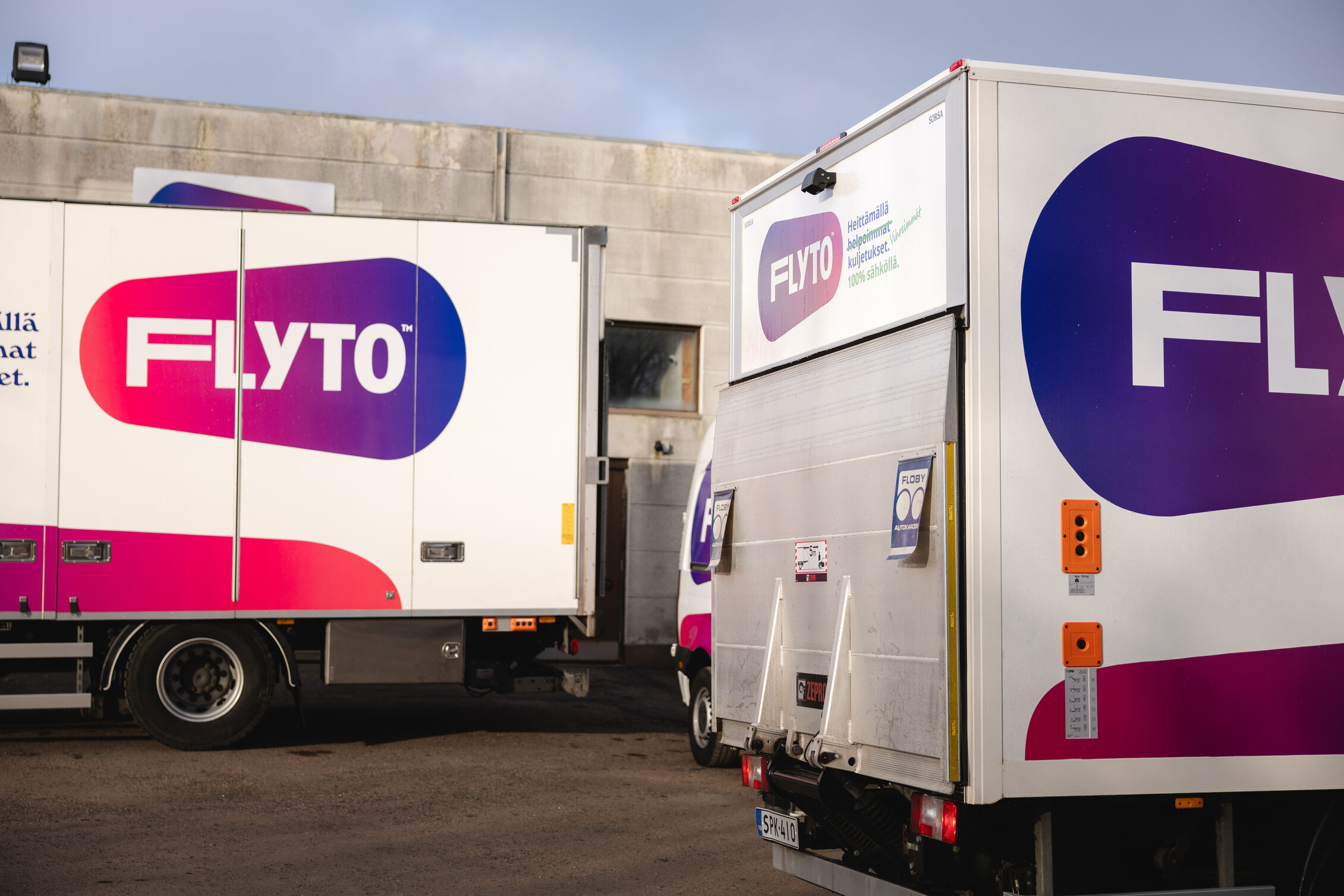
Flyto operates its own offices, warehouses, vehicles and crews across Northern, Central and Southern Europe, giving us direct control over the core legs of a move like this one. On corridors and capacity peaks where it makes sense, we complement that in-house network with a carefully vetted set of partner carriers and local agents — so you get a single point of contact and consistent service standards, backed by real European infrastructure rather than a purely brokered chain.
Frequently asked questions
Do I need to pay customs duty on my furniture moving from Ireland to Poland?
No. Both countries are in the EU customs union, so household goods move between them free of customs duty, import declarations, and import VAT (European Commission, the EU market).
Do I need a visa to move to Poland from Ireland?
No. As an EU/EEA citizen you have the right to live and work in Poland without a visa or work permit; you do need to register your stay if it exceeds 3 months (Your Europe, Residence rights when living abroad in the EU).
Can I keep using my EHIC once I live in Poland?
No — the EHIC is for temporary stays. Once resident, you need to be enrolled in Poland’s NFZ (via employment or a voluntary agreement) or use an S1 form if applicable (Your Europe, Health insurance cover when living abroad).
Do I have to exchange my Irish driving licence for a Polish one?
Not immediately — an EU licence is valid to drive on in Poland. You can choose to exchange it for a Polish one at any time, without a practical driving test (Warszawa 19115, Exchanging an EU driving licence).
When do I become a Polish tax resident instead of an Irish one?
Polish tax residency generally follows from spending more than 183 days a year in Poland or having your centre of vital interests there (Progress Holding, NIP for foreigners guide); Irish tax residency is based on the 183-day / 280-day-over-two-years test, and you remain "ordinarily resident" in Ireland for tax purposes until you’ve been non-resident for three consecutive tax years (Revenue.ie, How to know if you are resident for tax purposes).
Can I bring my dog with me without quarantine?
Yes — with a valid EU pet passport, a microchip, and an up-to-date rabies vaccination (21-day wait after a first vaccination), your dog or cat can travel to Poland with no quarantine and no tapeworm treatment required (Your Europe, Travelling with pets and other animals in the EU).
Sources
- European Commission — The EU market (customs union)
- Your Europe — Residence rights when living abroad in the EU
- Your Europe — Health insurance cover when living abroad
- Your Europe — Travelling with pets and other animals in the EU
- Revenue.ie — If you are leaving Ireland permanently
- Revenue.ie — How to know if you are resident for tax purposes
- Citizens Information — The European Health Insurance Card
- Citizens Information — Moving abroad from Ireland
- NCTS — Export FAQ
- Urząd do Spraw Cudzoziemców (Office for Foreigners) — registration of EU citizens
- Dolnośląski Urząd Wojewódzki — Zarejestrowanie pobytu obywatela Unii Europejskiej (example regional office page)
- Gov.pl — Get a PESEL ID, a service for foreigners
- Warszawa 19115 — Exchanging a foreign EU driving licence for a Polish one
- Warszawa 19115 — Registration of a second-hand vehicle imported from abroad
- Progress Holding — Get Your NIP in Poland: Foreigner’s Guide to Polish Tax ID