

Moving from France to Norway (2026): Complete Guide

Moving from France to Norway is an intra-European relocation, but not a simple intra-EU one: France is in the EU customs union, while Norway sits in the European Economic Area (EEA) alongside the EU but outside the EU customs union. That single distinction shapes almost everything below — you get full free movement of people and a genuine, if paperwork-light, duty-free path for your household goods, but you cannot skip customs formalities entirely the way you could moving between two EU member states. This guide is written for a French resident — citizen or long-term resident of France — relocating to Norway, and covers what actually applies on both ends: registration, healthcare, driving licences, vehicles, pets, and how your shipment physically gets there.
Key takeaways
- No customs duty on your household goods — but a declaration is still required. Because Norway is outside the EU customs union, Tolletaten (Norwegian Customs) requires a moving-goods declaration (form RD0030) with an itemised inventory; duty-free relief applies if you’ve lived abroad continuously for at least one year and import the goods within a year of moving — Tolletaten, household goods.
- No visa or work permit needed. As an EEA agreement citizen, you have full freedom of movement into Norway — UDI, residence under the EU/EEA regulations.
- You must still register once you arrive. EU/EEA nationals staying more than three months must use the UDI registration scheme; it’s free and done once — UDI, registration certificate for EU/EEA nationals.
- Your national ID number comes from Skatteetaten, not UDI. Reporting your move to the Norwegian Tax Administration is what gets you a fødselsnummer or D-number and access to the National Population Register — Skatteetaten, move to Norway.
- Your French driving licence is valid in Norway without conversion, following the same EU/EEA recognition framework — Your Europe, driving licence exchange and recognition; Statens Vegvesen, foreign driving licence in Norway.
- A vehicle is not covered by the same relief as your furniture. Tolletaten explicitly excludes vehicles from moving-goods relief; cars fall under Norway’s own vehicle duties and registration rules, handled by Skatteetaten — Skatteetaten, cars and other vehicles.
- Pets need more than a passport. The EU pet passport is accepted, but Norway additionally requires dogs to be treated against tapeworm (echinococcus) 24–120 hours before entry — Mattilsynet, travelling with dogs, cats and ferrets from EU countries to Norway.
- France has no formal population de-registration. Unlike Germany or the Nordics, there’s no "Abmeldung" equivalent — the operative step is notifying the tax authorities and closing out your French tax residency — impots.gouv.fr, je pars à l’étranger.
1. Free movement, and what actually applies at the border
Because Norway is in the EEA, not the EU customs union, France–Norway is not a pure "no paperwork" EU-to-EU move — but it’s far closer to that than a move to a non-EEA country. There’s no import duty and no VAT on your used personal and household effects if you meet Norway’s relief conditions: you’ve lived abroad continuously for at least a year, you owned and used the goods there, you’ll keep using them in Norway, and you bring them in within a year of your move. The declaration itself — form RD0030, filed with Tolletaten together with a simple inventory list (it doesn’t have to be highly detailed — a box-by-box list such as "Box 1 – Clothing, Box 2 – Kitchenware, 1 Sofa, 1 TV" is enough) — is the real "customs formality" here, and it’s a paperwork step, not a tax bill, for a normal household move. If you don’t already have a Norwegian identification number, you’ll also need to apply to Norwegian Customs for a TRK-number so the declaration can be processed (Tolletaten).
People, by contrast, move completely freely: as an EEA citizen you don’t need a visa, residence permit or work permit to live or work in Norway (UDI). The task on arrival is registration, not permission — covered in section 4.
For the practical side of the move – crews, customs paperwork and a fixed price – start here: international movers in France.
2. Leaving France: what to actually do
France doesn’t operate a municipal "de-registration of residence" the way several other European countries do — there’s no counter-visit or form that formally erases you from a population register when you leave. What you do need to close out is fiscal and administrative:
- Update your tax address. Notify your centre des finances publiques of your new foreign address via your personal space on impots.gouv.fr, and inform your employer or pension fund, since the taxation of that income changes once you’re no longer resident (impots.gouv.fr).
- File your departure-year return. You remain a French tax resident from 1 January until your actual departure date; your final return covers that period, after which your status (resident or non-resident) depends on your personal situation and the France–Norway tax treaty (impots.gouv.fr, je pars à l’étranger).
- Check exit tax exposure. This only concerns people who’ve been French tax residents for at least 6 of the last 10 years and hold securities worth €800,000+ or 50%+ of a company’s profits — most movers are unaffected, but it’s worth confirming if you hold significant shareholdings (impots.gouv.fr, exit tax).
- Sort out healthcare before you go. Your EHIC (Carte européenne d’assurance maladie) is designed for temporary stays, not for someone actually relocating: if you’re transferring your habitual residence to another EU/EEA country, you’re meant to use form S1 rather than the EHIC to register for care in your new country of residence (service-public.gouv.fr); the European Commission’s guide to using the EHIC while resident in France gives the mirror-image picture for the scheme (European Commission, EHIC in France).
- Driving licence and vehicle. You don’t need to do anything to your French licence before leaving — it stays valid and is recognised in Norway under the same EU/EEA framework that governs licence recognition across the bloc (Your Europe). If you’re bringing your car rather than selling it, keep your certificat d’immatriculation (carte grise) with you — Norway will apply its own registration and vehicle-duty rules on arrival (section 4).
3. How your household goods actually move
Realistically, France–Norway shipments run by road and ferry (or a road-plus-bridge routing through Denmark and Sweden), not by direct long-haul freight — there’s no meaningful rail-freight or short-sea container option for a single household’s furniture on this corridor. A typical routing is road from your home in France north through Belgium, the Netherlands and Germany into Denmark, then either a direct ferry crossing (e.g. Hirtshals–Kristiansand or Frederikshavn–Oslo) or a land route across the Öresund bridge through Sweden into southern Norway.
These are freight-industry planning estimates, not guarantees — actual timing depends on your specific pickup/delivery points, season, ferry schedules and how your shipment is consolidated:
- A dedicated full-load road+ferry move from France to the Oslo area typically transits in roughly 4–7 days door-to-door.
- A shared/groupage load — cheaper, but consolidated with other customers’ shipments — typically takes 2–4 weeks, since your goods wait for a full truck or trailer before departure.
Whichever routing your mover uses, the RD0030 declaration and inventory (section 1) need to be ready before the shipment reaches the Norwegian border, so start that paperwork in parallel with booking transport, not after.
4. Arriving in Norway: registration, healthcare, tax, driving licence
Register with UDI if you’re staying more than three months. This is the core EU/EEA "registration scheme," done via UDI’s online application plus an appointment (often with the police), and it’s free and only needed once, regardless of how long you end up staying (UDI). Note that the resulting registration certificate is not itself proof of your right of residence — if you’re asked to demonstrate that, you do it with supporting documents like an employment contract or payslips (UDI, registration certificate).
Report your move to Skatteetaten to get a national identity number. If you intend to stay in Norway for six months or more, you have to notify the Norwegian Tax Administration of your move: you complete their online reporting wizard, show proof of your residential address, and appear in person at a tax office for an ID check. Once your move is approved, you’re assigned a national identity number (fødselsnummer), or a D-number if you don’t qualify for one, and entered into the National Population Register (Folkeregisteret) — the identifier behind essentially every practical task in Norway, from opening a bank account to filing tax (Skatteetaten, move to Norway; Skatteetaten, national identity numbers).
Healthcare runs through this same registration: once you’re a registered resident you’re part of Norway’s National Insurance Scheme (folketrygden), and you use Helsenorge — Norway’s digital health portal, which has a dedicated section on health rights for people new to Norway — to pick a fastlege (regular GP) (Helsenorge).
Driving licence. Your French EU/EEA licence is valid to drive on immediately; Norway distinguishes clearly between EU/EEA-issued licences (recognised across the area) and non-EU/EEA ones, and Statens Vegvesen sets out how the exchange process works if and when you decide to convert to a Norwegian licence (Statens Vegvesen).
Vehicle. If you’re importing your own car, treat it as a separate project from your household-goods declaration: Tolletaten states plainly that vehicles are not exempt from customs duty and other taxes/duties when moving, so cars fall outside the RD0030 relief and are instead subject to Norway’s own vehicle-related duties and registration process. Skatteetaten is the authority to check with before you decide whether shipping the car makes financial sense versus selling in France and buying in Norway (Skatteetaten, cars and other vehicles).
5. Moving with pets
Dogs, cats and ferrets travel from France to Norway under the EU non-commercial pet movement framework, with one Norway-specific addition:
- ISO-compliant microchip (11784 standard, HDX or FDX-B), implanted before the rabies vaccination.
- Rabies vaccination, given at 12 weeks or older, with a 21-day wait after a primary vaccination before travel counts as valid.
- EU pet passport, issued by an authorised vet, recording the chip, vaccination and owner details.
- Tapeworm (echinococcus) treatment for dogs, administered 24–120 hours before entering Norway — this is Norway’s own extra requirement on top of the standard EU passport rules, and it is not waived for pets coming from France (the exemption only applies to animals arriving directly from Finland, Malta, Ireland or Northern Ireland).
All from Mattilsynet, travelling with dogs, cats and ferrets from EU countries to Norway.
6. Money, banking, and things people forget
Norway uses the krone (NOK), not the euro, so budget for exchange-rate exposure on both your moving costs and early living expenses. Keep a French or SEPA-zone bank account open for as long as you owe French tax — impots.gouv.fr explicitly flags this as necessary for paying French taxes online after you’ve left (impots.gouv.fr). And because vehicles sit outside the normal household-goods relief (Tolletaten), run the numbers on Norway’s vehicle duties (section 4) before you commit a shipping slot to your car — for many movers, selling in France and buying locally works out simpler than a French-plated car sitting in Norwegian customs limbo.
How Flyto handles your France to Norway move
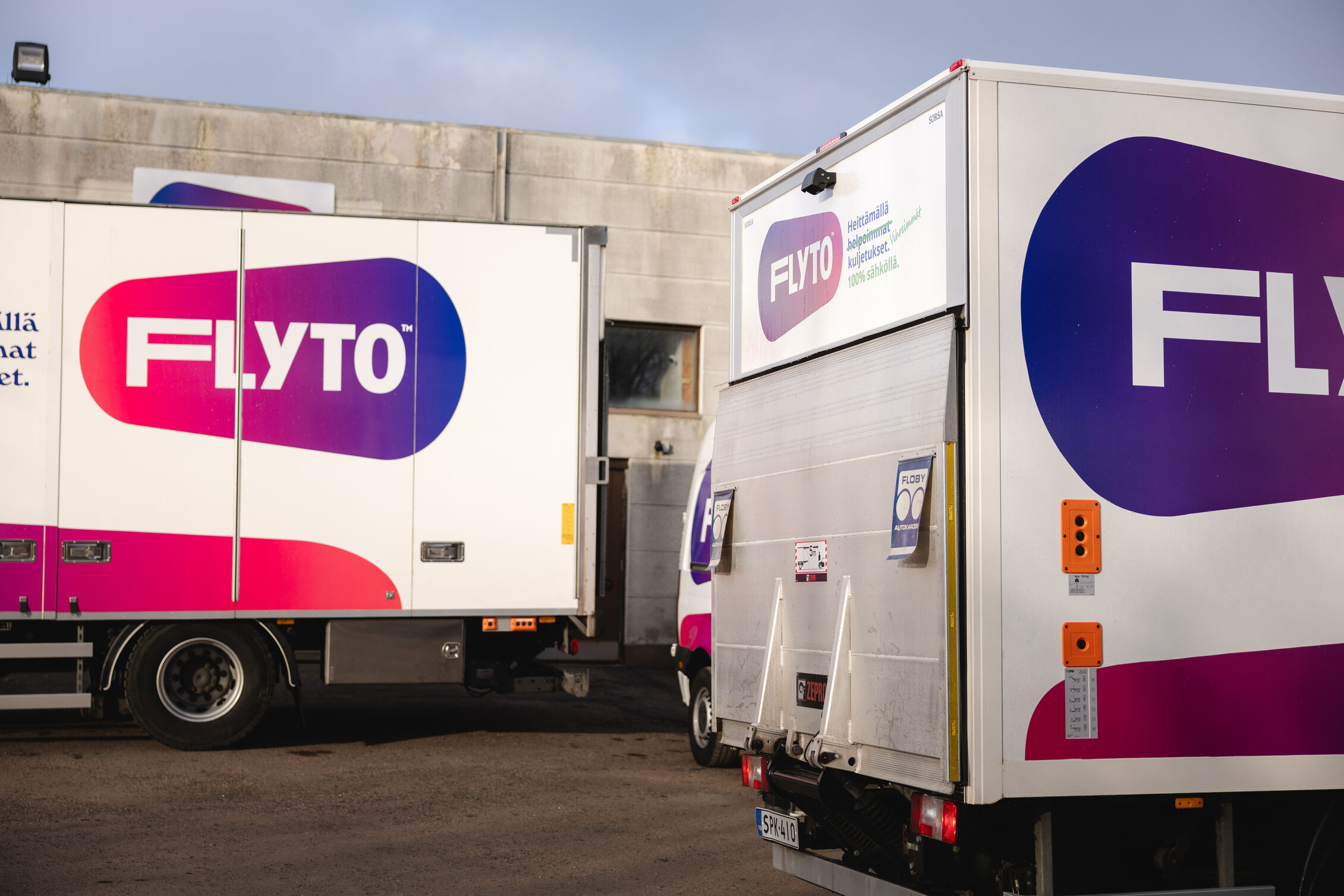
Flyto runs this corridor with our own operations rather than handing it off end-to-end: we have offices, warehouses, crews and vehicles across Northern, Central and Southern Europe, so the France-side collection and the Nordic-side routing are both handled by teams we manage directly. Where it makes sense — a specific ferry leg, a regional delivery run in Norway — we bring in a small number of carefully vetted partner carriers rather than claiming to own every kilometre ourselves, and your Tolletaten paperwork (the RD0030 declaration and inventory) is prepared as part of the move, not left for you to sort out alone.
Frequently asked questions
Do I need a visa or work permit to move from France to Norway?
No. As an EEA-agreement citizen you have full freedom of movement; the requirement is registering after arrival, not obtaining permission before it (UDI).
Will I pay customs duty on my furniture and personal belongings?
No duty applies if you’ve lived abroad continuously for at least a year and bring the goods in within a year of moving — but you still file a moving-goods declaration (RD0030) with an itemised inventory (Tolletaten).
Do I need to exchange my French driving licence for a Norwegian one?
Not to drive — your French licence is valid immediately under the EU/EEA recognition framework. Exchanging it for a Norwegian licence is a separate, optional step (Your Europe; Statens Vegvesen).
What happens to my EHIC when I move to Norway?
It’s not the right document once you’re actually relocating — France’s guidance is to use form S1 to register for healthcare in your new country of residence instead of relying on the EHIC (service-public.gouv.fr).
Can I bring my dog or cat?
Yes. You need an EU pet passport (microchip, rabies vaccination with a 21-day wait) plus, for dogs, a tapeworm treatment given 24–120 hours before arrival — France isn’t on Norway’s short exemption list, so the treatment is required (Mattilsynet).
How soon do I have to register once I arrive in Norway?
Within three months of arrival if you’re staying longer than that — the UDI registration is free and only needs to be done once (UDI).
Sources
- Tolletaten — Household goods, import when moving to Norway
- UDI — Registration certificate for EU/EEA nationals
- UDI — Residency under the EU/EEA regulations
- Skatteetaten — National identity numbers
- Skatteetaten — Move to Norway (National Population Register)
- Skatteetaten — Cars and other vehicles
- Statens Vegvesen — Foreign driving licence in Norway
- Mattilsynet — Travelling with dogs, cats and ferrets from EU countries to Norway
- Helsenorge — Norway’s digital health portal
- impots.gouv.fr — Je pars à l’étranger ou j’arrive en France
- impots.gouv.fr — L’Exit Tax
- impots.gouv.fr — Je pars vivre à l’étranger, quelles démarches dois-je accomplir ?
- service-public.gouv.fr — Carte européenne d’assurance maladie (EHIC)
- European Commission — European Health Insurance Card, France
- Your Europe (European Commission) — Driving licence exchange and recognition in the EU