

Moving from Spain to Austria (2026): Complete Guide

Spain and Austria are both EU member states, so a move along this corridor is an intra-European relocation, not an international one in the customs sense. That single fact changes almost everything about how the move works compared with relocating from, say, the UK or the US: there’s no customs border to clear, no import paperwork for your furniture, and no work permit to obtain. What’s left is a set of administrative registrations on both ends — closing out your Spanish address and tax file, opening an Austrian one — plus the real-world logistics of getting your belongings, your car and your pets from one country to the other. This guide is written for a resident of Spain (Spanish or another nationality) relocating to Austria, and it sticks to what is actually true for an EU-to-EU move.
Key takeaways
- No customs duty, no import declaration, no VAT on your household goods. Spain and Austria are both inside the EU customs union and single market, so personal belongings move freely between them — this is the single biggest practical difference from a move to or from a non-EU country (European Parliament: Free movement of goods; Your Europe: residence formalities).
- You don’t need a visa or work permit. As an EU/EEA citizen you have the right to live and work in Austria; the real task is administrative registration, not immigration (Your Europe: residence rights when living abroad in the EU).
- Register your address in Austria within 3 days of moving in (Meldezettel, at the local Meldeamt), and apply for an EU Anmeldebescheinigung (registration certificate) within 4 months if you’re staying more than three months (oesterreich.gv.at: Meldepflicht checklist; oesterreich.gv.at: registration certificate).
- Close out Spain properly: deregister your address (baja) with your local ayuntamiento’s padrón, and file Modelo 030 with the Agencia Tributaria within three months of the change to end Spanish tax residency — exact padrón paperwork is set locally, so confirm with your town hall (Your Europe: residence documents and formalities; Agencia Tributaria: Modelo 030).
- Your Spanish/EU driving licence stays valid in Austria — no test, no mandatory exchange for categories A and B; converting to an Austrian card is optional (€90) (oesterreich.gv.at: driving licence exchange).
- Your car needs a Spanish export de-registration before it can go on Austrian plates, and once you register your main residence in Austria you generally have one month (extendable by one more) to switch to Austrian plates (DGT: exporting a Spanish vehicle; oesterreich.gv.at: foreign number plates).
- Pets travel on an EU pet passport — microchip plus rabies vaccination, no quarantine between EU countries (Your Europe: travelling with pets).
- Both countries use the euro, and EU "roam like at home" rules mean your Spanish SIM works at domestic rates in Austria while you get set up (Your Europe: mobile roaming).
1. Free movement: what actually applies (and what doesn’t)
Because both Spain and Austria sit inside the EU customs union and the single market, goods that are already in free circulation in one move to the other without customs duties, import VAT or a customs declaration — this is the legal essence of the free movement of goods, one of the EU’s founding freedoms (European Parliament factsheet). In practice that means your furniture, boxes and personal effects simply travel by road; there is no "transfer of residence" customs relief to apply for and no import declaration to file, because none is required in the first place. (This is different from moving household goods from a non-EU/EEA country, or from Switzerland, Norway or Iceland, all of which sit outside the EU customs union proper and do involve real customs formalities.)
Free movement of people works the same way: as an EU citizen you don’t need a visa or a work permit to live or work in Austria (Your Europe: residence rights). The genuine to-do list is administrative — registering your address and tax status correctly on both ends — which is what the rest of this guide covers.
Planning the move itself as well? Costs, transit times and how to choose a mover are covered on our page about international removals to Spain.
2. Leaving Spain: closing things out properly
Even though nothing needs to be declared to customs, Spain still expects you to formally close out a few registrations:
- Padrón (municipal register): deregister your address. The padrón is administered locally by each ayuntamiento under a national framework set by the INE, so the exact deregistration (baja) process and paperwork vary by town hall — confirm the steps with yours. Spanish nationals who register at a consulate abroad as residents overseas typically have this reflected through that channel; foreign nationals generally need to request the baja directly from their municipality (Your Europe: residence documents and formalities, including deregistering your residence).
- End your Spanish tax residency: Modelo 030. File Modelo 030 with the Agencia Tributaria to notify the change of tax domicile, generally within three months of the change (or, if your annual income tax return deadline falls first, notify with that return instead). You’ll need your DNI/NIE and supporting documentation (Agencia Tributaria: Modelo 030 instructions; documentation required).
- Healthcare: the S1 form, where it applies. The portable S1 document lets certain people — notably pensioners drawing a Spanish pension — keep their healthcare costs covered by Spain while habitually resident in another EU/EEA country. If you’re moving to work in Austria, you’ll normally be insured directly through the Austrian system instead; check your own case before assuming S1 applies (Seguridad Social: formulario S1 asistencia sanitaria fuera de España).
- Driving licence: no action is required in Spain — an EU driving licence remains valid when you move to another EU country, so nothing needs to be exchanged or surrendered before you leave (DGT: traslado a un país de la Unión Europea).
- Vehicle export de-registration: if you’re taking your car, it must first be given a definitive baja por traslado a otro país at the DGT before it can be registered abroad (DGT: trasladar un vehículo español al extranjero).
3. How your household goods actually move
With paperwork this light, the move itself is a straightforward road transport across two or three internal EU borders — no port, no customs clearance warehouse, no transload required purely because of a border.
Typical routing runs from Madrid, Barcelona or Valencia north through France (via Girona/La Jonquera or Irun/San Sebastián), then through southern France or Switzerland into Austria via Innsbruck, Salzburg or directly into Vienna. In freight-industry terms — operational estimates, not official figures — a dedicated truck typically covers Barcelona–Vienna (roughly 1,800–2,000 km) or Madrid–Vienna (roughly 2,300–2,500 km) in about 3–5 driving days; a shared/groupage load consolidated with other customers commonly takes 1–3 weeks, depending on the carrier’s routing schedule that month. With no customs stop, transit-time variance comes from route consolidation and driver-hours rules, not border delays.
4. Arriving in Austria: the real registration process
This is where most of the actual admin work sits, and it’s genuinely different from Spain’s system:
- Register your address (Meldezettel) within 3 days of moving in. Everyone taking up residence in Austria — including EU citizens — must register their main residence with the local Meldeamt (registration office) within three days of occupying the accommodation, using the Meldezettel form and the signature of your landlord/accommodation provider (oesterreich.gv.at: Meldepflicht checklist).
- Apply for your Anmeldebescheinigung (EU registration certificate) within 4 months. If you’ll be in Austria more than three months, apply at the competent settlement authority (Niederlassungsbehörde/district authority) with a valid ID/passport plus proof of one of: employment (contract, employer’s data), self-sufficiency with comprehensive health insurance, or student status with insurance and means. The fee is €44, refundable if the certificate isn’t issued (oesterreich.gv.at: registration certificate application).
- Healthcare via ÖGK. If you’re employed, your employer registers you with the Österreichische Gesundheitskasse (ÖGK) automatically. If you’re not covered through employment or a transferred S1, you can apply for voluntary Selbstversicherung (self-insurance) with the ÖGK (ÖGK: Selbstversicherung).
- Tax registration. Establishing a Wohnsitz (a dwelling you use repeatedly, not necessarily your main home) in Austria triggers unlimited tax liability on worldwide income; residence of more than six months in a calendar year triggers it retroactively for the whole period even without a fixed Wohnsitz (USP.gv.at: Einkommensteuerpflicht). You’ll need a Steuernummer from your local Finanzamt, obtainable via FinanzOnline registration (BMF FinanzOnline: Erstanmeldung).
- Driving licence. Your Spanish/EU licence for categories A and B is recognised in Austria and stays valid without any test or medical exam; you can voluntarily convert it to an Austrian credit-card licence (Umschreibung) for a €90 fee. Licences for categories C/D (trucks/buses) are only valid for up to five years from your move unless converted (oesterreich.gv.at: driving licence exchange).
- Vehicle registration. Your car needs Austrian-valid third-party liability insurance before it can be registered; if it’s already EU type-approved and listed in Austria’s approval database it can be registered digitally, otherwise a single (self-import) approval is needed first (oesterreich.gv.at: vehicle registration). Once your main residence is registered in Austria, you may keep driving on Spanish plates for up to one month (extendable by a further month with good reason) before Austrian plates become mandatory (oesterreich.gv.at: driving with foreign number plates).
5. Moving pets from Spain to Austria
Cats, dogs and ferrets travel between EU countries on an EU pet passport: your pet needs an ISO-compliant microchip and a valid rabies vaccination, and the passport itself — recording the microchip number, vaccination history and owner/vet details — is issued by an authorised vet in your country of residence, so get it arranged in Spain before departure. Because both Spain and Austria are EU members, there’s no quarantine required for this route, and none of the small list of destinations that additionally require tapeworm (Echinococcus multilocularis) treatment before entry — currently Finland, Ireland, Malta, Norway and Northern Ireland — includes Austria (Your Europe: travelling with pets and other animals in the EU).
6. Money, banking, and things people forget
Spain and Austria both use the euro, so there’s no currency conversion on your savings, salary or the sale proceeds of anything you leave behind. SEPA covers transfers between Spanish and Austrian bank accounts, but get an Austrian IBAN early anyway: rent, utilities and most Austrian service contracts run on SEPA direct debit (Lastschrift), which is far easier to set up from a local account. Keep your Spanish SIM working meanwhile — under current EU rules, calls, texts and data are charged at your Spanish domestic rates while roaming in Austria, with no extra surcharge (Your Europe: mobile roaming). Commonly forgotten items: redirecting post, notifying your Spanish bank/pension provider/employer of the new address, cancelling or transferring Spanish utility and insurance contracts, and — if your Modelo 030 exit and your new Austrian tax residence overlap in the same calendar year — getting professional advice on the split-year tax treatment.
How Flyto handles your Spain to Austria move
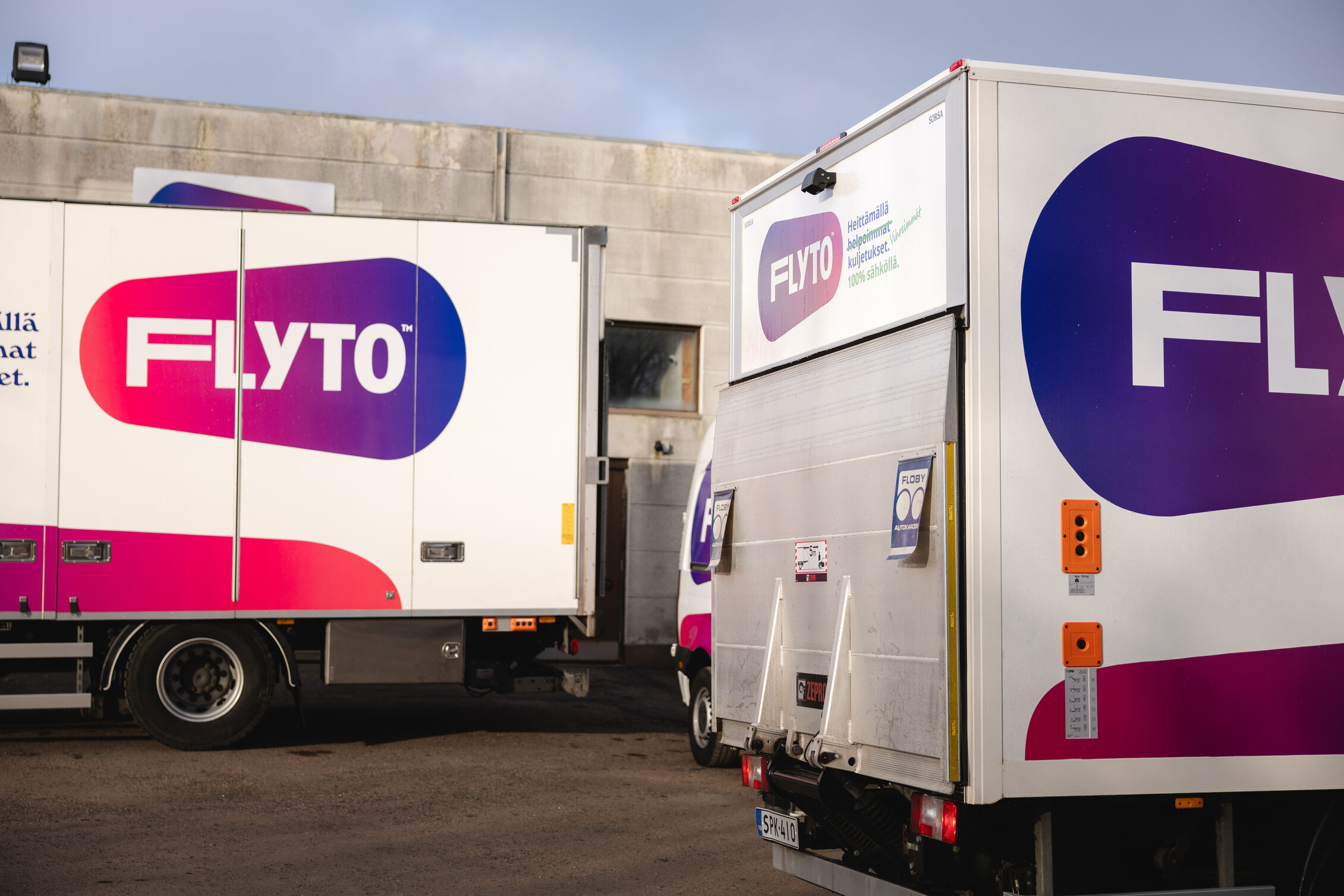
Flyto runs its own offices, warehouses, vehicles and moving teams across Northern, Central and Southern Europe, so a large share of a Spain-to-Austria move is handled directly by our own crews rather than handed off blind. Where a route or a specific leg is better served by a specialist partner — a particular regional pickup, a niche transport mode, or capacity at short notice — we work through a carefully vetted network of subcontractors we’ve worked with before, so you get consistent quality and a single point of contact even on the legs we don’t run ourselves.
Frequently asked questions
Do I need a visa or work permit to move from Spain to Austria?
No. As an EU/EEA citizen you have the right to live and work in any EU country without a visa or work permit; you do need to register your residence once you arrive (Your Europe: residence rights).
Will I pay customs duty or VAT on my furniture and belongings?
No. Household goods moving between two EU customs-union countries like Spain and Austria are already in free circulation and cross without duty, VAT or a customs declaration (European Parliament: free movement of goods).
Do I need to exchange my Spanish driving licence for an Austrian one?
Not for categories A and B — your EU licence stays valid indefinitely and is recognised without a test. Exchanging it (Umschreibung) is optional and costs €90 (oesterreich.gv.at: driving licence exchange).
How soon do I have to register my address after arriving in Austria?
Within three days of moving into your accommodation, via the Meldezettel at your local Meldeamt (oesterreich.gv.at: Meldepflicht).
Can I keep my Spanish car on Spanish plates in Austria?
Only temporarily. Once your main residence is registered in Austria, you generally have one month (extendable by one more with good reason) before you must register the car with Austrian plates, and it needs Austrian-valid liability insurance and, if applicable, a prior Spanish export de-registration (oesterreich.gv.at: foreign number plates; DGT: exporting a vehicle).
What happens to my Spanish healthcare cover when I move?
For most people moving to work in Austria, healthcare cover switches to the Austrian system (via ÖGK, generally through your employer). Pensioners and some other specific cases can keep Spain paying via the S1 form instead — check which applies to you (Seguridad Social: S1; ÖGK: Selbstversicherung).
Sources
- European Parliament — Free movement of goods
- Your Europe — Residence documents and formalities when living in another EU country
- Your Europe — Residence rights when living abroad in the EU
- Your Europe — Travelling with pets and other animals in the EU
- Your Europe — Roaming: what you pay to use your smartphone in another EU country
- Agencia Tributaria — Modelo 030, instrucciones (deadline)
- Agencia Tributaria — Modelo 030, documentación
- Seguridad Social — Formulario S1 para asistencia sanitaria fuera de España
- DGT — Traslado a un país de la Unión Europea (permiso de conducir)
- DGT — Trasladar un vehículo español al extranjero
- oesterreich.gv.at — Checkliste Meldepflicht in Österreich
- oesterreich.gv.at — EU citizens: registration certificate application
- oesterreich.gv.at — Ausländischer Führerschein: Umschreibung
- oesterreich.gv.at — Vehicle registration
- oesterreich.gv.at — Driving with foreign number plates
- ÖGK — Selbstversicherung in der Krankenversicherung
- USP.gv.at — Einkommensteuerpflicht (unbeschränkte Steuerpflicht)
- BMF FinanzOnline — Online-Erstanmeldung