

Top European Moving Companies for Germany Expats 2026


Removal company to Germany — costs, timings and how Flyto handles it
If you are searching for a removal company to Germany, the questions that matter are price, dates and who actually carries your goods. Flyto organises removals to Berlin, Munich, Hamburg, Frankfurt and everywhere in between from the UK, Ireland, Spain, the Nordics, the Netherlands, Switzerland and across Europe, using its own hubs in Northern, Central and Southern Europe and vetted partner crews for loading and delivery. One contract, one fixed price, one point of contact.
Indicative 2026 market ranges (not a Flyto quote): 10–15 m³ from the UK or Spain €1,900–€3,600; 25–35 m³ €4,200–€8,500. UK origins need a Transfer of Residence customs declaration (duty-free for goods owned 6+ months); EU origins move without customs. Transit is typically 2–5 days within Central Europe, 4–8 days from the UK, Spain or Finland. Parking permits (Halteverbotszone) and lift access in German cities affect the final price more than distance does.
Get an exact price for your removal to Germany — then use the comparison below to check any removal company against the same criteria.
What this page is, and what it is not
Germany is the largest relocation market in Europe, and a search for ”top European moving companies Germany expats” returns mostly lead-generation portals – Umzugspreisvergleich (formerly Umzugsauktion), Movinga, Sirelo, ImmoScout24’s moving-partner lists – that sell your enquiry to whichever remover pays. This page is written by a company that loads and delivers in Germany every week, and it answers the questions that decide how a German move goes: how the trucks reach Berlin, Munich, Frankfurt or Hamburg, what the address does to the price, what Anmeldung and customs require, what a realistic budget is, and how to tell a remover from a marketplace. We name competitors where it helps and we say where Flyto is the wrong choice.
How international moves to and from Germany actually run
Germany is the crossroads of European road freight, which is why almost every corridor is easy to serve. From the UK: Calais–Dunkirk into Belgium and the Ruhr, or the Harwich–Hook of Holland ferry, then the A2/A3 to Berlin, Frankfurt or Munich – one to two driving days. From the Netherlands, Belgium, Switzerland and Austria: same-day or next-day delivery on a dedicated vehicle. From Spain, Portugal and Italy: two to three days north through France or over the Alps. From the Nordics: via the Rødby–Puttgarden or Trelleborg–Rostock ferries into Hamburg and Berlin. Flyto’s Central European hub consolidates loads on all of these corridors several times a month; dedicated vehicles run on demand for larger homes and fixed dates. In Flyto’s own enquiry data Germany is the busiest origin country in Europe, and Germany→Spain, Germany→Netherlands and Germany→Switzerland are among the ten largest corridors we handle.
Transit, door to door: 1–2 days on a dedicated vehicle from the UK or the Benelux; 3–6 days consolidated; 4–8 days from Spain, Italy or the Nordics.
The German address is the price
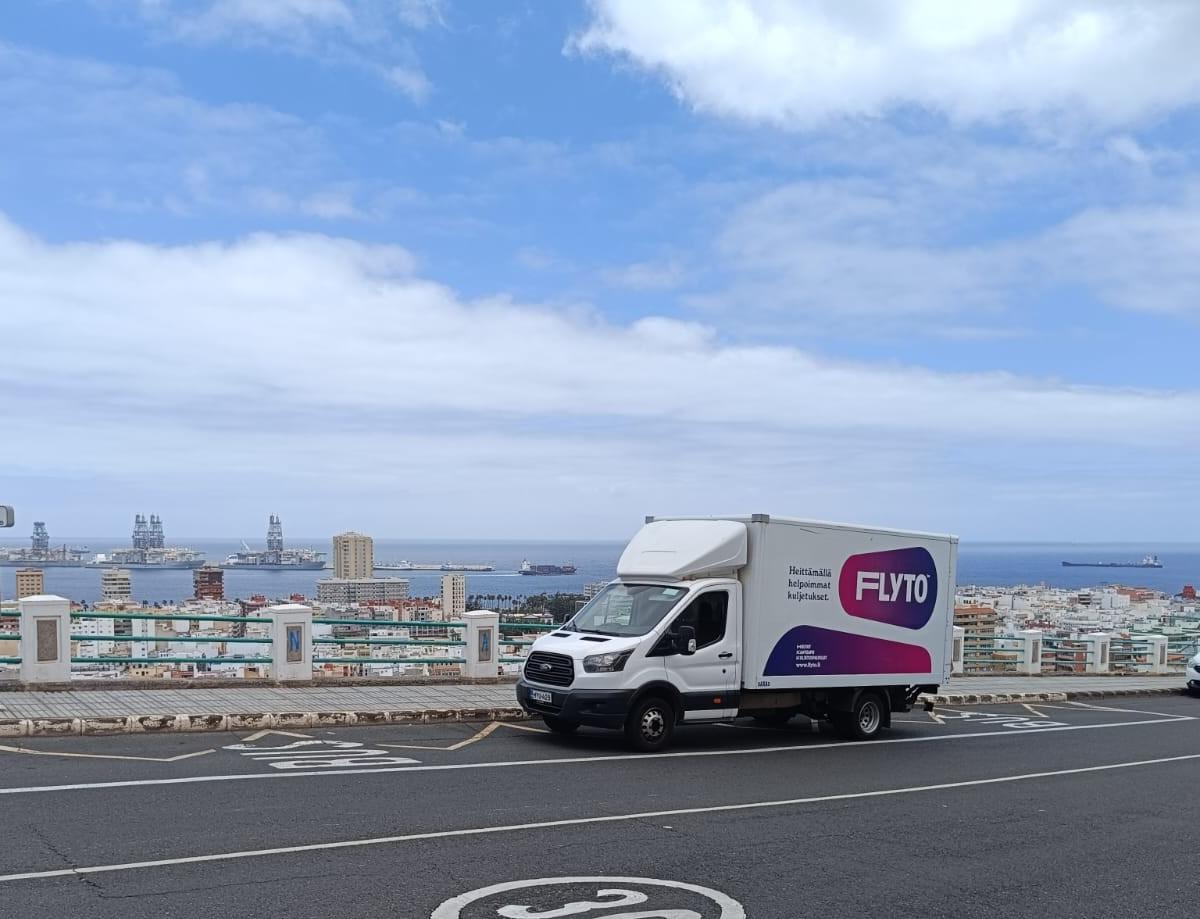
The motorway is the easy part. Berlin’s Altbau districts (Prenzlauer Berg, Kreuzberg, Neukölln, Charlottenburg): fourth- and fifth-floor flats without a lift, wide stairwells but 3.5-metre ceilings and heavy old doors – the exterior furniture lift (Möbellift, €150–€350) is how sofas and wardrobes get in. Parking: Berlin, Munich, Hamburg, Frankfurt, Cologne and Düsseldorf require a no-parking zone (Halteverbotszone) for the moving vehicle, applied for at the district traffic office two to four weeks ahead (roughly €80–€250 including the signage), or the truck stops 150 metres away and the crew carries. Munich adds inner-city access rules and the tightest parking in the country; Hamburg’s Speicherstadt and HafenCity have height limits and underground car parks a truck does not fit; Frankfurt’s high-rises need a lift booking with the Hausverwaltung. Small towns and suburbs are simple. We ask before quoting and write the answer into the fixed price; a quote that did not ask will be corrected on the day.
What a move to or from Germany costs
Indicative 2026 market ranges, door to door, consolidated (not a Flyto price list – every move is priced on volume, route and access):
| Corridor | 1-bed flat, 10–15 m³ | 3-bed house, 25–35 m³ | Typical transit |
|---|---|---|---|
| UK ↔ Germany | £1,800–£3,200 | £4,000–£7,200 | 2–6 days |
| Netherlands / Belgium ↔ Germany | €1,100–€2,300 | €2,600–€4,800 | 1–4 days |
| Switzerland / Austria ↔ Germany | €1,300–€2,600 | €3,000–€5,600 | 1–4 days |
| Spain / Portugal / Italy ↔ Germany | €2,000–€3,800 | €4,200–€8,000 | 4–8 days |
| Nordics ↔ Germany | €1,900–€3,600 | €4,000–€7,800 | 3–7 days |
| Overseas (USA, Canada, Australia, UAE) – shared container | €3,500–€7,500 | €7,000–€13,500 | 4–12 weeks |
Get your fixed price (2 min) →
A dedicated vehicle adds 30–60 % and removes the delivery window. Not included: storage if your German flat is not ready (common – most tenancies start on the 1st or 15th), and the no-parking zone and furniture lift, which we price in advance rather than invoice afterwards.
Customs and paperwork
From another EU country there is no customs on household goods – the move is transport plus registration. From the UK, Switzerland and Norway there is: household goods you have owned and used for at least six months are imported duty- and VAT-free as Übersiedlungsgut when you transfer your residence to Germany, declared to German customs with the form 0350 declaration, proof of at least 12 months’ residence outside the EU, proof of your German address or employment contract, and an inventory. New items, alcohol beyond the allowance and goods for a second home pay 19 % import VAT plus duty. Since Brexit, British citizens need a residence title to live and work in Germany – applied for after arrival for most, but the employer usually starts the process before the move.
Once in the country: Anmeldung at the Bürgeramt within 14 days of moving in, with the landlord’s Wohnungsgeberbestätigung – you need the registration certificate for the tax ID, a bank account, health insurance and the residence title; Berlin appointments are scarce, so book the Bürgeramt slot before the move. Health insurance (statutory or private) is mandatory from day one of employment. Leaving Germany: Abmeldung at the Bürgeramt, which ends church-tax liability; the broadcasting fee (Rundfunkbeitrag) must be cancelled separately with proof of deregistration.
What separates a remover from a marketplace
Most first-page results for movers in Germany are marketplaces and aggregators. They are useful for collecting quotes; they do not move anything, and the cheapest bid on an auction site is the one most likely to add charges at the door. The questions that separate a serious remover:
- Who loads and who delivers? A company that asks about your Altbau stairwell and the Halteverbotszone before quoting has done the address before.
- Is the price fixed before loading? Volume-based fixed pricing with the access conditions written in. Hourly or ”estimated” quotes are where the surprises live.
- Customs competence for UK, Swiss and Norwegian origins – explained in a paragraph, not a footnote.
- Insurance by declared value, not only carrier liability per kilogram (the legal minimum under German freight law is low).
- Verifiable reviews on a Google Business Profile and a company registration you can look up.
Who else moves to and from Germany – an honest map
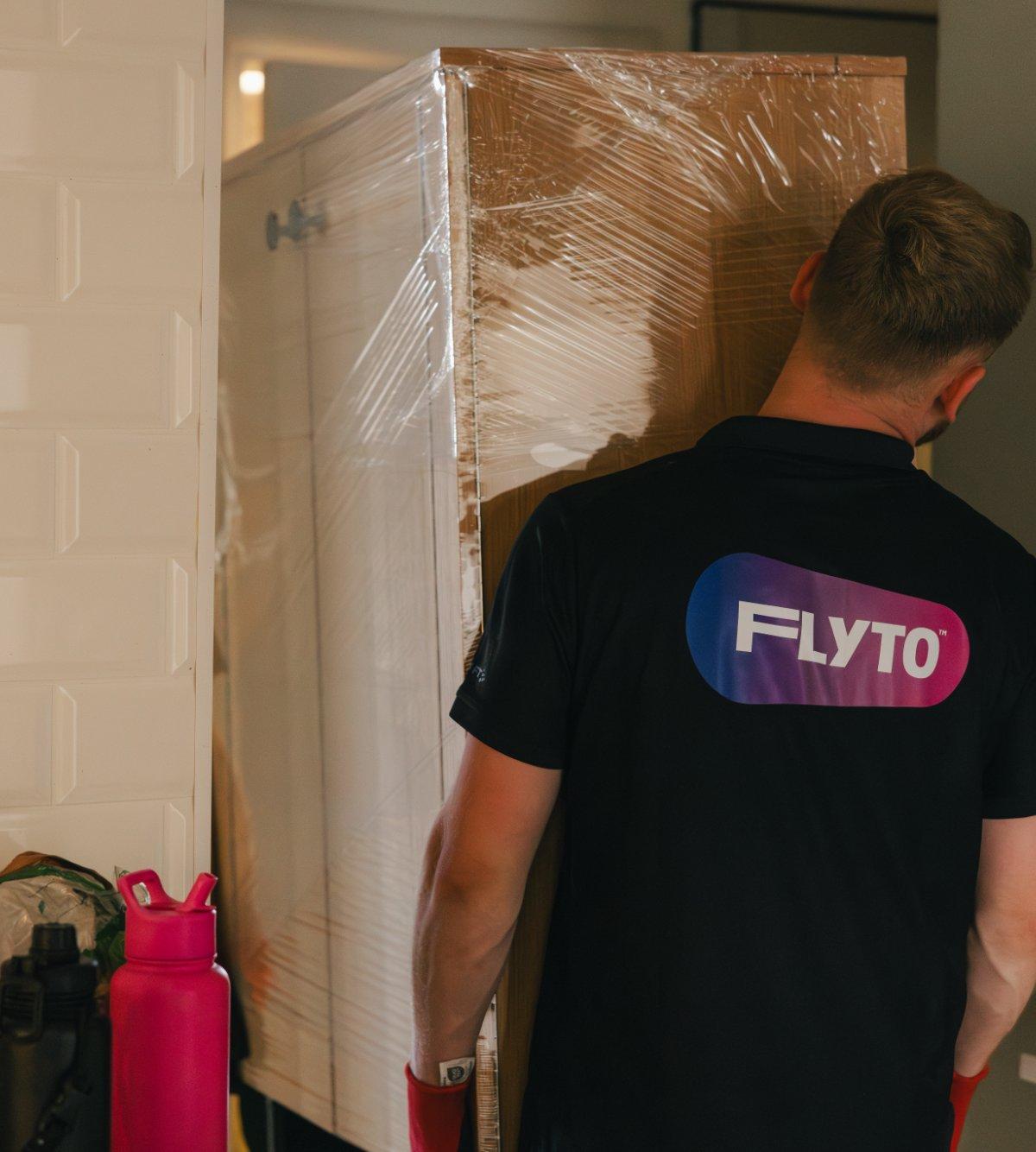
German international specialists: the firms certified by the AMÖ (Bundesverband Möbelspedition und Logistik) such as hasenkamp Relocation, Hertling and the confern network – established, strong on corporate and overseas container moves. Global networks: AGS (AGS Froesch, Koblenz and Berlin), Crown and Santa Fe (both Frankfurt) have German branches and suit employer-paid relocations. Online brokers: Movinga – restructured in 2024 and now operated under licence by Moveagain AG – and similar platforms sell online and subcontract the loading. Where Flyto fits: households moving between Germany and the UK, the Nordics, the Benelux, Spain, Portugal, Switzerland and overseas who want one contract, a fixed price and a company that plans the Berlin or Munich address rather than discovering it on the day – and who do not need a corporate-mobility programme. If you need a Munich company with a depot for a move across town, we are the wrong choice and will say so.
A Germany move, step by step
6–8 weeks before: volume estimate (room-by-room calculator or a 15-minute video survey), fixed quote, consolidated or dedicated. 3–4 weeks before: dates confirmed, packing materials delivered, Halteverbotszone applied for at the district traffic office (allow up to four weeks in Berlin), furniture lift booked if the survey showed it, customs paperwork assembled for non-EU origins, Bürgeramt appointment booked. 1 week before: packing (yours or ours), photographed inventory, declaration filed. Moving day: loading, inventory signed, goods to the Central European hub or straight onto the dedicated vehicle. Delivery: crew in the agreed window, lift or shuttle vehicle as planned, reassembly, packing material removed, inventory signed off.
A worked example: a two-bedroom flat from London to Berlin Prenzlauer Berg
Volume by video survey 18 m³. Consolidated load collected in Hackney on a Tuesday, delivered to a fourth-floor Altbau flat without a lift. The fixed price covers: collection with two crew, furniture blankets and stretch wrap, 25 boxes of material, the Channel crossing, the export declaration in the UK and the Übersiedlungsgut import declaration in Germany, the Halteverbotszone for the delivery street, a furniture lift for the sofa and bed, delivery within a three-day window six days after collection, reassembly and removal of packing material. Indicative 2026 market cost for this profile: £2,800–£3,900. On a dedicated vehicle with a fixed delivery day: roughly £4,200–£5,400.

Germany-specific practicalities
Kitchens: German rental flats often come without a fitted kitchen – tenants bring or buy their own, so a kitchen is a real line in the inventory and adds 3–5 m³. Lamps and curtain rails: also often absent; bring them. Appliances: 230 V Schuko – everything European works, UK plugs need adapters. Cars: re-registration at the Zulassungsstelle with a German technical inspection (TÜV/HU), insurance and proof of residence; a UK car can be imported VAT-free as household goods if owned six months. Pets: EU pet passport from an EU origin; animal health certificate within 10 days from the UK. Deposits and dates: German tenancies usually begin on the 1st or 15th and hand-over protocols are formal – if the key date and the delivery window do not line up, short-term storage at the hub is cheaper than a second move.
Seasonality
Demand peaks from June to September and around the 1st of every month; late January to March and November are the quietest and cheapest. In Flyto’s enquiry data 63 % of planned European moves fall in July–September. If your dates are flexible, a consolidated move mid-month outside the peak is the best value; if you must move at the end of August, book six to eight weeks ahead and accept a delivery window rather than a day.
Frequently asked questions
How long does an international move to Germany take?
One to two days on a dedicated vehicle from the UK or the Benelux; three to six days consolidated; four to eight days from Spain, Italy or the Nordics.
Do I pay import duty on my furniture?
Not from an EU origin. From the UK, Switzerland or Norway, household goods owned six months are duty- and VAT-free as Übersiedlungsgut, provided you are transferring your residence and have the address or employment paperwork.
Can you deliver to a fourth-floor Altbau flat without a lift?
Yes. We apply for the Halteverbotszone and book the furniture lift in advance and include both in the fixed price.
Is a consolidated (part-load) move safe?
Yes. Each household’s goods are labelled, inventoried and photographed separately, and transit insurance covers the full route.
When should I book?
Four to six weeks ahead outside the peak; six to eight weeks for June–September and for moves on the 1st of a month.
Do you also move out of Germany?
Yes – the same corridors run in reverse every week, including to Spain, the UK (with ToR1), Switzerland (form 18.44), the Nordics and overseas.
Get a fixed price for your move
Enter your volume and both addresses and you get a door-to-door price in about two minutes – in your language, with access conditions, ferries, tolls and customs paperwork included. No volume yet? The calculator estimates it room by room.