

Moving from Germany to France (2026): Complete Guide

Germany and France are both founding members of the EU’s single market, which makes this one of the most straightforward relocation corridors in Europe. If you’re a resident of Germany moving to France — whether from Berlin, Munich, Frankfurt or a smaller town — you are moving between two EU customs-union countries, so this guide is built around the two things that actually matter for an intra-EU move: closing out your German registrations correctly, and getting registered on the French side. There is no customs process for your belongings and no visa for you.
Key takeaways
- No customs, no duty, no import declaration. Germany and France are both in the EU customs union, so household goods move between them under the EU’s free movement of goods — no import declaration, no duty, no VAT on your furniture or belongings, as confirmed by German customs’ own guidance on intra-EU movement of goods.
- No visa or work permit needed. As an EU citizen you have the right to live and work in France without a permit, per Your Europe on residence rights when living abroad in the EU.
- France does not require EU citizens to hold a residence permit at all. Unlike many countries, you can live in France indefinitely on your German ID card or passport alone; requesting a residence card is optional — see service-public.gouv.fr on the carte de séjour for EU/EEA/Swiss citizens.
- You must formally de-register in Germany. Abmeldung at your local Bürgeramt/Einwohnermeldeamt is mandatory when moving abroad, within a set window around your move date — see Service Berlin’s Abmeldung procedure.
- Your German tax liability doesn’t end automatically. Unlimited tax liability ends only once you give up both your home and your habitual residence in Germany, as defined in §9 Abgabenordnung; tax residency itself is governed by national rules and bilateral treaties per Your Europe on income taxes abroad.
- Your German driving licence stays valid — no forced exchange, with narrow exceptions. It remains usable in France for its full validity period; a swap only becomes mandatory if it’s lost, stolen or damaged, if you commit a traffic offence in France, or — for older licences issued with indefinite validity — after two years of residence, per Your Europe on driving licence exchange and recognition.
- Your car needs a French quitus fiscal before re-registration, even though no VAT is owed on an EU-to-EU move, per economie.gouv.fr.
- Pets travel on an EU pet passport, not a health certificate, per Your Europe on travelling with pets in the EU.
1. Free movement: what actually applies to your move
Because both Germany and France are inside the EU customs union, the rules that dominate overseas relocation guides — customs clearance, import duty, personal-effects declarations — simply don’t apply here. Goods can move freely between EU member states without customs formalities or charges, as German customs (Zoll) confirms for movement of goods within the EU. You don’t need an inventory for customs, a "transfer of residence" application, or duty-free relief — those concepts exist for moves from outside the EU/EEA, not for a Germany–France move.
The same logic applies to you as a person: EU citizens have the right to move to and reside in another member state without a visa or work permit, under the EU’s free-movement rules described by Your Europe. The real administrative work in this corridor isn’t customs or immigration — it’s the registration and de-registration paperwork on both ends, covered below.
(If you’re relocating via Switzerland, Norway or Iceland instead of directly Germany–France, note that Switzerland is outside the EU/EEA customs union and requires a formal customs declaration with duty-free relief for removal goods, while Norway and Iceland are in the EEA but outside the EU customs union, so genuine customs formalities — with relief for household goods — apply on that leg. None of that applies to a direct Germany-to-France move.)
If you still need to book the removal – price ranges, what is included and the questions to ask before you sign – see removal company to Germany.
2. Leaving Germany: closing things out correctly
De-register your residence (Abmeldung). When you move abroad and give up your only home in Germany, you’re legally required to de-register with your local Bürgeramt/Einwohnermeldeamt. This can be done at the earliest one week before you move out and must be completed within two weeks after; it’s free, and you’ll receive an Abmeldebescheinigung you should keep — you’ll need it to cancel insurance contracts and other agreements tied to your German address (Service Berlin).
Ending German tax residency isn’t automatic. De-registering your address alone does not end your unlimited tax liability. Under §9 of the Abgabenordnung, German tax law looks at where you actually maintain a home and your habitual place of stay — generally more than six months a year — not just your registration status. Once you’ve genuinely relocated, you’ll typically become tax-resident in France instead, and which country has the right to tax specific income is governed by national law and the bilateral treaty between the two, as explained by Your Europe on income taxes abroad and double taxation. If you hold shares in a company, ask a cross-border tax adviser whether German exit-taxation rules apply to your situation before you leave.
Healthcare — request your S1 if it applies. If you’re moving as a pensioner or in certain cross-border-worker situations, request an S1 form from your German health insurer before you leave; it lets you register with the French health system on the same terms as a French resident, per Your Europe on health insurance cover in your host country. Employed movers will generally enrol fresh in the French system instead (see Section 4).
Vehicle. If you’re driving your car to France, you have two legal options at the Zulassungsstelle: fully de-register the plates, or de-register and simultaneously get a red-striped export plate (Ausfuhrkennzeichen) valid for a fixed period of up to twelve months, which lets you legally drive the car to France on German plates before re-registering it there (Kreis Kleve, official vehicle registration authority).
3. How your household goods actually move
Once you’ve handled the paperwork above, the physical move itself is a straightforward European road (and sometimes rail-ferry) job — no customs stop, no bonded warehouse, no import broker. The following are freight-industry route estimates, not guarantees, since actual timing depends on load consolidation, route, and season:
- Berlin/Munich/Frankfurt area → Paris: roughly 900–1,050 km by road; a dedicated (direct) truck typically covers this in 1–2 days of driving, while a shared/groupage load — common for smaller moves — usually takes 5–10 working days door-to-door because the truck collects and delivers other shipments en route.
- Southern/western Germany → southern France (e.g. Lyon, Marseille): 1,000–1,300+ km; dedicated transport in 2–3 days, groupage typically 7–12 working days.
- Northern Germany → France: slightly longer road distances add roughly a day to the above.
A full container load or dedicated truck is fastest and most direct but costs more; groupage (shared-load) shipments are more economical for smaller volumes but take longer because the vehicle serves multiple customers along the route. Since there’s no customs hold anywhere in this corridor, the schedule is almost entirely a function of the transport mode you choose and route logistics, not paperwork.
4. Arriving in France: registration, healthcare, tax, driving
Residence registration — France’s system is genuinely light-touch. Unlike most EU countries, France does not require EU/EEA/Swiss citizens to obtain a residence permit (titre de séjour) or register on any foreigners’ register to live there — you can reside on your valid German ID card or passport indefinitely. It’s optional to request a residence card, and only after five years of continuous, legal residence can you request the carte de séjour "Citoyen UE/EEE/Suisse — séjour permanent," issued free of charge (service-public.gouv.fr). The general EU-wide rule that other member states may ask you to register your residence after three months, described by Your Europe, simply isn’t something France applies to EU citizens.
Healthcare — enrol with CPAM. France’s Protection universelle maladie (PUMA) covers anyone residing in the country "in a stable and regular manner," reimbursing healthcare costs regardless of employment status; for employees and the self-employed, cover opens automatically through work, while people without professional activity need to file an affiliation request. You apply to the Caisse Primaire d’Assurance Maladie (CPAM) covering your new address, either online via ameli.fr or in person (ameli.fr; service-public.gouv.fr on health cover for foreigners settling in France). If you hold an S1 from Germany, submit it to CPAM instead of applying under PUMA directly.
Tax registration. France doesn’t issue a separate "arrival" tax registration step — your tax file is created through your first French tax return. If you move to France partway through a year, your first declaration only needs to cover income received since your arrival date, filed with the Service des Impôts des Particuliers for your area (impots.gouv.fr).
Driving licence. Your German licence remains fully valid in France for its entire validity period — no exchange is required simply because you’ve moved. Voluntary exchange for a French licence is possible but optional. A swap only becomes mandatory in three situations: your licence is lost, stolen or damaged; you commit a traffic offence in France; or — relevant mainly to older German licences issued with indefinite validity, before the EU-wide move to time-limited card formats — after two years of usual residence in France (Your Europe).
Vehicle re-registration. Even though no VAT is due on a car brought from another EU country, French rules still require a quitus fiscal (tax clearance certificate) before you can get French plates. You request it within 15 days of the vehicle’s arrival, in the same online procedure as the registration itself via the ANTS/France Titres portal — the registration application doubles as the quitus fiscal request, with no fee due when no VAT is owed (economie.gouv.fr; impots.gouv.fr). Procedures can vary slightly by department, so confirm the current steps for your prefecture before your car arrives.
5. Pets
Dogs, cats and ferrets can travel with you under the EU’s harmonised pet-movement rules: your pet needs an ISO-compliant microchip, a valid rabies vaccination given after the microchip was implanted, and an EU pet passport issued by an authorised vet, which then travels with the animal indefinitely between member states (Your Europe on travelling with pets in the EU). If your pet doesn’t already have an EU pet passport, get one from a German vet before departure — it’s the document France’s authorities will expect to see, not a fresh health certificate.
6. Money, banking, and things people forget
- Opening a French bank account is straightforward for EU citizens but budget time for identity and address verification; many landlords, utility providers and even mobile contracts expect a French IBAN or a local guarantor.
- Tenant’s home insurance (assurance habitation) is a legal requirement for renters in France, unlike in Germany — arrange it before you collect your keys.
- Keep your German Abmeldebestätigung. You’ll need it for insurers, banks, and sometimes the Finanzamt if questions arise about when your German tax liability ended.
- Cross-border pension and social-security continuity: contributions across EU countries are coordinated so you don’t lose pension rights, but the paperwork (via your German pension insurer and France’s Assurance Retraite) is worth starting early rather than after you’ve moved.
- School enrolment in France is handled at the mairie (town hall) of your new address, and typically requires proof of address and your child’s vaccination records.
How Flyto handles your Germany to France move
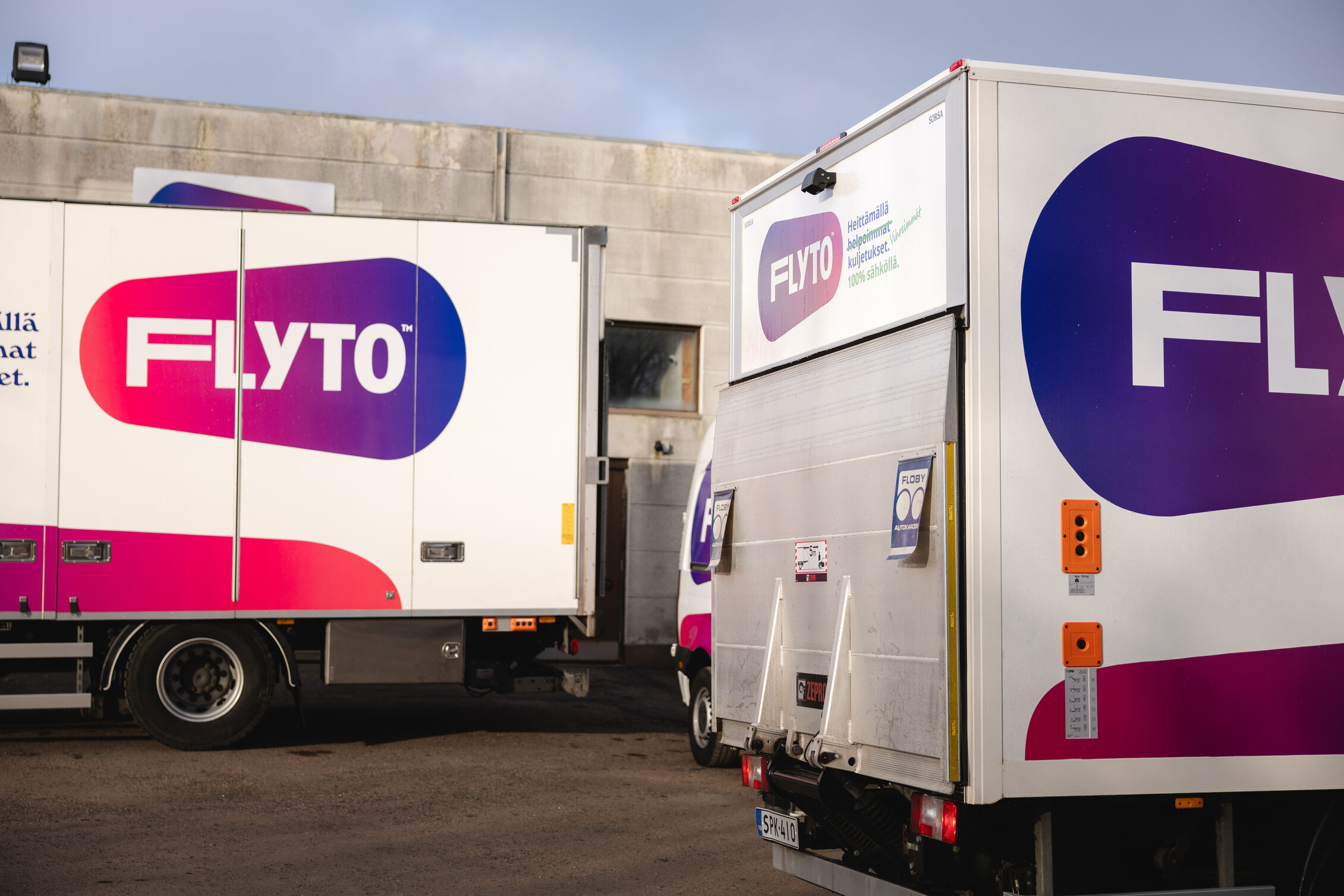
Flyto runs its own offices, warehouses, teams and vehicles across Northern, Central and Southern Europe, so a Germany-to-France move is typically handled largely with our in-house European network rather than handed off wholesale. Where it makes sense — a specific regional pickup, a particular route, or peak-season capacity — we bring in a carefully vetted partner or subcontractor to keep your move on schedule, always coordinated by your Flyto team from quote to delivery.
Frequently asked questions
Do I need to declare my furniture and belongings to French customs?
No. Because both Germany and France are in the EU customs union, household goods move freely between them — there’s no customs declaration, duty, or import tax to worry about (Zoll).
Do I need a visa or residence permit to live in France?
No. As an EU citizen you have the right to live and work in France without a visa, and France doesn’t even require you to hold a residence permit — your ID card or passport is sufficient (service-public.gouv.fr).
Is de-registering in Germany optional if I’m not sure I’m staying in France long-term?
No — if you’re giving up your only home in Germany, Abmeldung is legally required, not optional, and must happen within the set window around your move (Service Berlin).
Will I be taxed in both Germany and France?
Not if things are handled correctly. Tax residency depends on where your home and habitual residence actually are, and a bilateral tax treaty between Germany and France prevents double taxation of the same income — but the details depend on your income sources, so get advice before your move if your situation is complex (Your Europe on double taxation).
Do I need to exchange my German driving licence for a French one?
No, not simply because you’ve moved — your German licence stays valid throughout its validity period. Exchange only becomes mandatory if it’s lost, stolen or damaged; if you commit a traffic offence in France; or, for older licences issued with indefinite validity, after two years of French residence (Your Europe).
Can I bring my car without paying VAT or duty again?
Yes — no VAT or duty is owed moving a car between EU countries, but you still need a French quitus fiscal (a tax-status certificate, free when no VAT is due) before you can get French plates (economie.gouv.fr).
Sources
- Zoll (German Customs) – Movement of goods within the EU
- Your Europe – Residence rights when living abroad in the EU
- Your Europe – Registering residence abroad after the first 3 months
- service-public.gouv.fr – Carte de séjour d’un citoyen UE/EEE/Suisse
- Service Berlin – Abmeldung einer Wohnung
- Gesetze im Internet – Abgabenordnung §9 (gewöhnlicher Aufenthalt)
- Your Europe – Income taxes abroad
- Your Europe – Double taxation
- Your Europe – Health insurance cover in your host country (S1)
- Ameli.fr – La protection universelle maladie (PUMA)
- service-public.gouv.fr – Assurance maladie d’un étranger qui s’installe en France
- impots.gouv.fr – Je pars à l’étranger ou j’arrive en France
- impots.gouv.fr – Quitus fiscal (particulier)
- economie.gouv.fr – Achat d’un véhicule dans un autre pays de l’UE : quitus fiscal
- Your Europe – Driving licence exchange and recognition in the EU
- Kreis Kleve – Ausfuhrkennzeichen mit internationaler Zulassung
- Your Europe – Travelling with pets and other animals in the EU