

Moving to Santiago from Abroad (2026): Complete Relocation Guide

Santiago is the entry point for the great majority of people relocating to Chile: the capital concentrates the country’s jobs, embassies, hospitals, universities and the freight corridor that runs inland from the Pacific ports. Chile is also the most stable and developed economy in South America, an OECD member since 2010 with the region’s highest income per head, which is a large part of why professionals, retirees and investors choose it. This guide is written for someone moving to Santiago from another country with a household shipment. It covers the two systems you have to satisfy — Chile’s Servicio Nacional de Migraciones (immigration) and Servicio Nacional de Aduanas (customs), plus the Servicio Agrícola y Ganadero (SAG) at the border — and then the practical reality of living in the city: neighbourhoods, healthcare, the metro, the winter smog, and the fact that you are settling on one of the most seismically active margins on the planet. Every figure below is either linked to an official source or clearly labelled as an estimate.
Key takeaways
- Whether your household goods enter Chile duty-free depends on your immigration status, not on what you ship. You need a Temporary Residence permit (or a work contract of one year or more) to qualify for the household-goods franchise (Servicio Nacional de Migraciones, Temporary Residence Permit).
- The used-household-goods (menaje de casa) franchise is US$6,750 FOB, exempt from customs duty and VAT, plus work tools up to US$2,025 FOB. The goods must arrive within a 120-day window before or after your entry (Servicio Nacional de Aduanas, Preguntas Frecuentes Viajero y Turista).
- Sea freight arrives at San Antonio — Chile’s largest container port and the first in the country to move more than two million TEU in a year — or nearby Valparaíso, then travels roughly 100 km inland to Santiago by road (Seatrade Maritime, San Antonio 2m TEU).
- Every incoming shipment is screened by SAG for food, plants, seeds, wood and animal products; undeclared agricultural items are confiscated and fined (Servicio Agrícola y Ganadero).
- You will need a RUT (tax ID from the SII) and, once you have residence, a cédula de identidad para extranjeros carrying your RUN from the Registro Civil — the number that unlocks banking, contracts and utilities (ChileAtiende, Obtención de RUT).
- Permanent Residence is normally granted after 24 months of valid Temporary Residence (12 months in expedited cases), applied for from inside Chile (Servicio Nacional de Migraciones, Residencia Definitiva).
- Santiago’s winters bring genuine air-pollution episodes: trapped between the Andes and the coastal range, the basin suffers thermal inversions from about April to August that can trigger official environmental alerts (Partículas.cl, Air Quality Forecasting in the Metropolitan Region).
- Buildings are engineered to a demanding seismic code (NCh433); Santiago’s mid- and high-rises performed well in the magnitude 8.8 Maule earthquake of 2010, which the code was tightened after (Rojas et al., The Structural Design of Tall and Special Buildings, 2010).
1. Why Santiago — and an honest look at the trade-offs
Chile stands out in South America for macroeconomic stability, strong institutions and a functioning bureaucracy that is increasingly digital. It joined the OECD in 2010 and has the region’s highest GDP per capita, which is why it attracts skilled migrants, mining and energy professionals, remote workers and retirees. Santiago, home to roughly seven million people across the Metropolitan Region, is where that economy is concentrated: it holds the head offices, the best hospitals and schools, the widest metro network on the continent, and the logistics spine that connects the Pacific ports to the rest of the country.
It is not without downsides, and it is fair to name them before you commit a shipping container. Winter air quality is poor and occasionally severe. The Andes are spectacular but the same mountains that frame the city also trap its pollution. Spanish is genuinely essential — far more than in some expat hubs, day-to-day life, paperwork and healthcare all run in Spanish, and Chilean Spanish is fast and idiomatic. Chile is geographically remote: long-haul flights to Europe or North America are the norm, and sea freight from Europe or Asia takes weeks. And you are moving to earthquake country. None of these is a reason not to go, but each shapes how you should plan the move.
2. Visa and residence: the Temporary Residence permit is the foundation
Chile does not have a single universal “moving” visa. Your immigration category is granted by the Servicio Nacional de Migraciones (SERMIG), and it drives almost everything else — your right to work, your access to the health and tax systems, and crucially whether your household goods clear customs duty-free. The route for most people settling in Santiago is the Temporary Residence permit (Residencia Temporal), a permit for foreigners intending to live in Chile for a defined period. Under the 2021 migration law and Decree 177 of 2022 it is divided into subcategories, including lawful paid activities and work, professionals and skilled technicians, investors and entrepreneurs, retirees and rentistas living on passive income, family reunification, students, and holders of international-agreement or Mercosur entitlements (Servicio Nacional de Migraciones, Residencia Temporal).
A short Transitory Permanence permit (the tourist-type entry for stays under 90 days) does not unlock the household-goods franchise, so if you arrive as a visitor and only regularise later, you can miss the duty-free window on your shipment. Where possible, secure the Temporary Residence category before your container sails. Applications are made through SERMIG’s digital portal at tramites.extranjeria.gob.cl using ClaveÚnica, the government’s single sign-on; documents are uploaded as PDFs and translated to Spanish or English where needed.
Temporary Residence is the stepping stone to Permanent Residence (Residencia Definitiva). The standard rule is 24 months of valid temporary residence before you can apply, reduced to 12 months in expedited cases such as close family ties, official income, proven investment, or scientific and cultural contribution; extended absences or migration breaches can push the requirement beyond 24 months. You apply from within Chile, no more than 90 days before your temporary permit is due for renewal (Servicio Nacional de Migraciones, Residencia Definitiva). Permanent residence does not need renewing and grants nearly all the rights of a citizen except voting and certain public offices.
3. RUT, RUN and the cédula: the numbers that run your life
Two agencies issue the identifiers you will live by, and newcomers routinely confuse them. The RUT (Rol Único Tributario) is your tax number, issued by the Servicio de Impuestos Internos (SII); the RUN (Rol Único Nacional) is your civil-registry number, issued by the Registro Civil, and it is the number printed on your ID card, the cédula de identidad. For an individual the two numbers are identical, which is why people use “RUT” and “RUN” interchangeably in everyday speech (Wise, RUT and RUN in Chile).
In practice a foreigner obtains a RUT from the SII to open a bank account, sign a lease or start work, and can register the tax number before ever holding a physical ID card (ChileAtiende, Obtención de RUT; Servicio de Impuestos Internos, RUT e Inicio de Actividades). Once your residence is granted you attend the Registro Civil to enrol your fingerprints and collect your cédula de identidad para extranjeros, which carries your permanent RUN (Servicio de Registro Civil e Identificación). Nearly every meaningful transaction — a phone contract, a rental deposit, a hospital admission — asks for your RUT, so getting these in order early is one of the highest-value tasks in your first weeks.
4. Shipping your belongings: ports, container options and transit
Household shipments to Santiago almost always come by sea. The two gateways serving the capital are San Antonio and Valparaíso on the central Pacific coast. San Antonio is Chile’s largest container port and the country’s principal gateway for central Chile; in 2025 it became the first Chilean port to move more than two million TEU in a single year (Seatrade Maritime). Both ports sit roughly 100–110 km from Santiago, so once your goods clear customs they finish the journey by truck over the coastal range into the city.
Your main container choices are the familiar three:
- 20ft container — suits a one-to-two-bedroom home; roughly 25–28 m³ of usable space.
- 40ft container — a family home of three bedrooms or more, with capacity for larger furniture; roughly 55–58 m³.
- LCL (less than container load) — a shared container billed by volume, sensible for a partial shipment, a studio, or if you are keeping most of your goods behind.
Transit times vary by origin and are best confirmed at the time of booking, but as a planning estimate a full-container sea leg from Northern Europe or East Asia to San Antonio typically runs in the region of five to eight weeks port-to-port, before customs clearance and inland delivery (estimate — confirm current schedules with your forwarder). Because of the 120-day customs window described below, the practical advice is to align the sailing with your own arrival rather than shipping months ahead or long after you land.
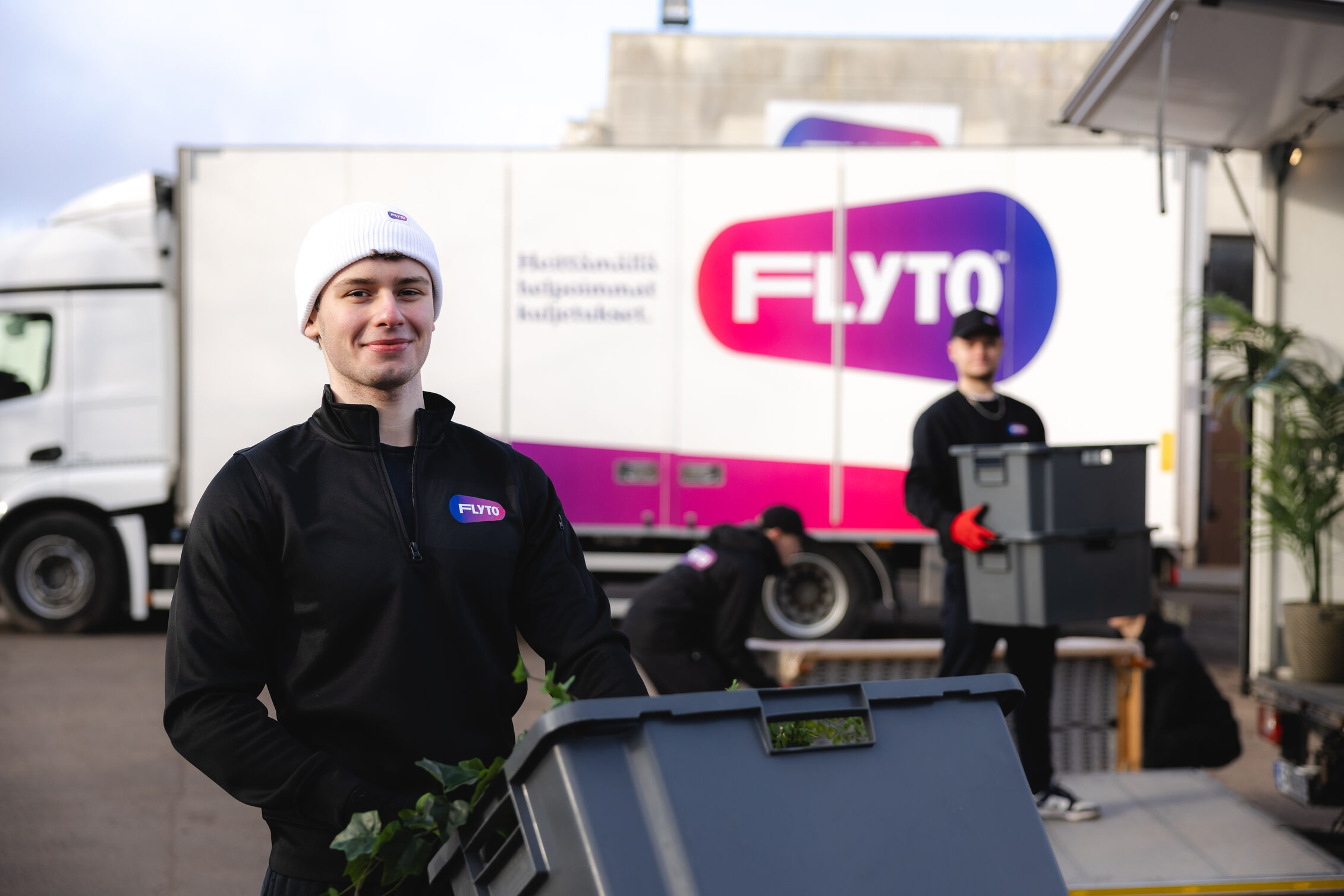
Flyto can quote the door-to-door move — export packing at origin, the sea leg, customs coordination and inland delivery in Santiago — as a single managed service. You can request a Santiago moving quote here, and it helps to have an inventory with rough volumes ready.
5. Chilean customs: the menaje de casa franchise and what it covers
Chile’s Servicio Nacional de Aduanas gives residents and incoming residents a used-household-goods concession under customs heading 00.09.05. The headline figures, for someone entering with a temporary-residence visa or a work contract of one year or more, are:
- Household goods (menaje de casa): up to US$6,750 FOB, exempt from both customs duty and VAT.
- Work tools (útiles de trabajo): up to US$2,025 FOB, exempt from VAT (customs duty may still apply), limited to tools genuinely needed for your profession or trade.
The goods must be used, non-commercial, and must arrive within 120 days before or after your date of entry. Beyond that window, or above the franchise value, the goods are subject to ordinary duties — and used items carry a 50% surcharge on the duty because they are second-hand, with clearance handled through a licensed customs agent (agente de aduanas) (Servicio Nacional de Aduanas, Preguntas Frecuentes Viajero y Turista). These franchise values were set following Chile’s update to its customs-franchise amounts, and are adjusted periodically, so verify the current figure on the Aduana site before you ship.
Two further customs points matter for movers. First, used vehicles are, as a rule, prohibited from import into Chile; the exceptions (returning Chileans who lived abroad long enough, certain disability permits, and free-trade-zone users in the far north) rarely cover an ordinary work or temporary-residence visa, so most people sell the car at home and buy locally (Servicio Nacional de Aduanas, Importación de vehículos). Second, cash or bearer instruments of US$10,000 or more (or the equivalent) must be declared on entry; failing to declare can be treated as smuggling (Servicio Nacional de Aduanas, Declaración de Dinero). Beyond that, expect the usual restrictions on weapons, certain medicines and other controlled goods; a clean, itemised packing list in Spanish makes clearance far smoother.
6. SAG: the agricultural inspection you must not underestimate
Chile is a long, isolated agricultural exporter that guards its biosecurity fiercely. The Servicio Agrícola y Ganadero (SAG) inspects incoming shipments and passengers for anything of plant or animal origin — food, seeds, plants, soil, untreated wood, animal products — and confiscates undeclared items, with fines for non-declaration (Servicio Agrícola y Ganadero). For a household move this has two practical consequences. Do not pack foodstuffs, plants, seeds or garden soil in your container; and be aware that untreated wooden items and packing materials can attract extra scrutiny or fumigation. If you are bringing pets, SAG runs a dedicated authorisation process with microchip, rabies-vaccination timing, parasite treatment and an official veterinary certificate; start it well before departure, because the timing requirements bite (SAG, pet import authorisation). When in doubt, declare — declaring costs you a few minutes; not declaring costs a fine.
7. Where to live in Santiago
Santiago is a mosaic of comunas (municipalities), and newcomers cluster in a handful in the eastern and central city. A quick, honest orientation:
- Providencia — central, leafy, extremely well connected by metro, a favourite first landing for professionals and couples; walkable with cafes, clinics and offices. Rents are high but you trade car dependence for convenience.
- Las Condes — the business and corporate-expat heartland (“Sanhattan” around El Golf), modern apartment towers, international schools nearby, safe and services-rich; more expensive and more car-oriented the further east you go.
- Vitacura — the most upmarket residential comuna, low-rise, green, family-focused, with parks and premium retail; the highest rents and least nightlife.
- Ñuñoa — a middle-class, increasingly popular comuna with a strong local identity, plazas, universities and better value than the far east; well served as the metro expands.
- Lastarria / Bellas Artes — the cultural core of the central city, bohemian and walkable, museums, restaurants and heritage buildings; central but denser and noisier, best for those who want city life over space.
As a general pattern, moving east and uphill towards the Andes buys you newer buildings, cleaner winter air and higher prices; moving central buys you connectivity and character at the cost of space. As a market estimate, monthly rent for a modern one-bedroom apartment in Providencia or Las Condes commonly falls in a broad range around CLP 600,000–1,000,000 (roughly US$650–1,100), with Vitacura higher and Ñuñoa somewhat lower — treat these as indicative only and check current listings.
8. Getting around: the metro and the traffic
Santiago’s greatest urban asset is its metro. Metro de Santiago runs seven lines, about 143 stations and roughly 149 km of track, carrying some 2.4 million passengers a day — the largest network of its kind in South America, and expanding toward the airport and beyond over the coming decade (Alstom, Santiago Metro Line 7). The metro and buses share the integrated Red / Bip! card, a single stored-value card you tap across the network. Living within walking distance of a metro station materially improves daily life and cuts your exposure to the city’s traffic, which is heavy at peak hours; car ownership is common in the eastern comunas but far from essential if you choose your neighbourhood around the metro map.
9. Healthcare: Fonasa and the Isapres
Chile runs a mixed health system. Fonasa is the public insurer, funded largely by a 7% payroll contribution, and it covers the majority of the population through public hospitals and, via co-payments, some private providers (Fondo Nacional de Salud (Fonasa)). The alternative is a private insurer, an Isapre, which channels the same mandatory contribution (often topped up) into private-clinic cover with shorter waits and more choice; Isapres are regulated by the Superintendencia de Salud (Superintendencia de Salud). Residents who contribute to the system choose between Fonasa and an Isapre. In practice many professional expats opt for an Isapre plan for access to Santiago’s well-regarded private clinics, while budgeting for the fact that Isapre premiums rise with age and health history. Newcomers should also carry international or travel health cover for the gap between arrival and being enrolled in the local system.
10. The winter air: an honest word on smog
Santiago sits in a bowl, hemmed by the Andes to the east and the coastal range to the west, under the influence of the South Pacific anticyclone. From roughly April to August this geography produces thermal inversions — a lid of warmer air that traps pollutants near the ground with little wind to clear them, driving up fine-particle (PM2.5) concentrations (Partículas.cl, Air Quality Forecasting in the Metropolitan Region). On the worst winter days the authorities declare environmental alerts, restricting wood-burning stoves, curbing outdoor school sport and tightening vehicle controls; Santiago has repeatedly ranked among the more polluted major cities in the world on such days (IQAir, Santiago air quality). This is a real, seasonal quality-of-life factor. Practical responses: favour higher, eastern comunas where air tends to be cleaner, consider an air purifier for winter, and factor it in if anyone in the household has respiratory sensitivities. Summers, by contrast, are warm, dry and much clearer.
11. Living on an active fault: seismic reality
Chile lies along the boundary where the Nazca plate dives beneath the South American plate, one of the most earthquake-prone margins on Earth. The country responded with a rigorous seismic building code, NCh433, and the payoff is visible: in the magnitude 8.8 Maule earthquake of 27 February 2010 — one of the largest ever recorded — the great majority of Santiago’s engineered mid- and high-rise buildings performed well and protected life, and the code was reviewed and tightened afterwards (Rojas et al., The Structural Design of Tall and Special Buildings, 2010). Santiago falls within the code’s seismic zonation. For a resident this means two things: modern construction is genuinely earthquake-engineered and you should not be alarmed by the frequency of small tremors, which are normal here; and you should still do the basics — know your building’s safe spots, secure tall furniture and heavy fittings, and keep an emergency kit. Chile’s institutions run earthquake and tsunami preparedness as routine public life, not as a rare drill.
12. Language and settling in
Spanish is not optional in Santiago. While international companies and top clinics have English speakers, the immigration portal, leases, utilities, healthcare and daily errands run in Spanish, and Chilean Spanish is famously quick, elided and rich in local slang (modismos). Arriving with functional Spanish — or committing to lessons in your first months — is one of the best investments you can make in the move; it changes bureaucracy from an ordeal into an errand and opens the social life of the city. Beyond language, expect a warm, family-centred culture, a strong cafe and restaurant scene concentrated in Providencia, Lastarria and Ñuñoa, and outstanding access to the outdoors — Andean ski resorts and hiking within an hour or two, the coast at Valparaíso and Viña del Mar under two hours, and the wine valleys just south.
13. A realistic first-90-days checklist
- Before you ship: confirm your Temporary Residence category with SERMIG; prepare a detailed, Spanish-language inventory with values for the customs franchise; remove all food, plants, seeds and soil from the shipment; start the SAG pet process if relevant.
- On arrival: enter in the correct migratory category; align the container’s arrival with the 120-day customs window; obtain your RUT from the SII.
- First weeks: collect your cédula and RUN from the Registro Civil once residence is granted; open a bank account; choose Fonasa or an Isapre; get a Red / Bip! transit card.
- Settling: sign a lease in a metro-connected comuna; arrange schools if you have children; begin or continue Spanish lessons; set up a basic earthquake kit.
How Flyto helps with your move to Santiago
Flyto manages international household moves end to end, and a move to Santiago is exactly the kind where a single coordinated service pays off: export packing at origin, the sea freight to San Antonio or Valparaíso, coordination of the Aduana menaje franchise and SAG requirements, and inland delivery into your Santiago comuna. Start by requesting a moving quote with a rough inventory, browse our Chile relocation guides for country-specific detail, and see the full moving-to-Chile hub for services. If you are relocating from a specific country, we have route guides such as moving from Spain to Chile that cover the departure-side paperwork in depth.
Frequently asked questions
Do I need a visa before I ship my belongings to Santiago?
Effectively yes. The duty-free household-goods franchise is tied to holding a Temporary Residence permit or a qualifying work contract, so it is best to have your immigration category confirmed before your container sails. Arriving as a tourist and regularising later can cost you the duty-free window on the shipment (Servicio Nacional de Migraciones, Temporary Residence Permit).
How much can I bring duty-free?
Used household goods up to US$6,750 FOB enter free of customs duty and VAT, plus work tools up to US$2,025 FOB, provided the goods are used, non-commercial and arrive within 120 days before or after your entry. Above that, or outside the window, ordinary duties apply with a 50% surcharge on second-hand goods (Servicio Nacional de Aduanas, Preguntas Frecuentes Viajero y Turista).
Which port will my container arrive at?
Most household shipments to Santiago clear at San Antonio, Chile’s largest container port, or nearby Valparaíso, both about 100–110 km from the city, with the final leg by truck (Seatrade Maritime, San Antonio).
Can I ship my car to Chile?
Almost never worth attempting. Chile prohibits importing used vehicles by default, and the narrow exceptions rarely cover an ordinary work or temporary-residence visa. Nearly all movers sell at home and buy a car locally (Servicio Nacional de Aduanas, Importación de vehículos).
What is the difference between a RUT and a RUN?
The RUT is your tax number from the SII; the RUN is your civil-registry number from the Registro Civil and the one printed on your ID card. For an individual the two numbers are the same, and everyday speech treats them as interchangeable (Wise, RUT and RUN in Chile).
Is the Santiago smog really that bad?
It is a genuine seasonal issue from roughly April to August, when thermal inversions trap pollution in the basin and the city can rank among the world’s more polluted on the worst days, triggering official alerts. Choosing a higher, eastern comuna and using an air purifier in winter mitigates it; summers are clear (Partículas.cl; IQAir).
Should I be worried about earthquakes?
Santiago is seismically active, but modern buildings are engineered to the demanding NCh433 code and performed well in the 2010 magnitude 8.8 Maule earthquake. Small tremors are normal; sensible preparation — securing furniture, knowing safe spots, keeping an emergency kit — is all that is needed (Rojas et al., 2010).
Sources
- Servicio Nacional de Migraciones (SERMIG) — visas y permisos de residencia
- Consulado de Chile — Información sobre visas para ingresar a Chile
- Servicio Nacional de Aduanas — Extranjeros (franquicia de menaje de casa)
- Servicio Nacional de Aduanas — Preguntas frecuentes de viajeros y turistas
- Servicio Agrícola y Ganadero (SAG) — Autorización sanitaria para ingresar a Chile con perros y gatos
- ChileAtiende — Autorización sanitaria para ingresar a Chile con mascotas
- Comisión Nacional de Seguridad de Tránsito (CONASET) — normas y licencia de conducir
- Puerto San Antonio — principal puerto de carga de la Región Metropolitana de Santiago