

Moving from Germany to Chile (2026): Complete Guide

Relocating from Germany to Chile means managing two separate bureaucracies at once: German export rules on the way out, and Chilean import and immigration rules on the way in. This corridor mostly serves professionals on work contracts, retirees, rentistas (passive-income visa holders), and family-reunification cases relocating from cities like Hamburg, Frankfurt, or Munich to Santiago, Valparaíso, or further south. This guide covers the German deregistration and export-customs process, the Chilean visa and customs process, pets, vehicles, money, and a short note on moving back the other way.
Key takeaways
- Your Chilean residence visa category determines your customs treatment: only holders of a temporary residence or contract visa of one year or more can bring household goods (menaje de casa) into Chile duty- and VAT-free — Aduanas de Chile, foreigners’ rules.
- Duty-free household goods into Chile are capped at US$6,750 FOB, and work tools at US$2,025 FOB (a 6% customs duty applies to tools, VAT-exempt), and everything must arrive with you or within 120 days of your entry — Aduanas de Chile, retorno de chilenos y residentes extranjeros.
- Leaving Germany permanently, you must deregister (Abmeldung) with your local Bürgeramt / Meldebehörde, generally within two weeks (14 days) after you move out — Berlin.de citizen services, Abmeldung einer Wohnung.
- German export customs declarations through ATLAS are generally required from a shipment value above €1,000 or weight above 1,000 kg; below that, an oral declaration can suffice — Zoll (German Customs), export to a non-EU country.
- Chile has generally banned the import of used vehicles since Law 18.483; the exemption for citizens returning after an extended period abroad does not apply to foreign nationals moving in — Aduanas de Chile, vehicle imports; Ley 18.483, Art. 21.
- Carrying cash at or above €10,000 across Germany’s border with a non-EU country, or US$10,000 or more into Chile, must be declared to customs — Zoll, cash declaration, Aduanas de Chile, cash declaration.
- Dogs and cats need an individual microchip or tattoo, a Certificado Zoosanitario de Importación (CZI), a recent clinical exam, and rabies vaccination to enter Chile; pets arriving from the EU may present the EU pet passport — SAG, pet entry authorization.
- If you later move back to Germany, EU customs law gives you a duty-free import window for removal goods (Übersiedlungsgut), provided you had your normal residence outside the EU customs territory for a qualifying period first — Zoll, moving/Umzug.
1. Your Chilean visa status decides your customs treatment
Chilean customs (Servicio Nacional de Aduanas) does not give duty-free treatment to household goods based on nationality — it is based on the immigration status you hold on arrival. The duty-free menaje de casa franchise is only available to foreigners who enter with a temporary residence visa or a contract-subject visa (visa sujeta a contrato) valid for one year or more, granted by Chile’s Servicio Nacional de Migraciones (residence permit categories). Common categories for Germans relocating are the work visa (lawful remunerated activities, with a Chilean employer contract), the rentista visa (passive income), and the retirees-and-rentiers category; short-stay tourist entry does not qualify you for the customs franchise at all — Aduanas de Chile, foreigners’ rules. Sort out your visa application before shipping anything: the customs benefit is tied to the visa, not the other way around.
2. The Germany export side: deregistration, customs, and tax exit
Deregister your residence. When you move abroad and give up your German address entirely, German registration law requires you to deregister (Abmeldung) at your local citizens’ registration office (Bürgeramt/Einwohnermeldeamt) by no later than 14 days after you move out; Berlin’s official portal confirms you can also file from up to seven days before the move — Berlin.de, Abmeldung einer Wohnung. Keep several certified copies of the deregistration confirmation (Abmeldebestätigung) — you’ll need it to close German contracts, health insurance, and the broadcasting fee, and Chilean authorities or your German consulate may ask for it too.
Export customs declaration. German customs (Zoll, the Bundeszollverwaltung) runs import/export declarations through its electronic ATLAS system (Automatisiertes Tarif- und Lokales Zoll-Abwicklungs-System). For general exports to a non-EU country, a formal electronic export declaration is generally required once a consignment’s value exceeds roughly €1,000 or its weight exceeds 1,000 kg; below that, exporters can often make an oral declaration by presenting the commercial invoice at the exit customs office — Zoll, export to a non-EU state. Personal household effects moving with you are handled under Zoll’s separate "Umzug" (relocation goods) rules; used, non-commercial personal items generally move with far less formality than commercial cargo, but your international mover’s export paperwork should still reference this framework — Zoll, Umzug.
Tax residency exit. Ending your German tax residence is a separate step from deregistering your address — notify your Finanzamt of your move and departure date. Most private individuals owe no special exit tax. The one exception to know about: Wegzugsbesteuerung under §6 of the Außensteuergesetz (AStG) can apply if you have held at least a 1% stake in a domestic or foreign corporation and were subject to unlimited German tax liability for at least seven of the last twelve years — in that case your shareholding can be treated as notionally sold at market value on the date you give up German residence, and the resulting gain taxed. This is a shareholding-specific rule, not a general "leaving Germany" tax, and the Federal Ministry of Finance (Bundesministerium der Finanzen) publishes the relevant notification form and guidance — BMF, Wegzugsbesteuerung / §6 AStG notification form. If a significant shareholding applies to you, get advice from a German tax advisor before you deregister.
3. Ports and transit: what’s realistic
Germany’s two relevant seaports for this corridor are Hamburg, the country’s largest container port, and Bremerhaven, its second-largest container port on the North Sea — Port of Hamburg. On the Chilean side, cargo mostly clears through Valparaíso and San Antonio, the country’s two main general-cargo and container ports on the central Pacific coast, together handling the majority of Chile’s foreign trade — Puerto San Antonio.
No government agency publishes a fixed transit time for this route, so treat the following purely as freight-industry estimates, not official figures: full-container sea freight from Hamburg/Bremerhaven to Valparaíso/San Antonio typically runs 6–9 weeks port-to-port, depending on transshipment routing (via other South American or US ports) and sailing frequency, plus Chilean customs clearance time on top. Air freight for urgent or high-value items typically takes 5–10 days door-to-door including handling, versus roughly 3–4 months realistic door-to-door for sea freight once export clearance, ocean transit, Chilean import clearance, and last-mile delivery to your address are all added up.
4. The Chile import side: process and paperwork
Once your visa is approved, the practical steps are: your international mover files the shipping documents (bill of lading/airway bill) consigned to you by name, matching your visa, passport, and Chilean RUT/RUN if issued; the shipment must physically enter Chile together with you or within 120 days before or after your entry date, with a possible one-time extension if justified in advance — Aduanas de Chile, foreigners’ rules. Goods must be used, non-commercial in nature and quantity, intended for your family’s own use, and not purchased in a Chilean free-trade zone. Under the franchise, household goods up to US$6,750 FOB enter free of import duty and VAT; work tools up to US$2,025 FOB are VAT-exempt but carry a 6% customs duty — Aduanas de Chile, retorno de chilenos y residentes extranjeros. You cannot sell, rent, or otherwise transfer the imported goods for one year without repaying the exempted duties, and you cannot use this franchise again for three years. A licensed Chilean customs broker (agente de aduana) is normally required to process the formal import declaration on your behalf; Aduanas’ benefits-and-franchises page is a useful starting point for the wider system — Aduanas de Chile, beneficios y franquicias.
5. Pets
Into Chile: Chile’s agricultural and livestock service, SAG (Servicio Agrícola y Ganadero), requires dogs and cats to carry permanent individual identification (microchip or tattoo — mandatory as of a July 2026 SAG update), a Certificado Zoosanitario de Importación (CZI) or equivalent health certificate issued by the official veterinary authority in Germany, a clinical health exam performed within 10 days before travel, current rabies vaccination, and internal/external deworming within 30 days before travel; pets arriving from the EU may present the EU pet passport — SAG, pet entry authorization. Start this process weeks in advance with your German vet, since the clinical-exam and certificate-validity windows are short.
Back into Germany/EU (for the return leg): the EU requires rabies vaccination (pet at least 12 weeks old at first vaccination, with 21 days elapsed before travel), ISO microchip identification, and — since a pet passport is issued only for EU-internal travel — an EU animal health certificate plus written owner declaration for pets entering from a non-EU country like Chile. Whether a post-vaccination rabies antibody titre test is additionally required depends on Chile’s current listing under the relevant EU implementing regulation, so confirm the up-to-date country list before you travel — European Commission, bringing a pet into the EU from a non-EU country; Germany’s federal ministry publishes the domestic entry-point rules — BMLEH, pets entry regulation.
6. Vehicles, money, and things people forget
Vehicles. Chile’s Law 18.483 (Article 21) generally prohibits the import of used motor vehicles. The main exemption — for Chilean citizens returning after an extended period abroad — does not apply to foreign nationals moving to Chile for the first time, and there is no general "bring your own used car" allowance tied to a residence visa; special categories (ambulances, disability-adapted and off-road/special-use vehicles, antique vehicles 50+ years old) are narrow exceptions — Aduanas de Chile, vehicle imports; Ley 18.483, Art. 21, Biblioteca del Congreso Nacional. In practice, most people relocating from Germany sell or store their car and buy locally in Chile rather than shipping it.
Cash and money. Cash of €10,000 or more must be declared in writing when crossing Germany’s border with a non-EU country — this is an unprompted obligation, not something you only do if asked, and non-declaration can carry a fine of up to €1 million; Zoll’s published guidance confirms the €10,000 threshold and process for the German border — Zoll, cash declaration. On arrival, declare cash or bearer instruments of US$10,000 or more (or the equivalent, including in Chilean pesos) to Chilean customs — Aduanas de Chile, cash declaration.
Other things people forget: keep your German deregistration certificate and Chilean visa resolution together with your shipping documents — Chilean customs brokers will ask for both; register with your German consulate in Chile once settled; and remember that alcohol, plants, seeds, and most fresh food items face separate SAG import restrictions at the Chilean border independent of your household-goods franchise.
How Flyto handles your Germany to Chile move
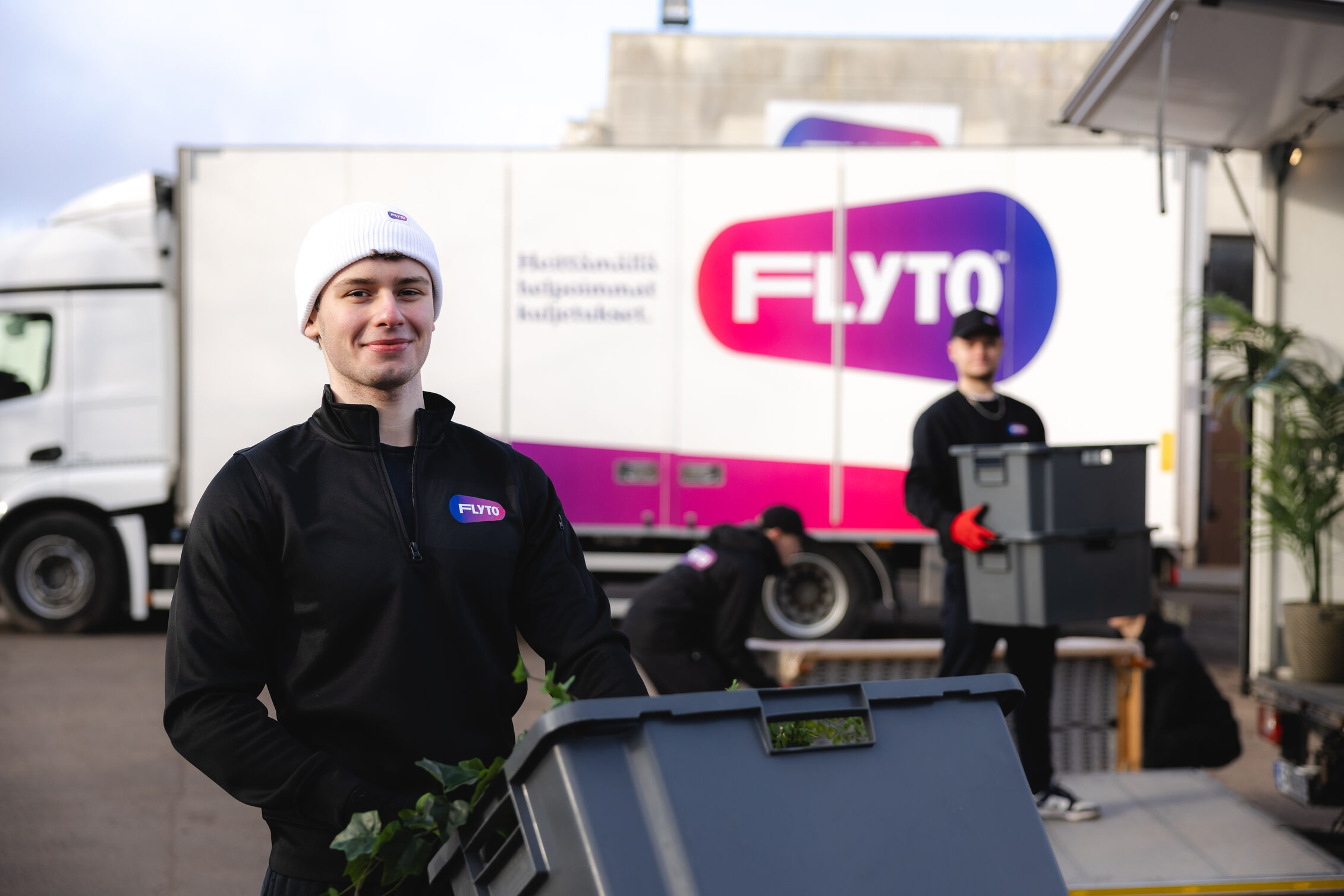
Flyto runs its own offices, warehouses, crews, and vehicles across Northern, Central, and Southern Europe, so much of the German collection, export documentation, and consolidation for your shipment stays in-house. For the ocean or air leg and the Chilean side, we work through a carefully vetted network of freight partners and trusted local agents in Chile who handle customs clearance and last-mile delivery on the ground, so you get one point of contact from your German address to your new home.
Frequently asked questions
Do I need a Chilean visa before I can ship my household goods duty-free?
Yes. The duty-free menaje de casa franchise only applies with an approved temporary residence or contract visa of one year or more from Chile’s Servicio Nacional de Migraciones — arrange the visa first.
Can I bring my car from Germany to Chile?
In practice, no. Chile generally bans importing used vehicles, and the main legal exemption is reserved for returning Chilean citizens after an extended period abroad, not foreign residents.
How much does German exit tax cost me?
For most private individuals moving without a significant company shareholding, there is no special exit tax — you simply end your unlimited German tax liability when you deregister and move your habitual residence abroad. Wegzugsbesteuerung under §6 AStG only bites if you hold 1%+ of a corporation and meet the residence-history test (broadly, unlimited tax liability for at least 7 of the last 12 years).
What happens if I don’t deregister in Germany?
Beyond an administrative fine (rarely enforced but legally possible), an outstanding registration can complicate closing German bank accounts, insurance, and tax matters, and may be requested by Chilean authorities or your consulate as proof of your move.
Do I need a separate certificate for my dog if it already has an EU pet passport?
If your pet is arriving directly from an EU country with a valid EU pet passport, SAG accepts that in place of a separate Certificado Zoosanitario de Importación; pets travelling from Germany still need current rabies vaccination and microchip/tattoo identification regardless.
Is there a weight or value limit on what I can bring to Chile duty-free?
Yes — household goods are capped at US$6,750 FOB and work tools at US$2,025 FOB under the standard foreigner’s franchise; anything above that is subject to normal Chilean import duty and VAT.
Sources
- Aduanas de Chile — Franquicia de menaje de casa para extranjeros y extranjeras
- Aduanas de Chile — Retorno de chilenos y residentes extranjeros
- Aduanas de Chile — Beneficios y franquicias
- Aduanas de Chile — Declaración de dinero
- Aduanas de Chile — Importación de vehículos
- Biblioteca del Congreso Nacional de Chile — Ley 18.483 (Art. 21)
- Servicio Nacional de Migraciones — Residencia temporal para extranjeros fuera de Chile
- SAG — Autorización sanitaria para ingresar a Chile con perros y gatos
- Zoll (German Customs) — Ausfuhr in einen Nicht-EU-Staat
- Zoll (German Customs) — Umzug (Übersiedlungsgut)
- Zoll (German Customs) — Cash declaration entering Germany from a non-EU country
- Berlin.de — Abmeldung einer Wohnung
- Bundesministerium der Finanzen — Wegzugsbesteuerung (§6 AStG) notification form
- European Commission — Bringing a pet into the EU from a non-EU country
- BMLEH (German Federal Ministry) — Pets entry regulation
- Port of Hamburg — official port information
- Puerto San Antonio — official port company