

Moving to Geneva (2026): The Complete Relocation Guide

Geneva is Switzerland’s most international city — a compact canton of roughly half a million people wrapped around the end of the lake, where a large share of residents hold a foreign passport and the UN, WHO, WTO, ILO, the Red Cross and (just up the road) CERN set the rhythm of the place. It is also one of Western Europe’s hardest cities to actually move into: Switzerland sits outside the EU customs union, so your furniture crosses a real border and needs customs clearance; the housing market is the tightest in the country; and the old Vieille-Ville and lake-side buildings were never built for a removal truck. This guide covers the practical mechanics of moving to Geneva in 2026 — the customs and logistics only a mover knows, where to live and what rent really costs, how to find a flat and register at the OCPM, and what monthly life actually costs — with official sources throughout.
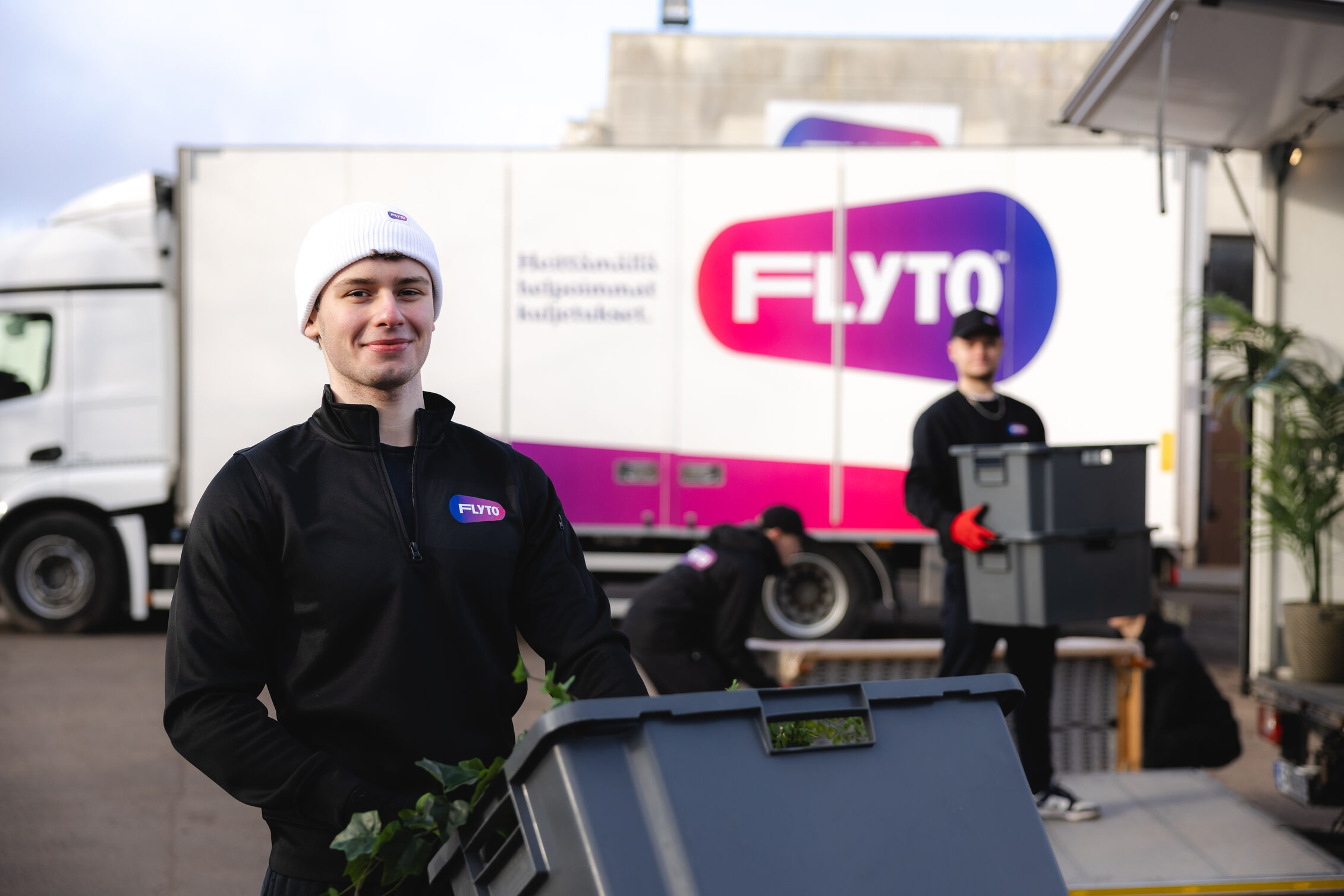
Freshness note: rules and prices verified against geneve.ch, ge.ch, the Federal Office for Customs and Border Security (BAZG/OFDF), TPG, priminfo.admin.ch and the Federal Office of Public Health (BAG) in 2026. Fees and rents move — confirm figures with the linked authorities before you rely on them.
Quick answer: moving to Geneva in 2026
What does it cost to move to Geneva? An international household move (a full flat) typically lands in the low-to-mid four figures from within Europe and higher from overseas, driven mostly by volume, distance and access. Because Switzerland is outside the EU, your shipment also needs customs clearance even from a neighbouring country, and Geneva’s access difficulties (see below) add real cost — so get a fixed quote for your specific address rather than a generic estimate. Get a Flyto quote here.
How long does the move take? Road moves from within Europe are usually a few days to about two weeks door-to-door; overseas sea freight runs several weeks. The Geneva-specific quirks everyone underestimates: your household goods must be declared to Swiss customs (household-effects relief with Form 18.44), and the truck needs a public-space permit from the Ville de Genève requested at least ten working days ahead. Miss either and move day stalls.
Key takeaways
- Your furniture crosses a real customs border. Switzerland is not in the EU customs union, so household goods are cleared at the border — but if you are transferring your residence, they come in free of duty and VAT as effets de déménagement using Form 18.44, provided you have owned and used them for at least six months and will keep using them (BAZG).
- The moving truck needs a public-space permit. Occupying the kerb or a parking bay for a move requires an autorisation d’utilisation de l’espace public, requested from the Ville de Genève at least 10 working days in advance; a private provider handling the request adds a CHF 50 fee on top of the occupation tax (Ville de Genève).
- Geneva has almost no empty homes. The cantonal vacancy rate is about 0.34% — the lowest in French-speaking Switzerland — so the flat search, not the move, is the hard part (Le News, citing the Federal Statistical Office).
- You must register at the OCPM within 14 days. Anyone settling in Geneva announces their arrival to the Office cantonal de la population et des migrations within two weeks and receives a residence permit — typically a B, L or, for staff of international organisations and their families, a Ci permit (ge.ch).
- Health insurance is compulsory and expensive. Every resident must take out basic LAMal cover within three months of arrival (backdated to arrival), and Geneva has among the highest premiums in the country — well above the 2026 national average of CHF 393.30/month (priminfo.admin.ch).
For the practical side of the move – crews, customs paperwork and a fixed price – start here: international moving companies in Switzerland.
1. The move into Geneva — logistics only a mover knows
This is the part generic ”moving to Geneva” guides skip, and it is exactly where a Geneva move goes wrong. Three things set Geneva apart from a move within the EU: it is a customs border, the old streets and buildings fight the truck, and cheaper housing often sits across the French frontier.
Swiss customs: your household goods clear a real border
Switzerland is not in the EU, so even a move from France, Germany or Italy is an import. The good news: if you are genuinely transferring your domicile to Switzerland, your used household effects come in free of customs duty and VAT. You declare them as effets de déménagement / Übersiedlungsgut using the official Form 18.44 from the Federal Office for Customs and Border Security (BAZG/OFDF). The conditions the customs office actually checks:
- Prior use: the goods must have been used by you personally for at least six months before the move, and you must continue to use them in Switzerland (BAZG — moving, household effects).
- Transfer of domicile: you prove you are actually relocating — an employment contract, a Swiss lease, or confirmation you have deregistered from your old country. EU/EFTA nationals do not have to present a residence permit for this.
- A complete inventory: Form 18.44 requires a detailed, valued list of everything in the shipment, in duplicate. Vehicles, alcohol above set quantities and new items are treated separately and may be dutiable.
- Timing: BAZG advises emailing your completed relocation file to the relevant customs office at least two working days before you cross the border, so clearance is not improvised at the barrier.
None of this is hard — but it is paperwork with real consequences if it is wrong, and it is the single biggest difference between a Swiss move and an intra-EU one. A mover who does Switzerland regularly prepares the 18.44 and the inventory as a matter of course.
The moving-day parking permit
You cannot count on free kerb space in central Geneva. To keep a spot for the truck — or to stand a furniture lift on the pavement — you need an autorisation d’utilisation de l’espace public pour un déménagement from the Ville de Genève. The key facts from the city itself (Ville de Genève):
- Who grants it: the city’s Service de l’espace public issues the authorisation for any occupation of the public domain for a move. Signage instructions (the actual no-parking signs) are then set by the cantonal mobility service.
- Lead time: the request must be filed at least 10 working days before the occupation starts. In practice that means booking a fortnight or more ahead, and longer in busy central sectors.
- Cost: a fixed occupation tax scaled to the duration and area used, plus a CHF 50 processing fee when a private service provider files the request on your behalf. Your mover normally handles the whole application and the signage.
- Two ends: if you are moving within or into Geneva you often need a reserved space at both addresses. This is the detail people forget, and there is no fix on the day.
Vieille-Ville, no lift, and the monte-meubles
Geneva’s most sought-after flats sit in exactly the buildings a removal team dreads: the medieval Vieille-Ville with its stepped lanes and no vehicle access, and the elegant 19th-century blocks along the lake and in Eaux-Vives and Champel — high-ceilinged, beautiful, and frequently without a lift or with a cage lift far too small for a sofa. The standard Geneva solution is an exterior furniture lift, a monte-meubles, run up the façade to bring bulky items in through a window or balcony. It needs its own reserved space on the street (another reason the public-space permit matters) and it has to be planned before the day, not discovered when the wardrobe jams on a spiral staircase. A mover who knows Geneva assesses staircase width, floor and access in advance and books the monte-meubles into the quote.
The cross-border factor
Uniquely among Swiss cities, a large share of the Geneva workforce lives in France and commutes in — well over 100,000 cross-border workers (frontaliers) cross the frontier daily. That shapes moves in two ways. First, many people moving to ”Geneva” are actually settling in Annemasse, Saint-Julien-en-Genevois or Ferney-Voltaire on the French side, which is a France import with its own rules, not a Swiss one. Second, even a Swiss-side move often involves loading or unloading near the border. Knowing which side of the frontier the customs paperwork belongs on is part of doing this properly.
2. Where to live — Geneva neighborhoods by profile
Geneva is small and its character shifts within a few tram stops. The rent figures below are indicative monthly asking rents for typical 2–3 room flats in 2026, drawn from the Investropa Geneva rent index and cross-checked against live listings on Homegate and ImmoScout24. Everything here is scarce and expensive by European standards — treat these as starting points, not guarantees.
Best for families:
- Champel (~CHF 3,000–4,500 for a family flat) — leafy, quiet, upper-middle-class, close to the university hospital (HUG) and good schools. Genuinely calm and green, and priced accordingly; short on nightlife.
- Eaux-Vives (~CHF 2,500–3,400 for a 2–3 room) — the desirable lake-side quarter, now served by the Léman Express station; a mix of families and professionals with parks, the lake and restaurants. Central and pricey, and the best flats go instantly.
- Champel and the right bank villages / Vaud (Nyon, Coppet) — families wanting space increasingly look up the lake into canton Vaud, trading a longer (but rail-linked) commute for more room per franc.
Best for young professionals:
- Pâquis (~CHF 2,000–2,800 for a 2 room) — the dense, multicultural quarter behind the station and the lake: cheap eats, bars, red-light edges and 24-hour life. Central and characterful, but noisy and gritty street to street.
- Plainpalais / Jonction (~CHF 2,200–3,000) — student and creative Geneva around the university and the famous flea-market plaine; lively, walkable and well-connected, if short on quiet.
- Carouge (~CHF 2,300–3,000) — the ”little Italy” south of the river, with Sardinian-style low houses, courtyards, markets and a distinct village feel. Charming and popular, so competition is fierce.
Best for budget (relatively):
- Servette / Petit-Saconnex (~CHF 1,900–2,600) — solid residential right-bank neighbourhoods near the international district; less glamorous, better value, well served by trams.
- Vieille-Ville — the historic old town is beautiful and central but has little stock, high rents and difficult building access; a lifestyle choice more than a value one.
- Across the border in France (Annemasse, Ferney-Voltaire, Saint-Julien) — rents run roughly 40–60% below the Swiss side, which is why so many commute; a Geneva-side flat around CHF 1,800–2,400 can drop to well under €1,200 a few kilometres into France. You will need a cross-border worker (G) permit and to factor in the frontier crossing.
3. The Geneva housing market — how flats are actually found
Geneva has the tightest rental market in Switzerland: the cantonal vacancy rate is about 0.34%, the lowest in the French-speaking cantons (Le News). Dozens of applicants per viewing is normal. Here is how it actually works.
- Where to search: the main portals are Homegate, ImmoScout24 and Flatfox; many good flats also circulate through régies (managing agents) before they are advertised. Register with the big régies and move within hours of a listing appearing.
- The dossier de location. Landlords expect a complete application bundle on the spot: ID and residence permit, your last three payslips or an employment contract, and — the document that decides it in Switzerland — an extrait du registre des poursuites (debt-collection register extract) no more than three months old, proving you have no unpaid debts. Have it all as one PDF before you view.
- Deposit (garantie de loyer): legally capped at three months’ rent and paid into a blocked tenant deposit account in your name; the landlord cannot touch it without your agreement or a court order, and it is released when you leave (Pouvoir judiciaire de Genève). Deposit-insurance products exist as an alternative but cost an annual premium.
- Scam warning. Fake listings target newcomers and cross-border searchers. Never transfer a deposit or a ”reservation” before you have viewed the flat in person and dealt with the real régie. Classic red flags: an ”owner abroad”, keys promised by post against advance payment, prices well below the market, or pressure to pay to a foreign IBAN.
4. Registering at the OCPM — arrival and permits
In Geneva, arrival registration and your residence permit are handled together by the Office cantonal de la population et des migrations (OCPM). It is the gateway to everything else — bank account, salary, insurance. The rules (ge.ch):
- 14-day deadline. Anyone settling in Geneva must announce their arrival to the OCPM within 14 days. EU/EFTA nationals can announce from up to 30 days before arrival; non-EU/EFTA nationals generally need their permit approved before they move.
- What you bring: passport or ID, your rental contract or landlord confirmation, an employment contract, passport photos and (for non-EU/EFTA) the relevant permit paperwork. You register your commune of residence in the same step.
- Permit types: a B permit for stays/employment of 12 months or more, an L permit for shorter stays, and — very common in Geneva — a Ci permit for the spouses and children of international-organisation and embassy staff, which allows them to work. The OCPM sits at Route de Chancy 88, 1213 Onex.
- If you are leaving Switzerland rather than arriving, the equivalent step is deregistration — see our Swiss deregistration guide.
5. Cost of living in Geneva (2026)
Geneva is consistently ranked among the most expensive cities in the world, and rent plus health insurance are the two lines that dominate a budget:
- Rent is the big number — see section 2. A central 2–3 room flat commonly runs CHF 2,000–3,400 a month, family flats in Champel or Eaux-Vives CHF 3,000–4,500 (Investropa). On top of rent you usually pay charges (heating, hot water, shared costs).
- Health insurance (LAMal) is a fixed monthly premium per person, not deducted from salary. The 2026 national average is CHF 393.30/month, and Geneva sits well above it — budget roughly CHF 500–700 for a working adult on a standard model, depending on insurer and deductible (priminfo.admin.ch). Lower-income households can claim a cantonal subsidy.
- Public transport. A single Tout Genève ticket (60 minutes) is CHF 3.00 and a day card CHF 10.00; the standard adult monthly pass is about CHF 70 and the annual pass about CHF 500 (TPG). One ticket works across the whole unireso network — TPG trams and buses, the Mouettes lake shuttles and the Léman Express within the canton.
- Utilities. Electricity, gas and water in the canton come from the public utility SIG (Services Industriels de Genève); a typical household spends on the order of CHF 100–200 a month combined, on top of any charges bundled into rent.
6. Getting settled — health, transport, schools, internet
- Health insurance (LAMal), the 3-month rule. Basic cover is compulsory for every resident and you have three months from arrival to sign up with an insurer of your choice; cover is then backdated to your arrival date, so you are never uninsured in between (ch.ch, BAG). Compare premiums before you pick — the spread between insurers for identical cover is large.
- Transport and the Léman Express. Geneva runs on TPG trams and buses plus the Léman Express, the cross-border regional rail network that links Coppet in Vaud through Cornavin and Eaux-Vives out to Annemasse, Evian, Annecy and St-Gervais — Annemasse to central Geneva takes about 20 minutes (Léman Express). Most residents skip the car; parking is scarce and expensive.
- Schools. The public system teaches in French and is free and good, which suits families planning to stay. Geneva is also the world capital of international schooling — the International School of Geneva (Ecolint), Collège du Léman, Institut Florimont and others offer English-language and IB curricula, but fees run into the tens of thousands of francs a year and popular schools keep waiting lists, so apply early.
- Internet. The main providers are Swisscom, Sunrise and Salt, with fibre widely available across the city and speeds up to 1 Gbit/s in most buildings. Installation can take a couple of weeks after you sign, so order as soon as you have an address.
7. How Flyto handles your move to Geneva
Everything in section 1 is why a Geneva move rewards a mover who knows Switzerland specifically — and it’s where Flyto earns its keep. We prepare your Swiss customs clearance — the Form 18.44 household-effects declaration and the valued inventory — so your furniture crosses the border duty- and VAT-free instead of being held up at the barrier. We arrange the public-space permit with the Ville de Genève at both addresses, with the ten working days’ lead time the city requires, so there is a legal, reserved space when the truck arrives. And we assess Vieille-Ville and lake-side access in advance — staircase, floor, lift — and bring a monte-meubles when the sofa won’t make the stairwell, rather than discovering the problem mid-carry. That’s the honest difference between a generic van hire and a relocation partner who has done Geneva street by street. Get a fixed quote for your Geneva move, browse our full Switzerland moving guides, our Swiss customs guide for household goods, or compare Geneva with our Zurich relocation guide. Moving on to France? See Switzerland to France.
Moving to Geneva? Get a fixed quote.
Tell us your addresses and volume and we’ll price the whole move — including Swiss customs clearance, the public-space permit and any furniture lift your building needs. No surprises at the border or on the day.
Frequently asked questions
Do I pay customs duty on my furniture when moving to Geneva?
No, not if you are transferring your residence to Switzerland. Because Switzerland is outside the EU customs union your goods are cleared at the border, but used household effects come in free of duty and VAT as effets de déménagement using Form 18.44, provided you have owned and used them for at least six months and will keep using them. You need a detailed inventory, and BAZG advises sending your relocation file to the customs office at least two working days before crossing (BAZG/OFDF).
Do I need a parking permit for the moving truck in Geneva?
In practice, yes. Occupying the kerb or a parking bay for a move requires an autorisation d’utilisation de l’espace public from the Ville de Genève, filed at least ten working days in advance. There is a fixed occupation tax based on duration and area, plus a CHF 50 fee if a private provider files it for you. The signage is set by the cantonal mobility service, so most people delegate the whole job to their mover (Ville de Genève).
How hard is it to find an apartment in Geneva?
Very. Geneva’s vacancy rate is about 0.34%, the lowest in French-speaking Switzerland, and dozens of applicants per viewing is normal. Success depends on a complete dossier — ID and permit, three payslips or a work contract, and an extrait du registre des poursuites under three months old — ready as one PDF before you view. Register with the main régies and portals (Homegate, ImmoScout24, Flatfox) and respond within hours.
How big a deposit can a Geneva landlord ask for?
The garantie de loyer is capped at three months’ rent and must be paid into a blocked tenant deposit account in your name. The landlord cannot draw on it without your agreement or a court decision, and it is released when the tenancy ends. Deposit-insurance products are an alternative but charge an annual premium instead of tying up cash (Pouvoir judiciaire de Genève).
When do I have to register in Geneva, and which permit will I get?
You announce your arrival to the OCPM within 14 days of settling. Common permits are the B (stays or employment of 12 months or more), the L (shorter stays) and — very common in Geneva — the Ci for the spouses and children of international-organisation and embassy staff, which lets them work. Non-EU/EFTA nationals generally need their permit approved before moving (ge.ch).
How much is health insurance in Geneva?
Basic LAMal cover is compulsory and paid as a fixed monthly premium per person. The 2026 national average is CHF 393.30 a month, and Geneva is among the most expensive cantons — budget roughly CHF 500–700 for a working adult on a standard model, depending on insurer and deductible. You have three months from arrival to enrol, and cover is backdated to your arrival date; lower-income households can claim a cantonal subsidy (priminfo.admin.ch).
Is it cheaper to live in France and commute to Geneva?
Often, yes — which is why well over 100,000 cross-border workers do it. Rents in Annemasse, Ferney-Voltaire and Saint-Julien run roughly 40–60% below the Swiss side, and the Léman Express reaches central Geneva from Annemasse in about 20 minutes. You need a cross-border worker (G) permit, and a move to the French side is a France import with its own customs and registration rules, not a Swiss one.
Official sources
- BAZG/OFDF — Moving to Switzerland: procedure and Form 18.44
- BAZG/OFDF — Moving (household effects), duty-free conditions
- Ville de Genève — public-space authorisation for a move
- ge.ch — Announcing my arrival at the OCPM (registration + permits)
- Pouvoir judiciaire de Genève — rental deposit (garantie de loyer)
- Le News — Swiss vacancy rates 2025 (Geneva 0.34%)
- Investropa — Geneva rent index 2026
- TPG — tickets and passes (Tout Genève)
- Léman Express — cross-border regional rail
- priminfo.admin.ch — official LAMal premium comparison
- BAG — compulsory health insurance requirement
- ch.ch — moving to Switzerland (official portal)
- Flyto — Swiss customs for household goods
- Flyto — Swiss deregistration guide
- Flyto — moving to Zurich guide
- Flyto — Switzerland to France route guide
- Flyto — Switzerland moving guides
Hiring an international mover? See our full International removals to Switzerland service — Flyto’s own European hubs, vetted local partners and one English-speaking coordinator, door to door.