Moving from Switzerland to the Netherlands (2026): Complete Guide

Switzerland to the Netherlands is a well-travelled, entirely European corridor — but it isn’t a simple EU-to-EU move. Switzerland sits outside the EU/EEA customs union, so unlike a move between, say, Germany and France, your household goods do go through an actual customs procedure on both ends. The good news: for a genuine relocation of used personal belongings, that procedure exists specifically to let you import everything duty- and VAT-free, not to tax you. Meanwhile, because Switzerland and the EU have a bilateral Agreement on the Free Movement of Persons, you do not need a visa or work permit to live in the Netherlands — the real task on the people side is registration, not immigration. This guide is for anyone living in Switzerland (Swiss national or resident foreigner) relocating to the Netherlands.
Key takeaways
- Household goods can move duty-free, but a customs declaration is still required — Switzerland is not in the EU customs union, so Dutch customs treats a move from Switzerland like any move from a "non-EU country," with a relief scheme (not free movement of goods) for used personal effects (Dutch Customs).
- No visa or work permit needed — under the Switzerland–EU/EFTA Agreement on the Free Movement of Persons, Swiss and Dutch/EU citizens can freely take up residence and work in each other’s territory (SEM).
- You must still register locally in the Netherlands — EU/EEA/Swiss citizens staying more than 4 months register in the Personal Records Database (BRP) at their new municipality and receive a BSN (citizen service number) (Den Haag / BRP registration).
- No IND residence permit is normally required — EU, EEA and Swiss citizens are exempt from Dutch immigration registration in almost all cases; your passport or ID is your proof of lawful residence (IND).
- Compulsory Swiss health insurance ends for most movers (pension recipients and some frontier-worker cases are an exception), and you must arrange Dutch basic health insurance (zorgverzekering) within 4 months of registering (BAG, Government.nl).
- Deregister at your Swiss Gemeinde before departure — this is what ends your Swiss tax liability and unlocks cancellation of compulsory insurance and other exit steps (EDA).
- Dogs and cats travel under EU pet-passport rules — Switzerland is treated as EU-equivalent for pet travel, so a valid EU pet passport, microchip and rabies vaccination are normally all you need (NVWA).
- Your car can also move largely tax-free, but it goes through its own RDW registration and BPM (vehicle tax) exemption request, separate from your household goods (RDW).
1. What actually applies: free movement of people, real customs for goods
It’s worth separating the two halves of this move clearly, because they’re governed by different rules:
People: Switzerland is neither an EU nor an EEA member, but the bilateral Agreement on the Free Movement of Persons (AFMP) between Switzerland and the EU gives Swiss and EU/EEA citizens the mutual right to live, work, or be self-employed in each other’s territory without a work permit, provided you have a job, are self-employed, or (if not working) can show sufficient financial means and full health insurance. This is functionally very close to intra-EU freedom of movement.
Goods: Switzerland is outside the EU/EEA customs union. That means your move does go through a formal customs procedure — but for genuine household relocations, both sides run a relief scheme, not a tax grab:
- On export from Switzerland, no export duty is charged and there’s no complex clearance process — you present an inventory listing your Swiss and Dutch addresses to a manned Swiss customs office as you leave, and declare any private vehicle separately using its Swiss registration document (BAZG).
- On import into the Netherlands, Dutch Customs treats a move from Switzerland the same as any move from a non-EU country: household effects can be imported free of duty and VAT if you meet all of the following — you lived outside the EU (i.e., in Switzerland) for at least 12 consecutive months, you owned and used the goods for at least 6 months, you keep using them personally, you don’t lend, pledge, lease or transfer them within 12 months of import, and you import them within 12 months of settling in the Netherlands. Crucially, your removal company files the declaration for you, using a special relief code in the customs system — you don’t submit this yourself (Dutch Customs).
Alcohol, tobacco, commercial vehicles and non-portable professional equipment are excluded from the relief and always taxed. Keep your signed inventory and either your new BRP registration confirmation or your Swiss deregistration certificate plus a supporting document (rental contract, employment contract) — your mover will need these for the Dutch declaration.
2. Leaving Switzerland: deregistration, tax, insurance, licence, vehicle
Deregister at your Gemeinde. Before or on your departure date, file an Abmeldung ("notification of departure") at your Swiss municipality. This is the trigger that ends your Swiss residence, your obligation to hold Swiss compulsory health insurance in most cases, and your unlimited Swiss tax liability. Get the deregistration certificate (Abmeldebestätigung) — you’ll need it for your bank, insurer, and the Dutch import declaration (EDA – Emigrating). If you’re a Swiss citizen, also register with the Swiss embassy or consulate responsible for the Netherlands so you’re recorded in the Register of the Swiss Abroad.
Tax liability ends with the move. Switzerland levies no exit tax; your unlimited tax liability simply ends once you genuinely transfer your domicile abroad (vacate your home, deregister, actually reside in the Netherlands) — you’ll file a final, pro-rated cantonal/federal return for the departure year.
Cancel or convert compulsory health insurance (LAMal/KVG). For most people who take up residence and work in the Netherlands, compulsory Swiss insurance ends once the move is genuine — cancel it with your insurer using the Gemeinde’s confirmation of departure as proof. There are exceptions under the Switzerland–EU coordination rules: people who continue drawing a Swiss pension, or certain frontier-worker situations, may be required to keep Swiss LAMal cover (with premiums based on Dutch residence) rather than cancel it, so check your specific category with your insurer or the Federal Office of Public Health (BAG) before you deregister (BAG).
Driving licence. Swiss licences remain valid for driving in the Netherlands; there’s no requirement to exchange it immediately, but you can exchange it for a Dutch one at your municipality, which forwards the application to the RDW (RDW).
Vehicle export. If you’re taking your car, present its Swiss registration document (Fahrzeugausweis) to Swiss customs when you cross the border (BAZG).
Second-pillar pension (BVG/Pensionskasse). If you’re leaving the workforce or your pension fund on departure, note that when moving to an EU/EFTA country such as the Netherlands, the mandatory ("obligatorium") portion of your vested benefits normally has to stay in a Swiss vested-benefits account until retirement age — only the extra-mandatory portion can usually be paid out in cash, unless you can show you won’t be subject to compulsory state pension insurance in the Netherlands (Stiftung Auffangeinrichtung BVG). If you already draw an AHV/AVS pension, notify your compensation fund (Ausgleichskasse) before departure so payment can continue to the Netherlands (ch.ch – OASI pension abroad).
3. How your household goods actually move (freight-industry estimate)
The routing and timings below are typical freight-industry estimates, not official figures — actual transit depends on your specific origin/destination, load size and carrier schedule.
Most Switzerland–Netherlands household moves go by road. A full truckload from the Zurich or Basel area to Amsterdam, Rotterdam or Utrecht runs roughly 700–850 km via the A3/A5 through Karlsruhe, Frankfurt and Cologne, or via Basel–Strasbourg–Brussels further south — typically a 1–2 day direct transit for a dedicated truck, or 1–3 weeks for a shared/groupage load that consolidates with other customers’ shipments along the same corridor to keep costs down. From cities further from the border (Geneva, Ticino), add a day or more of transit. Sea or air freight is essentially never used on this route; it’s a road corridor.
4. Arriving in the Netherlands: registration, healthcare, tax, licence
Register in the BRP promptly after finding a fixed address, and always before the 4-month mark. EU/EEA and Swiss citizens intending to stay more than 4 months must book an appointment and register in person at their municipality’s BRP desk with a passport/ID and proof of address; registration is typically processed within about 4 weeks, after which you receive a BSN by post — the citizen service number needed for almost everything else (bank account, employer, healthcare, tax) (Den Haag – 1st BRP registration).
No IND residence-permit registration in the normal case. As an EU, EEA or Swiss citizen you generally do not need to register with the Immigration and Naturalisation Service (IND) at all — your passport or national ID card is sufficient proof of your right to reside, unless you previously had Dutch residency that the IND formally ended (IND).
Take out Dutch health insurance within 4 months. Everyone living or working in the Netherlands must take out a basic zorgverzekering policy with a private insurer within 4 months of registering, even if you already had Swiss coverage; cover should be effective from your registration date, and late sign-up can mean backdated premiums and fines (Government.nl).
File an M-form for your move year. For the tax year in which you moved, Dutch tax authorities require the migration ("M") tax return, splitting your income into the period before and after you became a Dutch resident — filed via Mijn Belastingdienst (Belastingdienst).
Driving licence exchange. You can exchange your Swiss licence for a Dutch one at your municipality, which forwards it to the RDW; the Dutch licence is then valid for up to 10 years (RDW).
Vehicle registration. Bringing your car requires an RDW inspection appointment; request the BPM (private vehicle tax) exemption from the Tax and Customs Administration before your inspection, bring the original Swiss registration certificate, ID and driving licence, and arrange third-party liability (WA) insurance before driving on Dutch plates (RDW).
5. Pets
Dogs, cats and ferrets travelling from Switzerland to the Netherlands follow EU pet-travel rules rather than third-country rules: Switzerland is one of a small group of non-EU territories (with Norway, Iceland, Liechtenstein, the Faroe Islands and Greenland) that Dutch authorities treat as EU-equivalent for this purpose. In practice you need a microchip, a valid rabies vaccination, and an EU pet passport — no additional import permit or rabies-titer blood test is required, unlike for a genuine third country (NVWA).
6. Money, banking and things people forget
- Bank account: Open a Dutch account (or arrange a Euro-compatible international account) — you’ll need it, plus your BSN, for salary, rent and utilities. Notify your Swiss bank of your new non-resident status; some Swiss accounts and investment products have restrictions for EU-resident customers.
- Pension coordination: Beyond the second-pillar point above, check your first-pillar AHV/AVS position — payments to people living in the Netherlands generally continue, but you must inform your compensation fund of the move so your file transfers to the Swiss Compensation Fund abroad (ch.ch).
- Rental deposit and utilities: Terminate your Swiss lease/notify your Hauswart per your notice period, and settle final municipal/cantonal charges before deregistering — some cantons only issue the final tax bill after your Abmeldung is processed.
- Post and address redirection: Set up Swiss Post redirection and update your address with Swiss AHV, pension funds, insurers and banks — Dutch institutions will separately need your new BSN-linked address once registered.
- School enrolment: If you have children, deregister them from their Swiss school and start Dutch school/childcare enrolment through your new municipality early — places, especially in international schools, fill up.
How Flyto handles your Switzerland to the Netherlands move
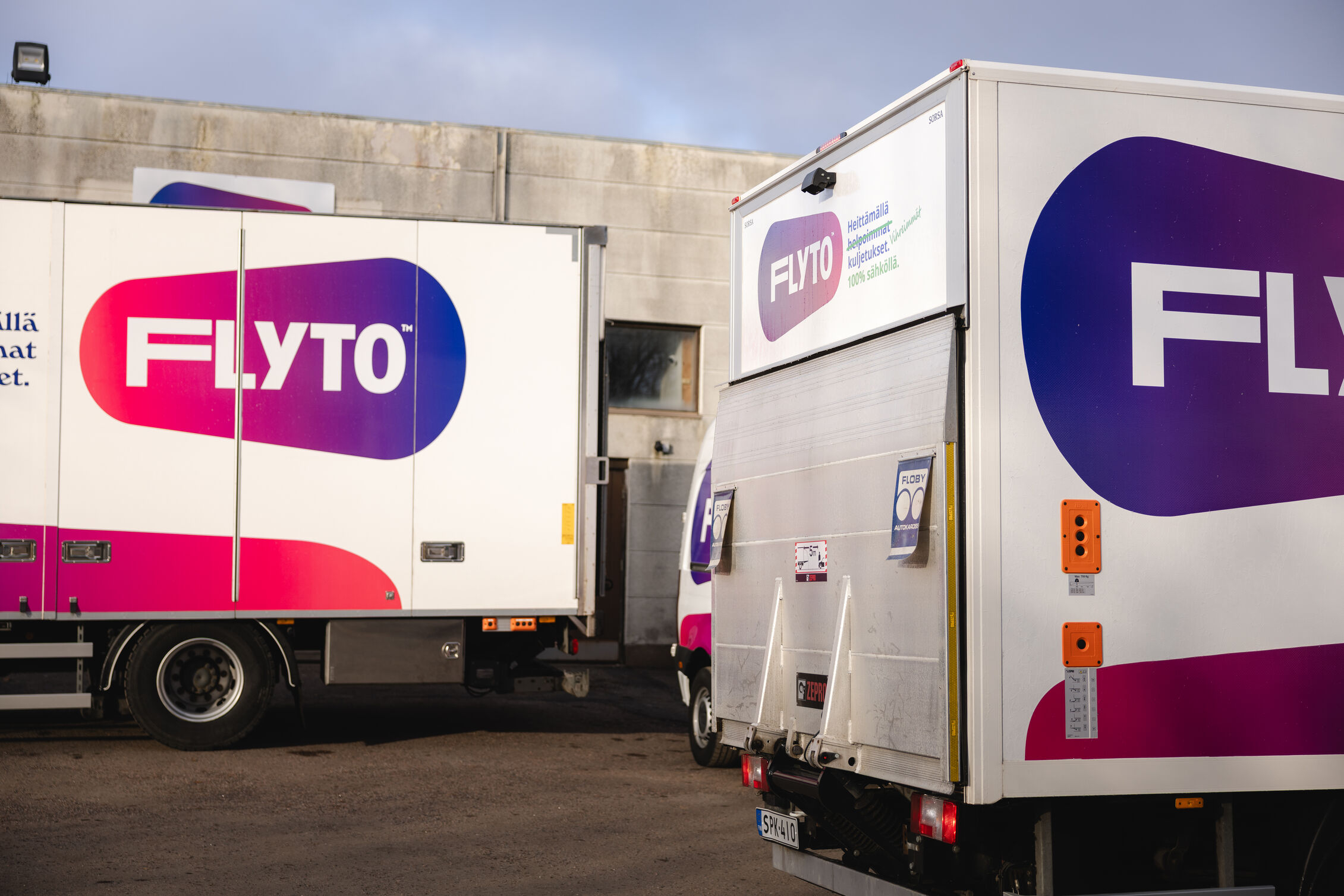
Flyto runs its own offices, warehouses, crews and vehicles across Northern, Central and Southern Europe, so for a corridor like Switzerland–Netherlands we typically handle planning, packing and the door-to-door road transport with our in-house teams. Where it makes sense — a specific regional pickup, a shared groupage slot, or capacity at peak season — we bring in a carefully vetted partner carrier from our European network, always coordinated under one point of contact so you’re not juggling multiple companies. Either way, we prepare the inventory and supporting documents your Dutch customs declaration needs, so the duty-free relief goes through smoothly.
Frequently asked questions
Do I need a visa or work permit to move from Switzerland to the Netherlands?
No. Under the Switzerland–EU Agreement on the Free Movement of Persons, Swiss citizens can live and work in the Netherlands without a visa or work permit, provided they’re employed, self-employed, or can show sufficient means and health insurance if not working (SEM).
Will I pay customs duty on my furniture and belongings?
Not if you meet the relief conditions (12 months’ prior residence in Switzerland, 6 months’ ownership/use of the goods, import within 12 months of settling, personal use only). Your removal company files the duty-free declaration for you with Dutch Customs (Dutch Customs).
Do I have to register with Dutch immigration (IND)?
Generally no — EU, EEA and Swiss citizens are exempt from IND registration; your municipal BRP registration is the step that matters (IND).
What happens to my Swiss health insurance?
For most people it ends once residence genuinely moves to the Netherlands; provide your insurer the Gemeinde’s confirmation of departure to cancel it, and take out Dutch zorgverzekering within 4 months of your BRP registration. Pension recipients and some frontier-worker cases may be required to keep Swiss cover instead — check with BAG or your insurer (BAG; Government.nl).
Can I bring my car without paying vehicle tax?
Usually yes, via a BPM exemption for relocating households, but you must request the exemption before your RDW inspection appointment and complete RDW registration (RDW).
What about my dog or cat?
Switzerland is treated as EU-equivalent for pet travel to the Netherlands — a microchip, valid rabies vaccination and EU pet passport are normally sufficient, with no extra import permit (NVWA).
Sources
- Dutch Customs – Moving to the Netherlands from a non-EU country
- BAZG – Relocation: Export from Switzerland
- BAZG – Leaving Switzerland with personal goods
- SEM – Free Movement of Persons Switzerland–EU/EFTA
- EDA – Emigrating
- Den Haag – 1st BRP registration for EU/EEA and Swiss nationals
- IND – Staying in the Netherlands as an EU, EEA or Swiss citizen
- BAG – Health insurance: persons resident abroad
- Government.nl – When do I need to take out health insurance
- RDW – Exchanging a foreign driving licence
- RDW – Relocating to the Netherlands and taking your vehicle with you
- Belastingdienst – M-form for the year of emigration/immigration
- NVWA – Travelling to the Netherlands with your dog or cat
- ch.ch – OASI (AHV/AVS): Pension payments to people living abroad
- Stiftung Auffangeinrichtung BVG – Cash payout due to emigration