

Moving from Austria to Italy (2026): Complete Guide

Moving from Austria to Italy is a move between two EU member states, and that single fact changes almost everything compared with an intercontinental relocation. There is no customs process for your furniture, no import duty, and no visa to apply for — both countries sit inside the EU customs union and both are open to EU citizens under freedom of movement. What actually needs your attention is administrative: de-registering correctly in Austria, registering correctly in Italy, and keeping your tax, healthcare, and driving status continuous across the border. This guide is written for an Austrian resident (Austrian or otherwise EU/EEA national) relocating to Italy, and covers exactly what applies to an EU-to-EU household move in 2026.
Key takeaways
- No customs, no duty, no import declaration. Austria and Italy are both in the EU customs union, so household goods move under free movement of goods — there is nothing to declare and nothing to pay at the border (Your Europe – Residence documents and formalities).
- You don’t need a visa or work permit. As an EU/EEA citizen you have the right to live and work in Italy; the only real requirement is registering your residence once you’re settled (Your Europe – Residence rights when living abroad in the EU).
- De-register your Austrian address (Abmeldung) within 3 days of moving out, in person, by post, or online with ID Austria/EU Login, and keep the Abmeldebescheinigung — you’ll need it for the Finanzamt, ÖGK, and Italian authorities (oesterreich.gv.at – Abmeldung des Wohnsitzes).
- Register your Italian residence (iscrizione anagrafica) once you’re settled — there’s no strict deadline or penalty for EU citizens. Italy’s national population-registry portal confirms EU citizens face no fine or consequence for not registering, but do it promptly anyway: it’s the gateway to enrolling in the national health service and to everyday paperwork (Anagrafe Nazionale – Servizi per cittadini europei).
- Your EU driving licence stays valid in Italy — no mandatory exchange just for moving, though you can exchange it voluntarily and must exchange after certain events (loss, offence, or after 2 years for an indefinite-validity licence) (Your Europe – Driving licence exchange and recognition).
- Italy gives you 90 days to re-register a foreign-plated car once you’re resident there. There’s no EU-wide law on car registration, so this Italian national rule is what actually governs your timeline, and it’s enforced (BMEIA Generalkonsulat Mailand – KFZ-Angelegenheiten; Your Europe – Car registration formalities).
- Your EU pet passport travels with you unchanged — microchip plus valid rabies vaccination is all that’s needed to bring a dog, cat, or ferret from Austria into Italy (Your Europe – Travelling with pets in the EU).
- Your Austrian IBAN keeps working in Italy — EU rules ban "IBAN discrimination," so Italian landlords, utilities, and employers must accept an Austrian SEPA account exactly like a local one (European Consumer Centre – European bank accounts are valid across the EU).
1. Free movement, and what actually applies to your move
Because both Austria and Italy are EU member states inside the single customs territory, your household goods cross the border under the EU’s free movement of goods. There is no customs declaration to file, no duty to pay, and no "personal effects" concession to claim — those concepts only exist for moves that cross the external EU customs border (for example, to or from Switzerland, the UK, or a non-EU/EEA country). Norway and Iceland, while inside the EEA for people and services, sit outside the EU customs union for goods, so a move involving either of them still needs customs formalities with removal-goods relief. For an Austria–Italy move, none of that applies: your moving truck simply drives across the Brenner Pass or through Slovenia like any other EU internal shipment (Your Europe – Residence documents and formalities).
What you do still need to handle is people-side registration on both ends, tax continuity, healthcare, and your vehicle and driving licence — all covered below.
If you still need to book the removal – price ranges, what is included and the questions to ask before you sign – see international movers for Austria.
2. Leaving Austria: what to close out before you go
De-register your residence (Abmeldung). You must de-register your Hauptwohnsitz at the local Meldeamt (or via ID Austria/EU Login online) within a window of three days before to three days after you actually move out. Deregistration doesn’t require a registration form or landlord confirmation — reporting the move, including by post, is enough. Keep the Abmeldebescheinigung — Austrian and Italian authorities, banks, and your health fund will all ask for it (oesterreich.gv.at – Abmeldung des Wohnsitzes). The Austrian Foreign Ministry (BMEIA) publishes a broader checklist for moving abroad covering documents, insurance, vehicle formalities, and social security notifications (BMEIA – Übersiedlung ins Ausland).
End your Austrian tax residency. After the Meldeamt Abmeldung, the Finanzamt is notified automatically via the central population register (ZMR) and reclassifies you to limited tax liability for any remaining Austrian-source income. It’s still worth notifying the Finanzamt directly with your departure date and requesting confirmation of non-residency, since Italy’s tax office may ask for it. If you hold significant shareholdings, moving your tax residence can trigger Austria’s exit-tax rules on unrealised gains (Wegzugsbesteuerung); within the EU/EEA, payment of any resulting tax can typically be deferred. This is a genuinely technical area — get advice from a tax professional if it applies to you.
Sort out health insurance. Your Austrian public health insurance (ÖGK) doesn’t automatically continue once you shift your main residence to Italy. Under EU coordination rules, responsibility for your healthcare cover transfers to your new country of residence based on your economic status — not your nationality. If you’re a posted worker, cross-border worker, or pensioner, ask ÖGK about an S1 form (the old E106) before you leave, which establishes your entitlement to Italian healthcare; otherwise your EHIC/e-card can bridge necessary medical treatment until you’re enrolled locally (Your Europe – Health insurance cover when living abroad in the EU; BMEIA – Krankenversicherung im Ausland).
Handle your vehicle. You don’t have to deregister your car in Austria before crossing — you can keep driving on Austrian plates until you complete Italian registration (see Section 4 for Italy’s 90-day window). If you’d rather deregister first, it’s free at your Austrian Zulassungsstelle. Either way, plan for the Italian re-registration once you arrive; Austria’s own consulate in Milan actively advises residents to get it done promptly, since Italian traffic police enforce the rule (BMEIA Generalkonsulat Mailand – KFZ-Angelegenheiten).
Other notifications. Cancel or forward mail, notify your pension insurance carrier (contributions and periods abroad remain creditable within the EU), and if you’re male and subject to Austrian conscription rules and will be abroad more than six months, notify your Militärkommando (BMEIA – Übersiedlung ins Ausland).
3. How your household goods actually move
Realistically, an Austria–Italy household move runs entirely by road. From Vienna, Salzburg, or Innsbruck the standard routing crosses the Brenner Pass into South Tyrol and down the A22 into the Italian motorway network — the most direct and most commonly used freight corridor between the two countries. From western Austria (Vorarlberg) some carriers route via Switzerland or through Slovenia if the destination is northeastern Italy (Trieste, Udine, Veneto). These are freight-industry estimates, not guaranteed transit times, and actual dates depend on your mover’s schedule and consolidation:
- Vienna → Milan/Turin (northern Italy): roughly 1–2 days door-to-door for a dedicated truck; longer if your shipment is grouped with other loads.
- Vienna → Rome or further south: typically 2–4 days by road.
- Innsbruck → Verona/Milan (via Brenner): often achievable within a single day for a direct load.
No ferry crossing is required for a mainland Austria–mainland Italy move (this differs from moves to Sicily or Sardinia, which need a short sea leg from the Italian mainland). Because no customs paperwork is involved, the main scheduling variables are simply road distance, whether your shipment is a dedicated truck or shared load, and delivery access at the Italian end (narrow historic city centres, especially in places like Florence, Venice-adjacent towns, or Rome’s ZTL zones, can require a smaller shuttle vehicle for final delivery).
4. Arriving in Italy: registering as an EU citizen
Unlike a non-EU immigration process, there’s no visa or permesso di soggiorno application. The steps that matter are:
1. Get a codice fiscale. This Italian tax code is the key that unlocks almost everything else — renting, opening a bank account, healthcare enrolment, utilities. EU citizens can request it at any Agenzia delle Entrate office by booking an appointment and presenting a valid passport or ID card (Agenzia delle Entrate – Tax identification number for foreign citizens).
2. Register your residence — iscrizione anagrafica. If you’re staying more than three months, you register at the Anagrafe (registry) office of your comune, submitting a declaration of residence. Officially, Italy’s national population-registry portal states there is no fixed deadline and no penalty for EU citizens who don’t register — but in practice, do it as soon as you’re settled, since registration is what unlocks SSN healthcare enrolment and everyday paperwork. You’ll typically need your ID/passport, proof of address (rental contract or a host’s declaration), your codice fiscale, and — depending on your status — proof of employment, sufficient economic resources, or health insurance. The comune verifies your situation and issues an attestazione di iscrizione anagrafica, the document that formally proves your right of residence as an EU citizen (Anagrafe Nazionale della Popolazione Residente – Servizi per cittadini europei).
3. Enrol in the Servizio Sanitario Nazionale (SSN). Once registered as a resident, EU citizens who are employed, self-employed, a family member of an Italian/EU worker, or otherwise meet the qualifying conditions can enrol with their local ASL (Azienda Sanitaria Locale) and receive a tessera sanitaria, giving access to a general practitioner (medico di base) and the public healthcare system on the same footing as Italian citizens (Agenzia delle Entrate – Iscrizione al Servizio Sanitario Nazionale). Until that’s active, your Austrian European Health Insurance Card (e-card/EHIC) can cover medically necessary treatment.
4. Driving licence. Your Austrian (EU) driving licence remains fully valid to drive in Italy — there is no requirement to exchange it just because you’ve moved. You may exchange it voluntarily once you’re an Italian resident. Mandatory exchange only kicks in if the licence is lost or damaged, you commit a driving offence in Italy, or (for licences with indefinite validity) after two years of residence (Your Europe – Driving licence exchange and recognition in the EU).
5. Vehicle re-registration. Italy requires residents driving a foreign-plated car to re-register it locally (immatricolazione) with the Motorizzazione Civile within 90 days of establishing residence — Italian traffic police enforce this actively, and Austria’s own Consulate-General in Milan advises getting it done well before the deadline. Expect to provide the original Austrian registration certificate, proof of a valid roadworthiness test, proof of ownership, and proof of insurance (BMEIA Generalkonsulat Mailand – KFZ-Angelegenheiten; Your Europe – Car registration documents and formalities in the EU).
6. Tax registration. Once your codice fiscale is active and you’re an Italian tax resident (generally once you spend more than 183 days a year there or your centre of vital interests shifts), you’ll file Italian tax returns going forward; keep the Austrian Finanzamt confirmation of non-residency on hand in case Italy’s Agenzia delle Entrate requests it.
5. Moving with pets
Dogs, cats, and ferrets travel freely between Austria and Italy under standard EU pet-travel rules: your pet needs an ISO-compliant microchip (implanted before vaccination), a valid rabies vaccination given at 12 weeks or older, and an EU pet passport issued by an authorised vet documenting both — you’ll also need to wait at least 21 days after vaccination before travelling. As long as the passport is up to date, there’s no quarantine and no separate import process — this is genuinely one of the simplest legs of the move (Your Europe – Travelling with pets and other animals in the EU; European Commission – Travelling with a pet within the EU).
6. Money, banking, and things people forget
- Keep your Austrian bank account if you like — EU rules prohibit "IBAN discrimination" under Article 9 of the SEPA Regulation, so Italian employers, landlords, and utility providers must accept payments to or from your AT-IBAN account exactly as they would an IT-IBAN one; opening a local Italian account is convenient but not legally required for most transactions (European Consumer Centre – European bank accounts are valid across the EU).
- Get your codice fiscale before you need it — it’s requested for things as basic as signing a lease or a mobile phone contract, so obtaining it early (even before the anagrafe registration) saves friction.
- Don’t let the ASL enrolment gap catch you — there can be a window between de-registering ÖGK coverage and activating SSN enrolment; carry your EHIC/e-card until the Italian tessera sanitaria is issued.
- School enrolment and childcare run on comune-level deadlines that are separate from the anagrafe registration — start those conversations early if you’re moving with children.
- Pension continuity — periods of insurance in Austria and Italy are coordinated under EU social security rules, so contribution history isn’t lost, but it’s worth informing your Austrian pension carrier of the move.
How Flyto handles your Austria to Italy move
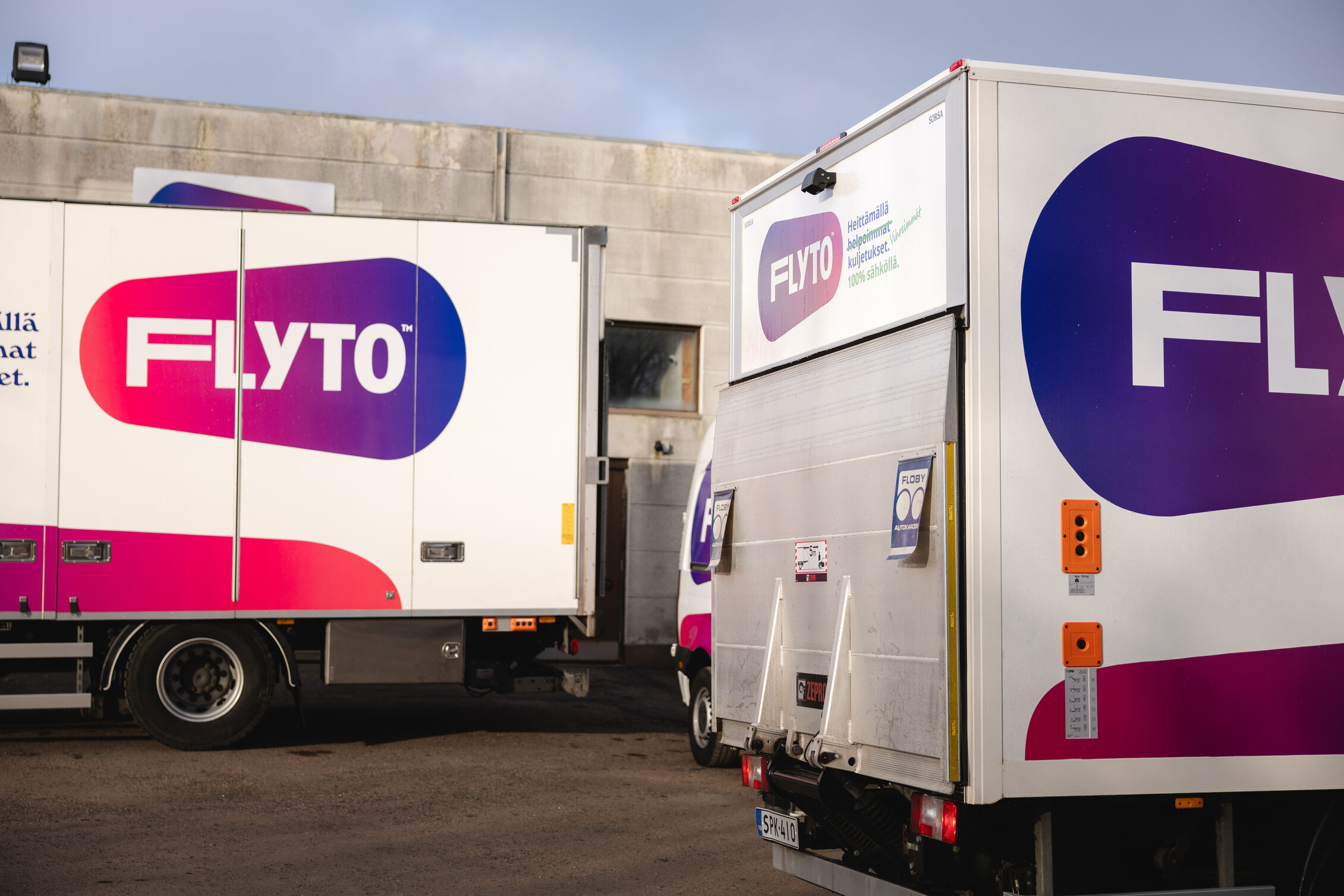
Flyto operates its own offices, warehouses, and moving teams across Northern, Central, and Southern Europe, which means your Austria–Italy corridor is planned and coordinated in-house rather than handed off blind. For final-mile legs into restricted-access city centres, or destinations outside our direct network, we work with a carefully vetted network of partner carriers so your goods still move on a schedule we stand behind end to end.
Frequently asked questions
Do I need to pay customs duty on my furniture moving from Austria to Italy?
No. Both countries are inside the EU customs union, so household goods move under free movement of goods with no customs declaration and no duty (Your Europe – Residence documents and formalities).
Do I need a visa to live and work in Italy as an Austrian resident?
No, as long as you hold EU/EEA citizenship. You have the right to live and work in Italy; the requirement is registering your residence once you’re settled (Your Europe – Residence rights when living abroad in the EU).
How soon do I need to register with the comune in Italy?
There’s no fixed statutory deadline or penalty for EU citizens specifically — Italy’s national population-registry portal confirms this directly. Register as soon as you’re settled anyway, since it’s the step that unlocks SSN healthcare enrolment and other everyday paperwork (Anagrafe Nazionale – Servizi per cittadini europei).
Can I keep driving on my Austrian licence in Italy?
Yes, indefinitely for ordinary use — there’s no requirement to exchange it just because you’ve relocated, though voluntary exchange and certain trigger events (loss, offence, or two years of residence for indefinite-validity licences) can require it later (Your Europe – Driving licence exchange and recognition).
What happens to my Austrian health insurance when I move?
It doesn’t automatically continue once your main residence shifts to Italy — cover responsibility transfers based on your economic status, not nationality. Ask ÖGK about an S1 form if you’re a posted/cross-border worker or pensioner; otherwise your EHIC/e-card bridges necessary care until you’re enrolled in Italy’s SSN (Your Europe – Health insurance cover when living abroad in the EU).
Can I bring my car without any customs paperwork?
Yes — no customs paperwork for the vehicle itself since it’s an EU-internal move. But Italy requires you to re-register it locally (immatricolazione) within 90 days of establishing residence, including proof of roadworthiness and ownership (BMEIA Generalkonsulat Mailand – KFZ-Angelegenheiten).
Sources
- Your Europe – Residence documents and formalities
- Your Europe – Residence rights when living abroad in the EU
- Your Europe – Driving licence exchange and recognition in the EU
- Your Europe – Car registration documents and formalities in the EU
- Your Europe – Travelling with pets and other animals in the EU
- European Commission – Travelling with a pet within the EU
- Your Europe – Health insurance cover when living abroad in the EU
- European Consumer Centre – European bank accounts are valid across the EU
- oesterreich.gv.at – Abmeldung des Wohnsitzes
- BMEIA – Übersiedlung ins Ausland
- BMEIA – Krankenversicherung im Ausland
- BMEIA Generalkonsulat Mailand – KFZ-Angelegenheiten
- Anagrafe Nazionale della Popolazione Residente – Servizi per cittadini europei
- Agenzia delle Entrate – Tax identification number for foreign citizens
- Agenzia delle Entrate – Iscrizione al Servizio Sanitario Nazionale