

Moving from Poland to Argentina (2026): Complete Guide

Relocating from Poland to Argentina means closing out your life as an EU/Polish resident on one end and opening a new one as a foreign resident under Argentine customs and immigration law on the other. This corridor has two very different rule sets: Poland’s export/deregistration process runs through the Krajowa Administracja Skarbowa (KAS) and your local gmina, while Argentina’s import side runs through the customs agency ARCA (Agencia de Recaudación y Control Aduanero, the renamed AFIP) and the Dirección Nacional de Migraciones (DNM). This guide is for a Polish resident — Polish national or foreign resident of Poland — planning a household move to Argentina, whether for work, retirement, or family reasons, and covers both directions plus the reverse trip home.
Key takeaways
- Poland’s customs authority is the Krajowa Administracja Skarbowa (KAS), and commercial export declarations are filed electronically via the AES/ECS2 PLUS system on the PUESC platform, not on paper — podatki.gov.pl, puesc.gov.pl.
- If you’re leaving Poland permanently, you must report your departure ("zgłoszenie wyjazdu za granicę"), which triggers automatic deregistration (wymeldowanie) from your address — gov.pl.
- Most movers owe no Polish exit tax — it only applies when transferred assets (shares, securities, etc.) exceed PLN 4 million, filed on form PIT-NZ — podatki.gov.pl.
- In Argentina, your DNM residency category (temporary vs. permanent) determines what customs relief you qualify for: the standard duty-free household-goods regime and the used-vehicle import benefit are tied to permanent residency — migraciones.gob.ar.
- Household goods (menaje) for foreigners with permanent residency enter Argentina duty-free with no value ceiling, on SITA Form 10221, provided they arrive between 3 months before and 6 months after you do — ARCA.
- Dogs and cats need an International Veterinary Certificate (CVI) in Spanish confirming rabies vaccination and health, valid 60 days, checked by SENASA at the border — argentina.gob.ar/senasa.
- Carrying €10,000 or more in cash out of the EU requires the EU Cash Declaration Form; entering Argentina with USD 10,000 or more in cash requires declaration on form OM 2249-A, while leaving Argentina with that much uses form OM 2250-B — European Commission, Argentina.gob.ar (RG 5659/2025).
- A used car can be imported duty-free by a permanent resident who has lived abroad at least 2 years, one vehicle per person, customs value up to USD 15,000 — ARCA.
1. Why your Argentine immigration status decides your customs treatment
Everything on the Argentine side hinges on one fact: what residency category the Dirección Nacional de Migraciones (DNM) has granted you before your goods arrive. Applications run through the online Radex portal (DNM’s remote residency-filing system), and residency types range from temporary to permanent, each with different rights attached — migraciones.gob.ar, argentina.gob.ar/migraciones/residencias. Customs relief is layered on top of that immigration status, not independent of it:
- The duty-free household-goods (menaje) regime is documented for foreigners with permanent residency ("Extranjeros con residencia en el país (Permanente)"), filed on SITA Form 10221 — ARCA guía de trámites.
- The duty-free used-vehicle import benefit explicitly requires proof of permanent residence, an Argentine DNI/CI and a permanent-entry stamp — ARCA guía de trámites.
Practical takeaway: confirm your DNM residency category and get your Radex file moving before you commit a ship date for your container, since the customs window for duty-free entry of your household goods (3 months before to 6 months after your own arrival) is anchored to your personal entry into the country, not to your visa application date.
2. Leaving Poland: authority, deregistration, export system, tax exit
Customs authority. Poland’s tax and customs functions sit under one integrated body, the Krajowa Administracja Skarbowa (KAS), part of the Ministry of Finance — gov.pl/KAS.
Deregistration ("wymeldowanie"). Polish citizens leaving with the intent to reside abroad permanently, or temporarily for more than six months, are required to report their departure. Filing this "zgłoszenie wyjazdu za granicę" — on paper at the urząd gminy/miasta or electronically — automatically triggers wymeldowanie from your registered address; a permanent-departure declaration deregisters you from both permanent and temporary registration, while a temporary-departure declaration (over six months, no intent to settle permanently abroad) only deregisters the temporary address if you held one — gov.pl. The report must be made no later than the day you leave your current address.
Export declaration system. For anything shipped as commercial cargo (as opposed to accompanied personal luggage), Polish export declarations are lodged exclusively electronically in the AES (Automated Export System)/ECS2 PLUS, accessed via the PUESC (Platforma Usług Elektronicznych Skarbowo-Celnych) portal — the legacy AES/ECS2 was replaced by AES/ECS2 PLUS on 31 October 2024. A commercial export filing requires an EORI number; the confirmation message (IE599, now issued as CC599C under the new system) proves goods physically left the EU and supports 0% VAT treatment on the export invoice — podatki.gov.pl, PUESC. In practice, your moving company or its customs agent files this on your behalf for a freighted household-goods shipment; it is not something a private individual normally files themselves for personal effects carried as accompanied baggage.
Tax residency exit. Poland applies an "exit tax" (podatek od dochodów z niezrealizowanych zysków) when a change of tax residency causes Poland to lose its right to tax gains on certain assets — but this only bites individuals whose transferred assets (shares, stocks, derivatives, fund units) exceed PLN 4 million; below that threshold there is no exit tax filing obligation. Where it applies, the declaration is form PIT-NZ (or PIT-NZS for inherited business assets), due, along with payment, by the 7th day of the month following the month the threshold was crossed — podatki.gov.pl. Most relocating households will not trigger this, but if you hold significant investment assets, get local tax advice before you file your departure paperwork.
Cash. If you carry €10,000 or more in cash (or equivalent) when leaving the EU, you must declare it using the harmonised EU Cash Declaration Form, submitted to customs or Border Guard authorities before crossing the border — European Commission.
3. Ports and transit — real routes, freight-industry estimates
Poland’s three container gateways are Gdańsk (home to Baltic Hub, the Baltic’s largest deep-sea container terminal, with container-line connections to North America and major global transshipment hubs), Gdynia (BCT and GCT terminals) and Szczecin-Świnoujście — Port of Gdańsk. There is no direct container service from Poland to Argentina, so sea freight for a Poland–Argentina household move typically routes through a major North European or Mediterranean transshipment hub before reaching Buenos Aires. For air freight, Warsaw Chopin Airport (WAW) is the standard departure point, arriving at Ministro Pistarini/Ezeiza (EZE).
These transit times are freight-industry estimates, not official government figures — always confirm with your carrier or moving company:
- Sea freight (FCL/LCL), Gdańsk/Gdynia → Buenos Aires, with transshipment: roughly 35–55 days port-to-port.
- Air freight, Warsaw → Buenos Aires: roughly 3–7 days door-to-door once cleared for shipment, depending on routing and consolidation.
Add customs clearance time on the Argentine end, which depends on how quickly your Radex residency file and SITA Form 10221 documentation are in order.
4. Arriving in Argentina: the import process
Argentina’s tax and customs functions are run by ARCA (Agencia de Recaudación y Control Aduanero), the agency that absorbed AFIP’s former customs role. Unaccompanied household goods for a foreigner taking up permanent residence are cleared under the "mudanza" (relocation) regime using SITA Form 10221, filed via ARCA’s online guía de trámites system: personal and household effects, new or used, are duty- and tax-exempt with no value ceiling, provided their quantity and nature don’t suggest a commercial shipment. Goods must arrive within a window of 3 months before to 6 months after your own entry into the country, and clearance is only released after you have personally arrived — ARCA, AFIP viajeros. Note that these accompanied-luggage privileges do not extend automatically to unaccompanied cargo arriving separately — that’s precisely what the SITA 10221 relocation filing is for.
Separately, for accompanied luggage (what you carry with you when you travel), Argentina uses form OM 121/F.121, generated through ARCA’s online system, printed in duplicate and signed at customs — this is the standard traveler’s baggage declaration, most relevant if you make return trips to Poland after settling — argentina.gob.ar.
5. Pets: rules at both ends
Leaving Poland/the EU. For a non-commercial move of a dog, cat or ferret to a non-EU ("third") country, the local Powiatowy Lekarz Weterynarii (District Veterinarian, under the Główny Inspektorat Weterynarii, GIW) issues the export health certificate, based on a veterinary clinical exam valid 48 hours plus proof of current rabies vaccination; the certificate itself is valid 15 days from issue. Poland’s veterinary authority publishes pre-agreed bilateral certificate templates for only a handful of third countries (currently Brazil, Mexico and Ukraine) — Argentina is not among them, so the document that actually governs entry is the SENASA-format CVI described below. Confirm with your Powiatowy Lekarz Weterynarii, well ahead of your export date, which certificate to prepare — piw.gov.pl.
Arriving in Argentina. SENASA requires an International Veterinary Certificate (CVI), issued and stamped by the exporting country’s official veterinary authority, covering a health certificate, current rabies vaccination and internal/external deworming. The CVI is valid for 60 days from issue, provided the rabies vaccination remains current, and must be accompanied by a Spanish translation if issued in another language. No prior import authorization is required — SENASA staff verify the CVI (or pet passport), and the animal itself, on arrival at the border — argentina.gob.ar/senasa.
6. Vehicles, money, and what people forget
Vehicles. A foreigner who has been granted permanent residency in Argentina, and who can show at least two years’ continuous residence abroad, may import one used car, registered in their own name for at least 3 months before returning, with a customs value up to USD 15,000, duty-free under this relocation regime (RG 3109/11). Required documents include a certificate of residence abroad confirming the two years, issued by the relevant Argentine consulate, the vehicle title, and the original purchase invoice or a sworn value declaration — ARCA. On the Polish side, exporting a privately owned vehicle outside the EU doesn’t require deregistering it with your local wydział komunikacji simply to ship it, but plan for the fact you’ll be re-registering under Argentine rules once it lands, using the consulate-issued documentation above.
Money. Two separate thresholds apply, at opposite ends: leaving the EU with €10,000 or more in cash requires the EU Cash Declaration Form (European Commission); entering or leaving Argentina with USD 10,000 or more in cash, negotiable instruments, or precious metals requires declaration under General Resolution 5659/2025 — on form OM 2249-A when entering, or form OM 2250-B when exiting. There is no cap on how much you can bring into Argentina if declared and its origin can be justified, but travelers leaving Argentina are limited to under USD 10,000 in cash, with larger amounts required to move via bank transfer — Argentina.gob.ar, RG 5659/2025.
What people forget. Apostille (not full consular legalization, since both Poland and Argentina are Hague Apostille Convention members) plus a certified Spanish translation for civil documents — birth/marriage certificates, diplomas — needed for DNM registration, school enrollment, and property or bank paperwork. Keep your Polish departure paperwork (potwierdzenie wymeldowania) and your Argentine entry stamp date handy, since the latter is the anchor date for both your menaje and vehicle-import windows.
How Flyto handles your Poland to Argentina move
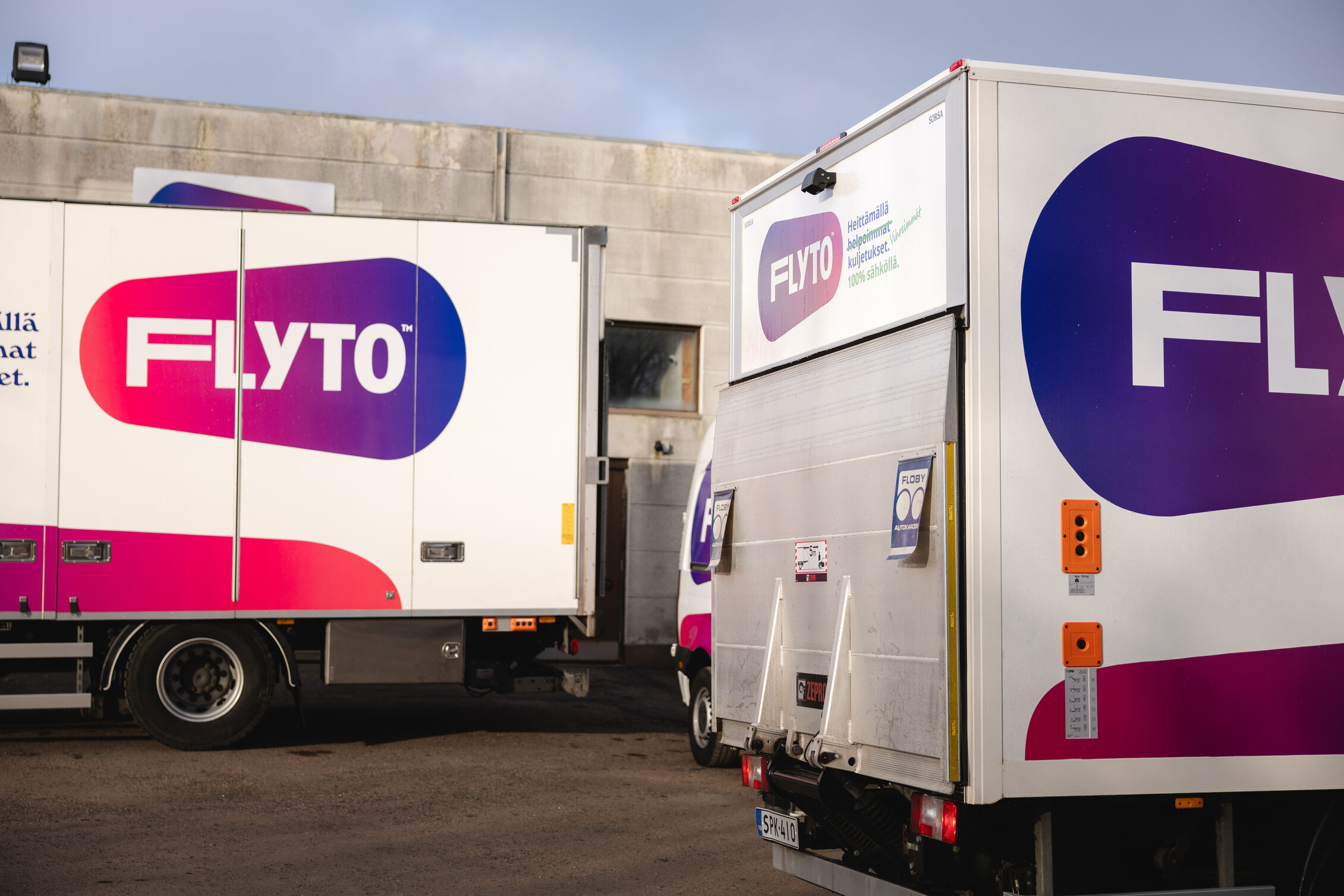
Flyto runs the Northern, Central and Southern European legs of your move with our own offices, warehouses, teams and vehicles, so your Poland-side collection, packing and export handling is done in-house rather than handed off blind. For the long-haul freight and the Argentine arrival, we work through a carefully vetted network of subcontracted carriers and trusted local partners in Argentina who handle SITA 10221 clearance, SENASA coordination for pets, and final delivery — giving you one point of contact for a move that spans two continents and two very different customs systems.
Frequently asked questions
Do I need to formally deregister from Poland before moving to Argentina?
If you’re leaving with the intent to live abroad permanently, or for more than six months, yes — you must report your departure ("zgłoszenie wyjazdu za granicę"), which automatically deregisters you from your address — gov.pl.
Will I owe Polish exit tax when I move?
Only if the market value of transferred assets like shares or securities exceeds PLN 4 million; ordinary household movers are not affected — podatki.gov.pl.
Can I bring my household goods into Argentina duty-free?
Yes, if you hold permanent residency and file SITA Form 10221, with no value ceiling on personal effects — but the goods must arrive within 3 months before to 6 months after you personally do — ARCA.
What paperwork does my dog or cat need to enter Argentina?
An International Veterinary Certificate (CVI) from an official vet in Poland, confirming rabies vaccination and general health, valid for 60 days and translated into Spanish, checked by SENASA at the border — argentina.gob.ar/senasa.
How much cash can I carry across each border?
€10,000 or more requires an EU Cash Declaration when leaving Poland; USD 10,000 or more requires declaration on form OM 2249-A when entering Argentina, or form OM 2250-B when leaving — European Commission, Argentina.gob.ar.
What about moving back from Argentina to Poland later?
If you return to Poland after living abroad continuously for at least a year, your used household goods can qualify for Poland’s "mienie przesiedleńcze" relocation-property customs relief, provided items were owned for at least 6 months and aren’t sold or transferred for 12 months after clearance — powroty.gov.pl.
Sources
- KAS – About Us (gov.pl)
- Zgłoś wyjazd za granicę (gov.pl)
- PIT-NZ exit tax forms (podatki.gov.pl)
- Procedura wywozu / export procedure (podatki.gov.pl)
- Eksport / AES export declarations (PUESC)
- Mienie przesiedleńcze – relocation property relief (powroty.gov.pl)
- EU cash controls (European Commission)
- Wywóz zwierząt towarzyszących do krajów trzecich (Powiatowy Inspektorat Weterynarii w Warszawie)
- Port of Gdańsk – shipping connections
- ARCA – Mudanzas de importación (guía de trámites)
- AFIP/ARCA – Extranjeros que ingresan a residir
- Declarar objetos del equipaje (Argentina.gob.ar)
- Ingresos con perros y/o gatos – SENASA (Argentina.gob.ar)
- Radicaciones / Residencias – Dirección Nacional de Migraciones (Argentina.gob.ar)
- ARCA – Nacionalización de vehículos usados (guía de trámites)
- RG 5659/2025 – ingreso y egreso de dinero en efectivo (Argentina.gob.ar)