

Moving from Sweden to Vietnam (2026): Complete Guide

Moving from Sweden to Vietnam means closing out two very different administrative systems: Sweden’s population-register and customs-export process, and Vietnam’s visa-linked, permit-based import regime. The Sweden side is largely a paperwork exercise — deregistering from folkbokföringen, filing an export declaration, and settling your tax residency. The Vietnam side is stricter: what you can bring in duty-free, and how easily, depends directly on your immigration status. This guide is written for a Sweden-based resident relocating to Vietnam for work, and covers both halves plus a short note on moving back.
Key takeaways
- Sweden’s customs authority is Tullverket, and moving your belongings out of the EU requires an export declaration (self-filed at the border or via your mover/forwarder), not just a straightforward "no paperwork" departure — Tullverket, moving from Sweden to a country outside the EU.
- If you’ll live abroad for a year or more, Swedish law requires you to notify Skatteverket, which deregisters you from folkbokföringen (status changes to "Utvandrad") — you keep your personnummer and Swedish citizenship — Skatteverket, Flytta från Sverige.
- Leaving Sweden does not automatically end unlimited Swedish tax liability: if you’re a Swedish citizen or have lived in Sweden 10+ years, you’re presumed to retain "väsentlig anknytning" (substantial connection) for five years and must yourself prove otherwise — Skatteverket, väsentlig anknytning.
- In Vietnam, whether you can import household goods duty-free is tied to your immigration paperwork — a valid visa, work permit, and (usually) a Temporary Residence Card — administered by the Vietnam Immigration Department, under the Ministry of Public Security — xuatnhapcanh.gov.vn.
- Vietnam exempts genuine "moveable assets" — the household and personal effects of a foreign worker relocating for a work assignment of 12 months or longer — from import duty when shipped as unaccompanied baggage; goods beyond a reasonable personal-use allowance, or new/commercial-quantity goods, are taxed — Vietnam Trade Portal (MOIT), personal-effects import procedure.
- Carrying more than USD 5,000 (or VND 15,000,000, or the equivalent in another currency) in cash into or out of Vietnam requires a customs declaration at the border — Vietnam Customs, Regional Customs Sub-Department VI.
- Pets need to clear both ends: Jordbruksverket’s export rules on the Swedish side, and Vietnam’s livestock and animal-health authority, Cục Chăn nuôi và Thú y (formed from a 2025 merger of Vietnam’s former livestock and veterinary departments), on the arrival side — Jordbruksverket, föra ut hundar från Sverige; Cục Chăn nuôi và Thú y.
1. Your Vietnam immigration status decides your customs treatment
Unlike an EU-to-EU move, Vietnam does not treat incoming household goods as a routine matter separate from immigration. Vietnam Customs and the border authorities expect an importer with a legitimate, ongoing reason to be in the country — normally a valid visa, a work permit, and in most cases a Temporary Residence Card (TRC) issued by the Vietnam Immigration Department, an agency of the Ministry of Public Security (xuatnhapcanh.gov.vn). Practically, this means: secure your work permit and TRC application (or have your employer sponsor it) before your shipment arrives, because customs clearance of an unaccompanied household-goods shipment is generally handled as your personal "moveable assets" only once your residence and work status in Vietnam is established, and you (or an authorised representative) typically need to be reachable in-country for clearance. Arriving on a short-stay visa with your container already at the port is the single most common cause of delay for this corridor — settle your visa/work-permit/TRC track first, then time your shipment’s departure from Sweden around it.
2. The Sweden export side: Tullverket, Skatteverket, and tax exit
Customs — Tullverket. Sweden’s customs authority is Tullverket. When you move your personal belongings from Sweden to a country outside the EU, you must submit an export declaration — you can do this yourself at a customs office at the border, or your removal company/forwarder can do it on your behalf (Tullverket, moving to a country outside the EU). The declaration uses the Single Administrative Document (SAD): capital goods (vehicles, TVs, computers, refrigerators, etc.) must be itemised individually on an attached list, while lower-value items can be grouped under collective terms such as "books," "household goods," or "clothing"; code 9905 00 00 is entered in the commodity-code field for personal property belonging to the emigrant, and "1000" is entered in the procedure field for ordinary export of personal belongings. Certain cultural goods (art, antiques) may additionally require an export authorisation/licence from the Swedish National Heritage Board before they can leave Sweden or the EU. Tullverket also publishes a dedicated FAQ on the customs exemption available for personal belongings, worth reading before you pack (Tullverket FAQ).
Deregistration — Skatteverket. If you intend to live abroad for one year or longer, Swedish law obliges you to notify Skatteverket, which handles the Swedish population register (folkbokföring). On processing your notification, your registration status changes to "Utvandrad" (emigrated); you keep your personnummer, Swedish citizenship, and the ability to use Swedish authorities, banks and healthcare administratively, but you are no longer folkbokförd in Sweden (Skatteverket, Flytta från Sverige). Skatteverket now offers a dedicated e-service for reporting a move abroad; at launch it’s available to single, divorced, or widowed adults (18+) moving outside the Nordic countries, with joint/family move notifications to follow later (Skatteverket e-service portal).
Tax exit. Deregistering your address does not by itself end your Swedish tax liability. Skatteverket applies a "väsentlig anknytning" (substantial connection) test: if you are a Swedish citizen or have lived in Sweden for at least 10 years, you are presumed to remain unlimitedly tax liable ("obegränsat skattskyldig") for five years after leaving, and during that period the burden is on you to demonstrate you no longer have a substantial connection to Sweden (retained housing, business interests, family, etc.) — after five years the burden shifts to Skatteverket (Skatteverket, väsentlig anknytning). Skatteverket’s guidance for Swedes who have moved abroad explains ongoing filing obligations and how "begränsat skattskyldig" (limited tax liability) status is reached (Skatteverket, har du flyttat från Sverige). Get this assessed early, especially if you retain a Swedish home, directorship, or investments — it affects how your worldwide income is taxed after the move.
3. Ports & transit: routing from Sweden to Vietnam
Sweden. The Port of Gothenburg is Sweden’s largest port and Scandinavia’s biggest container port, handling roughly 57% of Sweden’s container trade — the natural sea-freight departure point for a household-goods container to Southeast Asia (Port of Gothenburg). Air freight and accompanied baggage typically route through Stockholm Arlanda.
Vietnam. On arrival, sea freight into southern Vietnam (Ho Chi Minh City and the surrounding industrial/expat area) generally clears through the Tân Cảng–Cát Lái terminal, part of the Port of Ho Chi Minh City and operated by the state-owned Saigon Newport Corporation (Saigon Newport; Vietnam Seaports Association). Shipments destined for Hanoi and the north typically route via Hải Phòng Port, one of Vietnam’s two oldest and largest general seaports.
Estimated transit times (freight-industry estimates, not official figures — always confirm with your forwarder):
- Sea freight, Gothenburg → Cát Lái/Hải Phòng: roughly 35–50 days door-to-port, depending on transshipment routing (typically via a Mediterranean or Middle East hub), plus Vietnamese customs clearance time.
- Air freight, Stockholm Arlanda → Ho Chi Minh City (SGN) / Hanoi (HAN): roughly 1–3 days transit, though unaccompanied air baggage shipments still require the same customs/visa-status clearance as sea freight.
4. The Vietnam import side: the "moveable assets" regime
Vietnam’s duty exemption for a relocating household’s belongings falls under what Vietnamese customs law calls "tài sản di chuyển" — moveable assets. In broad terms, it’s available to a foreign worker (or a Vietnamese national returning from abroad) who is relocating to Vietnam for a work assignment of 12 months or longer, and covers the ordinary household and personal effects that make up your normal home; the government summarises the procedure on its official Vietnam Trade Portal (Vietnam Trade Portal (MOIT), procedure detail). Items beyond a reasonable personal-use quantity — and most new, high-value, or commercial-quantity goods — are subject to import duty and VAT. In practice this means: keep proof of your work assignment length and, where possible, of ownership/purchase dates for major items; ship as a single consolidated unaccompanied-baggage shipment rather than multiple staggered shipments; and expect customs to physically inspect and value higher-ticket electronics and appliances. You (or your Vietnam-based sponsor/employer, with power of attorney) generally need to be available for the clearance process, and your visa/work-permit/TRC documentation will be requested alongside the bill of lading, packing list, and passport copy. Because the exact conditions and required paperwork are assessed case by case, confirm the current requirements with Vietnam Customs or your forwarder before shipping.
5. Pets: both ends of the corridor
Leaving Sweden. The Swedish Board of Agriculture (Jordbruksverket) is the authority for exporting pets from Sweden. Because Vietnam is outside the EU, the EU pet passport alone is not sufficient — your dog or cat will need a health certificate issued by an official veterinarian that meets Vietnam’s entry requirements, and it is explicitly the owner’s responsibility to find out what those requirements are, as Jordbruksverket does not track destination-country rules (Jordbruksverket, föra ut hundar från Sverige; föra ut katter från Sverige). Tullverket also publishes practical guidance for travelling with a dog or cat (Tullverket, resa med hund eller katt).
Entering Vietnam. Animal quarantine on entry is regulated by Cục Chăn nuôi và Thú y — the Department of Livestock Production and Animal Health, formed in a March 2025 merger of Vietnam’s former Livestock and Animal Health departments — under the Ministry of Agriculture and Environment (cucthuy.gov.vn). Import quarantine for live animals in Vietnam requires advance registration and approval through the relevant regional animal-health office before the animal’s arrival, plus a valid rabies vaccination and veterinary health certificate presented on arrival. Requirements and lead times are updated periodically, so confirm current documentation and the exact regional office (Ho Chi Minh City vs. Hanoi entry points fall under different regional offices) directly with Cục Chăn nuôi và Thú y or your pet-relocation agent well before booking your pet’s flight.
6. Vehicles, money, and things people forget
Vehicles. Importing a personal car into Vietnam is heavily restricted and taxed, and right-hand-drive vehicles are not permitted for permanent import (Vietnam drives on the right). Given the licensing requirements and tax burden involved, very few relocating households find it worthwhile to ship a car; most sell in Sweden and buy or lease locally in Vietnam instead. Confirm current rules with Vietnam Customs before committing to ship a vehicle.
Cash and money. If you carry more than USD 5,000 (or the equivalent in another currency) or VND 15,000,000 in cash when entering or leaving Vietnam, you must declare it to the border-gate customs office; amounts at or below that threshold can be carried without declaration, and non-cash instruments (bank cards, traveller’s cheques, savings books, securities) are treated separately from this cash-declaration rule (Vietnam Customs, Regional Customs Sub-Department VI).
Easy to forget:
- Cancel or transfer Swedish subscriptions, insurance, and address-linked services once you’re registered "Utvandrad" — many are tied to folkbokföring status.
- Keep certified copies (with apostille/legalisation as needed) of Swedish civil documents — Vietnam’s administrative processes for TRC, work permits, and even utility hookups often require legalised paperwork.
- Confirm which Swedish pension and social-insurance entitlements continue once you’re deregistered — this sits alongside, not instead of, the tax-residency question above.
- Sort out banking early: opening a Vietnamese bank account is generally tied to your residence-card status, so budget for a cash/card transition period on arrival.
Moving back: Vietnam → Sweden
The corridor also runs in reverse. If you later move back, Tullverket grants duty and VAT relief on personal effects brought into Sweden from outside the EU, provided you had your normal residence outside the EU for at least a continuous year, and had owned and used the items for at least 6 months before departure — proof of your Swedish residence permit/right of residence and Skatteverket’s population-registration decision may be requested (Tullverket, moving to Sweden). You’ll also need to re-register with Skatteverket’s folkbokföring to regain resident status. For pets, dogs and cats entering Sweden from a country outside the EU where the rabies situation is not classed as "under control" generally need a rabies antibody titer test carried out well in advance of travel, in addition to microchip and vaccination — check your pet’s specific requirements with Jordbruksverket before leaving Vietnam (Jordbruksverket, ta in hundar från länder utanför EU).
How Flyto handles your Sweden to Vietnam move
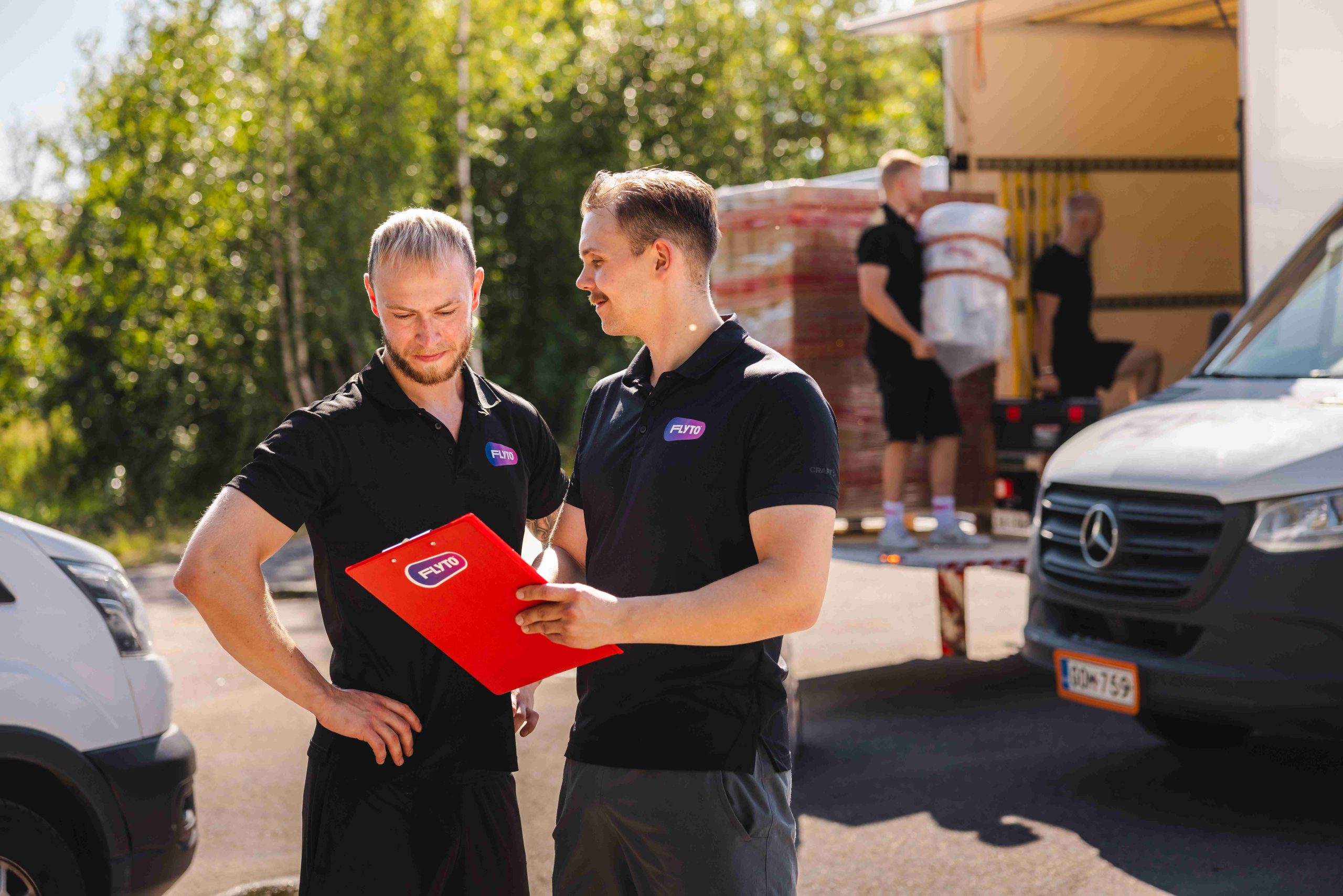
Flyto runs its own offices, warehouses, moving teams and vehicles across Northern, Central and Southern Europe, so the Swedish pickup, export documentation, and consolidation into your sea or air shipment is handled in-house. For the legs and services outside our own network — ocean/air carriage to Vietnam and the final customs clearance and delivery — we work through a carefully vetted network of partner forwarders and subcontractors, including trusted local partners on the ground in Vietnam who handle import clearance, TRC-linked customs formalities, and last-mile delivery.
Frequently asked questions
Do I need to deregister from Sweden before I can import my belongings duty-free into Vietnam?
The two processes are separate. Deregistering with Skatteverket (folkbokföring) governs your Swedish residency status and tax exit; your Vietnamese duty-free allowance for personal effects depends on Vietnamese immigration and customs rules, primarily your work assignment and visa/work-permit/TRC status there (Skatteverket; Vietnam Trade Portal).
Will I still pay Swedish tax after I move to Vietnam?
Possibly, especially in your first years. If you’re a Swedish citizen or lived in Sweden 10+ years, you’re presumed to have "väsentlig anknytning" and remain unlimitedly tax liable for up to five years unless you can show otherwise (Skatteverket).
Can I self-file the Swedish export declaration instead of using a mover?
Yes — Tullverket allows you to complete the export declaration yourself at a customs office at the border, though most people leave this to their removal firm or forwarder (Tullverket).
Does my dog need to be in Vietnam before or after I get my residence permit?
There’s no formal linkage, but practically, arrange your pet’s Vietnam quarantine approval with Cục Chăn nuôi và Thú y in advance and time arrival with someone able to receive the animal and complete on-arrival veterinary checks (Cục Chăn nuôi và Thú y).
How much cash can I bring into Vietnam without declaring it?
Up to USD 5,000 (or equivalent) or VND 15,000,000 without declaration; above that, you must complete a customs declaration at the border (Vietnam Customs).
Is it worth shipping my car to Vietnam?
Rarely. Vietnam bans right-hand-drive imports and applies significant licensing and taxation to personal vehicle imports; most relocating households sell in Sweden and buy locally instead.
Sources
- Tullverket — Moving from Sweden to a country outside the EU
- Tullverket — FAQ on customs exemption for personal belongings
- Tullverket — Resa med hund eller katt
- Skatteverket — Flytta från Sverige
- Skatteverket — e-service, flytta från Sverige
- Skatteverket — Har du flyttat från Sverige?
- Skatteverket — Väsentlig anknytning till Sverige (rättslig vägledning)
- Jordbruksverket — Föra ut hundar från Sverige
- Jordbruksverket — Föra ut katter från Sverige
- Port of Gothenburg — official site
- Vietnam Immigration Department — xuatnhapcanh.gov.vn
- Vietnam Trade Portal (Ministry of Industry and Trade) — import procedure
- Cục Chăn nuôi và Thú y — Department of Livestock Production and Animal Health
- Vietnam Customs, Regional Customs Sub-Department VI — cash declaration rules
- Saigon Newport Corporation — port operations
- Vietnam Seaports Association — Saigon New Port
- Tullverket — Duty and VAT relief when moving to Sweden
- Jordbruksverket — Ta in hundar från länder utanför EU där rabiessituationen inte är under kontroll