

Moving from Switzerland to Uruguay (2026): Complete Guide

Switzerland to Uruguay is a long-haul, intercontinental relocation corridor with no direct freight lanes — every household shipment has to route through a European seaport or hub airport before it reaches Montevideo. This guide covers both halves of the move: the Swiss export side (deregistering your commune, closing your tax liability, and clearing your shipment for export) and the Uruguayan import side (immigration status, the customs procedure for "menaje de casa," pets, and vehicles). It’s written for a Swiss resident — citizen, permit holder, or long-term expat — relocating to Uruguay for work, retirement, or family reasons, and closes with a short note on the reverse move, Uruguay back to Switzerland.
Key takeaways
- Switzerland has no export customs duty or general declaration requirement for personal belongings leaving the country — items are simply declared verbally at a staffed border crossing, per the Federal Office for Customs and Border Security (BAZG/OFDF).
- You must deregister (Abmeldung/annonce de départ) with your Swiss commune before or when you leave; the confirmation you receive is needed later for duty-free import formalities abroad, per ch.ch.
- Unlimited Swiss tax liability ends when you give up your Swiss residence and center of life; income earned in Switzerland from real estate or self-employment can still trigger limited tax liability afterward, per Stadt Zürich’s tax administration guidance on moving abroad.
- Switzerland has no cash-declaration threshold for crossing the border, but from CHF 10,000 (or on suspicion) BAZG officers can question you about origin and purpose, per BAZG.
- In Uruguay, people relocating permanently can import used household goods duty-free as "equipaje no acompañado," but the shipment must arrive within 3 months before or 6 months after your entry, per the Dirección Nacional de Aduanas (DNA).
- Uruguay’s cash-declaration threshold is USD 10,000 on entry or exit, per DNA.
- Uruguay generally prohibits importing used vehicles; the narrow duty-free exceptions DNA has granted in recent years are tied to Mercosur nationality or residency, so as a Swiss (non-Mercosur) citizen you should assume full import duty applies unless DNA confirms otherwise, per DNA.
- Pets need an International Veterinary Certificate (CVI) to enter Uruguay and Swiss/EU pet-passport or export-country veterinary paperwork to leave Switzerland, per MGAP and BLV/OSAV.
1. Your Uruguayan immigration status determines your customs treatment
Uruguay’s duty-free household-goods import only applies if you are actually relocating your residence — not visiting. The Dirección Nacional de Migración issues Legal Residency (Residencia Legal), which for non-Mercosur nationals like Swiss citizens generally starts as a Residencia Temporaria (renewable, up to two years) that can later be converted into permanent residency. DNA’s household-goods exemption for foreigners "coming to settle in the country" explicitly requires a certificate of legal or pending resident status issued by migration authorities, and if your permanent residency is still pending, DNA requires you to post a guarantee equal to the value of your goods, refunded once residency is granted, per DNA. In practice: start your Uruguayan residency application before your shipment arrives, because the customs clock (3 months before to 6 months after your entry) runs regardless of where your paperwork stands.
2. The Switzerland export side
Customs authority. Switzerland’s customs administration is the Federal Office for Customs and Border Security (BAZG/OFDF) (formerly the Federal Customs Administration, FCA). For outbound personal belongings, BAZG applies no general export duty and no mandatory written export declaration — items are declared verbally when you physically cross the border at a staffed customs post, and you present the "export document in tourist traffic" for confirmation if requested. If you’re shipping high-value new items (electronics, jewellery), you can ask the export customs office to note them beforehand using a Swiss sales receipt, which helps avoid re-import duty disputes if you ever bring them back.
For commercial/freight-forwarded shipments (the normal channel for a full household move), your moving company files the export declaration electronically. Switzerland’s electronic export-declaration channel has moved from the older e-dec platform to the newer Passar goods-traffic system, live since March 2024 and now the standard route for commercial export declarations, per BAZG’s Passar export checklist. There is no general weight or value threshold for personal effects leaving Switzerland — restrictions instead apply to specific categories (CITES-protected species, weapons, cultural property), which BAZG recommends clarifying before departure.
Deregistration (Abmeldung/annonce de départ). Before or when you leave, you must notify your commune of residence that you are moving abroad — in person, in writing, or online depending on the commune — per ch.ch, the Swiss authorities’ official portal. Request a deregistration confirmation: this closes your residence-permit and population-register record, and it is the document customs authorities abroad (including Uruguay’s DNA) typically want to see as proof you have actually left Switzerland, not just gone on an extended trip.
Tax exit. Your unlimited ("subjective") Swiss tax liability ends when you give up your tax domicile and center of life in Switzerland — confirmed by cantonal tax administrations such as Stadt Zürich’s guidance on moving abroad. You are taxed on income earned up to your departure date, but if you retain Swiss real estate or continue self-employment or public-sector activity based in Switzerland, a limited tax liability persists on that Swiss-source income even after you’ve left, and Zurich’s own guidance notes some leavers must appoint a Swiss-based tax representative. Since procedures and cut-off dates vary by canton, confirm your specific exit filing with your canton’s tax office before departure.
3. Ports, transit and freight routing (industry estimates, not official figures)
Switzerland is landlocked: there is no Swiss seaport, so household shipments leave the country by road (or, for bulk cargo, by Rhine barge) before joining an ocean vessel. The country’s one river port complex — the Rhine ports at Basel (Port of Switzerland) — connects Switzerland to the North Sea via Rotterdam and Antwerp, though full-container household-goods moves are almost always trucked directly to a North European seaport rather than barged. The main international airports for air freight or accompanied baggage are Zurich (ZRH) and Geneva (GVA); Uruguay’s main port of entry is Montevideo, and the main airport is Carrasco International (MVD).
Based on typical freight-industry routings (these are estimates from moving-industry experience, not figures published by any customs or port authority):
- Sea freight: truck from Switzerland to Rotterdam/Antwerp/Hamburg (1–3 days) → ocean transit to Montevideo (roughly 4–6 weeks, depending on carrier and transshipment) → Uruguayan customs clearance (1–3 weeks depending on documentation and residency status). Door-to-door totals commonly run 10–14 weeks.
- Air freight: typically 3–7 days transit Zurich/Geneva–Montevideo (via a hub), but air is usually reserved for a small subset of urgent or high-value items given cost, not full household shipments.
4. The Uruguay import side
Household goods enter Uruguay under the DNA’s "equipaje no acompañado" (unaccompanied baggage) regime for people relocating to the country, per DNA’s page for foreigners settling in Uruguay. Required documentation includes:
- A sworn declaration (declaración jurada) of the goods being imported, with an itemized list
- A copy of your passport
- Your migration certificate from the Dirección Nacional de Migración (or proof your residency application is pending)
- A copy of the bill of lading/transport contract, consigned to you
Used personal clothing, household furnishings, books, and (with proof of profession, verified through a consulate) professional tools and instruments are duty-free. Cars, motorcycles, boats, RVs and aircraft are excluded from this baggage exemption and follow separate, much stricter vehicle-import rules (see below). The shipment must physically arrive in Uruguay within 3 months before or 6 months after your own entry into the country, and if your permanent residency is still pending, DNA requires a guarantee for the value of the goods, refunded once residency is confirmed.
5. Pets
Leaving Switzerland: Before travel, arrange your pet’s paperwork with the Federal Food Safety and Veterinary Office (BLV/OSAV), which publishes country-specific requirements for dogs, cats and ferrets. You’ll generally need a valid microchip, rabies vaccination, and either an EU/Swiss pet passport or a veterinary certificate, and you must cross the border at a staffed crossing during customs hours to register the animal, per BAZG.
Entering Uruguay: Dogs and cats need an International Veterinary Certificate (CVI), issued by the official veterinary authority in Switzerland under Mercosur rules, confirming a clinical exam within 10 days of issue, internal/external deworming within 15 days, current rabies vaccination, and (for dogs, from non-rabies-free countries) a negative Leishmaniasis test, per the Ministerio de Ganadería, Agricultura y Pesca (MGAP). Traveling with your pet on the same flight requires no prior MGAP entry authorization; if flying, notify the airport veterinary service 48 hours ahead. "Non-traditional" pets (rabbits, birds, ferrets, etc.) need separate prior MGAP authorization — see MGAP’s official notice.
6. Vehicles, money, and things people forget
Vehicles: Uruguay maintains a general prohibition on importing used vehicles. DNA has, in recent years, opened narrow duty-free pathways for a single personal vehicle for people establishing residency — but the currently active pathway (under DNA regulation RG 49/2024) is explicitly limited to Mercosur residents and migrants, per DNA’s announcement. Switzerland is not a Mercosur member or associate state. An earlier, broader window that briefly let any new foreign resident import one vehicle duty-free (one vehicle, owned ≥1 year, non-transferable for 2 years, under Law 19.924) only covered people who obtained or applied for permanent residency between January 2020 and March 2021, and that window has long since closed. Bottom line: don’t ship a Swiss-registered car assuming it will clear duty-free — confirm current eligibility directly with DNA and the Ministry of Economy and Finance (via the VUCE single window) before arranging transport, and budget for full import duties as the default case.
Cash: Switzerland has no mandatory cash-declaration threshold when crossing the border, though BAZG can question you from CHF 10,000 or on suspicion, per BAZG. Uruguay requires a declaration above USD 10,000 in cash, precious metals, or monetary instruments on entry or exit, per DNA.
Things people forget: the Swiss commune deregistration confirmation (needed on the Uruguayan side to prove you actually left); getting your Uruguayan migration certificate before your shipment lands, since it’s a required customs document; the 3-month/6-month shipment-arrival window, which is easy to miss if your move date shifts; the fact that professional tools/instruments need consular verification of your profession to qualify duty-free; and — if you were hoping to bring a car — confirming eligibility with DNA well before you commit to shipping it.
Reverse direction (Uruguay → Switzerland): Moving back follows the mirror logic. On the Uruguayan side, you deregister your residence and settle any pending tax/import guarantees with DNA (e.g., vehicle non-transfer periods, refundable goods guarantees). On the Swiss side, returning residents/citizens can generally re-import previously-owned household effects, but new Swiss tax residency and commune registration start fresh — check current import rules with BAZG and register with your new commune of residence before you ship anything back.
How Flyto handles your Switzerland to Uruguay move
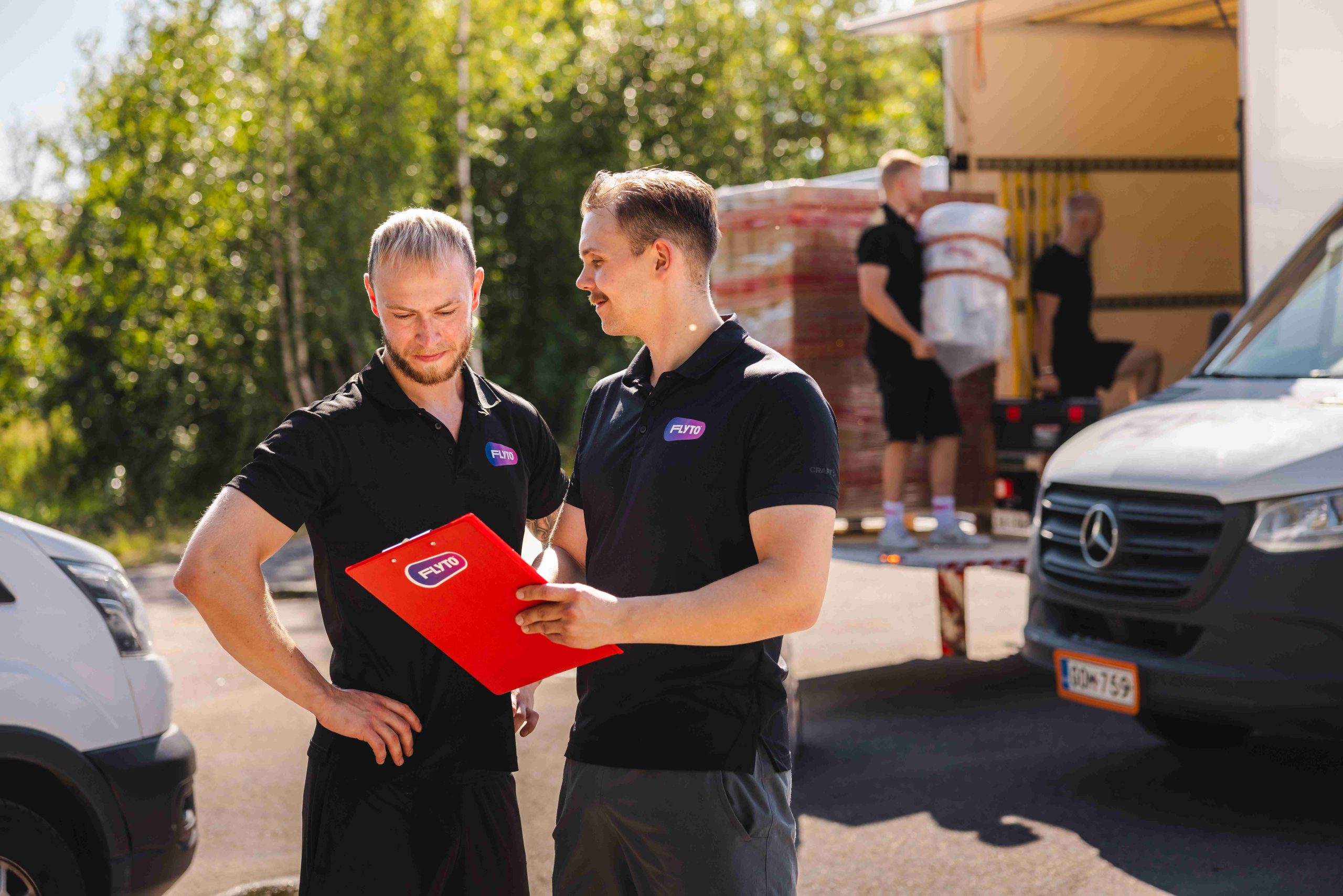
Flyto runs its own offices, warehouses, teams and vehicles across Northern, Central and Southern Europe, so the Swiss collection, export handling, and consolidation into your sea or air shipment is managed in-house rather than outsourced blind. For the ocean or air leg to Montevideo and the final delivery inside Uruguay, we work with a carefully vetted network of subcontractor carriers and trusted local partners on the ground in Uruguay, who handle destination customs clearance and last-mile delivery under our coordination.
Frequently asked questions
Do I need to pay Swiss export duty on my furniture and belongings?
No — Switzerland does not charge export duty on personal household effects, and there’s no general declaration requirement beyond the verbal border declaration, per BAZG.
Can I import my shipment duty-free into Uruguay if my residency is still pending?
Yes, but DNA will require you to post a guarantee equal to the goods’ value until your permanent legal residency is confirmed, per DNA.
Can I bring my car from Switzerland to Uruguay?
Uruguay generally prohibits importing used vehicles. The duty-free personal-vehicle exemptions DNA has granted in recent years are tied to Mercosur nationality or residency, so as a Swiss (non-Mercosur) citizen you should not assume you qualify — confirm your eligibility directly with DNA before shipping a vehicle, per DNA.
How long can the gap be between when I arrive in Uruguay and when my shipment arrives?
DNA requires the shipment to arrive within 3 months before, or 6 months after, your own entry date, per DNA.
What paperwork does my dog or cat need to enter Uruguay?
An International Veterinary Certificate (or valid pet passport) covering microchip, rabies vaccination, recent deworming and a clinical exam, per MGAP.
Do I need to formally close my Swiss tax residency, or does it lapse automatically?
It ends when you genuinely give up your Swiss residence/center of life, but you should still deregister with your commune and confirm your exit filing with your cantonal tax office, since Swiss-source income (e.g., rental property) can keep you under limited tax liability, per Stadt Zürich.
Sources
- BAZG — Leaving Switzerland with personal goods
- BAZG — Export checklist with Passar
- BAZG — Cash/currency at the Swiss border
- BAZG — Bringing dogs and cats into Switzerland
- BAZG — Importing goods into Switzerland (travellers)
- ch.ch — Notification of departure and registration
- Stadt Zürich — Tax administration: moving abroad (Wegzug ins Ausland)
- BLV/OSAV — Traveling with pets
- Dirección Nacional de Aduanas (Uruguay) — Foreigners coming to settle in the country
- Dirección Nacional de Aduanas — Cash/monetary instruments across the border
- Dirección Nacional de Aduanas — Used vehicles
- Dirección Nacional de Aduanas — Duty-exempt vehicle import for Mercosur residents/migrants (RG 49/2024)
- gub.uy — Legal Residency procedure
- gub.uy / MGAP — Pet entry request (Solicitud de ingreso con mascotas al Uruguay)