

Moving from the USA to the Netherlands (2026): Complete Guide

The USA-to-Netherlands corridor is one of the busiest transatlantic relocation routes, and a successful move depends on getting both halves right: the American export side (clearing your goods out of the United States and closing your U.S. tax and reporting obligations) and the Dutch import side (immigration status, municipal registration, and duty-free import of your belongings). This guide walks a U.S. resident through both, in order, and ends with a short note for anyone who later moves back the other way. It is written for people relocating with a household of goods, a pet, and sometimes a vehicle — not for tourists or short-stay visitors.
Key takeaways
- Your Dutch immigration status drives your customs treatment: the duty- and VAT-free import of household goods requires proof that you are actually settling in the Netherlands, via municipal registration (Dutch Customs).
- On the U.S. side there is no national "deregistration" — the United States has no population register. What you do close out is your tax and financial-reporting relationship (IRS).
- U.S. export of a shipped container is governed by the Foreign Trade Regulations; Electronic Export Information (EEI) filing is generally required when a commodity’s value exceeds $2,500 (15 CFR 30.37).
- The Netherlands grants a relief from import duty and VAT on used household goods if you lived outside the EU for 12 consecutive months, owned and used the goods for 6 months, and import them within 12 months of settling (Dutch Customs).
- Your removal company must file the Dutch import declaration with the relief code — you cannot file it yourself (Dutch Customs).
- Pets need an ISO microchip implanted before the rabies vaccination and a USDA-APHIS-endorsed EU health certificate (USDA APHIS).
- As a U.S. citizen you keep filing U.S. federal taxes on worldwide income after you move, and you must file an FBAR if foreign accounts exceed $10,000 (IRS; FinCEN/IRS).
- A non-citizen (green-card holder) leaving the U.S. may need a "sailing permit" from the IRS before departure (IRS).
1. How your Dutch status determines the customs treatment
Everything about your import hinges on proving you are genuinely moving your residence. The Netherlands only waives import duty and VAT on your household effects when you can show you are transferring your normal place of residence into the EU. In practice that proof is a certificate of registration from your Dutch municipality (or, if you register slightly later, proof of deregistration abroad plus an employment contract, work permit, or rental/mortgage documentation) (Dutch Customs).
As a U.S. citizen you are a third-country national, so long stays require immigration authorisation. Most working relocations use the highly skilled migrant route, where your Dutch employer (a recognised sponsor) applies to the Immigration and Naturalisation Service (IND) on your behalf (Business.gov.nl). U.S. nationals generally still need the residence permit but may be exempt from the separate entry visa (MVV); check the exemption list on the IND site. After arrival you register in the Personal Records Database (BRP) at your local town hall, which gives you a citizen service number (BSN) — required for work, banking, and healthcare (Business.gov.nl). That BRP entry is the document your mover needs for the customs relief.
2. The U.S. export side
The customs authority. U.S. Customs and Border Protection (CBP) polices the border, but export shipments are governed by the Foreign Trade Regulations administered by the U.S. Census Bureau, with export data captured in the Automated Export System (AES) (15 CFR 30.37).
No deregistration, but real exit tasks. Unlike most European countries, the U.S. has no population registry to sign out of. The exit tasks that matter are administrative and financial: filing a USPS change of address, notifying the Social Security Administration and your state’s DMV, updating voter registration, and — most importantly — your taxes.
Export declaration and thresholds. For a normal international move, your belongings travel as cargo under a bill of lading, so your forwarder files EEI in AES. Filing is generally required once the value of goods under a single commodity classification exceeds $2,500 (15 CFR 30.37). There is an exemption for baggage and personal effects that are "accompanied or unaccompanied" and not shipped as cargo under a bill of lading, but a full container of household goods usually does not qualify — so expect the mover to handle the AES filing (15 CFR 30.37).
Tax residency exit. If you are a U.S. citizen, moving abroad does not end your filing duty: you remain taxed on worldwide income and must keep filing a federal return, though the Foreign Earned Income Exclusion and Foreign Tax Credit usually eliminate double taxation (IRS; IRS Pub 54). You must also file an annual FBAR (FinCEN Form 114) if your foreign accounts together exceed $10,000 at any point in the year (IRS). If you are not a U.S. citizen — e.g. a green-card holder leaving for good — you may need an IRS "sailing permit" (Form 1040-C or 2063) confirming your U.S. tax affairs are settled before you depart (IRS).
3. Ports and transit
Household goods from the U.S. to the Netherlands almost always move by sea container, occasionally by air for small or urgent shipments. Real gateway ports on the U.S. side include the Port of New York and New Jersey (PANYNJ), the Port of Savannah in Georgia (Georgia Ports Authority), Port Houston (Port Houston) on the Gulf, and the Port of Los Angeles (Port of LA) on the West Coast. Nearly all transatlantic cargo lands at the Port of Rotterdam, Europe’s largest seaport (Port of Rotterdam); air freight arrives at Amsterdam Airport Schiphol.
Transit times are freight-industry estimates, not official figures. As a rough planning guide, East Coast ports (New York/New Jersey, Savannah) to Rotterdam typically run around 2–4 weeks of port-to-port ocean transit, while West or Gulf Coast origins can add a week or more. Air freight is faster (often a few days in transit) but far costlier. Add packing, sailing schedules, and Dutch customs clearance on top — door-to-door, a full-container sea move commonly takes 6–10 weeks. Treat all of these as planning estimates; only your carrier’s booking confirms actual dates.
4. The Netherlands import side
Once your container reaches Rotterdam, your removal company files the import declaration in the Dutch Customs system using a special relief code, claiming exemption from import duties and VAT on your used household effects (Dutch Customs). You cannot file this yourself — Customs is explicit that the application is made through your mover (Dutch Customs).
To qualify for the relief you must meet all of these conditions: you have lived outside the EU for at least 12 consecutive months; you have owned and used the goods for at least 6 months; you import them within 12 months of settling in the Netherlands; and you will not lend, pledge, hire out or transfer the goods within 12 months (Dutch Customs). You hand your mover a signed inventory of everything being shipped, plus your BRP registration certificate (or the alternative settlement evidence noted above) (Dutch Customs).
The relief does not cover alcohol products, tobacco and tobacco products, commercial vehicles, or non-portable equipment for professional use — those are excluded from the exemption (Dutch Customs).
5. Pets
For dogs, cats, and ferrets, the U.S. exit paperwork is the operative step, because the EU sets the entry rules and the U.S. veterinary authority certifies compliance. Your pet needs an ISO-compliant (15-digit) microchip implanted before its rabies vaccination, a valid rabies vaccination, and an EU animal health certificate completed by a USDA-accredited veterinarian and endorsed by USDA-APHIS Veterinary Services shortly before travel (USDA APHIS; APHIS EU export overview). A waiting period after the primary rabies vaccination applies before the EU will admit your pet, so vaccinate well ahead of your flight (USDA APHIS). On arrival, checks fall to the Dutch food and product safety authority (NVWA). Note that new EU non-commercial health certificates take effect on 1 October 2026, so confirm the current form with your accredited vet before booking (USDA APHIS).
6. Vehicles, money, and things people forget
Vehicles. A car can travel in your container, but you file a separate import declaration through your mover (Dutch Customs). To use it on Dutch roads you must register it with the RDW (the Netherlands Vehicle Authority): you book an RDW identification inspection, bring the foreign registration and any Certificate of Conformity, and file a BPM (passenger-vehicle tax) declaration before registration (RDW; Government.nl). If your car qualifies for the household-goods relief, a BPM exemption may also apply. After registration you pay road tax (MRB), fit Dutch plates, and take out at least third-party insurance (Government.nl). Left-hand-drive U.S. cars often cost more to make road-legal than they’re worth — price it before shipping.
Money. Keep your U.S. FBAR and tax filings current (IRS), and remember that carrying €10,000 or more in cash across the EU external border must be declared to Dutch Customs.
Commonly forgotten: apostilled birth/marriage documents for BRP and immigration; prescription medicine rules; and closing or converting U.S. subscriptions and insurance that won’t work abroad.
How Flyto handles your USA-to-Netherlands move
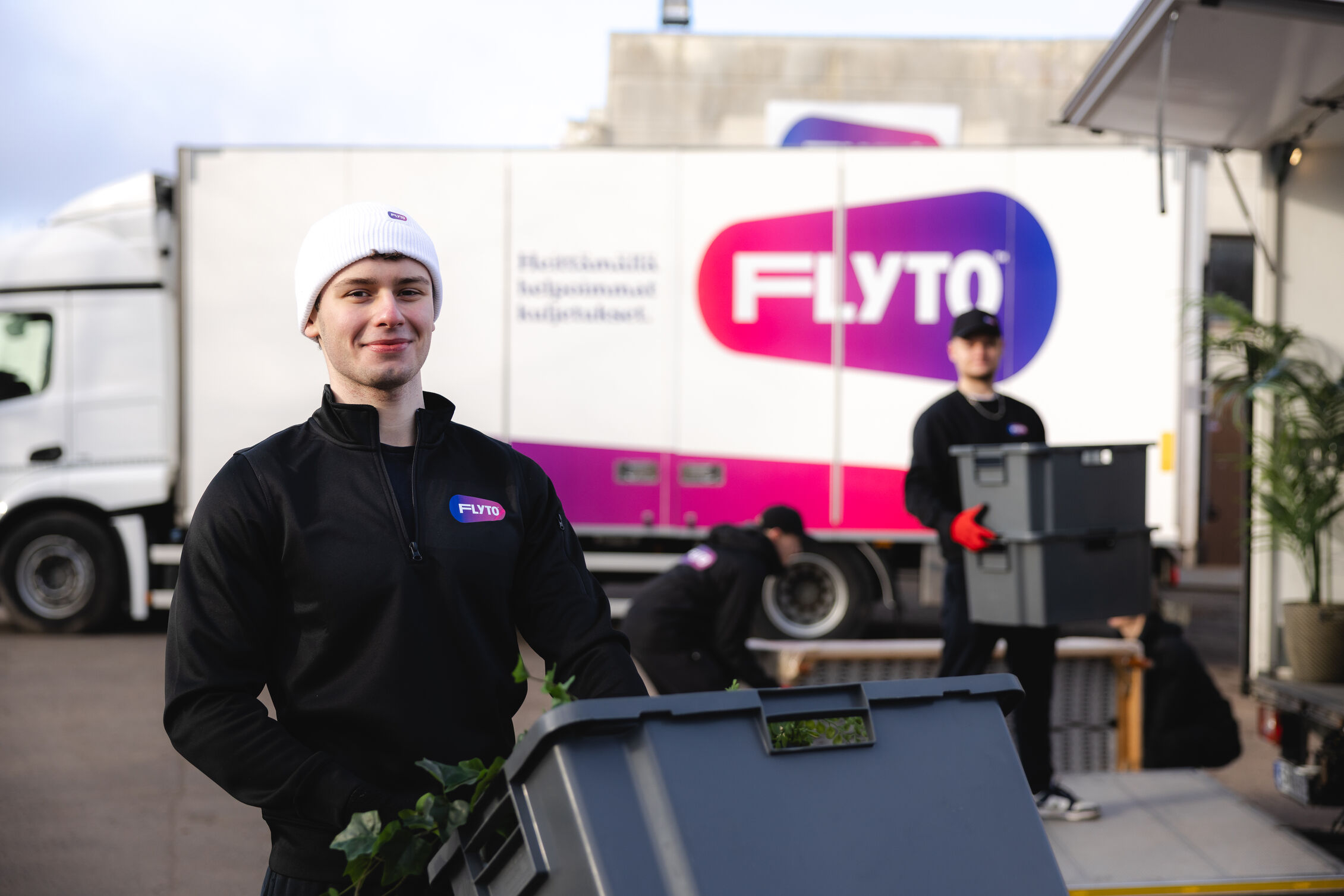
Flyto runs a strong in-house European operation — our own offices, warehouses, teams, and vehicles across Northern, Central, and Southern Europe — combined with a carefully chosen partner and subcontractor network for the U.S. origin leg and ocean freight. In the Netherlands we work with trusted local partners for customs filing, delivery, and unpacking, so your relief declaration and BRP paperwork are handled correctly the first time.
Frequently asked questions
Do I have to be registered in my Dutch municipality before my goods arrive?
Ideally yes — your BRP registration certificate is the standard proof for the duty and VAT relief. If registration lags behind the shipment, Customs accepts alternatives such as proof of deregistration abroad plus an employment contract or housing documents (Dutch Customs).
Can I file the Dutch customs paperwork myself to save money?
No. Dutch Customs requires the relief declaration to be filed through your removal company using its declaration system (Dutch Customs).
Will I still pay U.S. taxes after I move to the Netherlands?
If you’re a U.S. citizen, yes — you keep filing on worldwide income, but the Foreign Earned Income Exclusion and Foreign Tax Credit usually offset Dutch tax (IRS).
How long before travel should I start my pet’s paperwork?
Start months ahead: the microchip must precede the rabies shot, a waiting period follows vaccination, and the health certificate needs USDA-APHIS endorsement close to departure (USDA APHIS).
Is alcohol from my wine collection covered by the relief?
No — alcohol and tobacco are excluded from the household-goods exemption and are taxed separately (Dutch Customs).
Note on the reverse move (Netherlands → USA)
Moving back is a mirror image. You’d deregister from the BRP, and your U.S. returning-resident import of used personal effects is handled by CBP. The big change is pets: since 1 August 2024, every dog entering the U.S. needs a CDC Dog Import Form receipt, must be microchipped and at least 6 months old, with lighter rules for dogs coming only from rabies-free or low-risk countries such as the Netherlands (CDC).
Sources
- 15 CFR 30.37 — Miscellaneous exemptions (Foreign Trade Regulations / AES)
- IRS — U.S. Citizens and Resident Aliens Abroad
- IRS — Publication 54, Tax Guide for U.S. Citizens and Resident Aliens Abroad
- IRS — Departing Alien Clearance (Sailing Permit)
- IRS — Report of Foreign Bank and Financial Accounts (FBAR)
- USDA APHIS — Pet Travel from the U.S. to the Netherlands
- USDA APHIS — Take a Pet From the U.S. to Another Country (Export)
- CDC — Entry Requirements for Dogs from Rabies-Free or Low-Risk Countries
- Port Authority of New York & New Jersey
- Georgia Ports Authority (Port of Savannah)
- Port Houston
- Port of Los Angeles
- Dutch Customs (Douane) — Moving to the Netherlands from a non-EU country
- IND — Immigration and Naturalisation Service
- Business.gov.nl — Residence permit for highly skilled migrant
- Government.nl — Importing a car into the Netherlands
- RDW — Moving to the Netherlands and taking your vehicle with you
- Port of Rotterdam