

Moving from Luxembourg to Singapore (2026): Complete Guide

Relocating from Luxembourg to Singapore means moving between two small, hyper-connected states on opposite sides of the world — and crossing two separate customs regimes. On the departure side you are exporting your household from a landlocked EU member state whose goods leave through the Administration des douanes et accises and physically travel by rail, river and air to a North Sea port or to Changi. On the arrival side you are importing used personal effects into Singapore under the rules of Singapore Customs and, for pets, the Animal & Veterinary Service (AVS). This guide covers both halves — the Luxembourg export process and the Singapore import process — plus a short note on the reverse journey. It is written for a resident of Luxembourg (Luxembourger, EU national or third-country national) moving to Singapore for work, family or retirement.
Key takeaways
- Singapore grants GST relief on used household goods only if you own them, have used and possessed them for at least 3 months, import them within 6 months of first arrival, and undertake not to dispose of them for 3 months (Singapore Customs).
- Singapore’s GST rate is 9%, charged on the CIF value plus duties where relief does not apply (Singapore Customs).
- You must formally declare your departure to your Luxembourg commune before leaving, which triggers removal from the national population register (Guichet.lu).
- Your final Luxembourg income-tax return for the year of departure is filed with the tax authorities via MyGuichet.lu (Guichet.lu).
- Luxembourg is landlocked: sea freight leaves via North Sea ports fed by the Bettembourg rail/road terminal or the Mertert river port; air freight leaves via Luxembourg Airport (Findel).
- Dogs and cats from Luxembourg fall under Singapore’s Schedule II, requiring microchip, rabies vaccination, serology test and an import licence; a 10-day quarantine — normally served as home quarantine — applies unless the conditions for a waiver are met (AVS).
- Carrying €10,000+ out of the EU must be declared to Luxembourg customs (Guichet.lu); carrying S$20,000+ into Singapore must be declared to the authorities (ICA).
1. Your Singapore immigration status determines the customs treatment
The single most important thing to settle before you ship anything is your Singapore immigration status, because it decides whether you qualify for GST relief on your household goods. Singapore Customs grants relief on used household articles and personal effects to people who are genuinely transferring their place of residence — Singapore Citizens and Permanent Residents returning from overseas, and foreigners relocating to Singapore (Singapore Customs). In practice this means you should have your Employment Pass, S Pass, Dependant’s Pass, PR approval or equivalent in hand, and time your shipment to arrive within the six-month window after you first enter Singapore.
Get this wrong — ship before your pass is issued, or land your container more than six months after arrival — and Singapore Customs will levy 9% GST on the full value of your goods rather than granting relief. Confirm your pass status and intended first-arrival date before you book freight.
2. The Luxembourg export side
Customs authority. Luxembourg’s customs authority is the Administration des douanes et accises (ADA) (douanes.public.lu). Because Singapore sits outside the EU customs territory, your removal is a genuine export and requires an export declaration lodged through the ADA’s electronic customs systems (the eDouane platform, using the Single Administrative Document) (Single Window for Logistics). In a household move this declaration is almost always filed by your international mover or a customs agent on your behalf, using a detailed inventory of the goods; you sign the inventory and provide your passport and Singapore visa.
Deregistration (radiation). Before you leave, you must declare your departure to the communal administration where you live — the Bierger-Center in Luxembourg City, or your local commune office elsewhere. The declaration should be made in the days before you leave, and it removes you from the population register (Guichet.lu; Ville de Luxembourg). Bring your ID card or passport; third-country nationals should expect to surrender their residence permit. Ask for a certificate of deregistration — you will need it as proof of the date you ceased Luxembourg residence.
Tax exit. Deregistration also matters for tax. You remain a Luxembourg tax resident until the day before your registered departure date; after that you are a non-resident. You must still file a final income-tax return for the year of departure with the Administration des contributions directes (ACD), which you can do electronically via MyGuichet.lu (Guichet.lu). Luxembourg does not levy a general exit tax on ordinary individuals leaving the country, but if you hold substantial shareholdings you should take professional advice before departure. Keep your deregistration certificate and a residence certificate for the resident period — they help you claim double-tax-treaty protection in Singapore.
3. Ports & transit from a landlocked country
Luxembourg has no seaport, so ocean freight never sails directly from Luxembourg. Instead your container is trucked or railed to a North Sea port and loaded there. Two domestic logistics hubs handle this:
- The Bettembourg-Dudelange rail/road (intermodal) terminal south of Luxembourg City, which offers regular direct rail connections to Antwerp and Zeebrugge (and, via traditional rail, to Hamburg/Duisburg and beyond) (Single Window for Logistics).
- The Port of Mertert, Luxembourg’s only inland (river) port, a trimodal water/rail/road platform on the Moselle (transports.public.lu).
For air freight, Luxembourg Airport (Findel) is a major European cargo hub and home to Cargolux and LuxairCARGO (lux-airport.lu), so air-freighted personal effects can depart directly from Luxembourg.
Transit times — freight-industry estimates, not official figures. As a rough planning guide only, ocean freight from a North Sea port (Antwerp/Rotterdam) to Singapore typically runs around 4–7 weeks in transit, and door-to-door with packing, inland haulage, sailing and Singapore clearance commonly falls in the 8–12 week range. Air freight is usually 1–2 weeks door-to-door. These are indicative industry ranges that vary with routing, sailings, consolidation and season — they are not published government figures. Ask your mover for a written schedule for your specific booking.
4. The Singapore import side
When your shipment reaches Singapore it must be declared to Singapore Customs. Household moves are handled as unaccompanied personal effects — goods sent separately by a shipping, airline or forwarding agent (Singapore Customs).
Permits. An In-Payment (GST) permit is required to import non-dutiable goods, and an In-Payment (Duty and GST) permit for dutiable goods; these are obtained through Singapore’s national trade platform, TradeNet (Singapore Customs). Your appointed forwarder normally files this for you.
GST relief conditions. To claim relief from the 9% GST you must satisfy all of the following (Singapore Customs):
- You own the items you are importing.
- You have used and possessed them for at least 3 months.
- They are imported within 6 months of your first arrival in Singapore.
- You undertake not to sell, give away or dispose of them within 3 months of their arrival.
- You are moving your place of residence from outside Singapore.
Relief is claimed by submitting an Application for GST Relief on Used Household Articles, Personal Effects and Personal Pets, which is a declaration of facts made to Singapore Customs (Singapore Customs). Note that liquor, tobacco and motor vehicles are excluded from this relief. Prohibited and controlled items — chewing gum, certain publications, weapons, telecommunications equipment and more — follow Singapore’s normal import controls regardless of your move.
5. Pets
Bringing a dog or cat requires clearing rules at both ends. On the Luxembourg side, your pet is exported under EU animal-health rules: an ISO-standard microchip, a valid rabies vaccination and an EU-format veterinary health certificate issued by an official veterinarian.
On the Singapore side, dogs and cats from Luxembourg fall under Schedule II of the AVS country categorisation, which carries these core requirements (AVS):
- A dog/cat licence obtained via the Pet Animal Licensing System (PALS) before you apply for the import licence.
- An import licence (from S$50 for the normal 2-working-day service, S$100 express), valid 90 days, applied for via the GoBusiness Licensing Portal.
- Microchip to ISO 11784/11785, and a minimum age of 12 weeks at export.
- Valid rabies vaccination plus a rabies antibody (serology) test: blood sampled at least 28 days after vaccination, with export allowed only from 90 days after a successful test and within 12 months of it.
- A veterinary certificate issued 2–7 days before export.
- A 10-day quarantine — normally served as home quarantine for Schedule II pets — which can be waived where all conditions are met (for example, the pet enters within 5 days of the owner and has lived at the same address for at least 6 months).
- A border-inspection appointment booked at least 5 days before arrival; pets arriving by air are inspected at the Changi Animal & Plant Quarantine Station.
Because the serology test requires a further ~3-month wait before export, start the pet process early — often before you book the container.
6. Vehicles, money and things people forget
Vehicles. Cars are the classic mistake. In Singapore all imported motor vehicles are dutiable regardless of how long you have owned them, and are excluded from GST relief. You pay excise duty (calculated on the Open Market Value), 9% GST, and — critically — you must obtain a Certificate of Entitlement (COE) and register the vehicle with the Land Transport Authority (LTA) before it can be driven (Singapore Customs). For most private movers the combined cost makes shipping a European car uneconomic.
Money. Leaving the EU with €10,000 or more in cash or equivalent bearer instruments must be declared to Luxembourg customs (ADA) (Guichet.lu; Your Europe). Entering Singapore with S$20,000 or more in physical currency or bearer negotiable instruments must be declared to the authorities, submitted electronically within 72 hours before arrival (ICA).
Easily forgotten. Complete your Singapore Arrival Card (SGAC) before entry (ICA). Cancel Luxembourg utilities, health-insurance (CNS) and bank direct debits, and set up mail forwarding after your commune deregistration. Keep a full signed inventory of everything you ship — Singapore Customs relies on it.
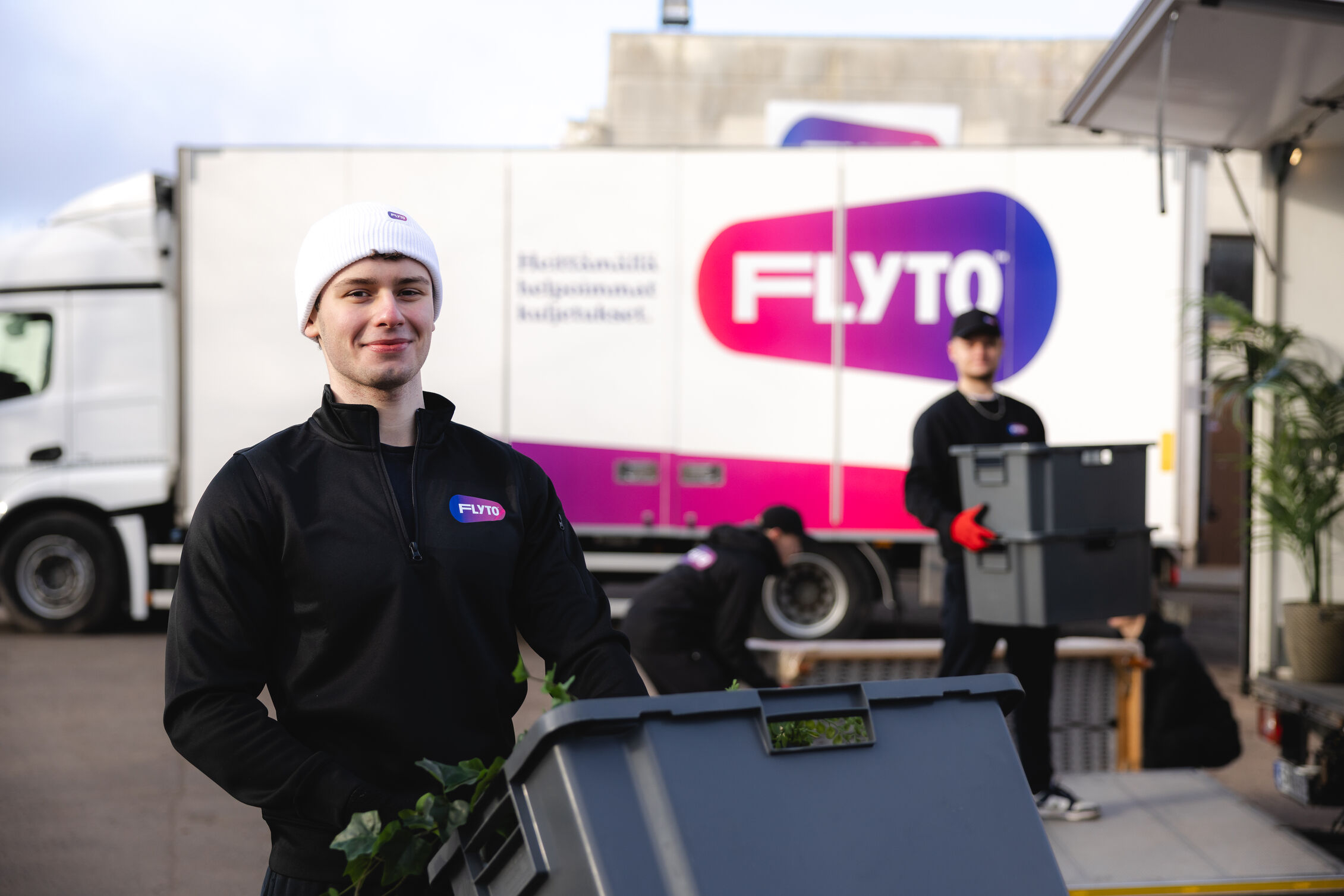
How Flyto handles your Luxembourg to Singapore move
Flyto runs strong in-house European operations, with our own offices, warehouses, teams and vehicles across Northern, Central and Southern Europe, so your packing and collection in Luxembourg and the road/rail leg to a North Sea port or to Findel airport are handled to our own standard. For the ocean or air leg and the arrival side we combine this with a carefully chosen network of vetted partners and subcontractors, plus trusted local agents in Singapore who manage customs clearance, GST-relief filing and delivery. We coordinate the whole chain end to end — we do not claim to do every step ourselves.
Frequently asked questions
Do I have to pay tax on my used furniture arriving in Singapore?
Not if you qualify for GST relief — you must own the goods, have used and possessed them for at least 3 months, import them within 6 months of first arrival, and agree not to dispose of them for 3 months (Singapore Customs). Otherwise 9% GST applies.
How long does the move take?
As an industry estimate, sea freight is commonly 8–12 weeks door-to-door and air freight 1–2 weeks. These are freight-industry ranges, not official figures, and depend on sailings and clearance.
Can I ship before my Employment Pass is issued?
It’s risky. GST relief is tied to genuinely transferring residence and to the six-month import window after your first arrival, so most people wait until their pass is confirmed before shipping.
Can I bring my car?
Technically yes, but it stays dutiable regardless of ownership length, is excluded from GST relief, and needs a COE plus LTA registration — usually uneconomic for private movers (Singapore Customs).
What do I need to do with my Luxembourg commune before leaving?
Declare your departure to your commune (the Bierger-Center in Luxembourg City), which removes you from the population register; keep the deregistration certificate for tax and treaty purposes (Guichet.lu).
What about moving back from Singapore to Luxembourg?
On return you re-import into the EU. Personal property you have owned and used for at least six months can be imported free of duty and VAT under the transfer-of-residence relief, declared to Luxembourg customs, with items importable in stages within 12 months of the move (Guichet.lu). You then register with your new commune within the required deadline.
Sources
- Administration des douanes et accises (Luxembourg customs)
- Customs declarations (Single Window for Logistics, Luxembourg)
- Declaring departure to your commune (Guichet.lu)
- Declaring your residence — arrival, change and departure (Ville de Luxembourg)
- Income tax return for natural persons (Guichet.lu)
- Cross-border cash declaration (Guichet.lu)
- Rules for taking cash in/out of the EU (Your Europe)
- Mertert river port (transports.public.lu)
- Bettembourg rail/road terminal (Single Window for Logistics)
- Luxembourg Airport cargo (lux-airport.lu)
- Moving to Singapore — bringing in household items (Singapore Customs)
- Do I qualify for GST relief? (Singapore Customs)
- Importing used household articles and personal effects (Singapore Customs)
- Importing dutiable motor vehicles (Singapore Customs)
- Importing dogs and cats (Animal & Veterinary Service, NParks)
- Taking cash in and out of Singapore (ICA)
- Entering Singapore / Singapore Arrival Card (ICA)
- Declaring personal property when moving to Luxembourg from a third country (Guichet.lu)