
Moving to Krakow (2026): The Complete Relocation Guide

Kraków is Poland’s second-largest city and, for many, its most beautiful — around 816,000 residents (816,614 at the end of 2025), the country’s former royal capital until the court moved to Warsaw in 1596, and home to a medieval Old Town that was one of the very first sites placed on the UNESCO World Heritage list, in 1978. It is a student city (the Jagiellonian University, founded in 1364, is the oldest in Poland; AGH is its engineering powerhouse) and Poland’s biggest business-services and IT hub, which is why so many international arrivals land here rather than in the capital. It is also, physically, one of the harder Polish cities to move into: the historic core is a walled, cobbled, limited-traffic zone that trucks cannot legally enter, the tenement flats have no lifts, and the city’s new clean-transport rules can bar an older removal vehicle from half the city. This guide covers the practical mechanics of moving to Kraków in 2026 — the logistics only a mover knows, where to live and what rent really costs, how to register your address, and what monthly life actually costs — with official sources throughout.
Freshness note: prices and rules verified against krakow.pl, bip.krakow.pl, zdmk.krakow.pl, gov.pl, MPK Kraków, NFZ and current Kraków rental-market data in 2026. Fees and rents move — confirm figures with the linked authorities before you rely on them.
Quick answer: moving to Kraków in 2026
What does it cost to move to Kraków? An international household move (a full flat) typically lands in the low-to-mid four figures in euros from within Europe and higher from overseas, driven mostly by volume, distance and access. Kraków’s access difficulties — the Old Town traffic ban, cobbles and lift-less tenements (see below) — add real cost, so get a fixed quote for your exact address rather than a generic estimate: get a Flyto quote here.
How long does the move take? Road moves from within the EU are usually a few days to about two weeks door-to-door; overseas sea freight runs several weeks. The one Kraków-specific quirk everyone underestimates: if your address is inside the Old Town or Kazimierz limited-traffic zone, a full-size truck cannot drive to your door at all — the move is done by small-van shuttle and hand-carry, and even a stop on the road edge needs a road-occupation permit from the city roads authority (ZDMK). None of this is a same-day fix.
Key takeaways
- Trucks are barred from the historic core. Kraków’s Stare Miasto (inside the green Planty ring) and neighbouring Kazimierz form a restricted-traffic zone (strefa ograniczonego ruchu) marked with B-1 ”no entry” signs. Only vehicles up to 7.5 t with a permit from the Zarząd Dróg Miasta Krakowa (ZDMK) may enter, and larger removal lorries generally cannot — so a small-van shuttle plus hand-carry over cobbles is the norm.
- A clean-transport zone now covers about half the city. Kraków’s Strefa Czystego Transportu (SCT) took effect on 1 January 2026 after a rocky legal history (an earlier resolution was annulled by the courts). Older petrol (pre-Euro 4) and diesel (pre-Euro 6) vehicles face restrictions, though registered residents get open-ended exemptions (krakow.pl).
- Occupying the kerb needs a permit. Parking a truck or placing a furniture lift on a public road means a road-occupation permit (zajęcie pasa drogowego) from ZDMK; the application window is 90–30 days before the works, on fees set by City Council resolution (ZDMK-28, BIP Kraków).
- Kraków rents are cheaper than Warsaw’s. Median asking rent across the city is about 2,724 PLN/month (roughly 69 PLN/m²) in 2026 — noticeably below the capital — with Kazimierz and Zwierzyniec the priciest and Nowa Huta the cheapest (Znajdź Najem market data).
- You must register your address (meldunek). EU/EFTA citizens have 30 days from moving in to register; non-EU nationals only 4 days. It is free, done at the urząd, and tied to your PESEL number (gov.pl).
1. The move into Kraków — logistics only a mover knows
This is the part generic ”moving to Kraków” guides skip, and it is exactly where a move goes wrong. Kraków’s centre was laid out in 1257 around Europe’s largest medieval market square and was never meant for motor traffic, let alone a removal lorry. Four things decide whether your move day runs smoothly.
The Old Town traffic ban — why the truck can’t reach your door
The whole of Stare Miasto inside the Planty (the leafy ring park that replaced the medieval walls), together with adjoining Kazimierz, is a strefa ograniczonego ruchu — a limited-traffic zone. Its entrances carry B-1 signs (”zakaz ruchu w obu kierunkach”), and Rynek Główny and its side streets are effectively pedestrian. You may enter only with a permit from the Zarząd Dróg Miasta Krakowa (ZDMK), and only for vehicles up to 7.5 tonnes; deliveries are confined to narrow morning loading windows, and a one-off ”przejazd okolicznościowy” (occasional-entry) permit exists precisely for events like weddings and house moves. In practice a standard 12-tonne removal lorry cannot get a permit for these streets at all. The professional solution is a small-van shuttle: the main truck parks legally at the edge of the zone and a smaller van (or hand-trolley) ferries loads the last stretch — across setts and cobbles that make trolleys slow and heavy. Budget more time and crew for a central address than you would anywhere else in Poland.
The SCT clean-transport zone — an honest status check
Kraków’s Strefa Czystego Transportu (SCT) has had a genuinely on-again, off-again history, and it is worth stating plainly. The city adopted a first SCT resolution, but in January 2024 the Provincial Administrative Court (WSA) annulled it, finding the zone’s boundaries and traffic arrangements insufficiently defined (Radio Kraków). The council then passed a revised resolution, and the zone came into force on 1 January 2026, covering roughly half the city — broadly the area inside the fourth ring road (BIP Kraków — SCT). In the first phase, petrol cars must meet Euro 4 (roughly 2005 and newer) and diesels Euro 6 (roughly 2014 and newer); older vehicles are restricted, with tighter standards phasing in over later years. Critically, all registered Kraków residents receive open-ended exemptions for vehicles they owned or used before the zone started, and there are further exemptions for disabled drivers, historic and special vehicles; non-residents pay per-entry or subscription fees (krakow.pl). For a move, this matters because an older removal vehicle may need a route or an exemption planned in advance — check the current rules before move day, as the scheme is still bedding in.
Kamienice, no lift, and the winda meblowa
Kraków’s desirable central flats sit in kamienice — the 19th- and early 20th-century tenement houses of the Old Town, Kazimierz, Podgórze and Krowodrza. Beautiful, high-ceilinged, and almost always without a lift, with tight, winding staircases and, in Kazimierz especially, deep courtyards. The practical consequence is the same as in any old European city: sofas, wardrobes and double beds frequently will not go up the stairwell or round its turns. The standard solution is an exterior furniture lift — a winda meblowa (a ladder hoist run up the facade) — to lift bulky items straight in through a window or balcony. That hoist needs kerb space at the foot of the building, which brings us to the permit.
The road-occupation permit (zajęcie pasa drogowego)
To park the truck on a public road, or to stand a furniture lift on the pavement or carriageway, you generally need a road-occupation permit (zezwolenie na zajęcie pasa drogowego) from ZDMK. The application window is 90 to 30 days before the planned occupation, and fees follow the rates set by City Council resolution (ZDMK-28, BIP Kraków; general fee schedule at krakow.pl fees page). This is the single most common thing international movers forget: there is no last-minute fix on move day, and an unpermitted lift or truck can be moved on or fined. A mover who works Kraków regularly files this — and, where needed, the restricted-zone entry permit — as a matter of routine.
2. Where to live — Kraków neighbourhoods by profile
Kraków’s districts range from the postcard-perfect but tourist-saturated core to leafy villa suburbs and the planned socialist town of Nowa Huta. The figures below are indicative median monthly asking rents for whole flats in 2026 from Znajdź Najem, cross-checked against the city-wide average of about 2,724 PLN/month (~69 PLN/m²). Actual prices depend heavily on size, condition and how much of the local stock is tied up in short-term tourist lets.
Best for character and walkability (at a price):
- Stare Miasto — Old Town (~2,800 PLN/mo) — living inside a UNESCO site, everything on foot, and genuinely magical; but tourist crowds, noise from bars, thin long-term stock and the traffic ban that complicates every delivery and move. Wonderful to visit your own address; harder to move into.
- Kazimierz (~3,000 PLN/mo, the priciest district) — the historic Jewish quarter turned bohemian nightlife and café heart; atmospheric and central, but a shallow rental market (much of it short-let), weekend noise, and the same limited-traffic access as the Old Town.
Best for young professionals:
- Podgórze (~2,800 PLN/mo) — across the Vistula, the strongest alternative to the strict centre: the regenerated Zabłocie tech-and-loft district, MOCAK and Schindler’s Factory, riverside walks, quick tram links, and a real neighbourhood feel without the tourist churn.
- Grzegórzki (~2,800 PLN/mo) — compact and central-east around the Galeria Kraków hub and the river bends; well connected and convenient, if short on green space.
Best for families and value:
- Krowodrza (~2,500 PLN/mo) — a broad, solid residential district north-west of the centre with good schools, parks and the AGH/university belt; a favourite of academics and families, with studios often in the 2,200–2,800 PLN range.
- Dębniki (~2,500 PLN/mo) — south of the river, mixing older riverside streets with large newer estates (Ruczaj) popular with IT workers near the tech parks; good value and green, if sprawling.
- Bronowice (~2,700 PLN/mo) — leafy north-west suburb with a village feel, newer housing and easy access to the A4/airport side of the city; calm and family-friendly.
- Zwierzyniec (~high, often 3,000+ PLN/mo) — the green villa district running up to Wolski Forest and the Kościuszko Mound; prestigious, quiet and expensive, with limited flat stock.
Best for budget and space:
- Nowa Huta (~2,300 PLN/mo, the cheapest district) — the planned 1950s steelworkers’ town east of the centre, with wide boulevards, generous greenery and genuinely low rents; further out and architecturally divisive, but increasingly appreciated for its space and its own strong identity.
3. The Kraków housing market — how flats are actually found
Kraków’s rental market is tight but not Warsaw-tight, and it has one local twist: student demand every autumn and heavy tourist short-letting in the centre, which thins the long-term stock in exactly the areas people most want. Here is how it works.
- Where to search: the mainstream portals are OLX, Otodom and Gratka; for rooms and shared flats, students use university boards and Facebook groups. In August and September, when tens of thousands of students arrive, good flats go within days — search ahead of the academic year if you can.
- Deposit (kaucja): expect one to two months’ rent as a security deposit, paid on signing and refundable at the end less any damage. Two months is common for furnished central flats; one month for longer, unfurnished lets.
- Agency fees: where an agent (pośrednik) is involved, a commission of up to one month’s rent may apply — always confirm who pays it before you view.
- Contract: a written lease (umowa najmu) is standard; the safest form for tenants and landlords alike is najem okazjonalny (registered with a notary). Read the utilities clause — rent (czynsz najmu) is often quoted separately from building fees (czynsz administracyjny) and metered utilities.
- Scam warning. Fake listings target new arrivals, especially students. Never transfer a deposit or ”reservation fee” before you have seen the flat in person and met the real landlord or verified agent. Classic red flags: an ”owner abroad” who will post the keys, prices far below the district median, pressure to pay by an unusual method or to a foreign account, and refusal to sign a proper contract.
4. Meldunek — registering your address in Kraków
Registration of residence (meldunek, the act of zameldowanie) is a legal obligation and the practical key to Polish administration — it underpins your PESEL number, which you need for banking, tax, healthcare and school places. The rules:
- Deadlines. You must register the place where you live. Citizens of the EU, EFTA and Switzerland (and their family members) have 30 days from moving in; other foreign nationals have just 4 days. Stays under 30 days do not require registration (gov.pl).
- Where and cost. You register at the local city office (Urząd Miasta Krakowa / Wydział Spraw Administracyjnych), in person or — with a trusted profile — online. The service is free of charge.
- PESEL. Registration is closely linked to the PESEL identification number; foreigners registering typically obtain or use their PESEL in the process. You can later verify your data in the PESEL register online (obywatel.gov.pl).
- What to bring. Your passport or ID, the registration form, and a document proving your right to the dwelling (tenancy agreement or an owner’s confirmation). If you are instead leaving Poland, deregistration (wymeldowanie) is the counterpart step — see our Poland deregistration guide.
5. Cost of living in Kraków (2026)
Kraków is markedly cheaper than Warsaw and a fraction of Western-European city costs, while offering big-city amenities. The current numbers:
- Rent is the main variable — see section 2. City-wide the median asking rent is about 2,724 PLN/month (~69 PLN/m²); a one-bedroom flat runs roughly 3,600 PLN in the centre and 2,900 PLN outside it (Znajdź Najem; Numbeo Kraków).
- Utilities. Basic utilities (electricity, heating, water, refuse) for an 85 m² flat average around 1,270 PLN/month, though this swings hard with the heating season (Numbeo).
- Internet. Home broadband (60 Mbps or more) is inexpensive by European standards at roughly 70 PLN/month (Numbeo). Main providers include Orange, Play, Plus, T-Mobile and UPC/Vectra; fibre is widespread.
- Public transport. A single 60-minute MPK ticket is 8 PLN and a monthly pass for city Zone I is 109 PLN (normal fare), following the March 2026 tariff (MPK Kraków) — for most residents the monthly pass is the obvious buy, and it is far cheaper than running a car inside the SCT.
- Eating out remains a Kraków pleasure: a meal at an inexpensive restaurant is around 45–50 PLN (Numbeo).
6. Getting settled — transport, health, schools, internet
- Transport (MPK Kraków). The city runs one of Poland’s densest tram networks plus buses; trams are the backbone of daily life and reach almost everywhere useful. With the SCT and the Old Town ban, most residents rely on trams, bikes and walking rather than a car (MPK).
- Health insurance (NFZ). Public healthcare runs through the Narodowy Fundusz Zdrowia (NFZ). If you work on an employment contract, cover is automatic — your employer registers you via ZUS. Those not otherwise insured (some students, non-working residents) can join voluntarily for roughly 830 PLN/month (far less for students), while EU visitors are covered for necessary care with an EHIC (NFZ). See also our Poland NFZ guide.
- Universities and schools. Kraków is a student city: the Jagiellonian University (UJ), Poland’s oldest (1364), and AGH University anchor a large academic population, alongside the Kraków University of Economics and others. For families, the city has public schools plus a strong choice of international and bilingual schools (British, IB and others) concentrated in Krowodrza, Zwierzyniec and the southern districts.
- Internet. Order early: installation can take a couple of weeks after signing, and it is worth checking which providers already serve your building — many central kamienice have fibre, but not all.
7. How Flyto handles your move to Kraków
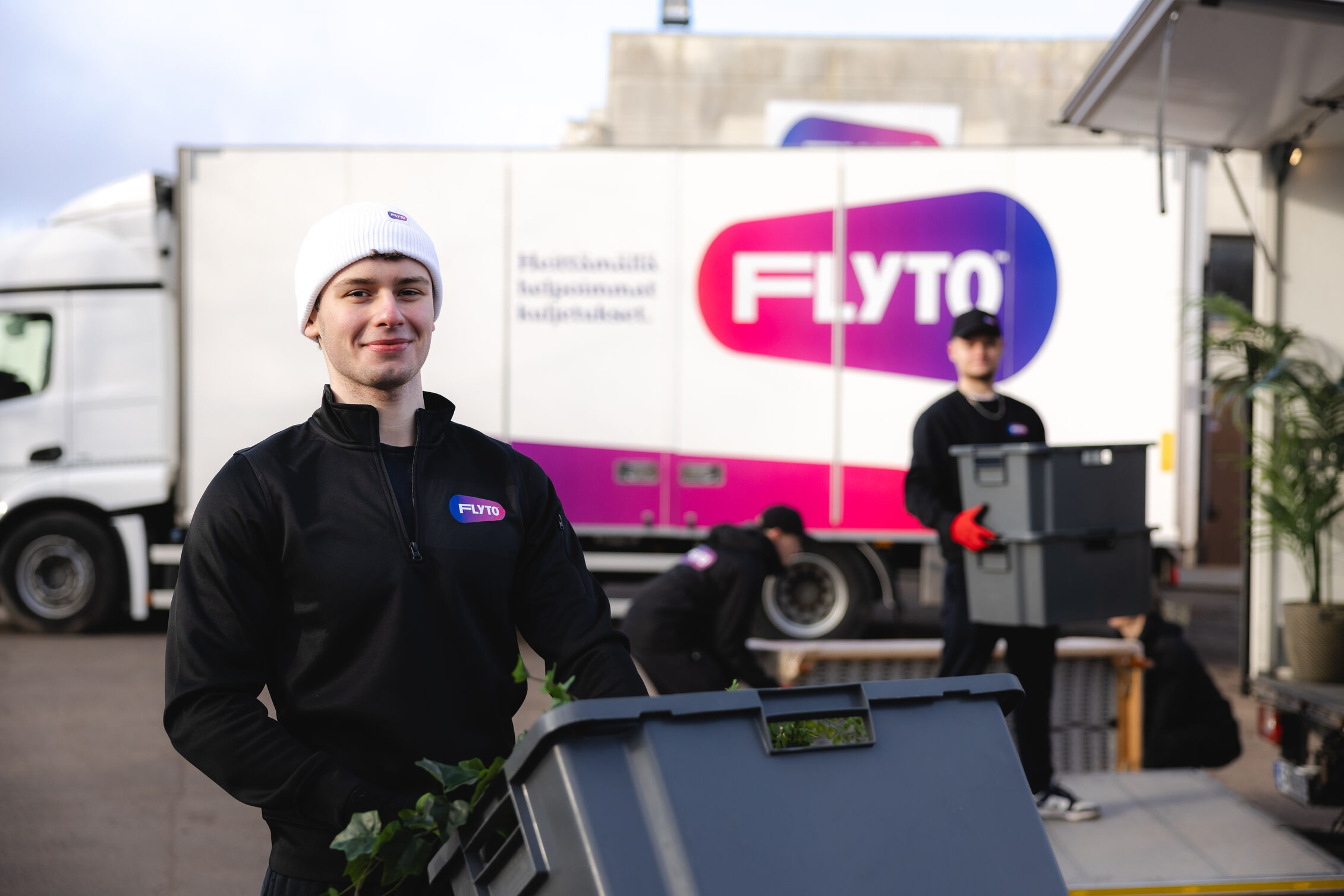
Everything in section 1 is why a Kraków move rewards a mover who actually knows the city — and it’s where Flyto earns its keep. For central addresses we plan the small-van shuttle and hand-carry around the Old Town and Kazimierz traffic ban, and arrange the ZDMK restricted-zone entry permit where a vehicle can be admitted. We file the road-occupation permit (zajęcie pasa drogowego) in the city’s 90–30-day window so there is a legal, empty space for the truck and the furniture lift. We check SCT vehicle rules in advance so an older removal vehicle is routed or exempted correctly. And we assess the kamienica staircase, floor and courtyard access before the day, bringing an exterior furniture lift (winda meblowa) when the sofa won’t make the stairwell — rather than discovering the problem mid-carry. That is the honest difference between a van hire and a relocation partner who has done Kraków’s cobbles street by street. Get a fixed quote for your Kraków move, or browse our full Poland moving guides and our customs guide for personal goods.
Moving to Kraków? Get a fixed quote.
Tell us your addresses and volume and we’ll price the whole move — including the Old Town shuttle, any ZDMK permits and the furniture lift your kamienica needs. No surprises on the day.
Frequently asked questions
Can a moving truck drive into Kraków’s Old Town?
Generally no. Stare Miasto inside the Planty ring and neighbouring Kazimierz are a limited-traffic zone (strefa ograniczonego ruchu) marked with B-1 ”no entry” signs. Only vehicles up to 7.5 t with a ZDMK permit may enter, within narrow loading windows, so a standard removal lorry usually cannot. Moves to central addresses are done with a small-van shuttle from the edge of the zone and hand-carry over the cobbles.
What is Kraków’s SCT and will it affect my move?
The Strefa Czystego Transportu (clean-transport zone) took effect on 1 January 2026 and covers roughly half the city. Older petrol (pre-Euro 4) and diesel (pre-Euro 6) vehicles are restricted, though registered residents get open-ended exemptions. An earlier SCT resolution was annulled by the courts in 2024 before the revised zone launched, so confirm the current rules — an older removal vehicle may need its route or an exemption planned in advance.
Do I need a permit to park the truck or a furniture lift on the street?
Usually yes. Occupying a public road or pavement with a truck or an exterior furniture lift requires a road-occupation permit (zajęcie pasa drogowego) from ZDMK, applied for 90–30 days before the works, on fees set by City Council resolution. There is no last-minute fix, so a good mover files this ahead of time.
How much is rent in Kraków in 2026?
The median asking rent city-wide is about 2,724 PLN/month (~69 PLN/m²), cheaper than Warsaw. Nowa Huta is the most affordable district (~2,300 PLN), while Kazimierz (~3,000 PLN) and Zwierzyniec are the priciest; central districts like Stare Miasto, Podgórze and Grzegórzki sit around 2,800 PLN. On top you pay building fees and metered utilities.
How big a deposit will a Kraków landlord ask for?
Typically one to two months’ rent as a security deposit (kaucja), paid on signing and refundable at the end less any damage. Two months is common for furnished central flats; one month for longer unfurnished lets. Where an agent is involved, a commission of up to one month’s rent may also apply — confirm who pays before viewing.
How soon must I register my address (meldunek) in Kraków?
EU, EFTA and Swiss citizens (and their family members) have 30 days from moving in; other foreign nationals have just 4 days. Registration is free, done at the Urząd Miasta, and linked to your PESEL number, which you’ll need for banking, tax and healthcare. Stays under 30 days don’t require registration.
Will my furniture fit up a Kraków kamienica staircase?
Often not. The desirable central flats are in kamienice — old tenement houses, almost always without a lift, with tight winding stairs and deep courtyards. Large items frequently have to go in via an exterior furniture lift (winda meblowa) through a window or balcony. A good mover checks the staircase, floor and courtyard access before move day and books the lift and its kerb permit in advance.
Is Kraków a good place to move to for work or study?
Yes. Kraków is Poland’s largest business-services and IT hub and a major student city, home to the Jagiellonian University (Poland’s oldest, 1364) and AGH. That mix drives strong demand for flats near the tech parks (Dębniki/Ruczaj) and the university belt (Krowodrza), and a deep pool of international schools for families.
Official sources
- krakow.pl — SCT from 1 January 2026, with resident exemptions
- BIP Kraków — Strefa Czystego Transportu (SCT) rules
- Radio Kraków — court annulled the first SCT resolution (2024)
- ZDMK — entry procedure for restricted-traffic zones
- ZDMK — identifiers and permits (Stare Miasto & Kazimierz)
- BIP Kraków — ZDMK-28, road-occupation permit (zajęcie pasa drogowego)
- krakow.pl — road-occupation fees (opłaty za zajęcie pasa drogowego)
- gov.pl — address registration for foreigners (zameldowanie)
- obywatel.gov.pl — check your data in the PESEL register
- MPK Kraków — ticket prices (2026 tariff)
- NFZ — voluntary health insurance
- Znajdź Najem — Kraków rent data by district (2026)
- Numbeo — Kraków cost of living
- Kraków — population, royal-capital history and UNESCO listing
- Flyto — Poland deregistration (wymeldowanie) guide
- Flyto — Poland NFZ health-insurance guide
- Flyto — customs for personal goods
- Flyto — Poland moving guides
Hiring an international mover? See our full International removals to Poland service — Flyto’s own European hubs, vetted local partners and one English-speaking coordinator, door to door.