
Moving from Poland to Sweden (2026): Complete Guide

Poland and Sweden are both EU member states, so a move between them is an intra-European relocation, not an international one in the customs sense. There is no border to clear, no import declaration to file and no duty to pay on your furniture, boxes or car — the rules that make overseas moves complicated simply don’t apply here. What does apply is registration: as an EU citizen you don’t need a visa or work permit to live in Sweden, but you do need to formally register your move on both ends so your tax, healthcare and social-insurance status follow you correctly. This guide is written for a resident of Poland relocating to Sweden and covers exactly what to do — and what you can skip.
Key takeaways
- No customs, no duty, no import declaration. Household goods move freely between EU customs-union members; there is no customs clearance procedure for a Poland-to-Sweden move (European Union – EU customs union in action).
- You don’t need a visa or residence permit. As an EU/EEA citizen you have an automatic right of residence in Sweden if you work, study or are self-supporting; you do not need to apply to Migrationsverket for permission (Migrationsverket – EU/EEA citizens).
- Register with Skatteverket if you’ll stay a year or more. This is what actually replaces a "residence permit" administratively — it gets you into the Swedish Population Register and issues your personnummer (Skatteverket – citizen of an EU/EEA country).
- Report your departure in Poland. Leaving permanently triggers automatic wymeldowanie (de-registration) when you report your departure to your gmina, or you can file the "departure abroad" notice separately (Gov.pl – Zgłoś wyjazd za granicę; Powroty.gov.pl).
- Swap your EHIC use for an S1 once you actually live in Sweden. The EHIC only covers temporary stays; permanent residents need to register health cover in the new country (Your Europe – health insurance cover in your host country).
- Your Polish driving licence stays valid in Sweden with no forced exchange deadline. Because Poland and Sweden are both EEA states, there’s no one-year expiry like the rule that applies to non-EEA licences — you can keep driving on it indefinitely (Transportstyrelsen – I have a driving licence).
- Pets need an EU pet passport, microchip and valid rabies vaccination — standard EU rules, no quarantine between Poland and Sweden (Your Europe – travelling with pets; Jordbruksverket – dogs, cats and ferrets from EU countries).
- Banks in either country cannot refuse you for having a "foreign" IBAN, and EU rules give you a right to a basic payment account wherever you’re legally resident (Your Europe – bank accounts in the EU).
1. Free movement of goods: what actually applies
Poland and Sweden are both inside the EU customs union, so goods that are already in free circulation move between them exactly as they would between two Polish cities — no customs office, no import declaration, no VAT or duty assessment on your personal belongings (EU customs union in action). There is no "Transfer of Residence" relief to apply for, because that mechanism only exists for moves into the EU from a third country. Practically, that means:
- No customs clearance, broker, or import paperwork for your household goods.
- No "personal effects" concession application — there’s nothing to apply for.
- The only paperwork that matters is commercial: a packing inventory for your mover/insurer, and — if you’re bringing a car — the vehicle’s own registration documents (see Section 4).
This is genuinely different from a move involving Switzerland (EFTA, outside the EU/EEA customs area — a customs declaration and duty-free removal-goods relief still apply), Norway or Iceland (EEA but outside the EU customs union — customs formalities apply, with relief available for genuine removal goods), or the UK (fully outside the EU/EEA, full customs procedures). None of that applies on the Poland–Sweden corridor.
2. Leaving Poland: de-registration, tax, healthcare, driving licence, vehicle
Address de-registration. If you’re leaving Poland with the intention of living abroad permanently, reporting your departure to your gmina (city/municipal office) automatically de-registers you from both permanent and temporary residence (wymeldowanie); if you’re leaving for longer than 6 months without permanent intent, it de-registers your temporary residence only. This can be done in writing, in person, or electronically via a Trusted Profile (Profil Zaufany) (Gov.pl – Zgłoś wyjazd za granicę; Powroty.gov.pl – Wyjechałem za granicę).
Ending tax residency. Polish law does not have a formal "exit" application or a certificate confirming loss of residency — tax residency simply follows where your personal and economic ties actually are. You should still notify your local urząd skarbowy of your new address using the ZAP-3 update form, which private individuals not running a business can now file electronically through e-Urząd Skarbowy (Ministry of Finance – e-Urząd Skarbowy). Keep documentation of your move (lease, Swedish registration, employment contract) in case Polish tax authorities ever need evidence that your centre of vital interests shifted.
Healthcare. Your NFZ coverage and EHIC are tied to being insured in Poland; they cover temporary stays abroad but not permanent residence. Once you actually live and are covered in Sweden, you stop relying on the EHIC for routine care there. If you’re moving as a pensioner or in certain cross-border employment situations, ask NFZ’s International Affairs Department about an S1 form, which transfers the cost of your healthcare to the paying country (Your Europe – health insurance cover in your host country).
Driving licence. Nothing to do — an EU/EEA-issued driving licence needs no exchange to remain valid, in Poland or anywhere else, until its printed expiry date (Your Europe – driving licence exchange and recognition).
Vehicle. If you take your car permanently to Sweden and register it there, you should also deregister it (wyrejestrowanie) at the Polish office (starostwo/urząd) where it was last registered, presenting the document confirming its new foreign registration. If instead you sell or gift the car to someone abroad, Polish rules set a firm 30-day deadline to deregister, counted from the date of that transaction (Warszawa19115 – wyrejestrowanie pojazdu z powodu wywozu za granicę).
3. How your household goods actually move (industry estimates)
The dominant freight route for household goods between Poland and Sweden is road-plus-RoRo-ferry across the Baltic Sea, not a land detour around through Denmark. Movers typically route via the Świnoujście–Ystad and Świnoujście–Trelleborg ferry corridors, served by operators including Polferries, Unity Line and TT-Line, with multiple sailings a day on the busier crossings (TT-Line – Świnoujście to Trelleborg).
Typical mover-side estimates for a full or part-load door-to-door move (these are freight-industry planning figures, not guarantees — actual timing depends on load consolidation, ferry schedules and administrative border checks even though no customs applies):
- Warsaw/Central Poland → Stockholm area: roughly 4–7 days door-to-door for a dedicated or part-load road+ferry service.
- Gdańsk/Northern Poland → Stockholm/Southern Sweden: often 2–4 days, given the shorter overland leg to the ferry ports.
- Group/consolidated loads (cheaper, shared truck) commonly run 1–3 weeks depending on how quickly a full load is assembled on your route.
Because there’s no customs hold-up, the schedule is almost entirely a function of ferry capacity and route planning rather than paperwork — which is the opposite of a non-EU move.
4. Arriving in Sweden: registration, healthcare, tax, driving licence
Right of residence vs. registration — these are two different things. As an EU/EEA citizen who works, studies or is self-supporting, you automatically have a right of residence (uppehållsrätt) in Sweden for stays over three months — you do not need to apply to Migrationsverket for permission (Migrationsverket – EU/EEA citizens). If you plan to stay a year or more, though, you’re generally required to register in the Swedish Population Register (folkbokföring), administered by Skatteverket, not Migrationsverket (Skatteverket – citizen of an EU/EEA country).
To register: submit the "Flytta till Sverige" (Moving to Sweden) notification with Skatteverket — you can submit it up to 14 days before your move at the earliest — then book an in-person identity check at a state service centre once you’ve arrived, bringing your original ID documents. Processing typically takes several weeks, after which you’re issued a personnummer (personal identity number) — this is the number that unlocks essentially everything administrative in Sweden (Skatteverket – moving to Sweden, population registration). If your stay will be under a year, you may instead need only a samordningsnummer (coordination number).
Healthcare. Public healthcare access in Sweden is linked to folkbokföring, not to a separate application — once registered with Skatteverket you become entitled to care on the same basis as Swedish residents. If you’re working across borders or not yet registered, you should also notify Försäkringskassan (the Social Insurance Agency), using form 5456 ("Information when moving to or working in Sweden") if you’re not using the online e-service, since social insurance coverage isn’t automatic just from residence — it depends on where you actually live or work (Försäkringskassan – move to Sweden).
Tax. Registration with Skatteverket’s population register also registers you for tax purposes and generates your personnummer, which doubles as your tax identifier.
Driving licence. Because Poland and Sweden are both EEA states, your Polish driving licence stays valid in Sweden for as long as it’s valid at home and you haven’t voluntarily exchanged it — even after you register as a resident. This is different from the rule for non-EEA licences, which stop being valid once the holder has been registered in Sweden for more than a year. There’s no forced deadline on the EU/EEA side, though some people choose to exchange voluntarily by post to Transportstyrelsen anyway, mainly for everyday convenience or once the original licence nears its own expiry date (Transportstyrelsen – I have a driving licence).
Vehicle. If you bring your Polish-registered car permanently, you apply to Transportstyrelsen for verification of origin to import it from an EU country; a vehicle already registered in another EU country and matching a standard production series is generally treated as meeting Swedish technical requirements. If the car is new (bought very recently), you must also notify Skatteverket’s office in Ludvika, since VAT may need to be settled before registration (Transportstyrelsen – import from an EU country).
5. Moving with pets
Both countries follow the same EU pet-travel rules, so there’s no quarantine and no separate Polish–Swedish agreement to worry about. Your dog, cat or ferret needs, in order: an ISO-compliant microchip, applied before or at the same time as the rabies vaccination (an animal chipped after its vaccination has to be re-vaccinated), and an EU pet passport issued by an authorised vet recording the chip and vaccination (Your Europe – travelling with pets). Under the EU pet-travel rules that Jordbruksverket applies, the rabies vaccination generally needs to have been given at least 21 days before travel (unless the animal already carries a valid vaccination from an earlier round), and the animal must be identifiable by its microchip (Jordbruksverket – movement of dogs, cats and ferrets from EU countries). Plan the vaccination timing early — it’s usually the longest lead item in a pet move.
6. Money, banking, and things people forget
- Banks can’t turn you away for a Polish IBAN. Under EU payment-services rules, service providers across the EEA must accept SEPA payments regardless of which member state issued the IBAN, and you have a right to open a basic payment account in Sweden even before you’re formally resident there (Your Europe – bank accounts in the EU). In practice, most Swedish banks will still want a personnummer to give you full services (BankID, Swish), so opening a basic account early and upgrading after registration is the common approach.
- Your personnummer is the real key, more than any single "registration certificate" — you’ll need it for renting an apartment, signing up for utilities, healthcare, and payroll.
- Update your address with everyone in Poland, not just the gmina and tax office — banks, insurers, ZUS if relevant, and any pension or benefit providers, since Polish administrative changes don’t automatically cascade abroad.
- Don’t cancel Polish health/social registrations before your Swedish coverage is active — there can be a gap if you time it too early.
- Keep your Polish vehicle’s original documents and any Swedish import correspondence together — deregistering the car in Poland requires proof that it’s now registered abroad.
How Flyto handles your Poland to Sweden move
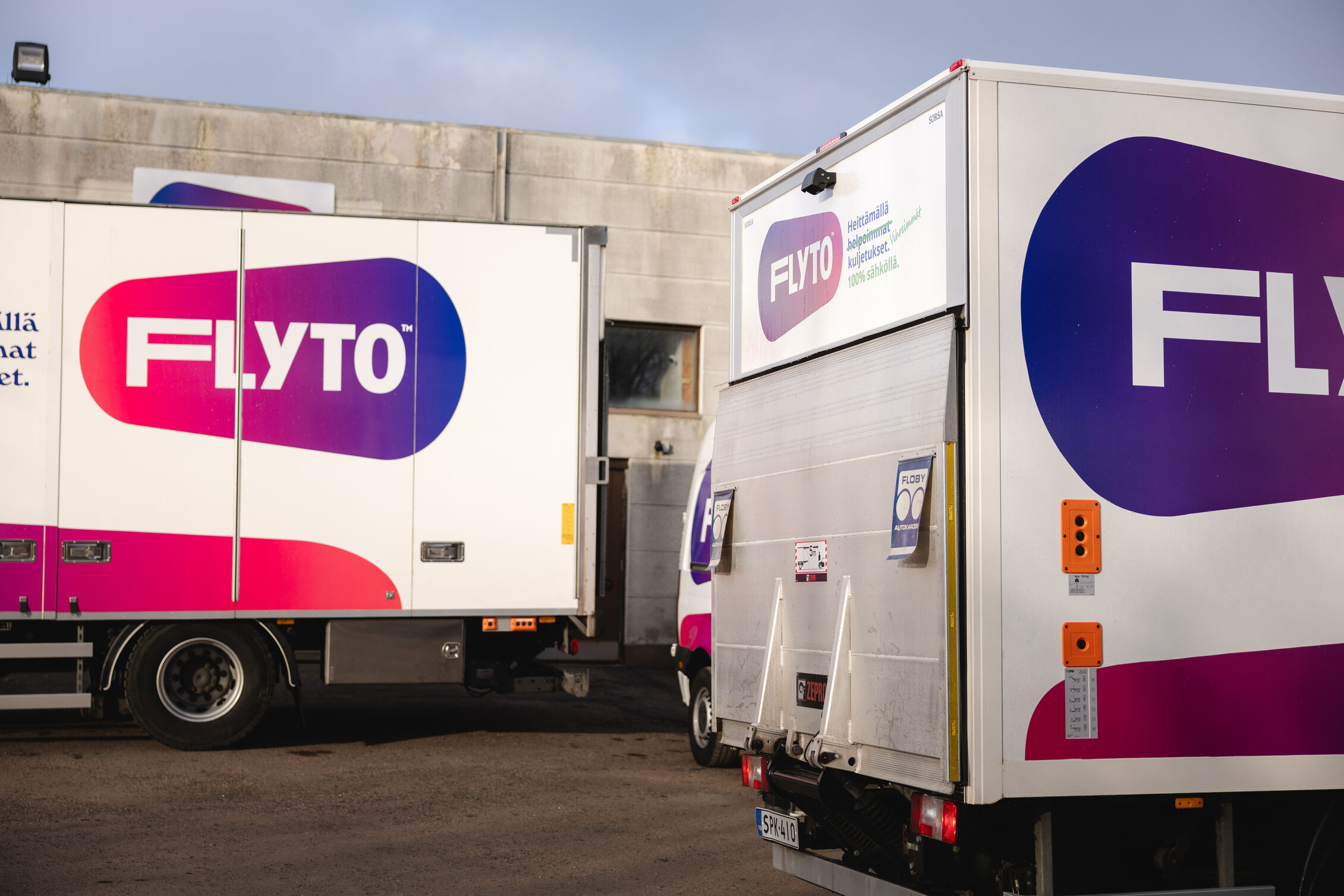
Flyto operates its own offices, warehouses and moving teams across Northern, Central and Southern Europe, which lets us run the Poland–Sweden corridor with direct oversight rather than handing it off blind. For the legs and dates where our own capacity doesn’t line up — a specific ferry sailing, a regional pickup, or peak-season demand — we route through a carefully vetted network of partner carriers who work to the same service standards, so you get one point of contact and one quote regardless of how many hands actually touch the truck.
Frequently asked questions
Do I need a visa or work permit to move from Poland to Sweden?
No. As an EU citizen you have freedom of movement; you can live, work or study in Sweden without a visa or permit (Migrationsverket – EU/EEA citizens).
Will my furniture and boxes be inspected at customs?
No. Poland and Sweden are both in the EU customs union, so there is no customs clearance process for household goods moving between them (EU customs union in action).
Do I have to register with Skatteverket the moment I arrive?
You can submit your move notification up to 14 days before you arrive, but the in-person identity check must happen after you’re physically in Sweden, and registration is generally required once you’ll be staying a year or more (Skatteverket – moving to Sweden).
Can I keep driving on my Polish licence forever?
Yes. Because Poland and Sweden are both EEA states, your Polish driving licence stays valid in Sweden for as long as it’s valid at home, even after you register as a resident — there’s no forced exchange deadline like the one that applies to licences from outside the EEA (Transportstyrelsen – I have a driving licence).
What happens to my EHIC once I live in Sweden?
The EHIC only covers temporary visits, not permanent residence. Once you’re actually living and insured in Sweden you rely on your Swedish healthcare registration instead; ask NFZ about an S1 if your situation (e.g. pension paid from Poland) requires it (Your Europe – health insurance cover in your host country).
Is there duty-free relief I need to apply for, like a non-EU move?
No — that relief only exists for moves from outside the EU. Since both Poland and Sweden are EU customs-union members, there’s simply nothing to apply for on the customs side (EU customs union in action).
Sources
- European Union – EU customs union in action
- Gov.pl – Zgłoś wyjazd za granicę
- Powroty.gov.pl – Wyjechałem za granicę
- Ministry of Finance (Poland) – e-Urząd Skarbowy / ZAP-3
- Warszawa19115 – wyrejestrowanie pojazdu z powodu wywozu za granicę
- Your Europe – health insurance cover in your host country (S1)
- Your Europe – driving licence exchange and recognition in the EU
- Your Europe – bank accounts in the EU
- Your Europe – travelling with pets and other animals in the EU
- Migrationsverket – EU/EEA citizens who want to live in Sweden
- Skatteverket – citizen of an EU/EEA country
- Skatteverket – moving to Sweden, population registration
- Transportstyrelsen – I have a driving licence
- Transportstyrelsen – import from an EU country
- Försäkringskassan – move to Sweden
- Jordbruksverket – movement of dogs, cats and ferrets from EU countries
- TT-Line – Świnoujście to Trelleborg ferry route