

Moving to Warsaw (2026): The Complete Relocation Guide

Warsaw is Poland’s capital and largest city — around 1.86 million residents, and after years of Ukrainian and other arrivals roughly one in seven is now a foreign national — and the natural landing point for almost anyone relocating to Poland for work. It is also a city with a split personality when it comes to actually moving in: about 85% of Warsaw was flattened in the Second World War and rebuilt with unusually wide boulevards, which makes truck access easier than in most old European capitals — but the housing itself is a mix of communist-era blok high-rises with tiny lifts and pre-war kamienice with no lift at all. This guide covers the practical mechanics of moving to Warsaw in 2026 — the truck and access logistics only a mover knows, where to live and what rent really costs, how to register your address and get a PESEL, and what monthly life actually costs — with official sources throughout.
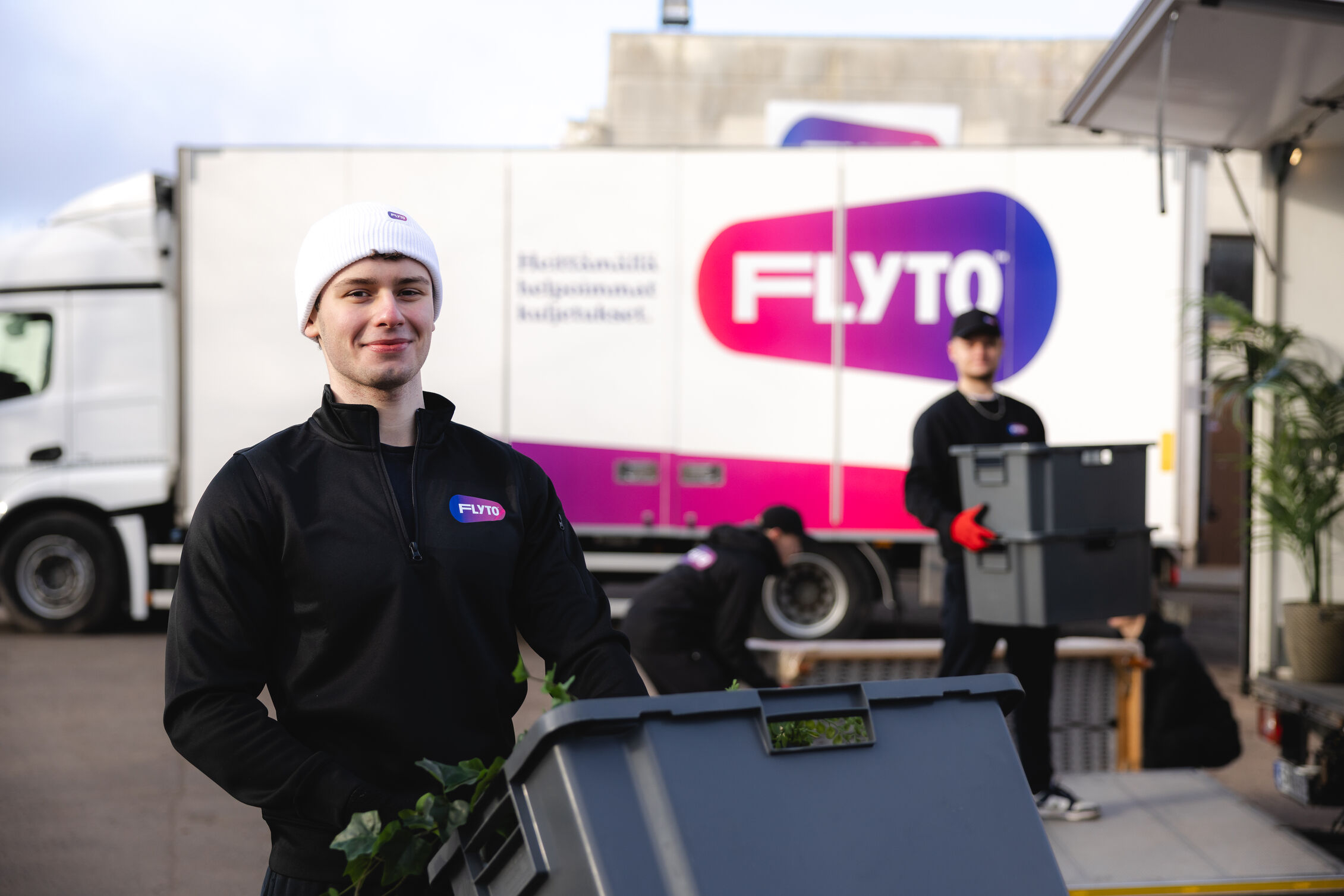
Freshness note: prices and rules verified against um.warszawa.pl, zdm.waw.pl, biznes.gov.pl, gov.pl, the Warsaw public transport authority (WTP/ZTM), NFZ/pacjent.gov.pl and Polish rental-market data in 2026. Fees and rents move — confirm figures with the linked authorities before you rely on them.
Quick answer: moving to Warsaw in 2026
What does it cost to move to Warsaw? An international household move (a full flat) typically lands in the low-to-mid four figures in euros from within Europe and higher from overseas, driven mostly by volume, distance and access. Because Warsaw’s building stock swings between wide-street new towers and lift-less pre-war kamienice, the access details change the price — so get a fixed quote for your specific address rather than a generic estimate — get a Flyto quote here.
How long does the move take? Road moves from within the EU are usually a few days to about two weeks door-to-door; overseas sea freight runs several weeks. The one Warsaw-specific quirk people underestimate: if the truck or an exterior furniture lift has to stand on the road or pavement, you need a road-occupation permit (zajęcie pasa drogowego) from the road manager — ZDM for main roads, the district office for local ones — and moving without one risks a penalty of up to ten times the fee (biznes.gov.pl).
Key takeaways
- Parking the truck can need a permit. Standing a removal truck, a container or an exterior furniture lift in the road or on the pavement is a zajęcie pasa drogowego — a road-occupation permit issued by the Municipal Roads Authority (ZDM) for main roads or by the district office (urząd dzielnicy) for local streets. The per-square-metre daily rate is set by city resolution and capped by national law at 10 zł/m²/day; occupying without a permit can cost ten times the fee (biznes.gov.pl, ZDM).
- The lift is the real variable. Communist-era blok and wielka płyta high-rises (much of Ursynów, Bielany, outer Mokotów) have small, slow lifts that won’t take a sofa or wardrobe, while pre-war kamienice in Praga and central districts often have no lift at all — which is why an exterior furniture lift (winda meblowa / podnośnik) is so often needed.
- New-lease rents are quoted per flat, not per m². Warsaw’s citywide asking rent works out around 85 zł/m²/month, and a typical two-room flat rents for roughly 4,900 zł/month plus building fees — far more in Śródmieście, less in the outer districts (Polish rental-market data, 2026).
- You must register within 30 days. Address registration (zameldowanie) is due by the 30th day after you move in, done at your district office, and most newcomers also need a PESEL number, which is issued free (gov.pl, gov.pl PESEL).
- The deposit is usually one to two months. The kaucja in practice runs one or two months’ rent; Polish law caps a long-term-lease deposit at twelve months’ rent, but the market almost never goes near that. Broker fees, where charged, are typically one month plus VAT.
1. The move into Warsaw — logistics only a mover knows
This is the part generic ”moving to Warsaw” guides skip, and it is exactly where a move goes wrong. Warsaw is easier than most old capitals to drive a truck through — and harder than most to get furniture up the stairs. Three things decide whether move day runs smoothly.
The road-occupation permit (zajęcie pasa drogowego)
Because so much of the city was rebuilt after 1945 on a broad, planned street grid — Marszałkowska, Aleje Jerozolimskie, the arteries around Śródmieście — there is often more kerb space than in a medieval city. But you still cannot legally park a large truck, drop a container, or stand an exterior furniture lift in the roadway or on the pavement without permission. That permission is a road-occupation permit, officially zajęcie pasa drogowego or zezwolenie na zajęcie pasa drogowego. Key facts:
- Who grants it: the road manager for that specific street. Main through-roads (powiatowe and wojewódzkie) are managed by the Zarząd Dróg Miejskich (ZDM); local streets (drogi gminne) are handled by the relevant district office (urząd dzielnicy) — so the first step is always checking which authority owns the street (ZDM).
- Official cost: a daily fee per square metre occupied, set by a Warsaw City Council resolution and capped by national law at 10 zł/m² per day. Any area under one square metre is billed as a full square metre (biznes.gov.pl).
- Lead time: the authority has up to a month to decide, so apply well ahead rather than the week of the move. In practice a mover who knows the district can move faster, but you should never assume same-day approval.
- Critical catch: occupying the road without a valid permit exposes you to an administrative penalty of ten times the normal fee (biznes.gov.pl). For a busy central street, the tidy solution most people use is a reserved bay (koperta) arranged in advance so the truck and lift have guaranteed space.
You often need this at both ends — the old address and the new one — if either sits on a street where free kerb space can’t be relied on. It is the single most common thing international movers forget, and there is no last-minute fix on move day.
Blok lifts, kamienice stairs, and the winda meblowa
Warsaw’s housing stock is two worlds. The first is the communist-era blok — the pre-fabricated wielka płyta (”large panel”) high-rises that fill Ursynów, Bielany, and swathes of Mokotów and Praga. They usually have a lift, but it is small, slow, and frequently too shallow to take a three-seat sofa, a double mattress, a wardrobe or a fridge upright. The second is the pre-war kamienica — the handsome tenement blocks that survived in Praga-Północ and dot central districts — which often have no lift at all and narrow, winding staircases.
Either way, the practical consequence is the same: bulky items regularly will not go up the normal route. The standard Warsaw solution is an exterior furniture lift (winda meblowa / winda zewnętrzna / podnośnik) — a ladder hoist run up the building’s facade to lift sofas, appliances and boxes straight in through a window or balcony, reaching well up a tall block. It needs its own space at the kerb, which is another reason the road-occupation permit matters. A good mover assesses this before the day — measuring the lift car and the stairwell turns — not when the sofa is wedged on a half-landing.
The Old Town, courtyards and restricted streets
Warsaw’s Stare Miasto (Old Town) is a special case: it was meticulously rebuilt after the war and is a UNESCO World Heritage site, with pedestrianised cobbled squares and streets closed to general traffic. A flat there — or in the adjoining New Town — can mean the truck parks some distance away and everything is carried in, sometimes with time-limited access windows. Elsewhere, the classic inner-city block wraps around a courtyard (podwórko), so a flat at the back can be a long carry from the street. None of this is a problem if it is planned for — and all of it is a bad surprise if it isn’t.
2. Where to live — Warsaw neighborhoods by profile
Warsaw’s districts vary enormously in age, feel and price. The figures below are indicative monthly asking rents for new lettings in 2026 from Polish rental-market data (citywide roughly 85 zł/m²/month, with a typical two-room flat near 4,900 zł), cross-checked against district price reporting (Bankier.pl). Rents in Poland are usually quoted as a whole-flat monthly figure, on top of which you pay the building’s administrative charge (czynsz administracyjny) and utilities.
Central and prestigious:
- Śródmieście (studios ~5,000 zł+, small flats ~6,000–10,000 zł/month) — the true centre: the Palace of Culture, offices, embassies, restaurants and nightlife, in a mix of surviving kamienice and new towers. Maximum convenience and the highest rents, with the trade-off of noise and tourist traffic.
- Żoliborz (3-room flats ~7,000–12,000 zł/month) — elegant, green and low-key, with interwar villas and a strong intelligentsia tradition; calm and central-adjacent, but small and expensive, with limited turnover of flats.
- Wilanów (larger flats ~7,000–12,000 zł/month) — the affluent southern ”Miasteczko Wilanów” new-build district around the royal palace; popular with well-off families and expats, but car-dependent and still catching up on public transport.
Best all-rounders:
- Mokotów (~4,500–7,000 zł/month) — Warsaw’s big, leafy middle-class district; prestigious pre-war streets in Stary Mokotów, plus the Służewiec office cluster locals nickname ”Mordor”. Broad choice and good transport, priced accordingly.
- Wola (~3,500–5,500 zł/month) — the former industrial west, now the skyscraper business district around Rondo Daszyńskiego; fast-gentrifying with a wall of new towers, well connected by metro line 2, but a building site in parts.
- Ochota (~3,500–5,500 zł/month) — compact and central-west, next to the main university campuses; solid value close to the centre, popular with students and young professionals, if short on green space.
Best for space and budget:
- Ursynów (~3,800 zł/month average) — a planned 1970s–80s estate of blok housing on metro line 1; green, family-friendly and calm, with the trade-off of a longer ride to the centre and a distinctly residential feel.
- Bielany (~3,300–3,400 zł/month) — quiet northern district with the Bielański forest and a mix of blocks and houses; affordable and green, though parts feel far out.
- Praga-Północ (among the cheaper central-ish options) — the east bank that largely survived the war, so genuine pre-war kamienice, a gritty industrial-turned-artsy character and rapid gentrification; cheaper and full of character, but uneven street to street.
- Praga-Południe (~3,000–5,000 zł/month) — the larger southern Praga, including the elegant villa quarter of Saska Kępa; residential, improving and better value than the west bank, with more space for the money.
3. The Warsaw housing market — how flats are actually found
Warsaw’s rental market is competitive but not as brutal as the tightest Western capitals; the search is still where most of the effort goes. Here is how it works.
- Where to search: the dominant portal is Otodom, alongside OLX and Gratka for private listings, plus agency sites. Good flats in central districts move quickly, so be ready to view fast and decide.
- Deposit (kaucja): expect one to two months’ rent in practice. Polish law caps a long-term-lease deposit at twelve months’ rent (six for the short-term ”occasional lease”), but the market rarely goes above two. It is refundable at the end of the tenancy less any damage beyond normal wear.
- Broker fee (prowizja): where an agent is involved, the tenant often pays a commission of about one month’s rent plus VAT. Many private listings carry no fee — filter for ”bez prowizji” if you want to avoid it.
- Building charges on top of rent. Almost every flat carries a monthly czynsz administracyjny (building/administration charge, often several hundred to over a thousand złoty) covering shared costs, and you pay utilities separately — always ask what the advertised rent does and doesn’t include.
- Expat and corporate demand. Central Warsaw has a large relocation and corporate-housing market, which keeps prices firm in Śródmieście, Wola and Mokotów and means furnished flats let quickly. Budget more time if you need something specific (parking, a lift, pets allowed).
- Scam warning. Fake listings exist here as everywhere. Never transfer a deposit or ”reservation fee” before you have viewed the flat in person and confirmed the landlord’s identity and ownership. Classic red flags: an ”owner abroad”, keys promised by courier against advance payment, prices well below the district norm, or pressure to pay to a foreign account.
4. Zameldowanie and PESEL — registering in Warsaw
Registration and a PESEL number are the keys to Polish bureaucracy — you’ll want them for banking, work, healthcare and tax. The rules:
- 30-day deadline. You must register your address (zameldowanie) by the 30th day after moving in, choosing permanent residence (pobyt stały) or temporary residence over three months (pobyt czasowy). It is done at the office of the municipality where you live — in Warsaw, your district office (urząd dzielnicy) — and it is free (gov.pl).
- What you need. A completed registration form plus a document showing your right to the flat — typically the tenancy agreement or the owner’s confirmation — and your ID or travel document. You can register in person or, with a trusted profile, online (gov.pl).
- PESEL. This national ID number is what most services actually ask for. Registering your address gives you a PESEL automatically; if you can’t register (for example you’re in temporary accommodation), you can apply for one separately at a district office, and it is issued free — for those without an employer in Warsaw, the Śródmieście district office handles the application (gov.pl PESEL).
- Deregistering when you leave. When you move away from Poland you should deregister (wymeldowanie) — see our Poland deregistration guide for how that works and why it matters for tax and NFZ.
5. Cost of living in Warsaw (2026)
Warsaw is more expensive than the rest of Poland but still well below London, Paris or the German big cities. The current picture:
- Rent is the big variable — see section 2. Budget roughly 3,000–4,000 zł/month for a studio or small flat in the outer districts up to 6,000–10,000 zł/month in central Śródmieście for a new lease, plus the building charge (Bankier.pl).
- Building and utilities. On top of rent you pay the monthly czynsz administracyjny and your own electricity, gas and internet — together often another 700–1,300 zł/month for a typical flat, more in winter when heating loads rise.
- Public transport. A single 20-minute ticket (zones 1+2) is 3.40 zł, a 75-minute ticket (zone 1) is 4.40 zł, and a 90-minute ticket (zones 1+2) is 7.00 zł. A 30-day season ticket is 110 zł for zone 1 and 180 zł for zones 1+2 — but as a registered Warsaw taxpayer with the Bilet Warszawiaka discount it drops to 98 zł for zones 1+2, and a 90-day zone-1 ticket is 280 zł (WTP ticket tariff, WTP long-term tickets). For most residents the season ticket, especially the Warszawiak rate, is the obvious buy.
- Everyday costs — groceries, eating out and services — sit noticeably below Western-European levels, which is a large part of why Warsaw remains attractive to relocating professionals even as rents have risen. Cross-check current baskets on Numbeo Warsaw before you budget.
6. Getting settled — health, transport, schools, internet
- Health (NFZ). Poland’s public healthcare runs through the National Health Fund (NFZ). If you work in Poland, your employer’s social-security (ZUS) contributions cover you and your dependants; EU/EEA arrivals can use an EHIC for the transition. Register with a primary-care doctor (lekarz POZ) once you’re insured, and consider private insurance for faster specialist access — details on the government patient portal (pacjent.gov.pl, NFZ). If you’re leaving Poland instead, see our NFZ-on-emigration guide.
- Transport. Warsaw has two metro lines, an extensive tram and bus network, and city rail (SKM/KM), all under one WTP ticket, plus the Veturilo bike-share. The metro and trams make most of the city car-free-friendly; a car is genuinely useful mainly in outer districts like Wilanów.
- Schools. Alongside Polish state schools, Warsaw has a deep bench of international and bilingual schools serving the expat and corporate community — British, American and IB curricula among them. Places at the popular ones fill up, so apply early if you’re moving with school-age children.
- Internet. Fixed broadband is fast, cheap and widely available — the main providers include Orange, Play, UPC/Vectra and T-Mobile, with fibre in most modern buildings. Installation is usually quick, but check what the building already supports before you sign a lease.
7. How Flyto handles your move to Warsaw
Everything in section 1 is why a Warsaw move rewards a mover who actually knows the city — and it’s where Flyto earns its keep. We arrange the road-occupation permit (zajęcie pasa drogowego) with the correct authority — ZDM for a main road, the district office for a local street — so the truck and lift have legal, guaranteed space and there’s no ten-times penalty. We assess access in advance: whether your blok lift will actually take the sofa, or whether a lift-less kamienica means an exterior furniture lift (winda meblowa) through the window. And we plan around the awkward cases — the pedestrianised Old Town, long courtyard carries, and one-way central streets — so nothing on move day is a surprise. That’s the honest difference between a generic van hire and a relocation partner who has done this street by street. Get a fixed quote for your Warsaw move, or browse our full Poland moving guides and, if you’re heading abroad, our Poland-to-Germany route guide.
Moving to Warsaw? Get a fixed quote.
Tell us your addresses and volume and we’ll price the whole move — including the road-occupation permit and any furniture lift your building needs. No surprises on the day.
Frequently asked questions
Do I need a permit to park the moving truck in Warsaw?
Often, yes. Standing a removal truck, a container or an exterior furniture lift in the roadway or on the pavement requires a road-occupation permit (zajęcie pasa drogowego) from the road manager — ZDM for main roads, the district office (urząd dzielnicy) for local streets. The daily fee is set per square metre and capped by national law at 10 zł/m²/day, and occupying without a permit can cost up to ten times the fee. The authority can take up to a month to decide, so arrange it well ahead.
Will my furniture fit in a Warsaw building’s lift or stairwell?
Not always. Communist-era blok high-rises usually have a lift, but it is often too small for a sofa, wardrobe or fridge, while pre-war kamienice frequently have no lift and narrow, winding stairs. The standard solution is an exterior furniture lift (winda meblowa) that hoists bulky items in through a window or balcony. A good mover measures the lift car and the staircase turns before move day and books the hoist in advance.
Which Warsaw district is best for families?
Mokotów, Żoliborz and Ursynów are classic family choices — greener and calmer, with good schools — while affluent families and many expats favour Wilanów for its new-build houses and flats. Mokotów and Żoliborz carry higher rents; Ursynów offers more space and green for less, with the trade-off of a longer commute to the centre.
How much is rent in Warsaw in 2026?
Citywide asking rent works out around 85 zł/m²/month, and a typical two-room flat rents for roughly 4,900 zł/month. In practice you’ll see studios and small flats from about 3,000–4,000 zł/month in outer districts up to 6,000–10,000 zł/month in central Śródmieście — plus the building’s administrative charge and utilities on top.
How big a deposit will a Warsaw landlord ask for?
Usually one to two months’ rent (the kaucja). Polish law caps a long-term-lease deposit at twelve months’ rent, but the market almost never approaches that. The deposit is refundable at the end of the tenancy less any damage beyond normal wear. If an agent is involved, expect a commission of about one month’s rent plus VAT, though many private listings are fee-free.
When do I have to register my address, and do I need a PESEL?
You must register (zameldowanie) by the 30th day after moving in, at your district office, and it’s free. Registering your address gives you a PESEL number automatically; if you can’t register, you can apply for a PESEL separately at a district office, also free. The PESEL is what most banks, employers and clinics actually ask for.
How much is public transport in Warsaw?
A single 75-minute zone-1 ticket is 4.40 zł and a 90-minute zones-1+2 ticket is 7.00 zł. A 30-day season ticket is 110 zł (zone 1) or 180 zł (zones 1+2); as a registered Warsaw taxpayer with the Bilet Warszawiaka discount the zones-1+2 30-day drops to 98 zł. One ticket covers the metro, trams, buses and city rail.
Is Warsaw easy to move a truck through?
Easier than most old European capitals. Because about 85% of the city was rebuilt after the war on a wide, planned street grid, central Warsaw generally has more room for a large truck than a medieval city. The harder part is nearly always the building itself — small blok lifts, lift-less kamienice, courtyard carries and the pedestrianised Old Town — which is what determines whether you need a furniture lift and a road-occupation permit.
Official sources
- Zarząd Dróg Miejskich (ZDM) — road-occupation permits and identifiers
- biznes.gov.pl — road-occupation permit (zajęcie pasa drogowego): fees and 10× penalty
- Warsaw Public Transport (WTP) — ticket tariff (single-ride prices)
- Warsaw Public Transport (WTP) — 30-day and 90-day season tickets
- gov.pl — address registration (zameldowanie), 30-day deadline
- gov.pl — getting a PESEL number
- pacjent.gov.pl — healthcare in Poland (NFZ)
- gov.pl — National Health Fund (NFZ)
- City of Warsaw — city statistics
- Notes From Poland — foreigners now ~15% of Warsaw’s population (GUS)
- Bankier.pl — Warsaw prices by district (2026)
- Numbeo — Warsaw cost of living (cross-check)
- Flyto — Poland deregistration (wymeldowanie) guide
- Flyto — Polish NFZ on emigration guide
- Flyto — Poland moving guides