
Moving to Oslo (2026): The Complete Relocation Guide

Oslo is one of Europe’s fastest-growing capitals — roughly 720,000 people in the city and close to 1.1 million in the wider region — and the natural landing point for anyone relocating to Norway for work, study or family. It is also a genuinely different move from the rest of the continent in one decisive way: Norway is in the EEA but not the EU, so there is a real customs border for your belongings — and, handled correctly, a real duty- and VAT-free relief for household goods that intra-EU movers never have to think about. This guide covers the practical mechanics of moving to Oslo in 2026 — the customs and truck logistics only a mover knows, where to live and what rent really costs in kroner, how the deposit and the housing hunt actually work, how to register with Folkeregisteret, and what monthly life costs — with official sources throughout.
Freshness note: prices and rules verified against Tolletaten (Norwegian Customs), Oslo kommune, Fjellinjen, Ruter, Skatteetaten, Lovdata (husleieloven), SSB and Helsenorge in 2026. Fees and rents move — confirm figures with the linked authorities before you rely on them.
Quick answer: moving to Oslo in 2026
What does it cost to move to Oslo? An international household move (a full home) typically lands in the low-to-mid four figures in euros from within Europe and higher from overseas, driven by volume, distance and access. Because Norway sits outside the EU customs union, your move also needs a customs declaration at the border — free of duty and VAT if your goods qualify as flyttegods (moving goods), but paperwork all the same. Get a fixed quote for your specific addresses rather than a generic estimate — get a Flyto quote here.
How long does the move take? Road moves from within Europe usually run a few days to about two weeks door-to-door; overseas sea freight takes several weeks. The one Oslo-specific quirk everyone underestimates: there is no automatic right to park a large removal truck outside your door. To reserve street space you apply to rent it from the city (Bymiljøetaten), and the standard reply time is about two weeks (Oslo kommune). Combined with winter ice, steep streets and lift-less older blocks, access is where an Oslo move is won or lost.
Key takeaways
- Your household goods can enter duty- and VAT-free — but only as declared flyttegods. To import moving goods free of customs duty and VAT you must have lived abroad continuously for at least a year, have owned and used the items abroad, and continue using them in Norway; import them within a year of moving (extendable for special reasons). Most people simply declare the goods to Customs at the border rather than filing an application form (Tolletaten).
- There is no automatic parking spot for the truck. Oslo has no consumer ”moving permit” like Berlin’s Haltverbot; brief loading and unloading is allowed, but to reserve a spot for a full move you rent street area from Bymiljøetaten via byleie.no, with a standard two-week processing time (Oslo kommune).
- The bomring adds real cost for a truck. Oslo’s toll ring (Fjellinjen, 83 stations on three rings) charges vehicles over 3,500 kg roughly NOK 109–223 per passing in 2026 depending on engine class and rush hour, versus NOK 38–47 for a car — though a one-hour rule limits repeat crossings (Fjellinjen).
- The deposit is the big upfront reality. By law a landlord may ask for a deposit (depositum) of up to six months’ rent, held in a blocked depositumskonto in your name — three months is common, but on a NOK 20,000 flat even that is NOK 60,000 locked away (husleieloven §3-5).
- Folkeregister registration unlocks everything. Your national identity number (fødselsnummer) and access to a regular GP, banking and much else follow from registering your move with Skatteetaten’s National Registry (Folkeregisteret) — EU/EEA citizens notify a move to Norway and the number is assigned once it is approved (Skatteetaten).
Planning the move itself as well? Costs, transit times and how to choose a mover are covered on our page about moving companies in Norway.
1. The move into Oslo — logistics only a mover knows
This is the part generic ”moving to Oslo” guides skip, and it is exactly where a move goes wrong. Oslo combines a customs border, a compact old core, a toll ring and a Nordic winter — four things that each add friction to move day. Get them right in advance and the day is boring; get them wrong and there is no last-minute fix.
The customs relief: importing your goods as flyttegods
Because Norway is in the EEA but not the EU customs union, your belongings cross a real customs border — something a move between two EU countries never involves. The good news is that Norway grants a specific relief for flyttegods (moving goods). To bring your household effects in free of both customs duty and import VAT, Tolletaten’s conditions are (Tolletaten):
- Time abroad: you must have stayed abroad continuously for at least one year before the move.
- Ownership and use: you must have owned and used the objects during your stay abroad, and you must continue to use them in Norway — they must be for personal use, not for sale.
- Import window: bring the goods in within a reasonable time and no later than one year after moving to Norway; Customs can extend this deadline for special reasons.
- How you declare it: most people do not need an application form. It is normally enough to go through the red zone at the border and submit a declaration of importation of moving goods when you arrive for customs clearance. Keep an inventory list ready.
The relief expressly covers import VAT as well as duty, which is what makes it valuable — without it, a full household could face 25% VAT on its assessed value. Special cases (inheritance, cars, goods arriving separately, moves for study or short postings) have their own rules, so check before you ship (Tolletaten — special cases). This is the single biggest paperwork difference between an Oslo move and an intra-EU one, and it is exactly the kind of thing a mover who runs the Norway corridor handles as routine.
Parking the truck: no automatic right to the kerb
Oslo has no equivalent of Berlin’s consumer no-parking permit. Short loading and unloading (av- og pålessing) is generally tolerated even where parking is otherwise restricted, but you cannot rely on a free, legal stretch of kerb being available outside a central address for a full day’s move. To actually reserve street space you apply to rent the area from Bymiljøetaten through the city’s byleie.no portal; the city’s standard reply time is about two weeks from receiving the application (Oslo kommune — renting street area). Getting this wrong is expensive: Oslo tows aggressively, and even a mis-placed moving container can be removed at a cost of around NOK 9,900 plus a daily fee (Oslo kommune — fines and towing). The practical answer is to plan the truck’s position, timing and any reservation well before the day — not to improvise on a narrow one-way street in Grünerløkka.
The bomring: toll cost for a heavy vehicle
Oslo is ringed by the Fjellinjen toll system — 83 stations across three rings (the Inner Ring, the Oslo Ring and the City Border). Tariffs that took effect on 1 January 2026 charge a car (up to 3,500 kg) NOK 38 off-peak and NOK 47 in rush hour, but a removal truck over 3,500 kg pays far more — roughly NOK 109–223 per passing depending on its Euro class and the time of day, with zero-emission heavy vehicles exempt through 2030 (Fjellinjen — tariffs; 2026 tariff change). A one-hour rule means you pay only once per ring per hour regardless of crossings, and the City Border is charged inbound only — but a move that crosses several rings still adds a real line item. A good quote states it up front rather than surprising you afterwards.
Winter, hills and the lift-less bygård
Two physical facts shape Oslo move days. First, the weather and terrain: Oslo winters bring ice and snow, and the city climbs from the fjord up steep streets toward Holmenkollen and the eastern ridges. A November-to-March move needs gritted paths, protected floors and drivers used to icy inclines — not an afterthought. Second, the building stock: Oslo’s desirable inner districts — Grünerløkka, Frogner, Majorstuen, St. Hanshaugen — are full of pre-war apartment blocks (bygårder) of four to five storeys, many with no lift and tight, turning staircases. As in other old European cities, the standard solution when a sofa, wardrobe or bed will not make the stairwell is an exterior furniture lift (møbelheis) — a ladder hoist run up the facade to bring bulky items in through a window or balcony. It needs its own kerb space, which is another reason the truck’s position matters. A mover who checks the floor, staircase and access before the day books the møbelheis in advance rather than discovering the problem on the second-floor landing.
2. Where to live — Oslo neighborhoods by profile
Oslo’s character splits classically between the wealthier, quieter west and the denser, more mixed and creative east, with the fjord-front and centre in between. The figures below are indicative asking rents for a two-room flat (NOK/month) in 2026 from the Utleio Oslo rental report; the city-wide average for a two-room is around NOK 17,500, at roughly NOK 270–340/m² per month. Cross-check any specific flat on Finn.no.
West Oslo — established and pricier:
- Frogner (~NOK 19,000–22,000) — Oslo’s grand old west: embassy streets, Vigeland Park, boutiques and cafés. Elegant and central, the most expensive of the classic districts, and quieter in the evenings than the east.
- Majorstuen (west, similar to Frogner) — a busy, well-connected hub where west Oslo meets the metro network; handsome apartment blocks, good shops and fast transport, at west-side prices.
- Nordre Aker / Ullern (~NOK 15,500–18,500) — leafy, residential and family-friendly, with houses and calmer streets; the trade-off is a longer commute and less nightlife.
Inner east and centre — younger and buzzier:
- Grünerløkka (~NOK 16,500–19,000) — the archetypal hip Oslo district: independent shops, the Akerselva river, brunch and bar culture. Lively and central, but noisy near the strips and largely lift-less old bygårder.
- St. Hanshaugen & Sagene (~NOK 15,500–18,000) — a notch calmer than Grünerløkka but just as central, wrapped around a hilltop park and the river; a favourite of young professionals and small families who want the east-side feel with less party noise.
- Sentrum & Bjørvika (~NOK 18,500–21,500) — the modern waterfront: the Opera House, the Munch museum, new-build glass towers and maximum convenience. Central and polished, but pricey and short on neighbourhood feel.
Value and change:
- Gamle Oslo / Grønland / Tøyen (~NOK 14,000–16,500) — the most affordable inner area and the most diverse: multicultural markets, cheap eats and a fast-gentrifying edge. Genuinely mixed and central, though it varies street to street.
- Bærum (separate municipality, west of the city) — the classic affluent commuter belt (Sandvika, Bekkestua, Stabekk): houses, top schools and calm, popular with families relocating for space. It is its own kommune with its own admin, and largely inside the toll system, so factor commuting cost and register at the right municipality.
3. The Oslo housing market — deposit, the hunt and the scams
Oslo has a tight, fast rental market: good flats are viewed by many applicants and let quickly, so the search — not the move — is often the hard part. Here is how it actually works.
- Where to search: Finn.no is the dominant portal for both rentals (leie) and purchases (kjøp); almost every serious listing is there. Move fast and have your documents ready before you view.
- Deposit (depositum): legally a landlord may require up to six months’ rent as security, though three months is the common ask. It must be paid into a blocked depositumskonto opened in your name; the landlord pays to set the account up, and any interest belongs to you (husleieloven §3-5). Never pay a deposit into a landlord’s private account — that is the classic sign of a problem.
- Leie vs. eie. Norway is a nation of owners — home ownership is the long-term norm — so the rental pool is smaller than the population implies and skews toward flats and shared housing. Many newcomers rent first and buy later once they have a fødselsnummer, a Norwegian credit history and a permanent job.
- The application. Landlords typically want proof of income or a job contract, ID, and references; a Norwegian identity number and a local bank account make you a stronger applicant, which is another reason to register quickly (section 4).
- Scam warning. As in every hot market, fake listings exist. Never transfer any money — deposit or ”reservation” — before you have viewed the flat in person and confirmed the landlord is real and the deposit goes to a proper depositumskonto. Red flags: an ”owner abroad” who cannot meet you, keys promised by post against advance payment, prices well below the ranges above, or pressure to pay to a private or foreign account. General consumer guidance on renting is on the Forbrukerrådet (Consumer Council) site.
4. Folkeregisteret — registering your move in Oslo
Registration with the National Registry (Folkeregisteret), run by Skatteetaten, is the master key to Norwegian life: it produces your identity number and, through it, access to a bank account, a regular GP, tax cards and much else. The essentials:
- Notify your move to Norway. You submit a notification of moving to Norway to Skatteetaten; your identity number is assigned once the notification is approved (Skatteetaten — moving to Norway).
- fødselsnummer vs. D-number. A fødselsnummer (national identity number) is linked to being registered as a resident; a D-number is a temporary number for people staying under six months, or longer stays that don’t yet meet the conditions for a full number (Skatteetaten — identity numbers). Which you receive depends on the length and basis of your stay.
- EU/EEA vs. non-EEA. EU/EEA citizens register their move directly with Skatteetaten; non-EEA citizens first need the relevant residence permit before registering. Book an in-person ID check at a tax office when required, and bring your passport and documentation.
- Tax residence is separate. Having a number does not by itself decide tax residence — broadly, staying more than 183 days in a 12-month period (or 270 days over 36 months) can make you tax-resident in Norway.
For the full arrival checklist see our complete guide to moving to Norway, and for the identity-number process specifically our fødselsnummer guide.
5. Cost of living in Oslo (2026)
Oslo is an expensive capital, but salaries and public services are correspondingly high. The current numbers:
- Rent is the big line — see section 2. Budget roughly NOK 14,000–16,500 for a two-room in the cheaper inner areas up to NOK 19,000–22,000 in Frogner and the waterfront, with a city-wide two-room average near NOK 17,500 (Utleio).
- Public transport. Ruter runs the metro (T-bane), trams, buses and local ferries. A single adult ticket for Zone 1 (all of Oslo) is NOK 42 in the app, and the 30-day ticket was cut to NOK 655 from 3 May 2026 (down from NOK 805) thanks to city and temporary state subsidy (Ruter — single ticket; Ruter — 30-day price cut). For most residents the 30-day ticket is the obvious buy.
- Electricity. Oslo sits in the NO1 (Eastern Norway) price area. In Q2 2026 the average household electricity price including grid rent and taxes was about 173 øre/kWh before government support, and around 118 øre/kWh after the støtte (support) scheme (SSB — electricity prices). A typical flat still spends a meaningful amount over the dark winter months, so factor heating in.
- Everyday costs — groceries, eating out and alcohol — run well above the European average, which is the usual sticker shock for newcomers. Public healthcare, schooling and childcare, however, are heavily subsidised (section 6), which offsets a lot.
6. Getting settled — transport, health, kids, internet
- Transport. Ruter’s T-bane, tram, bus and ferry network covers the city densely, and Oslo is compact and increasingly bike-friendly in the warmer months; with a 30-day ticket most residents manage without a car — which also spares you the bomring and parking. Plan journeys and buy tickets in the RuterBillett/Ruter app.
- Healthcare (fastlege). Norway runs a regular-GP scheme (fastlegeordningen): once you are registered as a resident in the National Registry you are entitled to a fastlege, your first point of contact for most care and referrals. General information for newcomers is on Helsenorge. Register with a GP soon after you arrive.
- Childcare and school. Norway guarantees a place in barnehage (kindergarten) for children from around age one, with fees capped nationally and heavily subsidised; primary and lower-secondary school is free and organised by catchment, run by the bydel (city district). Apply for barnehage early, as popular areas fill up.
- Internet. The main providers are Telenor, Telia and Altibox (plus building-specific fibre networks), with fibre widely available in the city; speeds of 100–1000 Mbit/s are common. Check what your building already has wired before you commit, and order early as installation can take a couple of weeks.
7. How Flyto handles your move to Oslo
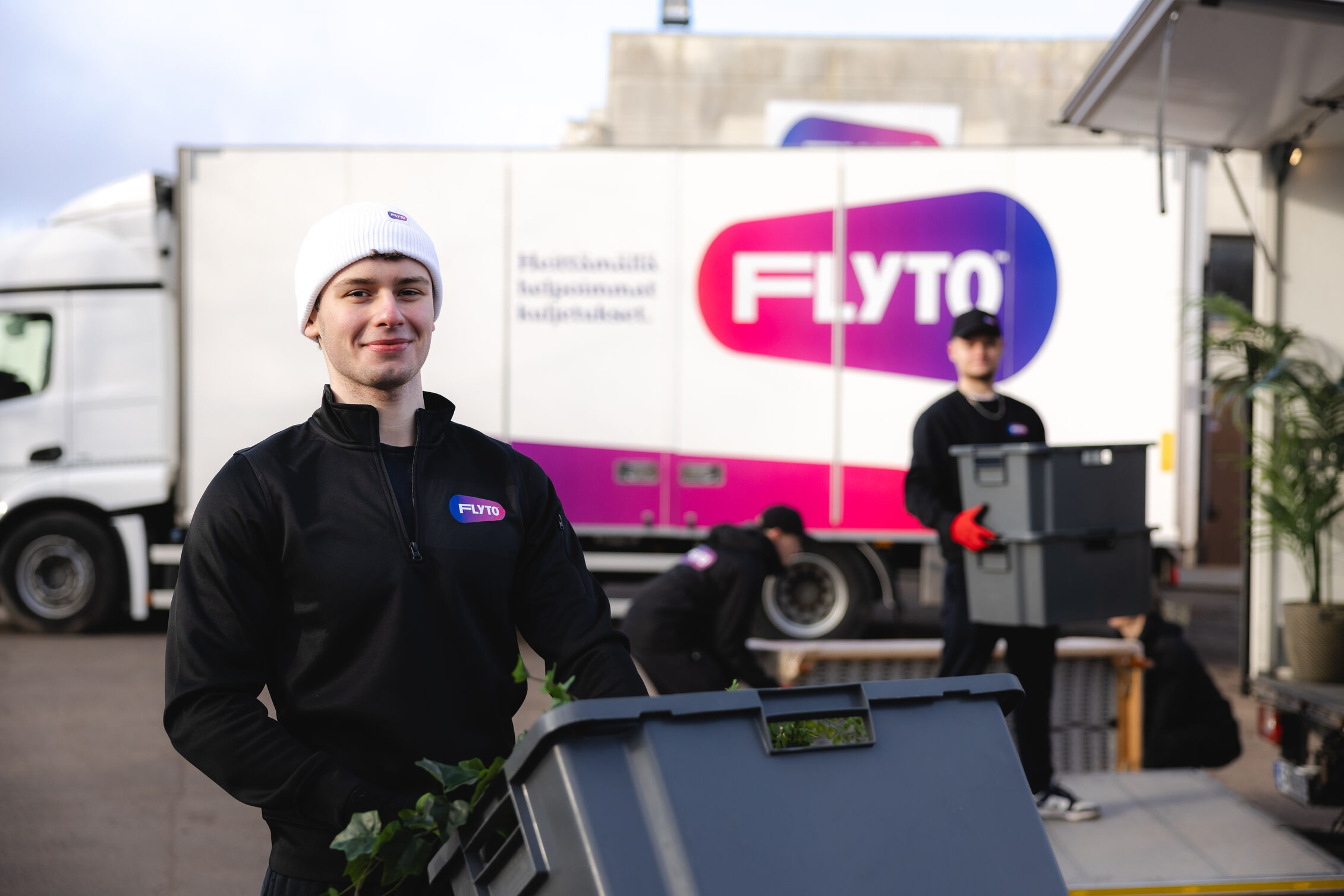
Everything in section 1 is why an Oslo move rewards a mover who actually runs the Norway corridor — and it’s where Flyto earns its keep. We prepare your customs paperwork as flyttegods so your household goods clear Tolletaten free of duty and VAT, with the inventory and declaration the border expects, rather than leaving you to explain a truckload of furniture at the red zone. We plan the truck’s position and any street-space reservation with the city’s lead time in mind, so there is somewhere legal to unload. We factor the bomring into the quote instead of surprising you with it. And we assess access in advance — floor, staircase, lift or no lift, winter conditions — and bring a furniture lift (møbelheis) when the sofa won’t make an Oslo stairwell. That’s the honest difference between a generic van hire and a relocation partner who has done this street by street. Get a fixed quote for your Oslo move, or browse our full Norway moving guides and customs guide for household goods.
Moving to Oslo? Get a fixed quote.
Tell us your addresses and volume and we’ll price the whole move — including the customs flyttegods clearance, the bomring, any street-space reservation and the furniture lift your Oslo block may need. No surprises on the day.
Frequently asked questions
Do I pay duty or VAT on my belongings when moving to Oslo?
Not if they qualify as flyttegods (moving goods). Because Norway is in the EEA but outside the EU customs union, your household goods cross a customs border — but Tolletaten grants relief from both customs duty and import VAT if you have lived abroad continuously for at least a year, have owned and used the items abroad, will keep using them in Norway, and import them within a year of moving. Most people simply declare the goods at the border’s red zone rather than filing an application form.
Do I need a permit to park the moving truck in Oslo?
Oslo has no consumer ”moving permit” like Berlin’s Haltverbot. Short loading and unloading is generally allowed, but you cannot count on free legal kerb space for a full day. To reserve a spot you apply to rent street area from Bymiljøetaten via byleie.no, and the standard reply time is about two weeks. Because the city tows aggressively, plan the truck’s position and any reservation well ahead — this is exactly what your mover should arrange.
How big a deposit can an Oslo landlord ask for?
By law the deposit (depositum) can be up to six months’ rent, though three months is the usual ask. It must go into a blocked depositumskonto opened in your name — the landlord pays to set it up, and any interest is yours (husleieloven §3-5). Never pay a deposit into a landlord’s private account; a proper deposit account is a key sign the rental is legitimate.
How much is rent in Oslo in 2026?
A two-room flat averages around NOK 17,500/month city-wide, ranging from roughly NOK 14,000–16,500 in more affordable inner areas like Gamle Oslo/Grønland up to NOK 19,000–22,000 in Frogner and the Bjørvika waterfront (Utleio 2026). A three-room typically runs NOK 22,000–28,000. Always cross-check a specific flat on Finn.no.
Will my furniture fit up an Oslo apartment staircase?
Often not. Oslo’s desirable inner districts — Grünerløkka, Frogner, Majorstuen, St. Hanshaugen — are full of pre-war blocks (bygårder) with no lift and narrow, turning stairs. Large items frequently have to go in via an exterior furniture lift (møbelheis) through a window or balcony. A good mover checks the floor, staircase and access before the day and books the lift in advance.
How do I register after moving to Oslo, and how do I get a fødselsnummer?
You notify your move to Norway to Skatteetaten’s National Registry (Folkeregisteret); your identity number is assigned once the notification is approved. EU/EEA citizens register directly with Skatteetaten, while non-EEA citizens first need the relevant residence permit. A fødselsnummer is tied to being a registered resident; a temporary D-number applies to shorter stays. Registration is what unlocks banking, a regular GP and tax cards.
Does the Oslo toll ring cost extra for a removal truck?
Yes. Fjellinjen’s toll ring charges vehicles over 3,500 kg roughly NOK 109–223 per passing in 2026 depending on Euro class and rush hour, well above the NOK 38–47 for a car. A one-hour rule limits repeat crossings, and zero-emission heavy vehicles are exempt through 2030. A move that crosses several rings still adds a real cost, so it should be stated in your quote up front.
Can I move in winter, and does the weather matter?
Yes, moves happen year-round, but Oslo winters bring ice, snow and short daylight, and the city’s streets climb steeply in places. A winter move needs gritted, protected walkways, floor protection against slush, and a crew used to icy inclines. It’s very manageable with planning — the risk is only when access and conditions haven’t been assessed in advance.
Official sources
- Tolletaten — importing household goods (flyttegods) duty- and VAT-free
- Tolletaten — moving goods, special cases
- Oslo kommune — renting street area (Bymiljøetaten / byleie.no)
- Oslo kommune — parking fines, towing and containers
- Fjellinjen — Oslo toll ring tariffs and stations (2026)
- Fjellinjen — 2026 tariff change
- Lovdata — husleieloven §3-5 (rental deposit)
- Forbrukerrådet — housing and renting consumer guidance
- Skatteetaten — moving to Norway and the National Registry
- Skatteetaten — national identity number (fødselsnummer) vs D-number
- Ruter — single ticket price
- Ruter — 30-day ticket price cut (May 2026)
- SSB — electricity prices for households
- Helsenorge — health services and the regular GP scheme for newcomers
- Finn.no — Oslo rental listings
- Utleio — Oslo rental price report 2026
- Flyto — complete guide to moving to Norway
- Flyto — fødselsnummer and identity numbers
- Flyto — customs for household goods
- Flyto — Oslo to Stockholm moving guide
- Flyto — Oslo to Copenhagen moving route
- Flyto — Norway moving guides
Hiring an international mover? See our full International removals to Norway service — Flyto’s own European hubs, vetted local partners and one English-speaking coordinator, door to door.