

Moving from the USA to Europe (2026): The Reverse-Move Guide

Most relocation guides cover the eastbound-to-westbound journey; this one runs the other way — exporting your household from the United States and clearing it into a European destination. It covers the US export side, the EU’s transfer-of-residence (ToR) customs relief, and the important differences at three common destinations: Germany, Spain and non-EU Switzerland. Every figure, form name and rule below is drawn from an official government source and linked inline.
Freshness note: customs reliefs, form numbers and thresholds change. Rules change — verify the specific detail that applies to your shipment with the named authority before you ship.
Key takeaways
- Leaving the US is lightly regulated: a household-goods shipment worth over $2,500 to a country other than Canada requires Electronic Export Information (EEI) filed in the Automated Export System, using the "HH" household-goods code — see US Census Bureau.
- The EU grants relief from import duty and VAT on used personal property for people transferring their normal residence into the Union, under Council Regulation (EC) No 1186/2009.
- Core EU conditions are consistent everywhere: you must have lived outside the EU for at least 12 months, the goods must have been owned and used for at least 6 months, and they must be imported within 12 months of establishing residence — German customs (Zoll).
- Germany uses customs Form 0350; imported goods stay under customs supervision and may not be sold, lent or hired out for 12 months after clearance — Zoll.
- Spain grants the same relief on a cambio de residencia, claimed directly in the import declaration (the DUA/SAD) — Agencia Tributaria (AEAT).
- Switzerland is not in the EU: it runs its own relief using Form 18.44, requiring transfer of domicile and 6 months’ prior personal use — Swiss BAZG.
- Dogs, cats and ferrets need a microchip, valid rabies vaccination and an EU animal health certificate; because the USA is a listed country, no rabies antibody titration test is required — European Commission.
- Carrying more than $10,000 in cash or monetary instruments out of the US must be reported on FinCEN Form 105 — US CBP.
1. How the reverse move works
An eastbound move has two regulatory halves. First, the export from the United States, which is comparatively simple: the US does not levy an export duty on used household effects, and the main obligation is a data filing. Second, the import into your European destination, which is where the real paperwork lives — because the EU (and Switzerland) will assess duty and VAT on incoming goods unless you actively claim transfer-of-residence relief.
The crucial mental shift is that in Europe, relief is not automatic. You claim it, you prove eligibility, and you meet deadlines. Miss the conditions and your used sofa can be taxed as if it were a commercial import. Get them right and the whole household clears free of duty and VAT.
2. Leaving the USA: export filing (AES / EEI)
For a household move, the export side is mostly a customs data filing rather than a physical inspection. According to the US Census Bureau, if you are moving to any country other than Canada and the value of your household goods exceeds $2,500, you or your authorised agent must file Electronic Export Information (EEI) in the Automated Export System (AES) before the goods leave. Shipments under that value can use the low-value exemption NOEEI 30.37(a).
Household goods have a simplified filing: once the "HH" export code is selected, a Schedule B commodity number and quantity are not required. In practice your international mover files the EEI as your agent. Keep a copy — some destination customs offices like to see the export declaration alongside your import papers.
Cash and valuables. Separately from the freight, if you physically carry, mail or ship more than $10,000 in currency or monetary instruments out of the US, you must report it on FinCEN Form 105 (the Report of International Transportation of Currency or Monetary Instruments), per US CBP and FinCEN. This is a reporting duty, not a limit — but failing to report can mean seizure.
3. The EU transfer-of-residence relief (the heart of the eastbound move)
Whichever EU country you land in, the legal basis for duty and VAT relief is the same: Council Regulation (EC) No 1186/2009, which sets up the Community system of reliefs from customs duty. Its personal-property chapter admits, free of import duties, the belongings of natural persons transferring their normal place of residence into the customs territory of the Union.
The conditions, summarised from the regulation and the German customs explanation, are:
- 12 months abroad. Your normal place of residence must have been outside the EU for a continuous period of at least twelve months. Authorities may allow exceptions where you can show clear intent (for example, an employment contract) to have lived outside the EU for 12+ months.
- 6 months’ ownership and use. Non-consumable items must have been in your possession and used by you for at least six months before the transfer of residence, evidenced by invoices or receipts.
- New residence in the EU. You must be establishing a normal residence in the Union (even a temporary one can qualify in Germany’s reading).
- 12-month import window. The goods must be entered for free circulation within twelve months of establishing residence. Shipments may be split, but the cumulative period cannot exceed twelve months.
- 12-month non-disposal rule. Once cleared, the goods remain under customs supervision and may not be lent, pledged, hired out or sold for twelve months.
Excluded from relief: alcoholic products, tobacco and tobacco products, commercial means of transport, and articles used in a trade or profession (other than portable instruments of the applied or liberal arts), per Zoll. Alcohol and tobacco can still travel, but they fall outside the duty/VAT-free household relief.
A note on VAT: the duty relief above comes from Regulation 1186/2009, while the parallel VAT exemption on the same transfer-of-residence goods derives from a separate instrument, Council Directive 2009/132/EC. In practice member states apply the two together for household movers, but the VAT side is administered under national implementing law — one more reason to confirm the exact treatment with your destination authority.
4. Germany: Form 0350
Germany implements the EU relief with customs Form 0350 ("Customs declaration for the release of personal property"), submitted in writing to the competent customs office (Zollamt). The eligibility conditions are exactly those of Regulation 1186/2009 above: 12 months abroad, 6 months’ prior use, import within 12 months, and no disposal for 12 months after clearance — all confirmed by Zoll.
Practical documents to have ready: your passport, proof you gave up US residence and are registering in Germany (the local Anmeldung), a German address/rental contract, the removal invoice, and a detailed, numbered inventory describing the contents box by box. For motor vehicles or private aircraft imported as household effects, the foreign registration certificate is required.
5. Spain: change of residence via the DUA
Spain grants the same EU relief on a cambio de residencia, administered by the Agencia Tributaria (AEAT). As set out on the AEAT transfer-of-residence page, you must have resided outside the EU customs territory for at least 12 consecutive months, the goods must have been in your possession for at least 6 months (12 months for vehicles and recreational vessels acquired under diplomatic exemptions) and not new, and the relief is claimed directly in the import declaration — the DUA (Spain’s version of the Single Administrative Document / SAD), by recording the exemption codes in box 37.2 (101 for VAT, 303 for IGIC and C01 for the customs exemption). No separate prior application is required.
The Spanish specificity is the proof of the residence change, which the AEAT states in two parts: a document proving cancellation of your previous residence outside the EU customs territory, plus proof that you are establishing residence in Spain. For non-Spanish nationals moving from the US, that new-residence proof is normally the foreigner’s identity card (TIE), or registration in the Central Register of Foreigners for EU/EEA citizens; Spanish nationals use their consular deregistration (baja consular) or DNI. Goods must be entered for free circulation within twelve months of taking up residence in the EU customs territory (or before, if backed by a guarantee and a commitment to move within six months).
6. Switzerland: outside the EU, its own regime (Form 18.44)
Switzerland is not in the EU customs union, so Regulation 1186/2009 does not apply — but the logic is similar. Per the Swiss Federal Office for Customs and Border Security (BAZG), household effects can be imported duty-free as Übersiedlungsgut provided you transfer your domicile to Switzerland, the articles were used by you personally for at least 6 months before import, and you continue to use them after import.
The declaration is made on Form 18.44 ("Declaration/Application for clearance of household effects"), presented in duplicate with an inventory list at any customs office competent for commercial goods — see the official 18.44 form. BAZG recommends sending your relocation file to the relevant customs office by email at least two working days before you cross the border to speed clearance (BAZG procedure). New items bought for the move are not eligible; road vehicles, watercraft and aircraft follow the same household-effects rules but must be declared on first entry.
7. Bringing pets from the USA to Europe
Moving dogs, cats or ferrets from the US into the EU is straightforward because of favourable listing. Per the European Commission, each animal must be:
- Microchipped (ISO-compatible transponder);
- Vaccinated against rabies — the animal must have been at least 12 weeks old when vaccinated, and the vaccine valid for at least 21 days before travel;
- Accompanied by an EU animal health certificate issued by an official veterinarian, valid 10 days from issue to the point-of-entry checks;
- Brought in through a designated travellers’ point of entry.
Crucially, the rabies antibody titration test is not required for pets from the USA, because the US is a listed third country under Annex II of the EU implementing rules. The non-commercial limit is 5 animals per movement. Switzerland applies equivalent EU-aligned pet rules; confirm current detail with BAZG before travel.
8. Don’t forget: your US tax tail
Relocating does not end your US tax relationship. US citizens and resident aliens are taxed on worldwide income wherever they live — see the IRS guidance for US citizens and resident aliens abroad. Foreign bank accounts you open in Europe may trigger an annual FBAR (FinCEN Form 114) reporting obligation. This is a reporting matter, not a moving-logistics one, but it catches many eastbound movers off guard. This guide is not tax advice; confirm your position with the IRS or a qualified adviser.
How Flyto handles this
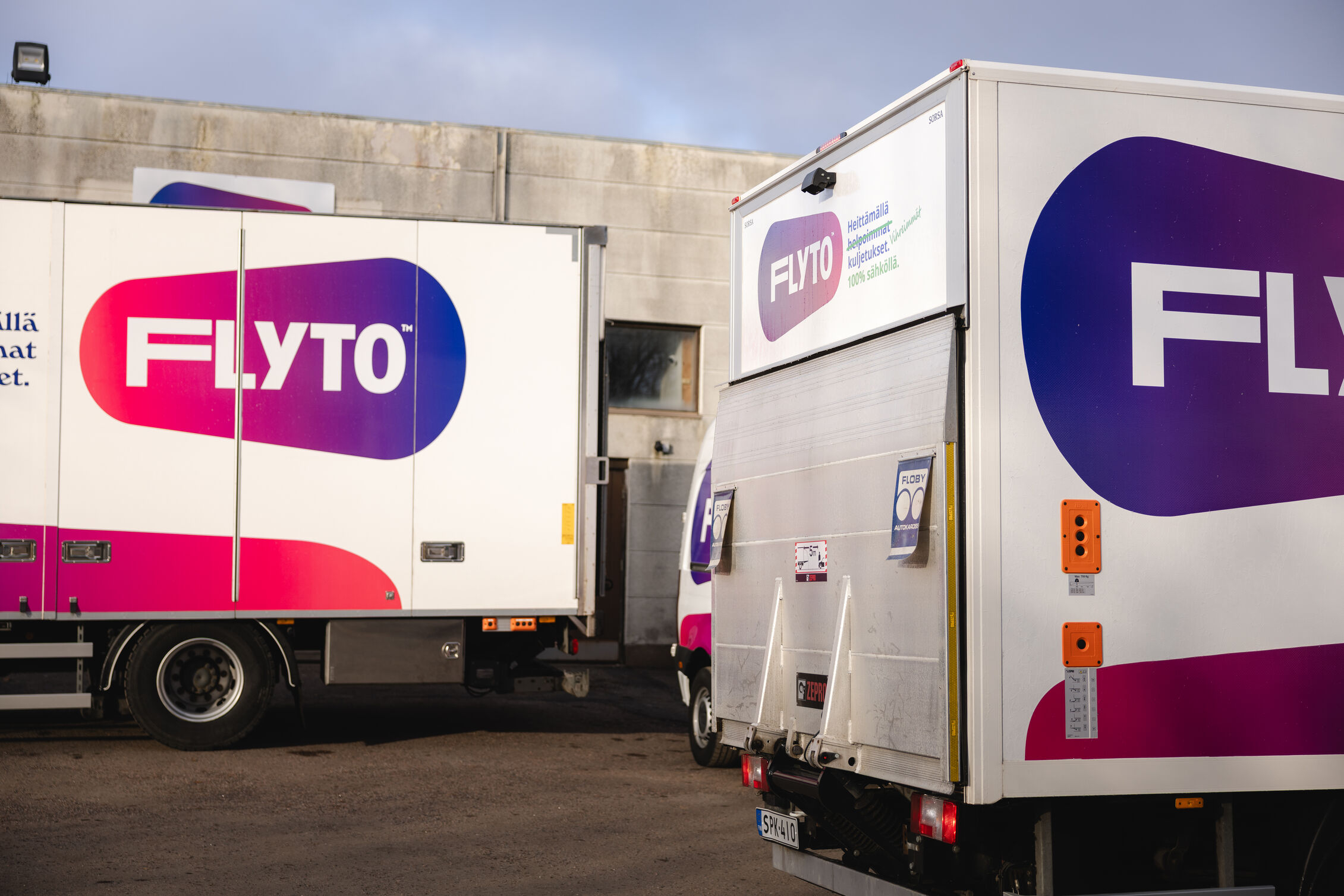
Flyto runs the reverse move as a single, door-to-door Platinum service — the only tier we offer for overseas relocations, precisely because there is no room for a broken handover mid-ocean. One team owns the whole chain to or from the USA: export packing at your US home, the AES/EEI export filing, sea or air freight, arrival clearance in Europe, and delivery and unpacking at destination.
The value on a US-to-Europe move is in the customs choreography. We prepare and submit the destination declaration — Germany’s Form 0350, Spain’s DUA change-of-residence file, or Switzerland’s Form 18.44 — with the numbered inventory and residence proofs each authority expects, and we time the shipment to land inside the 12-month relief window. We coordinate pet documentation against the EU entry rules, and we flag the alcohol, tobacco and vehicle items that sit outside the household relief before they become a problem at the border. See the [pillar guide]https://flytorelocation.com/us/moving-to-and-from-the-usa-2026-complete-relocation-guide/ for the full corridor overview and the [USA relocation page]https://flytorelocation.com/usa/ for corridor-specific detail.
Frequently asked questions
Do I pay duty and VAT on my used furniture when moving to Europe?
Not if you qualify for transfer-of-residence relief. Under Regulation 1186/2009, used personal property imported when you move your normal residence into the EU is admitted free of import duty (and, in practice, VAT), provided you meet the 12-months-abroad, 6-months-ownership and 12-month import-window conditions.
How long do I have to import my goods after arriving in Europe?
Twelve months from establishing your new residence, per Zoll. Spain applies the same 12-month limit via the AEAT. You can split the shipment, but the total period cannot exceed twelve months.
Can I sell the goods after they clear customs?
Not immediately. Goods admitted under the relief stay under customs supervision and may not be sold, lent, pledged or hired out for 12 months after clearance, according to Zoll.
Is Switzerland treated like the EU?
No. Switzerland is outside the EU customs union and uses its own relief with Form 18.44; the requirements (transfer of domicile, 6 months’ prior personal use, continued use) are set by BAZG, not by EU regulation.
What do I need to file on the US side?
For a household shipment over $2,500 to a non-Canada destination, EEI must be filed in AES using the "HH" code, per the US Census Bureau. Your mover normally files this as your agent.
Can I bring my dog or cat from the US to Europe?
Yes — with a microchip, a valid rabies vaccination and an EU animal health certificate. Because the USA is a listed country, no rabies antibody blood test is required (European Commission).
Do I have to declare cash when leaving the US?
You must report amounts over $10,000 in currency or monetary instruments on FinCEN Form 105; it is a reporting requirement, not a limit (US CBP).
Sources
- Council Regulation (EC) No 1186/2009 — Community system of reliefs from customs duty (EUR-Lex)
- German Customs (Zoll) — Transferring residence
- Spanish Tax Agency (AEAT) — Transfer of residence: franchises and tax exemption
- Swiss BAZG — Moving (household effects)
- Swiss BAZG — Moving to Switzerland: procedure
- Swiss BAZG — Form 18.44 (clearance of household effects)
- US Census Bureau — Relocating Abroad? (AES / EEI filing)
- European Commission — Bringing a pet into the EU from a non-EU country
- European Commission — Listing of territories and non-EU countries (pet titration test)
- US CBP — Currency reporting (FinCEN Form 105)
- IRS — US citizens and resident aliens abroad