Moving from Luxembourg to the Netherlands (2026): Complete Guide

Luxembourg and the Netherlands are both founding EU member states, and both sit inside the EU customs union and the Schengen area. That single fact changes everything about how this move works compared with a move to a non-EU country: there is no customs border to cross, no import paperwork for your furniture, and no work permit to obtain. What actually determines how smooth your move is are two very ordinary administrative tasks — closing out your Luxembourg registrations correctly, and registering promptly in the Netherlands — plus the practical logistics of getting a household’s worth of belongings roughly 300–400 km north. This guide is written for an EU/EEA/Swiss national resident in Luxembourg (or a family member exercising EU free-movement rights) who is relocating to the Netherlands, and covers every step in order. Third-country nationals without EU free-movement rights face separate Dutch immigration requirements not covered here and should confirm their situation with the IND before moving.
Key takeaways
- No customs, no duty, no import declaration. Luxembourg and the Netherlands are both inside the EU customs union, so household goods move under free movement of goods — the duty-relief and import-declaration regime the EU operates only applies to goods entering the customs union from a third country outside it (European Commission, duty relief).
- You don’t need a visa or work permit. As an EU/EEA/Swiss citizen you have the right to live and work in the Netherlands without a residence permit; the real task is registering with the municipality, not applying for permission to move (IND — EU/EEA/Swiss nationals).
- Deregister in Luxembourg before you leave. File a departure declaration with your commune’s population office, in person or online via MyGuichet.lu, at the latest on the day you leave (Guichet.lu — new resident / arrival–departure with the commune).
- You must register in the Netherlands promptly. If you’ll live in the Netherlands more than 4 months, you must register at your new municipality (gemeente) within 5 days of arrival; this generates your BSN (citizen service number), the key you need for everything else (EU rules on registering residence, Den Haag — 1st BRP registration for EU/EEA/Swiss citizens).
- Dutch health insurance is compulsory within 4 months of becoming eligible, even if you’re already covered elsewhere — miss the deadline and the CAK can backdate premiums and impose a fine on top (Government.nl — when do I need health insurance).
- Your EU driving licence stays valid — you are not required to exchange it just because you moved, though certain situations (loss, damage, or specific validity/medical rules) can make exchange necessary later (Your Europe — driving licence exchange & recognition).
- Bringing your car requires Dutch re-registration through the RDW, including a vehicle inspection; a relocation-goods exemption from BPM registration tax can apply, subject to conditions (RDW — moving to the Netherlands with your vehicle).
- Pets travel on the standard EU pet passport — microchip plus valid rabies vaccination, no quarantine, since both countries follow the same EU pet-travel scheme (Your Europe — travelling with pets).
1. Free movement: what actually applies (and what doesn’t)
Because Luxembourg and the Netherlands are both EU member states inside the single customs territory, the movement of your household goods between them is legally no different from moving goods between two Dutch provinces. The EU’s duty-relief framework (Council Regulation 1186/2009) exists specifically to grant relief from customs duty when someone transfers their normal residence from a third country into the customs territory of the Union — it has no application here, because there is no customs border between Luxembourg and the Netherlands to relieve you from in the first place (EU duty relief rules). In practice this means:
- No customs declaration for your furniture, boxes, appliances, or vehicle.
- No "transfer of residence" relief application, inventory-for-customs, or import VAT — none of that machinery is triggered for an EU-internal move.
- No import duty, regardless of the value of your goods.
This is also a fully intra-Schengen move: there’s no passport control at the Luxembourg–Belgium–Netherlands road route, and no immigration checkpoint. The only paperwork you genuinely need is administrative registration — closing your file in Luxembourg and opening one in the Netherlands — covered in the next two sections. (Note: this framing applies specifically to Luxembourg↔Netherlands. If your move instead touched Switzerland, Norway, Iceland, or the UK, real customs formalities would apply on that leg — Switzerland and the UK sit outside the EU/EEA customs area entirely, and Norway/Iceland are EEA but outside the EU customs union, so removal-goods customs relief procedures would be needed there.)
2. Leaving Luxembourg: what to close out
Commune deregistration. Before you leave, file a departure declaration ("déclaration de départ") with the population office (bureau de la population) of your current commune, at the latest on the day you leave, signed by you. This can be done in person at the commune or online via MyGuichet.lu, authenticated with LuxTrust, a Luxembourg eID card, or eIDAS (Guichet.lu — arrival/departure with the commune).
Ending tax residency. Luxembourg tax residency generally ends once your centre of vital interests moves abroad. Notify the Administration des contributions directes (ACD) of your change of residence in addition to the commune deregistration, since it affects whether you’re treated as a resident or non-resident taxpayer for the year of departure — worth checking with a tax adviser given the specifics of your situation (income, timing, property) (ACD — résident/non-résident).
Healthcare (CNS). Your Luxembourg health insurance affiliation with the Caisse nationale de santé (CNS) ends when the employment or residence basis for it ends. Depending on your specific situation — for example if you remain employed by a Luxembourg employer, are posted, or are a frontier worker — you may be entitled to an S1 portability form or other cross-border coordination document; check directly with CNS what applies to you, since S1 is not automatic for every departing resident. If none applies, you enrol directly in the Dutch system on arrival (see Section 4). CNS also runs a residual cover mechanism for a limited period after affiliation ends, for people who were continuously insured for a minimum qualifying period (CNS — social protection abroad).
Vehicle. If you’re taking your car, notify the Société nationale de circulation automobile (SNCA) for a permanent deregistration ("mise hors circulation définitive"), which can be done online via MyGuichet.lu, by post to SNCA, or in person at an SNCA office. You may be entitled to a partial refund of the annual road tax for the unused period — confirm current deadlines and refund conditions on the Guichet.lu page, as these details can change (Guichet.lu — mise hors circulation définitive).
Driving licence. No exchange is needed to leave Luxembourg — your licence, once issued under EU rules, remains recognised across the EU (see Section 4 for the Dutch-side treatment).
3. How your household goods actually move
There’s no cross-border freight regulation to navigate here — this is a domestic-style road move on international plates. The realistic routing, based on standard European removals practice (industry estimates, not fixed schedules):
- Direct road transport is the normal method: Luxembourg City to major Dutch cities (Amsterdam, Rotterdam, Utrecht, The Hague) is roughly 300–400 km by road via Belgium, typically a 4–6 hour drive one-way for a loaded removal truck.
- A dedicated full-truckload move can realistically be collected and delivered within 1–2 days; groupage (shared-load) services, common for smaller volumes, typically run 3–7 working days depending on route consolidation and delivery-day scheduling.
- No ferry or rail leg is required for this corridor — it’s a continuous road route through Belgium, itself also inside the EU customs union, so no formalities arise there either.
- Because there’s no customs clearance step, the schedule risk is almost entirely about traffic, parking-permit logistics at both ends (see Section 6), and lift/access at the delivery address — not paperwork delays.
4. Arriving in the Netherlands: registration, healthcare, tax, licence
Municipal registration (BRP) and BSN. As an EU/EEA/Swiss citizen you have an automatic right to live in the Netherlands without a residence permit (IND); what you must do is register. If you’ll be in the Netherlands for more than 4 months, register with your municipality (gemeente) within 5 days of arrival — first-time registrations for people without a BSN require valid ID/passport and proof of address (rental contract or homeowner statement), plus civil-status documents (birth/marriage certificates, sometimes legalised or apostilled) where applicable. Processing times vary by municipality; registration generates your BSN (burgerservicenummer), without which you cannot legally work, open a bank account, or take out health insurance (Den Haag — BRP registration for EU/EEA/Swiss nationals; Your Europe — registering residence).
Health insurance. Dutch basic health insurance (zorgverzekering) is compulsory for anyone who works or is registered as resident, and you must take it out within 4 months of becoming eligible — coverage is then backdated to your eligibility date. Miss the deadline and you get no retroactive reimbursement for that gap, and the CAK (the central administration office for uninsured persons) can enrol you and premiums due, plus a fine, apply — check the current fine amount on Government.nl, as it is adjusted periodically (Government.nl — when do I need health insurance).
Tax registration. Once you have a BSN, the Belastingdienst (Dutch tax administration) uses it to register you; new residents should check the "moving to the Netherlands" guidance, set up DigiD, and determine whether a worldwide-income return is required for the year of the move, given the potential for a split tax year between Luxembourg and the Netherlands — a cross-border tax adviser is worth consulting for anything beyond a straightforward employment move (Belastingdienst — for individuals).
Driving licence. Your EU driving licence stays valid in the Netherlands — moving does not by itself trigger a mandatory exchange. Exchange only becomes obligatory in specific situations (loss, theft, damage, or certain residual-validity/medical-check rules), and if you do exchange voluntarily you then become subject to Dutch rules on renewal periods and medical checks going forward (Your Europe — driving licence exchange & recognition).
Vehicle re-registration. If you bring your car, it must get a Dutch registration through the RDW. Book an appointment at an RDW inspection station, bring your ID and the complete original foreign registration certificate (plus certificate of conformity if available); the RDW inspects the vehicle and you file a BPM declaration with the Belastingdienst. A relocation-goods exemption from BPM registration tax can apply, but it carries conditions (such as prior ownership/use period and timing of import) — check current requirements directly with the RDW and Belastingdienst before assuming exemption. Once registered, you arrange third-party liability insurance and get Dutch plates made (RDW — moving to the Netherlands with your vehicle). Note that once you’re registered in the BRP, you’re generally not permitted to keep driving indefinitely on foreign plates registered in your own name — plan the RDW appointment promptly after arrival.
5. Moving with pets
Dogs, cats and ferrets travelling between EU countries move on the standard EU pet passport system: the animal must be microchipped (or have a pre-2011 tattoo, if still legible and dated), vaccinated against rabies by an authorised vet (minimum age 12 weeks for first vaccination, with a mandatory 21-day wait after a primary vaccination before travel), and carry an EU pet passport recording the chip number and vaccination history. There is no quarantine between Luxembourg and the Netherlands and no additional import paperwork — both countries operate the same EU scheme (Your Europe — travelling with pets).
6. Money, banking, and things people forget
- Euro to euro — no currency conversion, no exchange-rate risk on this move, since both Luxembourg and the Netherlands use the euro.
- Opening a Dutch bank account generally requires your BSN, so sequence it after municipal registration, not before.
- SEPA transfers work identically between Luxembourg and Dutch IBANs — you don’t need to close your Luxembourg account before opening a Dutch one, and many people run both in parallel during the transition.
- Redirect mail and notify your Luxembourg bank, employer/pension fund, and insurers of your new address — this is separate from, and in addition to, the commune deregistration.
- Parking permits for the moving truck at both the Luxembourg pickup address and the Dutch delivery address (especially in Amsterdam, Utrecht, or The Hague city centres, where truck parking is tightly regulated) are the most commonly forgotten practical step — arrange these with your mover or the local municipality ahead of moving day.
- School and childcare registration in the Netherlands is handled by individual municipalities/schools and is worth starting as soon as you have a Dutch address, since it runs on its own timeline independent of your BRP registration.
How Flyto handles your Luxembourg to the Netherlands move
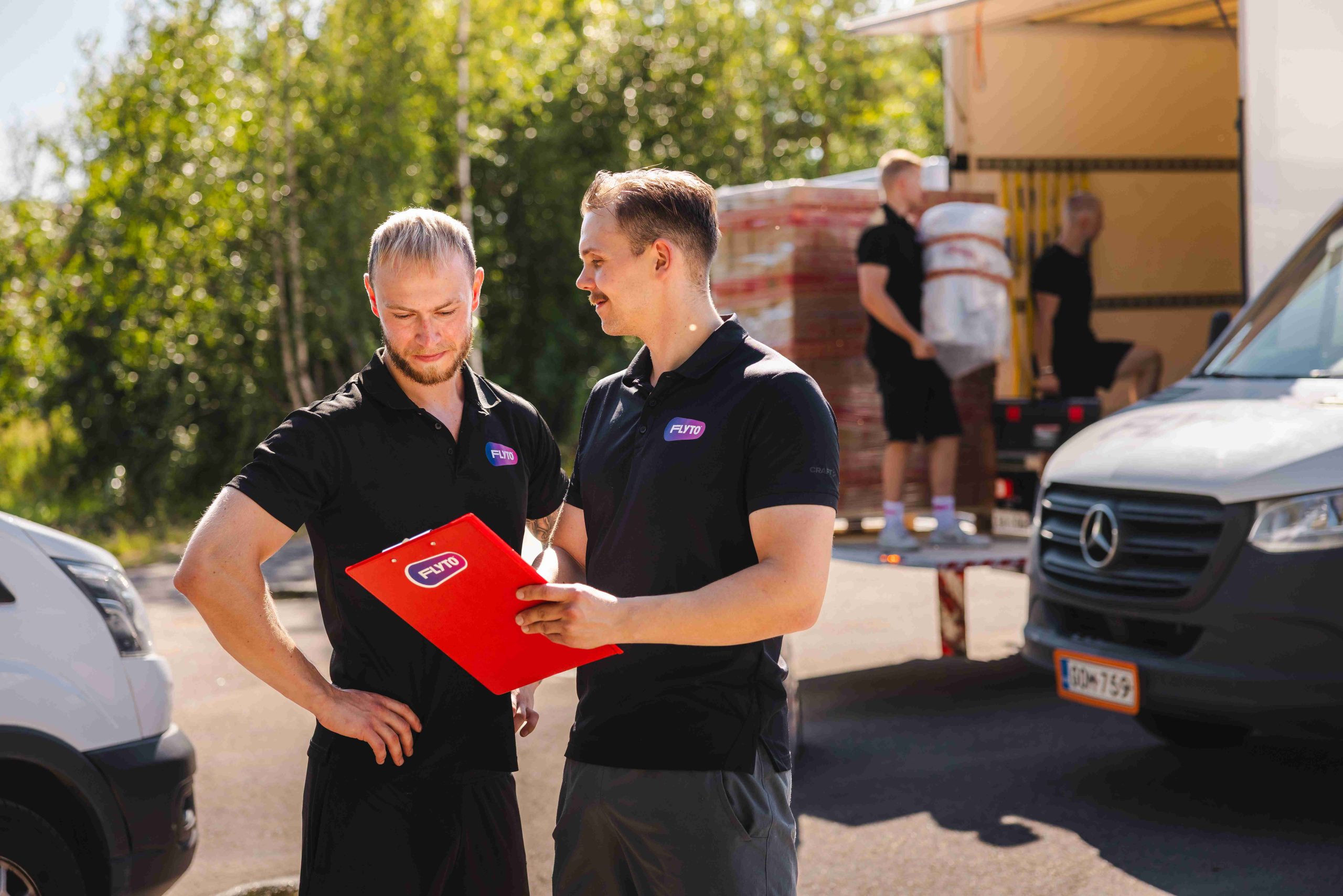
Flyto operates its own offices, warehouses, crews and vehicles across Northern, Central and Southern Europe, and this Luxembourg–Netherlands corridor runs primarily through our in-house Central European operations rather than a single long-haul subcontract. Where local pickup, storage, or delivery capacity benefits from it, we complement our own operations with a carefully vetted network of partner carriers, so your move gets the efficiency of a direct route combined with the flexibility to schedule around Dutch city-centre parking permits and delivery windows.
Frequently asked questions
Do I need a visa or residence permit to move from Luxembourg to the Netherlands?
No, if you’re an EU/EEA/Swiss citizen. You have the right to live and work in the Netherlands without a permit; you only need to register with your municipality if staying more than 4 months (IND; Your Europe).
Will my furniture and belongings be inspected at customs?
No. Luxembourg and the Netherlands are both in the EU customs union, so there is no customs border, no declaration, and no duty on household goods moving between them (EU duty relief rules).
How soon do I need to register in the Netherlands after arriving?
Within 5 days of arrival if you’ll stay more than 4 months, at your local gemeente, to obtain your BSN (Den Haag — BRP registration).
Can I keep using my Luxembourg driving licence in the Netherlands?
Yes, for most people — moving does not trigger a mandatory exchange, though loss, damage, or certain validity rules can require one later (Your Europe).
What happens to my Luxembourg health insurance when I leave?
Your CNS affiliation ends with your Luxembourg residence or employment basis. In specific cross-border situations you may be eligible for an S1 portability form — check with CNS what applies to you — and in any case you must take out compulsory Dutch health insurance within 4 months of becoming eligible in the Netherlands (CNS; Government.nl).
Do I need to do anything special to bring my car?
No customs formalities, but you do need to deregister it with the SNCA in Luxembourg before leaving, and re-register it with the RDW in the Netherlands (inspection plus BPM declaration; a relocation exemption from BPM tax can apply, subject to conditions) before driving it on Dutch plates (Guichet.lu; RDW).
Sources
- European Commission — Duty relief (customs procedures)
- Your Europe — Registering residence in another EU country
- Your Europe — Driving licence exchange and recognition in the EU
- Your Europe — Travelling with pets and other animals in the EU
- Guichet.lu — Arrival/departure declaration with the commune
- Administration des contributions directes — Résident / non-résident
- CNS — Protection sociale à l’étranger
- Guichet.lu — Mise hors circulation définitive d’un véhicule (SNCA)
- IND — Immigration and Naturalisation Service (EU/EEA/Swiss nationals)
- Den Haag — 1st BRP registration for EU/EEA/Swiss nationals
- Government.nl — When do I need Dutch health insurance
- Belastingdienst — For individuals (moving to the Netherlands)
- RDW — Moving to the Netherlands and taking your vehicle with you