

Moving from Italy to the UK (2026): Complete Guide

Italy and the UK are only a day’s drive apart, but this corridor is not a border-free EU move. Since Brexit, the United Kingdom sits fully outside the EU customs union and outside the EU’s free-movement-of-people rules. For anyone relocating from Italy to the UK in 2026 — whether for a job, a family reunion, or a fresh start — that means real customs paperwork for your belongings (though usually duty-free if done correctly) and a real immigration process, not just a registration formality. This guide sets out exactly what applies, and what doesn’t, so you can plan the move with accurate expectations instead of assumptions carried over from an EU-to-EU relocation.
Key takeaways
- The UK is outside the EU customs union — your move is treated as an import, not a duty-free EU transfer. In practice, most people pay no duty or import VAT on their own used household goods if they apply for Transfer of Residence (ToR) relief before the goods arrive (gov.uk: Transfer of Residence to Great Britain, ToR1 application).
- Free movement of people ended on 31 December 2020. As an Italian/EU citizen you need a UK visa (e.g. Skilled Worker, family, or another eligible route) before you move — there is no automatic right to live or work in the UK (gov.uk: points-based immigration system for EU citizens).
- Your UK immigration status is fully digital. Instead of a physical residence card, you prove your status through an online eVisa/UKVI account and a share code (gov.uk: eVisa).
- Deregister in Italy properly. Cancel your comune residency and register with AIRE within 90 days of establishing residence abroad — late or missing registration can trigger administrative penalties and complicates access to consular services, so don’t skip it even though it feels like paperwork (Iscrizione AIRE, esteri.it).
- AIRE alone does not end Italian tax residency — you also need to spend under 183 days/year in Italy and move your habitual dwelling and domicile (the centre of your personal and family life) out of the country (Agenzia delle Entrate: residenza fiscale).
- Your Italian driving licence works in the UK temporarily, and Italy is currently eligible for direct exchange for a GB licence with no test — check the DVLA’s online tool for your specific circumstances, since exchange arrangements are set out country by country and can change (gov.uk: exchange a non-GB licence, driving on a non-GB licence).
- Bringing a car requires NOVA notification to HMRC and UK re-registration — an EU-registered car does not simply carry over (gov.uk: importing vehicles, telling HMRC/NOVA).
- Pets need microchipping, rabies vaccination, and a valid travel document — a pet passport issued by an EU country (including Italy) is accepted for entry to Great Britain, but the reverse trip (GB back to the EU) needs an Animal Health Certificate instead, so don’t assume the same document works both ways (gov.uk: bringing a pet to Great Britain).
1. What actually applies: not an EU-to-EU move
If you were moving between two EU countries, household goods would cross the border with no customs declaration and no duty at all — genuine free movement of goods. The UK is different. Since it left the EU customs union at the end of the Brexit transition period, your shipment is legally an import into Great Britain, and it does get declared at the border.
The good news: the UK offers Transfer of Residence (ToR) relief, which removes import duty and import VAT on used personal and household effects for people genuinely relocating their home to the UK, provided you apply for a ToR1 reference number before your goods are shipped and meet the "normal residence" conditions (broadly, having lived outside the UK for the past 12 months and intending to live in the UK for at least 12 months) (gov.uk: Transfer of Residence to Great Britain). The ToR1 application is made electronically to HMRC, and the reference number is then used on the customs import declaration submitted when your shipment crosses (gov.uk: ToR1 application). Miss this step or ship goods before approval, and duty/VAT can become payable — which is why a professional mover matters on this specific corridor, unlike on an EU-EU lane.
On the people side, free movement also ended: as an EU citizen you now need a UK visa, and separately need to formally end your Italian registration — this isn’t a courtesy notification, it has fiscal and legal consequences on both ends, covered below.
Planning the move itself as well? Costs, transit times and how to choose a mover are covered on our page about international movers to Italy.
2. Leaving Italy: deregistration, tax, healthcare, licence, car
Comune deregistration and AIRE. Any Italian citizen moving abroad for more than 12 months must cancel their registration with their comune’s anagrafe and register with the AIRE (Anagrafe degli Italiani Residenti all’Estero) at the competent Italian consulate, via the Fast It portal, within 90 days of establishing residence abroad (registration can also be started before departure). Skipping this doesn’t just risk administrative penalties — it also means you stay formally resident (and taxable and votable) in Italy, and you lose the fast track to consular services once you’re actually living in the UK, so treat it as a priority in your first weeks, not an afterthought (Iscrizione AIRE).
Ending tax residency. Under Italian law, an individual is tax-resident for a given year if, for more than half of it, any one of the following applies: they are registered in the anagrafe della popolazione residente, they have their habitual dwelling ("dimora abituale") in Italy, or they have their domicile in Italy — meaning the place where their personal and family relationships are principally based. AIRE registration cancels the first of these, but it is not sufficient on its own: the Agenzia delle Entrate can still treat you as fiscally resident if your family and personal life stay centred in Italy, so keep documentation of your Italian rental/property exit, UK address, employment, and UK bank account to support the change (Agenzia delle Entrate: regole generali sulla residenza fiscale).
Healthcare. Your Italian TEAM (European Health Insurance Card) is meant for temporary stays, not for someone permanently relocating — once you are no longer resident, your entitlement under the Italian SSN via TEAM ends and you register with the UK NHS instead (see Section 4) (FAQ TEAM, Sistema Tessera Sanitaria).
Driving licence and vehicle. Your Italian licence remains usable in the UK for a period after arrival, and Italy is currently eligible for direct DVLA exchange without a test (Section 4 has the process and the caveat to confirm current eligibility). If you’re taking your car, you must formally deregister it from the Italian PRA (Pubblico Registro Automobilistico) and ANV via radiazione per esportazione, booked through ACI, before it leaves Italy — this cancels the Italian plates and stops road-tax liability, and the car will then need temporary plates/a travel document for the journey itself (ACI: radiazione per esportazione).
3. How your household goods actually move
Realistically, a household move from Italy to the UK goes by road — air freight is prohibitively expensive for furniture, and sea (RoRo/container) is mainly used for very large volumes or vehicles. For a standard road removal:
- Route: truck from your Italian city, north across the Alps (Fréjus or Mont Blanc tunnel, or the Brenner further east), through France or Switzerland/Belgium, to the Channel.
- Channel crossing: Eurotunnel Le Shuttle (loaded truck, roughly 35 minutes) or a ferry (Dover–Calais or Dover–Dunkirk, roughly 90 minutes at sea).
- Customs at the Channel: the ToR1 declaration is lodged here — plan it in advance with your mover, not on the day.
Realistic transit times (freight-industry estimates, not official/regulated figures): a dedicated (sole-use) truck from Northern Italy (Milan/Turin) to the UK typically takes 3–5 working days door-to-door once loaded; from Central or Southern Italy (Rome, Naples), add roughly 2–4 more days. Shared-load/groupage shipments — goods travelling with other customers’ consignments to cut cost — usually take 2–5 weeks, since the truck routes via a consolidation depot and waits to fill before crossing. These are typical planning figures and vary with season, customs processing, and scheduling.
4. Arriving in the UK: registration, healthcare, tax, driving
Unlike an EU-EU move, there is no simple "register at the town hall" step. You need to be inside the UK’s actual immigration and administrative systems:
Immigration status. Before moving, you (or your employer/sponsor) apply for the relevant UK visa under the points-based system — most commonly the Skilled Worker route, but also family, ancestry, or other eligible categories depending on your circumstances (gov.uk: points-based immigration system for EU citizens). Once granted, your immigration status is held digitally as an eVisa — you set up a UKVI account on gov.uk and generate a "share code" to prove your status to employers, landlords, and at the border, rather than carrying a physical card (gov.uk: eVisa).
Healthcare — the NHS. Registering with a GP surgery is the single practical step that unlocks NHS access. It’s free, doesn’t require proof of address, immigration status, ID, or an NHS number to register, and can usually be done online, by phone, or in person at a local practice (NHS: register with a GP surgery).
Tax and National Insurance. If you’re going to work in the UK, apply for a National Insurance number — required once you start working, though you can start work before it arrives if you can already prove your right to work; processing can take several weeks (gov.uk: apply for a National Insurance number). If you have income HMRC doesn’t already know about (foreign income, property income, self-employment, etc.), you separately register for Self Assessment (gov.uk: register for Self Assessment).
Driving licence. Italy is currently among the countries eligible for direct licence exchange: once resident in Great Britain, you can typically exchange your Italian licence for a GB one via the DVLA’s exchange service, without a test, while continuing to drive on your Italian licence in the meantime. Confirm your specific route and any time limits on the gov.uk exchange tool before you rely on it (gov.uk: exchange a non-GB driving licence, driving on a non-GB licence).
Vehicle import. If you bring your Italian-plated car, you must notify HMRC through the NOVA (Notification of Vehicle Arrivals) online service within 14 days of arrival — the DVLA will not issue UK plates/a V5C logbook without a NOVA reference confirming VAT and any duty position (gov.uk: importing vehicles into the UK, telling HMRC/NOVA).
5. Pets
A dog, cat, or ferret entering Great Britain from Italy needs to be microchipped and rabies-vaccinated, with a minimum 21-day wait after the first vaccination before travel is allowed. For the travel document, the good news is that a standard EU pet passport issued in Italy remains valid for entering Great Britain — you don’t need an Animal Health Certificate (AHC) for this direction of travel; AHCs are mainly needed for pets travelling the other way, from Great Britain into the EU, since the UK’s own pet passports lost EU recognition after Brexit. Dogs also need a tapeworm treatment from a vet no less than 24 hours and no more than 5 days before arrival in Great Britain (gov.uk: bringing your pet dog, cat or ferret to Great Britain). Because route-specific rules do change, confirm the exact current requirements with your vet and the gov.uk page shortly before travel (Your Europe: EU rules on travelling with pets).
6. Money, banking, and things people forget
- UK bank account: typically needs proof of ID (passport/eVisa) and a UK address; some banks accept a tenancy agreement or employer letter if you lack long-term proof of address yet — policies differ by bank.
- Currency: the UK uses GBP, not EUR — factor exchange-rate movement into any budget or quote you’re comparing.
- Council tax: once you have a UK address, you’re liable for local council tax, separate from anything paid in Italy, from your move-in date.
- Double taxation: if income is taxed in both countries during the transition year, check the Italy–UK tax treaty position with a cross-border adviser — AIRE and Self Assessment registration alone don’t resolve this.
- Mail and subscriptions: cancel or redirect Italian utilities and update your address with Poste Italiane, your bank, and other Italian institutions — AIRE registration doesn’t do this automatically.
How Flyto handles your Italy to the UK move
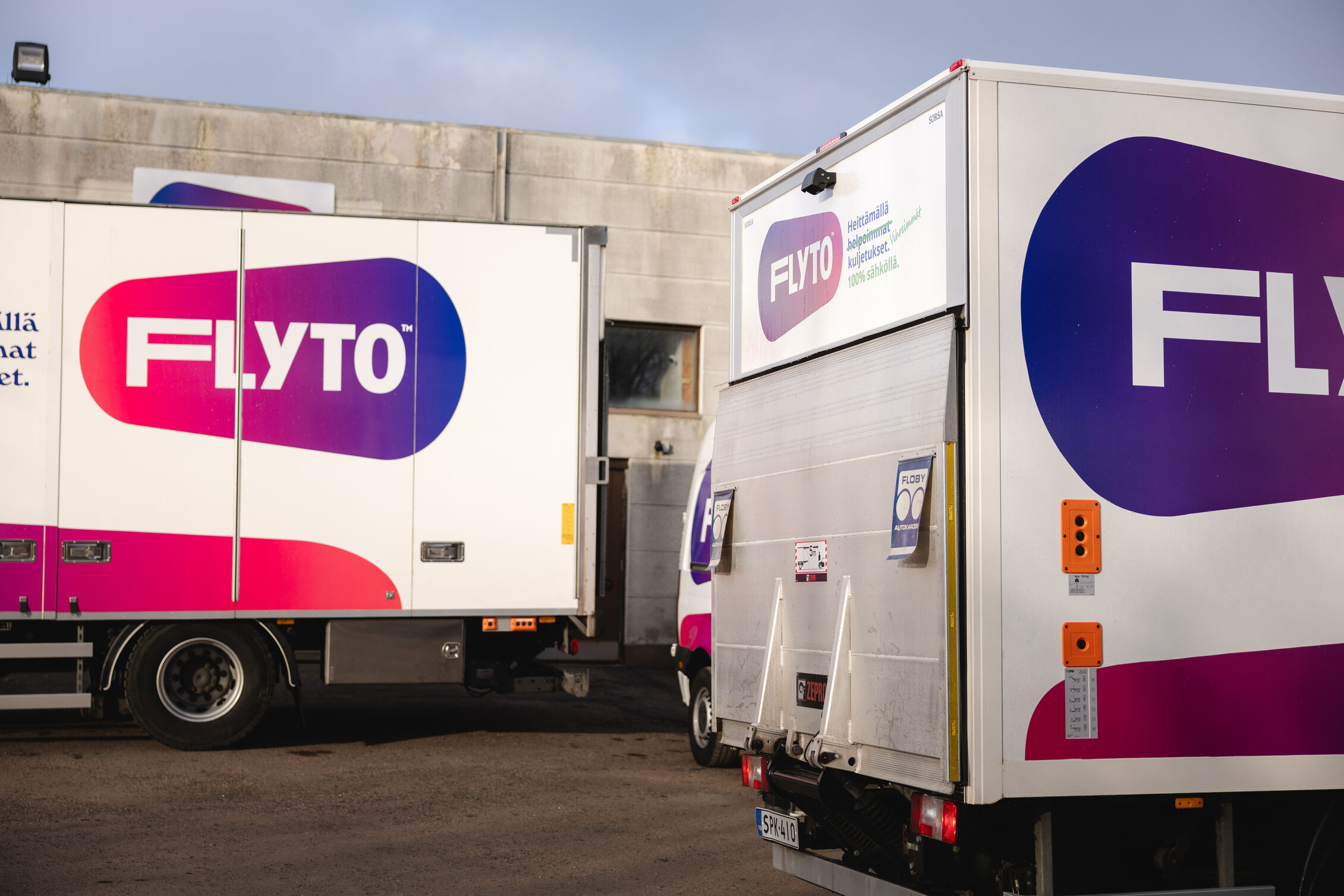
Flyto runs its own offices, warehouses, crews and vehicles across Northern, Central and Southern Europe, so the Italian collection, European road transport, and Channel crossing on this route are handled by our in-house teams end to end — not passed between unrelated local agents. For the parts of the journey and destination services that benefit from local UK expertise, such as ToR1 customs filing support or last-mile delivery in specific UK regions, we work with a carefully vetted network of partner carriers and agents, so you get one point of contact even where subcontracted specialists are involved.
Frequently asked questions
Do I have to pay customs duty on my furniture moving from Italy to the UK?
Not normally, if you apply for Transfer of Residence (ToR) relief before your goods ship and meet the eligibility conditions. Without ToR1 approval, duty and import VAT can apply (gov.uk: ToR to Great Britain).
Can I move to the UK from Italy without a visa, since we’re both in Europe?
No. Free movement between the EU and UK ended on 31 December 2020. As an Italian/EU citizen you need a UK visa, most commonly under the points-based system (gov.uk: points-based system for EU citizens).
Do I need to do anything with my Italian residency before I leave?
Yes — cancel your comune registration and register with AIRE within 90 days, and separately make sure you meet the tests to actually end your Italian tax residency, not just the registration formality (Iscrizione AIRE; Agenzia delle Entrate).
Will my Italian driving licence work in the UK?
Yes, initially, and Italy is currently eligible for a direct, test-free exchange for a GB licence once you’re a UK resident — confirm on the gov.uk tool, as country eligibility is reviewed periodically (gov.uk: exchange a non-GB licence).
How long does it take for household goods to arrive from Italy?
As a freight-industry estimate rather than an official figure: roughly 3–5 working days door-to-door for a dedicated truck from Northern Italy, longer from further south, or 2–5 weeks for a shared-load/groupage shipment.
Can I bring my car with Italian plates permanently?
You can import it, but you must deregister it in Italy (radiazione per esportazione) before export, then notify HMRC via NOVA within 14 days of UK arrival before the DVLA will issue UK registration (ACI: radiazione per esportazione; gov.uk: NOVA).
Related moves
Sources
- gov.uk: Transfer of Residence to Great Britain
- gov.uk: Application for transfer of residence relief (ToR1)
- gov.uk: The UK’s points-based immigration system — information for EU citizens
- gov.uk: eVisas — access and use your online immigration status
- gov.uk: Bring your pet dog, cat or ferret to Great Britain
- Your Europe: EU rules on travelling with pets and other animals
- gov.uk: Exchange a non-GB driving licence
- gov.uk: Driving in Great Britain on a non-GB licence
- gov.uk: Apply for a National Insurance number
- gov.uk: Register for Self Assessment if you are not self-employed
- gov.uk: Importing vehicles into the UK
- gov.uk: Importing vehicles into the UK — telling HMRC (NOVA)
- NHS: Register with a GP surgery
- Ministero degli Affari Esteri: Iscrizione AIRE (Servizi Consolari)
- Agenzia delle Entrate: Regole generali per persone fisiche — residenza fiscale
- ACI: Radiazione di un veicolo — esportazione all’estero
- Sistema Tessera Sanitaria (MEF): FAQ sulla TEAM
Hiring an international mover? See our full International removals to Italy service — Flyto’s own European hubs, vetted local partners and one English-speaking coordinator, door to door.