

Moving to Florence (2026): The Complete Relocation Guide

Florence (Firenze) is the capital of Tuscany and one of the most visited cities on earth — a compact medieval and Renaissance core of roughly 360,000 residents that draws millions of tourists a year into the same narrow lanes people actually live on. That collision, between a UNESCO World Heritage centre built for foot traffic and a modern city that has to move house, is exactly what makes relocating here different from anywhere else in Italy. This guide covers the practical mechanics of moving to Florence in 2026 — the truck-and-permit logistics that only a mover who knows the centro storico understands, where to live and what rent really costs, how to find a flat in a market squeezed by short lets, how to register your residence and get a codice fiscale, and what monthly life costs — with official sources throughout.
Freshness note: prices and rules verified against the Comune di Firenze (comune.fi.it), the city mobility office, the Agenzia delle Entrate, Autolinee Toscane, USL Toscana Centro and Idealista in 2026. Fees, fares and rents move — confirm figures with the linked authorities before you rely on them.
Quick answer: moving to Florence in 2026
What does it cost to move to Florence? An international household move (a full flat) typically lands in the low-to-mid four figures from within Europe and higher from overseas, driven mostly by volume, distance and access. Florence adds real access cost that other cities don’t — the historic-centre traffic zone and a mandatory public-land permit for the truck (see below) — so get a fixed quote for your exact address rather than a generic estimate. Get a Flyto quote here.
How long does the move take? Road moves from within the EU are usually a few days to about two weeks door-to-door; overseas sea freight runs several weeks. The one Florence-specific quirk everyone underestimates: the centro storico is a camera-enforced Zona a Traffico Limitato (ZTL) — one of Italy’s strictest — and to bring a removal vehicle in you need both a ZTL authorisation and a temporary public-land occupation permit (occupazione di suolo pubblico) from the Comune, which for short occupations is issued no sooner than 21 days after a complete application (Comune di Firenze).
Key takeaways
- The centro storico is a camera-enforced ZTL. The Limited Traffic Zone covers the whole historic centre in five sectors (A, B, O, F, G), running Monday–Friday 07:30–20:00 and Saturday 07:30–16:00, plus a summer night ZTL. Entry is read automatically by electronic gates (varchi telematici) and some gates are closed 24/7 — driving in without authorisation is an automatic fine (Comune di Firenze — ZTL).
- Your truck needs a public-land permit, booked weeks ahead. A temporary occupazione di suolo pubblico for a trasloco is applied for online through the Geoworks portal; for occupations under 12 hours the concession is issued no sooner than 21 days from a complete application, with an instruction/inspection fee of €66 plus the COSAP land charge (Comune di Firenze).
- Renaissance palazzi were not built for sofas. The centre’s protected medieval and Renaissance buildings routinely have no lift, tight stone staircases and facades you may not drill into — so bulky items often go up an exterior furniture lift (autoscala / montacarichi), which itself needs kerb space and a heritage-aware crew.
- Rents are high and the long-let market is squeezed by tourism. Average asking rent is about €20–21/m²/month across the city and higher in the centre and Oltrarno (Idealista). Florence has blocked new short-term-rental registrations in the UNESCO centre since 2025 and extended the block to nine more areas in 2026 (La Nazione).
- Residence and a codice fiscale are the first two jobs. EU citizens staying over three months must register at the Comune’s anagrafe (Comune di Firenze), and the codice fiscale — needed for almost everything — is issued free at the Agenzia delle Entrate (Agenzia delle Entrate).
1. The move into Florence — logistics only a mover knows
This is the part generic ”moving to Florence” guides skip, and it is exactly where a move goes wrong. The historic centre is a medieval street plan wrapped in a UNESCO World Heritage listing and choked with foot traffic; you cannot simply drive a removal truck to the door and start carrying. Three things decide whether your move day runs smoothly.
The ZTL: the centro storico’s camera-enforced traffic zone
Florence’s Zona a Traffico Limitato is one of the strictest and most heavily camera-enforced in Italy. It covers the entire historic centre, divided into five sectors — A, B, O, F and G — and is policed by electronic gates (varchi telematici) that automatically photograph and read the number plate of every vehicle that passes (Comune di Firenze — ZTL). Key facts:
- Daytime hours: in sectors A, B and O the ZTL is active Monday–Friday 07:30–20:00 and Saturday 07:30–16:00 (Comune di Firenze — mobility).
- Summer night ZTL: from the first Thursday of April (2 April in 2026) to the first Sunday of October, a night ZTL runs across all sectors on Thursday, Friday and Saturday nights, roughly 23:00–03:00.
- Enforcement is automatic. There is no warning and no on-the-spot officer — the camera at the gate simply records the plate, and an unauthorised entry becomes a fine. Some gates are closed 24 hours a day to all but public transport and emergency vehicles.
- The centre is also heavily pedestrianised. Large parts of the core (the Duomo, Piazza della Signoria and the streets around them) are Area Pedonale, with motorised bollards that only lower for specifically authorised vehicles — a standard permit or day pass will not let you in.
- Scudo Verde. Beyond the ZTL, Florence has since 2025 layered on the Scudo Verde, an environmental access zone covering most of the municipal area with its own camera gates. It mainly targets polluting vehicles, but it is another reason to let a mover confirm exactly what your truck is allowed to do.
For a removal vehicle — a truck or large van, not a car — the ZTL access is not something you buy online the night before. The documentation goes to the Polizia Municipale of the historic centre, which assesses the proposed route and issues a specific authorisation for that vehicle and that day. Get this wrong and the truck either cannot legally enter or every gate it crosses is a separate penalty.
The public-land permit (occupazione di suolo pubblico)
Because there is no reliable free kerb in the centre, you also need permission to stand the truck and any furniture lift on the street. This is a temporary occupazione di suolo pubblico for a trasloco, and the process is exact (Comune di Firenze):
- Where it’s applied for: exclusively online through the Geoworks portal, with SPID, CIE or CNS digital identity, to the Direzione Infrastrutture di viabilità e mobilità.
- Lead time: for occupations of under 12 hours a day, the concession is released no sooner than 21 days after a complete application is filed. This is the single biggest thing international movers underestimate — there is no same-week fix.
- Cost: an instruction and inspection fee of €66, plus the COSAP land charge, which is calculated from the area occupied, the duration and the location (the centre costs more). Payment via PagoPA is due at least 5 days before the occupation starts.
- Documents: the applicant’s ID, a scale PDF drawing showing exactly which strip of road/pavement will be occupied (width, side, street number, measurements), three photographs of the spot, the PagoPA payment attestation, and — where the tram is involved — a declaration about interference with the tramline.
You usually need this at both addresses if both sit on restricted streets. Most people delegate the entire ZTL-plus-permit job to their mover, because it has to be started weeks before the box is packed.
Palazzi, no lift, and the heritage-constrained autoscala
The flats everyone wants — high-ceilinged rooms in a Renaissance or medieval palazzo in the centre or in Oltrarno — are frequently on the third or fourth floor with no lift, up a tight stone staircase that a wardrobe or a three-seater sofa physically will not turn on. The standard solution elsewhere in Europe is an exterior furniture lift (autoscala or montacarichi), a ladder hoist run up the facade to lift bulky items straight in through a window or balcony.
In Florence there is a catch: many of these buildings are heritage-protected, so you cannot fix anything to the facade, and in narrow lanes there may not be room to set the hoist up at all — which loops straight back to the public-land permit and to the width of the street. A good Florence mover assesses this before the day — staircase turns, floor, whether an autoscala will even fit the lane, and whether the item has to be dismantled instead — rather than discovering the sofa is stuck on the second-floor landing. None of it is a problem when it’s planned; all of it is a bad surprise when it isn’t.
2. Where to live — Florence neighborhoods by profile
Florence is small and its character changes street by street. The figures below are indicative asking rents for new lettings in 2026, in euros per square metre per month, from Idealista and local market indices; the city-wide average sits around €20–21/m². Be warned that tourism distorts everything here — the centre in particular has far more short-let apartments than long-term ones, so honest long lets are scarce and go fast.
Centre and prestige:
- Centro Storico / Duomo (~€21–29/m²) — living inside the postcard, walking distance to everything, in a protected palazzo. The trade-offs are real: tourist crush at your door, ZTL rules on your own car, few true long lets, and the highest rents in the city (Piazza della Repubblica tops ~€29/m²).
- Santa Croce (~€22–25/m²) — the eastern edge of the centre around the basilica; genuine neighbourhood life, artisan workshops and nightlife, but noisy near the piazza and squarely inside the ZTL.
- San Marco / SS. Annunziata (~€21–24/m²) — museum-and-university Florence, near the Accademia and the Università; elegant and central, popular with academics, still ZTL-bound.
Character and creative:
- Oltrarno — Santo Spirito & San Frediano (~€22–24/m², the priciest quarter overall) — the ”other side” of the Arno, the artisan and bohemian heart, celebrated as one of Europe’s coolest districts; buzzy, beautiful and increasingly expensive, with the same tourism pressure as the centre.
- San Niccolò (~€27/m²) — the tiny, picturesque pocket of Oltrarno under the hill up to Piazzale Michelangelo; gorgeous and quiet-ish, but scarce and dear.
Residential and better value:
- Campo di Marte (~€14/m²) — east of the centre around the stadium; a real residential Florence of families and students, well served by rail and bus, with far more normal rents than the core.
- Le Cure (~€13–14/m²) — just north of Campo di Marte; a friendly, well-connected middle-class quarter with a proper market, popular with families priced out of the centre.
- Gavinana / Firenze Sud (~€12–13/m²) — south of the Arno; unglamorous, practical and among the cheaper city neighbourhoods, with good road links.
- Rifredi / Careggi (~€11–12/m², the best value in the city) — north-west, around the big Careggi hospital and university faculties; plain but affordable and very well connected by tram, ideal for hospital and campus workers.
Just outside the city:
- Fiesole — the hill town above Florence with the famous view; villas, gardens, calm and cachet (and the European University Institute), but you pay for space and you need transport for the hill.
- Sesto Fiorentino — a working commuter town north-west of the city with the university science campus; noticeably cheaper than Florence proper and on the rail line, at the cost of a commute.
3. The Florence housing market — how flats are actually found
Florence has one of Italy’s tightest rental markets, and the reason is tourism. Here is how it works and where the traps are.
- The short-let squeeze is the defining problem. Airbnb-style listings have climbed to roughly 12,000 across the city, about 85% of them in historic Florence, where short-let apartments now vastly outnumber ordinary rentals. In response the Comune has blocked new short-term-rental registrations in the UNESCO centre since 2025, and in 2026 extended the block to nine further areas — including Campo di Marte, Gavinana and Rifredi — across more than 500 streets through 2028 (La Nazione, FirenzeToday). For a long-term renter that policy is good news, but the immediate reality is still scarce supply and fast-moving listings.
- Where to search: the mainstream portals are Idealista, Immobiliare.it and Casa.it; for rooms and shared flats, university and expat groups. Good long lets go in days — be ready to view and decide quickly.
- Cauzione (deposit): landlords typically ask for 1–3 months’ rent as a security deposit, usually plus the first month up front. There is no Berlin-style legal cap in Italy, so read the contract.
- Codice fiscale first. You cannot sign a registered lease (or set up utilities) without a codice fiscale — get it before you flat-hunt seriously (see section 4).
- Registered contract. Insist on a proper registered lease (contratto di locazione registered with the Agenzia delle Entrate). It is what protects your deposit and lets you register your residence; an unregistered ”cash” arrangement leaves you with neither.
- Scam warning. With demand this far above supply, fake listings are common. Never transfer a deposit or ”reservation fee” before viewing the flat in person and meeting the real landlord or agent. Classic red flags: an owner ”abroad” who wants a deposit to post the keys, prices well below the area, and pressure to pay to a foreign IBAN or through a booking platform.
4. Residenza and codice fiscale — the paperwork that unlocks everything
Two registrations run your first weeks in Florence, and almost nothing else works until they are done.
- Codice fiscale. This 16-character tax identity is the master key — needed to sign a lease, open a bank account, take a phone contract, get a job or register with the health service. It is issued free of charge by the Agenzia delle Entrate: EU citizens apply in person at any Revenue Agency office with a valid ID; non-EU citizens bring a passport and residence permit (or apply via the immigration one-stop desk or questura), and first-time applicants must book an in-person appointment for identity verification (Agenzia delle Entrate). If you are still abroad, an Italian consulate can issue it.
- Residenza (anagrafe registration). EU citizens who intend to stay longer than three months must register with the Comune di Firenze’s anagrafe (registry office). You show proof of why you are staying — an employment document for work, or enrolment plus health cover and proof of sufficient means for study — and the residence takes legal effect from the date the Comune receives a complete application (Comune — EU citizens). Non-EU citizens register on the basis of a valid permesso di soggiorno (Comune — non-EU citizens). A police check on the address usually follows.
- Moving the other way (AIRE). If you are an Italian citizen leaving Florence to live abroad, the mirror step is enrolling in AIRE, the register of Italians resident overseas — see our guide to AIRE registration and our Italy moving guides for the wider paperwork trail.
5. Cost of living in Florence (2026)
Florence is an expensive Italian city — cheaper than Milan, but pushed up by tourism, especially on housing. The current numbers:
- Rent is the big variable — see section 2. Budget roughly €12/m²/month in the outer residential quarters up to €22–29/m² in the centre and Oltrarno for a new lease (Idealista).
- Public transport (Autolinee Toscane). From 1 August 2026 the standard 90-minute urban ticket (valid on bus and tram) is €2.00 (up from €1.70), a 10-trip urban carnet is €18.20, and the ordinary monthly pass is €42.40 (up from €38.70) (ANSA, Firenze Post; buy tickets via Autolinee Toscane). Discounted student and low-income (ISEE) passes were largely held unchanged.
- Utilities. Expect electricity, gas, water and waste to run on the order of €120–180/month for a typical flat, more with heavy winter heating in an old, poorly insulated building — the centre’s historic stock is charming and thermally leaky.
- Everyday costs. Tuscan groceries and a neighbourhood trattoria are reasonable by northern-European standards; a coffee at the bar is a euro or two. The premium you pay for Florence is overwhelmingly rent, not daily life.
6. Getting settled — health, transport, universities, internet
- Health (SSN and the tessera sanitaria). Once you have residence, you register with the local health authority — in Florence that is USL Toscana Centro — and choose a medico di base (family doctor) you can see for free. Registration issues your tessera sanitaria, which doubles as your European Health Insurance Card (TEAM) and national services card (USL Toscana Centro). EU residents who work and pay tax in Italy have the right to enrol.
- Transport day to day. Florence runs on foot in the centre, and on Autolinee Toscane buses plus the growing tramway (tramvia) elsewhere: line T1 links Careggi hospital to Villa Costanza via Santa Maria Novella station, and T2 connects the airport to the centre, with further lines under construction (Trams in Florence). Between the tram, the compact core and the ZTL, most residents find a car more liability than asset.
- Universities and schools. The Università degli Studi di Firenze is a major research university with around 50,000 students (University of Florence), and Fiesole hosts the European University Institute, a postgraduate and research institution with a community of some 2,000. Florence also has a large cluster of American and international study-abroad programmes, plus international and bilingual schools for relocating families.
- Internet. The main providers are TIM, Vodafone, WindTre and Fastweb, with fibre widely available in the city; installation can take a couple of weeks after you sign, so order early and check what the building already has — wiring into a protected historic palazzo can be slower.
7. How Flyto handles your move to Florence
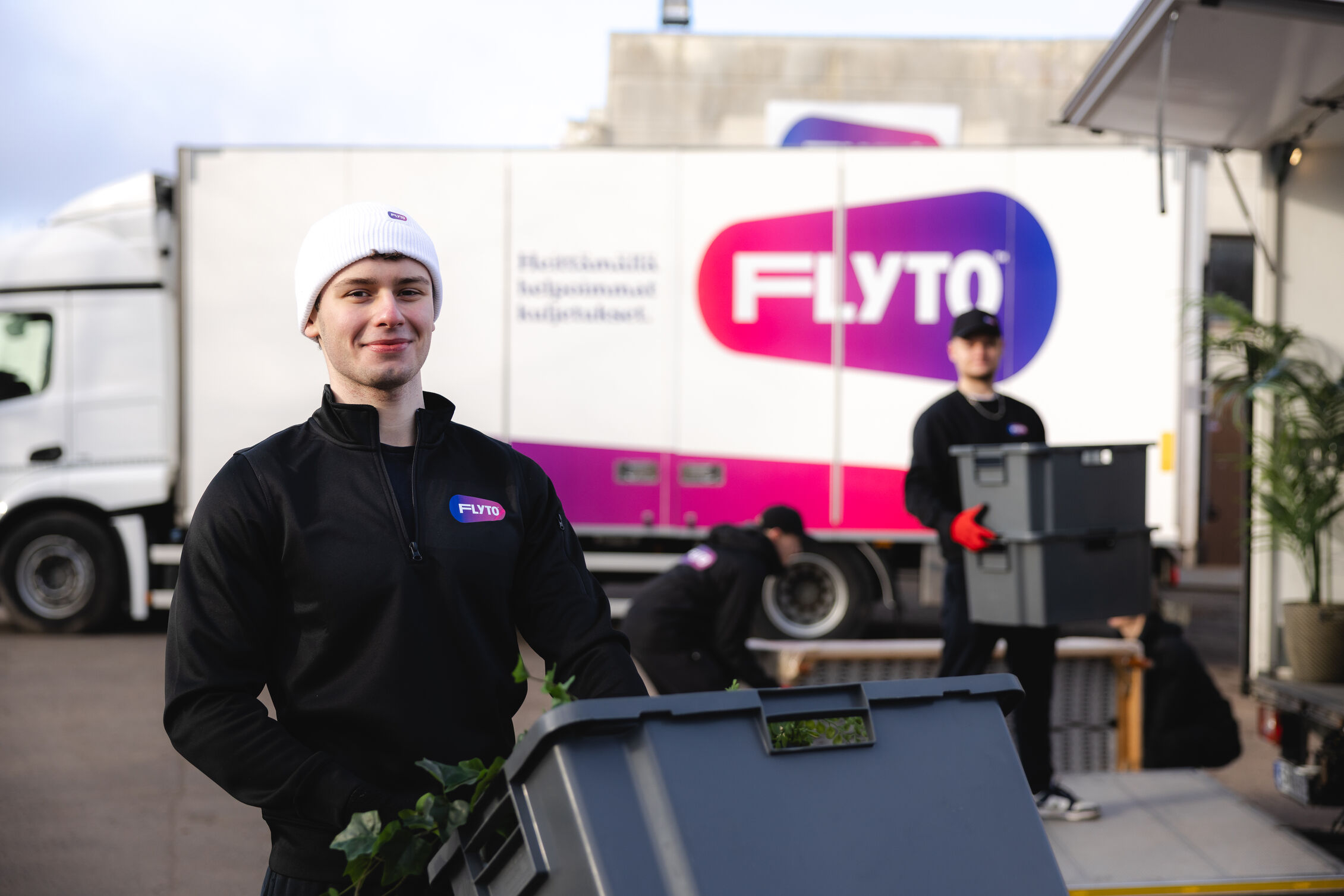
Everything in section 1 is why a Florence move rewards a mover who actually knows the city — and it is where Flyto earns its keep. We handle the ZTL authorisation for the removal vehicle with the Polizia Municipale and the occupazione di suolo pubblico permit through the Comune’s Geoworks portal, at both addresses, with the 21-day lead time the city requires — so the truck can legally reach your door and stand while we work. We plan for the Renaissance palazzo reality: staircase turns, no lift, whether a heritage-constrained autoscala will even fit the lane, and what has to be dismantled instead — assessed before the day, not mid-carry. And we route around the Area Pedonale, the tourist crush and the medieval one-way lanes with the right small van and hand-carry plan. That is the honest difference between a generic van hire and a relocation partner who has done Florence street by street. Get a fixed quote for your Florence move, see how we handle other Italian cities in our Rome guide, or if you are leaving Italy, our Italy-to-France route guide.
Moving to Florence? Get a fixed quote.
Tell us your addresses and volume and we’ll price the whole move — including the ZTL authorisation, the public-land permit and any heritage-constrained furniture lift the centro storico needs. No surprises on the day.
Frequently asked questions
Can a moving truck drive into Florence’s historic centre?
Not freely. The centro storico is a camera-enforced ZTL (Limited Traffic Zone) covering five sectors, active weekdays 07:30–20:00 and Saturdays 07:30–16:00, with some gates closed 24/7 and large pedestrian-only areas. A removal vehicle needs a specific authorisation issued by the Polizia Municipale, which assesses the route, plus a public-land occupation permit to stand on the street. Entering without authorisation is an automatic camera fine at each gate.
What permit does the truck need to park for the move?
A temporary occupazione di suolo pubblico (public-land occupation) for a trasloco, applied for online via the Comune’s Geoworks portal with SPID/CIE/CNS. For occupations under 12 hours a day the concession is issued no sooner than 21 days after a complete application, with a €66 instruction/inspection fee plus the COSAP land charge based on area, duration and location. Apply weeks ahead — there is no last-minute option.
How much is rent in Florence in 2026?
Average asking rent is around €20–21/m² per month city-wide, but it splits sharply: roughly €12/m² in outer residential quarters like Rifredi, Gavinana and Campo di Marte, rising to €22–29/m² in the centro storico and Oltrarno (Idealista). Tourism keeps long-let supply tight, so budget for the higher end near the centre and expect to move quickly on a good listing.
Why is it so hard to find a long-term flat in Florence?
Because so much housing has shifted to short-term tourist lets — around 12,000 listings, most in the historic centre. Florence has responded by blocking new short-let registrations in the UNESCO centre since 2025 and, in 2026, in nine further areas across 500-plus streets. That should ease long-let supply over time, but for now the market is tight and fast-moving.
Will my furniture fit up a Florence palazzo staircase?
Often not. Central and Oltrarno flats are frequently in protected medieval or Renaissance buildings with no lift and tight stone stairs, and large items may have to go in via an exterior furniture lift (autoscala). But heritage rules can forbid fixing anything to the facade and narrow lanes may not have room to set the hoist up at all — so a good mover checks staircase, floor and street access in advance and dismantles what has to be dismantled.
How do I register my residence and get a codice fiscale?
Get the codice fiscale first: it is free at any Agenzia delle Entrate office (EU citizens with ID; non-EU with passport and permesso di soggiorno), and first-timers book an in-person appointment. Then, if you are staying over three months, register your residenza at the Comune di Firenze anagrafe with proof of why you are staying (work, or study plus means and health cover); residence takes effect from the date the Comune receives a complete application.
Do I need a car in Florence?
Usually not, and it can be a liability. The centre is walkable and ZTL-restricted, and Autolinee Toscane buses plus the tramway (T1 and T2, with more lines coming) cover the city and reach the airport, Careggi hospital and Santa Maria Novella station. A single 90-minute ticket is €2.00 and a monthly pass €42.40 from August 2026.
How do I sign up for healthcare in Florence?
After registering your residence, enrol with USL Toscana Centro, the local health authority, and choose a medico di base (family doctor). Enrolment issues your tessera sanitaria, which also works as your European Health Insurance Card. EU residents who work and pay tax in Italy have the right to join the SSN; students and some other categories register under specific rules.
Official sources
- Comune di Firenze — ZTL (Limited Traffic Zone): sectors, hours, enforcement
- Comune di Firenze — mobility office: ZTL hours and electronic gates
- Comune di Firenze — temporary public-land occupation for moves (permit, 21-day lead, €66 fee, COSAP)
- Comune di Firenze — residence registration for EU citizens
- Comune di Firenze — residence registration for non-EU citizens
- Agenzia delle Entrate — codice fiscale for foreign citizens
- USL Toscana Centro — choosing a family doctor / SSN enrolment
- Idealista — Florence rental price report (asking rents, 2026)
- La Nazione — Florence extends short-term-rental block beyond the UNESCO area (2026)
- FirenzeToday — short-let block extended to nine areas outside the centre
- ANSA — Autolinee Toscane fare increase from 1 August 2026 (single ticket €2)
- Firenze Post — new bus and tram fares (carnet €18.20, monthly €42.40)
- Autolinee Toscane — tickets and passes
- Trams in Florence — tramvia lines T1/T2 and network
- University of Florence — student numbers and faculties
- Flyto — AIRE registration guide (leaving Italy)
- Flyto — moving to Rome guide
- Flyto — Italy-to-France route guide
- Flyto — Italy moving guides