

Moving to Valencia (2026): The Complete Relocation Guide

Valencia is Spain’s third-largest city — around 825,000 people in the municipality and roughly 1.6 million across its metropolitan area — and increasingly the country’s favourite landing spot for remote workers, families and retirees who want Mediterranean life without Barcelona or Madrid prices. It is noticeably cheaper than either, it has a real beach and a working port, and its old core, the huerta market gardens and the Turia riverbed park give it a character neither of the bigger cities can copy. It is also, in the places people most want to live, genuinely hard to move a truck into: the medieval streets of Ciutat Vella are too narrow for a removal lorry, many old buildings have no lift, and the city has a low-emission-zone framework hanging over older vehicles. This guide covers the practical mechanics of moving to Valencia in 2026 — the truck logistics only a mover knows, where to live and what rent really costs, how to register your address, and what monthly life actually costs — with official sources throughout.
Freshness note: prices and rules verified against valencia.es, sede.valencia.es, Metrovalencia, Idealista (Q1 2026), the Generalitat Valenciana (GVA Salut) and administracion.gob.es in 2026. Fees and rents move — confirm figures with the linked authorities before you rely on them.
Quick answer: moving to Valencia in 2026
What does it cost to move to Valencia? An international household move (a full flat) typically lands in the low-to-mid four figures from within Europe and higher from overseas, driven mostly by volume, distance and access. Valencia is cheaper to live in than Barcelona or Madrid, but the move itself can cost more than you expect if your new address is in the old town, where access is tight — so get a fixed quote for your specific building rather than a generic estimate. Get a Flyto quote here.
How long does the move take? Road moves from within the EU are usually a few days to about two weeks door-to-door; overseas sea freight runs several weeks. The one Valencia-specific quirk everyone underestimates: to guarantee the truck a legal spot you apply to the Ajuntament de València for a loading reservation on the public street (a reserva de espacio / ocupación de vía pública), and the city asks for the request one month in advance (Sede electrònica de l’Ajuntament). In Ciutat Vella you often cannot get a truck to the door at all.
Key takeaways
- Your moving truck needs a reserved space — booked a month ahead. The Ajuntament de València grants a temporary loading/unloading reservation on the street (for moves with vehicles under 3,500 kg), and its own procedure page states the request must be submitted one month before the planned date (sede.valencia.es).
- Ciutat Vella and El Carmen are a mover’s hard case. The historic core is ”a web of tiny medieval alleys” with old buildings that frequently lack a lift — so bulky furniture often goes in through a window on an external furniture lift (a montamuebles), not up the stairs.
- Valencia’s Low Emission Zone (ZBE) is on paper but not yet enforced. The city has designed a ~27.8 km² ZBE covering almost the whole municipality, with 93 control points, but as of 2026 the ordinance was never given final plenary approval and no fines are being issued (valencia.es; El Debate).
- Rent is well below the big two. The city average is about €13.5/m²/month in Q1 2026, so a 70 m² flat runs roughly €785 in Patraix up to about €1,200 in Ruzafa (Idealista Q1 2026, compiled by RE Leader).
- You register your address for almost everything. The empadronament (padrón) is booked by cita prèvia at the Ajuntament and unlocks your SIP health card, school places and more (sede.valencia.es).
1. The move into Valencia — logistics only a mover knows
This is the part generic ”moving to Valencia” guides skip, and it is exactly where a move goes wrong. Much of what people move to — Ciutat Vella, Ruzafa’s old blocks, El Cabanyal’s low fishermen’s houses — was built long before removal trucks existed. Three things determine whether your move day runs smoothly.
The reserva de espacio: your truck’s parking permit
You cannot count on a free stretch of kerb outside a Valencia building on move day, and double-parking a 7.5-tonne lorry on a narrow street is neither legal nor practical. To guarantee the truck a spot you apply to the Ajuntament de València for a temporary reservation of public space — the procedure is Zonas de reserva para carga y descarga en la vía pública, an ocupación de vía pública. Key facts from the city itself (Sede electrònica de l’Ajuntament de València):
- Who grants it: the Ajuntament de València (mobility/traffic administration). You file the request through the city’s sede electrònica or a citizen office.
- Lead time: the request must be submitted one month in advance of the planned date. This is the single most common thing international movers forget, and there is no last-minute fix on move day.
- What it covers: moves with vehicles under 3,500 kg, defining the dates, hours and the number of linear metres of kerb reserved. You submit a sketch of the location showing traffic lanes and any parking bay.
- Cost: a municipal tasa set by the city’s fee ordinance, based on the area, duration and exact location — modest for a normal move, but payable once the Ajuntament issues its assessment. Movers typically fold the permit fee, the signage and the handling into the quote.
- The signs: the physical ”reserved / no parking” signs must be placed on the street ahead of the move (commonly around 48 hours before) for the reservation to be enforceable and for wrongly parked cars to be moved. Most people delegate the whole permit-plus-signs job to their moving company.
You usually need two reservations: one at the old address and one at the new one. Book both as soon as your move date is fixed.
Ciutat Vella, El Carmen and the montamuebles
Valencia’s historic centre — Ciutat Vella, and above all the El Carmen barrio — is a knot of narrow medieval alleys, hidden squares and centuries-old buildings. A full-size removal truck simply cannot reach many doors here: streets are pedestrianised or too tight, and the buildings are, in the words of one local property guide, characterful blocks that ”often need work, lack a lift, or carry the quirks of a building used for centuries.” Sofas, wardrobes, double beds and appliances frequently will not fit up a tight, winding old staircase.
The standard Valencian solution is an external furniture lift — a montamuebles (also called an elevador de mudanzas): a ladder hoist run up the building’s facade to lift bulky items straight in through a window or balcony. It needs its own kerb space, which is another reason the reserva de espacio matters, and it has to be booked in advance. A good mover assesses this before the day — measuring the staircase, the floor, and how far the truck must park from the door — rather than discovering the problem when the sofa is stuck on the second-floor landing.
The ZBE (Zona de Bajas Emisiones): coming, but not yet enforced
Spain’s climate law requires large cities to run a Low Emission Zone, and Valencia has designed one: a single ZBE of about 27.8 km² covering almost the whole municipality, bounded by the Ronda Nord, Avinguda dels Tarongers, Serradora and the Bulevard Sud, with a stricter core in the APR Ciutat Vella. The plan foresees 274 licence-plate cameras across 93 control points and a phased calendar in which Valencia-registered vehicles could keep circulating until 2028 (valencia.es; valencia.es — APR Ciutat Vella).
The honest 2026 reality: the ZBE is not operational. The regulating ordinance was never given definitive plenary approval — a political deadlock left the framework unenforced — so no ZBE fines are being issued in Valencia (El Debate). For your move that means older removal trucks are not currently blocked from the city as they would be in Madrid or Barcelona — but the framework exists and could activate, so a professional mover keeps an eye on it and plans routes accordingly. Don’t assume the situation is permanent; confirm the current status on valencia.es before move day.
2. Where to live — Valencia neighborhoods by profile
Valencia’s character changes barrio by barrio. The rents below are indicative asking rents for a typical 70 m² flat in 2026, from Idealista Q1 2026 data compiled by RE Leader, against a city average of about €13.5/m²/month. New leases in the most-searched barrios run above that average; quieter districts sit below it.
Best for young professionals and nomads:
- Ruzafa / Russafa (~€1,200/mo, ~€17/m²) — the reinvented former working-class barrio, now full of cafés, co-working, vintage shops and nightlife; young, creative and international. The catch is the price (the priciest of these barrios) and real weekend noise around the bar streets.
- El Carmen / Ciutat Vella (~€1,150/mo, ~€16/m²) — the medieval old town: tiny alleys, plazas, street art and history on every corner. Beautiful and central, but flats are often small, lift-less and quirky, and the nightlife means noise (see the montamuebles warning in section 1).
- Eixample (~€1,060/mo, ~€15/m²) — the elegant grid south of the centre (including the Gran Via and Colón areas), handsome modernista buildings, well-connected and central without the old-town chaos. Solid, if not cheap.
Best for beach life:
- El Cabanyal / Poblats Marítims (~€1,000/mo, ~€14/m²) — the old fishermen’s quarter of low, brightly tiled houses a block back from the Mediterranean. Long neglected, now fast-gentrifying and hugely in demand; you get the beach and character, but streets and buildings vary a lot house to house.
Best for a local, calmer feel:
- Benimaclet (~€880/mo, ~€13/m²) — a former village absorbed by the city, now a younger, authentic, student-friendly and cheaper alternative to Ruzafa, with a real neighbourhood square and its own life. Quieter and less polished, which is exactly the point for many.
- Campanar (~€825/mo, ~€12/m²) — a mixed residential district north-west of the Turia park, with an old village core beside newer blocks; green, family-friendly and near the Bioparc and the science-park end of the riverbed. Less buzz, more space.
Best for budget:
- Patraix (~€785/mo, ~€11/m²) — a genuinely residential, locals-first barrio south-west of the centre with its own old plaza and church; the cheapest of these seven and well-connected by metro, if short on tourist gloss and nightlife.
3. The Valencia housing market — how flats are actually found
Valencia has become one of Spain’s tightest rental markets: a wave of remote workers, digital nomads and relocating families has pushed asking rents up sharply, and good listings go quickly. Here is how it works.
- Where to search: the mainstream portals are Idealista, Fotocasa and Habitaclia. Move fast and view in person — desirable flats in Ruzafa, El Carmen and El Cabanyal are gone within days.
- You need an NIE. The Número de Identidad de Extranjero is the foreigner ID number you need to sign a lease, open a bank account and set up utilities. EU citizens get it with their residency registration; non-EU citizens apply via the immigration/police process. Start it early — nothing else moves without it (administracion.gob.es; see also our NIE guide).
- The deposit (fianza): Spanish law sets the standard rental deposit at one month’s rent (the fianza), which the landlord must lodge with the regional housing authority. Landlords increasingly also ask for an additional guarantee — a second month, a bank guarantee (aval) or rent-default insurance — especially from newcomers without a Spanish payslip. Have proof of income ready.
- Agency fee. Since Spain’s 2023 housing law, the estate agent’s fee on a residential rental is paid by the landlord, not the tenant. If someone demands a ”finder’s fee” from you for a normal long-let, treat it as a red flag.
- Scam warning. Rising demand has brought a wave of fake listings. Never transfer any money — deposit or ”reservation” — before you have viewed the flat in person and confirmed who the real owner is. Classic red flags: the ”owner is abroad”, keys promised by post against an advance payment, prices well below market, or being pushed to pay via a booking platform or a foreign IBAN.
4. Empadronament (padró) — registering your address in Valencia
The empadronament (Spanish: empadronamiento; the register itself is the padró / padrón) is the municipal population register, and it is the key that unlocks the rest of the system: your SIP health card, a school place for your children, and many other procedures all require it. The rules:
- Where and how: you register at the Ajuntament de València by cita prèvia (prior appointment), booked online through the city’s sede electrònica or by phone on 010 (sede.valencia.es — empadronament).
- What to bring: valid ID (DNI, NIE or passport) for everyone registering, and proof of the address — your signed rental contract, property deed, or a recent utility bill in your name. Download and fill in the hoja padronal (registration form) beforehand.
- What you get: the appointment itself is quick, and you receive a stamped volante/certificado de empadronamiento — the document nearly every other office will ask you for. Book the cita prèvia as early as you can, as slots in a fast-growing city can be scarce.
5. Cost of living in Valencia (2026)
The whole point of Valencia for many people is that it delivers Mediterranean city life for meaningfully less than Barcelona or Madrid. The current numbers:
- Rent is the big variable — see section 2. Budget roughly €785/month for a 70 m² flat in cheaper barrios like Patraix up to about €1,200 in Ruzafa, against a city average near €13.5/m²/month (Idealista Q1 2026, via RE Leader). That is well below comparable central rents in the two bigger cities.
- Public transport is cheap. A single Metrovalencia ticket in the central zone is about €1.50, and a single EMT city-bus ride about €2.00 (Metrovalencia; fares overview). A statewide/regional fare subsidy has kept multi-trip and youth passes discounted (broadly 40–50%) into 2026, and DANA-affected residents travel free on much of the network — check the current terms before you buy.
- Utilities on a typical flat — electricity, water, gas and internet combined — commonly run on the order of €120–€180/month, varying with the season (air-conditioning in Valencia’s hot summers is the main swing) and household size.
- Everyday costs. Groceries, eating out and coffee are all cheaper than in Barcelona or Madrid, which — alongside rent — is why Valencia consistently ranks as one of the better-value large cities in Western Europe for both locals and remote workers.
6. Getting settled — health, kids, transport, internet
- Healthcare and the SIP card. Public healthcare in the Comunitat Valenciana runs on the SIP card (Sistema d’Informació Poblacional). Once you are entitled to cover and registered on the padrón, you enrol in the SIP at your local health centre and are assigned a doctor; a paper SIP valid for up to three months can bridge the gap while your registration completes, and the GVA +Salut app gives you a virtual card (GVA — SIP enrolment; GVA Salut — tarjeta sanitaria). EU newcomers should note that an EHIC covers only temporary stays, not residency.
- Schools. Valencia has public, concertado (state-subsidised) and private schools, plus international schools popular with expat families. Public-school admission is points-based and tied to your registered address, so the padrón and your barrio matter — apply within the official enrolment window. Note that the region is bilingual: Valencian (a variety of Catalan) and Spanish are both used in state schooling.
- Transport. Metrovalencia (metro and tram) plus the EMT bus network cover the city well, the metro links the airport to the centre directly, and Valencia is famously flat and bike-friendly — the Turia park and an expanding cycle-lane network make cycling realistic year-round, and Valenbisi is the public bike-share.
- Internet. The main providers are Movistar, Orange, Vodafone and MásMóvil, with fibre (fibra óptica) widely available and fast. Installation usually needs your NIE and a Spanish bank account and can take one to two weeks after you sign, so order early — and check what the building is already wired for.
7. How Flyto handles your move to Valencia
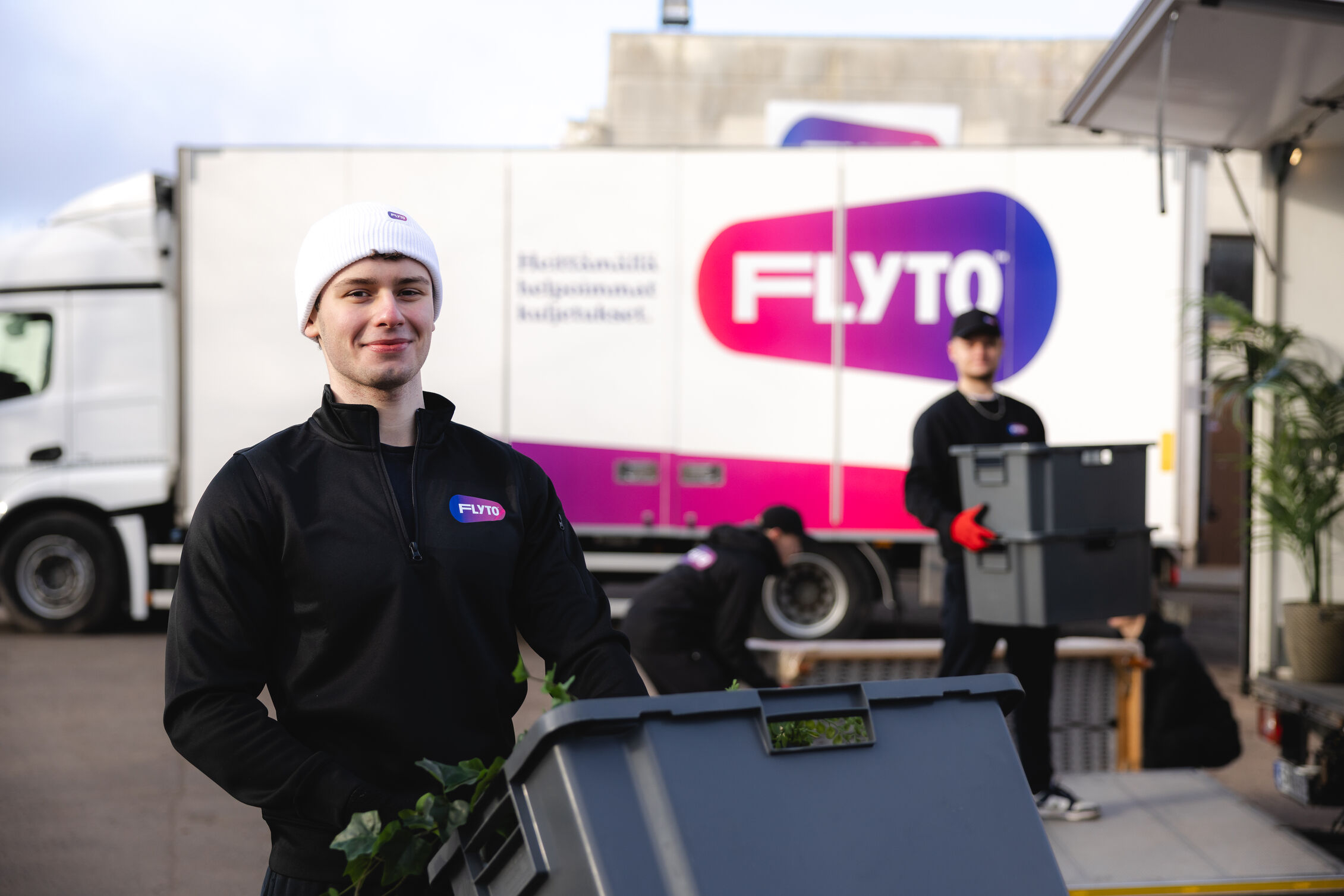
Everything in section 1 is why a Valencia move rewards a mover who actually knows the city — and it’s where Flyto earns its keep. We file the reserva de espacio at both addresses, with the Ajuntament’s one-month lead time, so there’s a legal, empty space when the truck arrives. We assess old-town and lift-less access in advance — staircase width, floor, how far the truck must park from the door — and bring a montamuebles (external furniture lift) when the sofa won’t make the stairwell, rather than discovering the problem mid-carry. And we plan around Ciutat Vella’s pedestrian alleys and the ZBE framework so nothing on move day is a surprise. That’s the honest difference between a generic van hire and a relocation partner who has done this street by street. Get a fixed quote for your Valencia move, or browse our full Spain moving guides, our Barcelona guide for a comparison, and our customs guide for household goods.
Moving to Valencia? Get a fixed quote.
Tell us your addresses and volume and we’ll price the whole move — including the reserva de espacio permits and any montamuebles your old-town building needs. No surprises on the day.
Frequently asked questions
Do I need a permit for my moving truck in Valencia?
In practice, yes — you cannot rely on finding free kerb space, and in the old town you often can’t park at the door at all. You apply to the Ajuntament de València for a temporary loading reservation on the street (a reserva de espacio / ocupación de vía pública), for vehicles under 3,500 kg. The city’s own procedure page asks for the request one month in advance, and the reserved-space signs must go up ahead of move day. Most people delegate the permit and signage to their mover.
Is Valencia’s Low Emission Zone (ZBE) enforced in 2026?
Not currently. Valencia designed a ~27.8 km² ZBE covering almost the whole city, with 93 control points, but the regulating ordinance was never given definitive plenary approval, so no ZBE fines are being issued as of 2026. The framework exists and could activate, so it’s worth checking the current status on valencia.es — but unlike Madrid or Barcelona, older removal trucks are not presently blocked from the city.
Will my furniture fit up a Valencia old-town staircase?
Often not. Ciutat Vella and El Carmen are full of centuries-old buildings with narrow, winding stairs and frequently no lift, and many streets are too tight for a truck. Large items regularly have to go in through a window or balcony on an external furniture lift (a montamuebles). A good mover checks the staircase, floor and street access before move day and books the lift in advance.
How much is rent in Valencia in 2026?
The city average is about €13.5/m²/month in Q1 2026 (Idealista). For a typical 70 m² flat that means roughly €785/month in cheaper barrios like Patraix, around €880 in Benimaclet, and up to about €1,150–€1,200 in El Carmen and Ruzafa. It is meaningfully cheaper than comparable central rents in Barcelona or Madrid.
Which Valencia neighborhood is best for me?
Ruzafa and El Carmen suit young professionals and nomads who want café life and nightlife (and will pay for it); Eixample is central and elegant; El Cabanyal is the beach choice; Benimaclet and Campanar are calmer and more local; Patraix is the budget pick. Bear in mind that El Carmen’s beauty comes with small, lift-less, quirky flats.
What is the empadronament and why do I need it?
The empadronament (padró/padrón) is registration on the municipal population register at the Ajuntament de València, booked by cita prèvia. You need valid ID and proof of address. The stamped certificate it produces is required for your SIP health card, school enrolment and many other procedures, so it’s one of the first things to do after you arrive.
How do I get healthcare and a SIP card in Valencia?
Public healthcare in the Comunitat Valenciana uses the SIP card. Once you are entitled to cover and registered on the padrón, you enrol at your local health centre and are assigned a doctor; a paper SIP valid up to three months can bridge the wait, and the GVA +Salut app provides a virtual card. An EHIC only covers temporary stays, not residency.
Is Valencia really cheaper than Barcelona and Madrid?
Yes, on the things that matter most to a household budget. Rents are well below comparable central rents in either bigger city, public transport is inexpensive (a single metro ride around €1.50), and groceries and eating out cost less — which is why Valencia has become such a popular landing spot for remote workers and families.
Official sources
- Sede electrònica de l’Ajuntament de València — reserva de carga y descarga / ocupación de vía pública (moving permit)
- Sede electrònica de l’Ajuntament de València — empadronament (padrón registration)
- Ajuntament de València — Zona de Bajas Emisiones (ZBE)
- Ajuntament de València — ZBE and the APR Ciutat Vella
- El Debate — Valencia without an operational ZBE for 2026 (status)
- Metrovalencia — fares (tarifas)
- Valencia public transport (Metrovalencia / EMT) fares overview 2026
- RE Leader — Valencia rents by barrio (Idealista Q1 2026 data)
- Generalitat Valenciana — SIP enrolment for public healthcare
- GVA Salut — tarjeta sanitaria (SIP card)
- administracion.gob.es — NIE (foreigner ID number)
- Flyto — Moving to Barcelona (2026)
- Flyto — Moving from Spain to France
- Flyto — Spanish NIE guide
- Flyto — customs for household goods
- Flyto — Spain moving guides