

Moving from Estonia to Finland (2026): Complete Guide

Estonia and Finland are separated by little more than a two-hour ferry ride across the Gulf of Finland, and both are full members of the EU customs union. That makes this one of the simplest corridors in Europe to move a household along: there is no customs process for your belongings, no visa for you, and a well-worn ferry route your furniture will actually travel on. This guide is written for an Estonian resident — citizen, long-term resident, or EU/EEA national living in Estonia — relocating to Finland, and it focuses on what genuinely changes: registrations, healthcare, tax, driving licences, vehicles, pets, and the real logistics of getting your goods there.
Key takeaways
- No customs duty, no import declaration, no tax on your household goods. Estonia and Finland are both inside the EU customs union and single market, so personal belongings move between them under the same free-movement-of-goods rules as any other intra-EU shipment — there is no customs border to cross (European Commission – Goods in the Single Market).
- You don’t need a visa or work permit — as an EU/EEA citizen you can enter and live in Finland freely; the only real task is registering once you’re there (Your Europe – Residence rights).
- Register your right of residence with Finnish Immigration Service (Migri) if you’ll stay over 3 months, via Enter Finland, and visit a Migri service point to prove your identity (Migri – Registering an EU citizen’s right of residence).
- Make a notification of move (muuttoilmoitus) to the Digital and Population Data Services Agency (DVV) to get a Finnish personal identity code and municipality of residence — this is what unlocks public services (DVV – Moving to Finland).
- Notify Estonia’s Population Register of your new Finnish address within 30 days, either via a town/municipality government, an Estonian foreign mission, or the e-population register self-service (Siseministeerium – Submission of a notice of residence).
- Your Estonian (EU/EEA) driving licence stays valid to drive in Finland for as long as it remains valid — Traficom’s rule is that you must exchange it for a Finnish licence via Ajovarma at the latest when it is about to expire, not on any fixed two-year clock (that two-year limit applies only to licences from non-EU/EEA "Contracting States") (Traficom – Exchanging a foreign driving licence).
- Dogs need tapeworm (Echinococcus) treatment before entering Finland — this is one of the few animal-health rules that still applies between EU countries (Ruokavirasto – Non-commercial movement of dogs, cats and ferrets from EU countries to Finland).
- File a residency-change notice with the Estonian Tax and Customs Board (EMTA) to formally end Estonian tax residency once you’ve relocated (EMTA – Tax residency).
1. Free movement first: what actually applies to this move
Because both Estonia and Finland are EU member states inside the single customs territory, a household move between them is not an import or export in any customs sense. There is no customs declaration to file and no duty to pay: goods circulate freely between EU member states under single-market rules, full stop (European Commission – Goods in the Single Market). Contrast that with a move to Norway or Iceland (EEA members but outside the EU customs union) or Switzerland (neither EU nor EEA) — those corridors do involve a customs declaration and a "transfer of normal residence" duty-relief process for removal goods — but for an Estonia–Finland move that entire process simply doesn’t exist.
The same free-movement principle applies to you as a person: as an EU/EEA citizen you don’t need a visa, residence permit, or work permit to move to Finland (Your Europe – Residence rights). The real administrative task is registration — first with Migri if you’ll stay more than three months, and then with the population register (DVV) to become a resident for tax, healthcare, and benefits purposes.
2. Leaving Estonia: what to close out
Population Register. Estonian law requires you to submit a notice of residence when you settle in a foreign state, giving your new Finnish address to the population register (rahvastikuregister). You can do this in the e-population register self-service environment, at a town or rural municipality office before you leave, or afterwards through an Estonian embassy/consulate or the Ministry of Foreign Affairs, which forwards the data (Siseministeerium – Submission of a notice of residence; Population Register overview).
Ending tax residency. Under Estonian law you stop being a tax resident once you no longer have a place of residence left in Estonia (you’ve genuinely relocated) and you don’t stay in Estonia more than 183 days within any 12 consecutive calendar months — you become a non-resident as of the day after you leave. You must notify the Estonian Tax and Customs Board (EMTA) of the change, filed via e-MTA for the fastest processing (EMTA – Tax residency; EMTA – Determining residency). Note that becoming a tax non-resident does not automatically cancel other Estonian obligations — check separately whether you need to close out Haigekassa/Tervisekassa coverage, pension contributions, or property tax on anything you keep in Estonia.
Healthcare — export or end your coverage. Tervisekassa explains that if you take up work in Finland and start paying taxes there, you’ll be insured through the Finnish system and can’t simultaneously hold active Estonian health insurance (Tervisekassa – Moving to another EU member state). If you’re not moving straight into work (e.g. retired), an S1 certificate may apply instead — check with Tervisekassa before departure. Until your Estonian coverage lapses, an EHIC remains useful for temporary stays elsewhere in the EU/EEA (Tervisekassa – European Health Insurance Card).
Driving licence. An Estonian driving licence, being an EU licence, does not need to be exchanged before you leave — it stays usable and is later exchangeable in Finland (see Section 4).
Vehicle. If you’re taking a car with you, the Estonian Transport Administration (Transpordiamet) removes a vehicle from the Estonian register when it’s taken out of the country because the owner is settling abroad or transferring the vehicle abroad; the registration plates should be returned to Transpordiamet, and this can be done online with Mobiil-ID or Smart-ID (Transpordiamet – Removal of vehicle from the register).
3. How your household goods actually move
The Tallinn–Helsinki corridor is one of the busiest ferry routes in the Baltic, run by Tallink Silja Line, Viking Line, and Eckerö Line, with multiple sailings a day in each direction and a crossing time of roughly 2–2.5 hours; all operators carry vehicles, including moving trucks, on the car decks (DirectFerries – Tallinn to Helsinki ferry schedules). In practice, a household move follows one of two patterns: a direct crossing, driving a dedicated truck straight onto a ferry (door-to-door in roughly 1–3 days including the road legs at each end), or groupage/consolidated freight, shared with other shipments on a regular schedule (typically 1–2 weeks, depending on the next available departure). These are freight-industry estimates, not fixed timetables — actual transit depends on truck scheduling, ferry capacity, and how loads are consolidated.
4. Arriving in Finland: registering as an EU citizen
Right of residence (Migri). If you’ll live in Finland for more than three months, you must register your right of residence with the Finnish Immigration Service before that period is up. This is done online via the Enter Finland e-service, followed by an in-person identity check at a Migri service point, which then issues a written certificate of registration (Migri – Registering an EU citizen’s right of residence; Migri – Registration of right of residence). Staying without registering past the three-month mark is a violation of the Aliens Act.
Population registration and personal identity code (DVV). Separately from Migri, you make a notification of move (muuttoilmoitus) to the Digital and Population Data Services Agency (DVV), either online, by post, or at a Posti outlet. This is what gets you entered into the Finnish Population Information System with a Finnish personal identity code (henkilötunnus) and an assigned municipality of residence — the credential that unlocks tax cards, Kela benefits, and municipal health services (DVV – Moving to Finland; DVV – A foreigner can apply for a personal identity code and municipality of residence online). You (and any family members, including children) must still visit in person within one month of submitting the online form to complete the process.
Healthcare (Kela and municipal services). Once DVV records a municipality of residence for you, you can use Finnish public healthcare services on the same basis as local residents, and you should notify Kela to activate your entitlement to benefits and a Kela card (Kela – Can you get benefits from Kela when you move to Finland?).
Tax registration. With your Finnish personal identity code in hand, apply for a Finnish tax card from the Finnish Tax Administration (Vero) using form 5042e; if you have one, bring an A1 certificate confirming your social-insurance coverage, which EU/EEA arrivals can obtain from their home-country authority (Vero – Arriving in Finland; Vero – Work in Finland).
Driving licence. Your Estonian (EU) driving licence remains valid to drive in Finland for as long as it stays valid — Traficom does not put EU/EEA licences on a fixed exchange clock the way it does licences from non-EU/EEA "Contracting States" (those get two years). You must exchange it for a Finnish licence at Ajovarma, the Traficom-authorised service provider, at the latest by the time it’s due to expire. No medical certificate is needed if the licence is still valid at the time of exchange; you get a temporary licence on the spot at your Ajovarma appointment, and the permanent card typically arrives by post within about two weeks (Traficom – Exchanging a foreign driving licence for a Finnish driving licence).
Vehicle re-registration. If you bring a car from Estonia, it must be either currently registered in an EEA country or covered by a Traficom transfer permit. To register it in Finland you’ll need both parts of the Estonian registration certificate, pay Finnish car tax, and pass a registration inspection; if you want to use the car before it’s fully registered, first submit a declaration of use to Vero (Traficom – Importing a vehicle to Finland; Vero – Importing a vehicle to Finland).
5. Pets: EU pet passport rules, plus Finland’s own tapeworm rule
Dogs, cats, and ferrets travel between EU countries under the EU pet passport system: your pet needs an ISO-compliant microchip implanted before its rabies vaccination, a valid rabies vaccination recorded in an EU pet passport, and — for first vaccinations — a 21-day wait after the shot before travel (Your Europe – Travelling with pets in the EU). Estonia issues EU pet passports through licensed veterinarians.
Finland adds one extra step that many EU-to-EU movers don’t expect: dogs must be treated against the tapeworm Echinococcus multilocularis before entering Finland. The treatment (praziquantel or an equally effective alternative) must be given 1–5 days before arrival by a vet outside Finland and recorded in the pet passport — this applies even though it’s an intra-EU move, because Finland (along with Norway, Ireland, and Malta) maintains disease-free status for this parasite and requires the treatment from arrivals from other EU countries. Cats and ferrets are exempt (Ruokavirasto – Non-commercial movement of dogs, cats and ferrets from EU countries to Finland).
6. Money, banking, and things people forget
- Both countries use the euro, so there’s no currency conversion — but open a Finnish IBAN for salary, rent, and utilities; SEPA transfers keep moving money between Estonian and Finnish accounts free and near-instant.
- Update your address with your Estonian bank, insurer, and e-residency-linked services separately — none of this updates automatically from the population register notice.
- Estonian digital ID tools (ID-card, Mobiil-ID, Smart-ID) keep working after you move and are the fastest way to file the EMTA and Transpordiamet paperwork remotely.
- Check whether your Estonian mobile contract has an EU roaming or early-termination clause before you leave.
- Confirm school or daycare places in your new Finnish municipality early — these run on local waiting lists, not automatic transfer from Estonia.
How Flyto handles your Estonia to Finland move
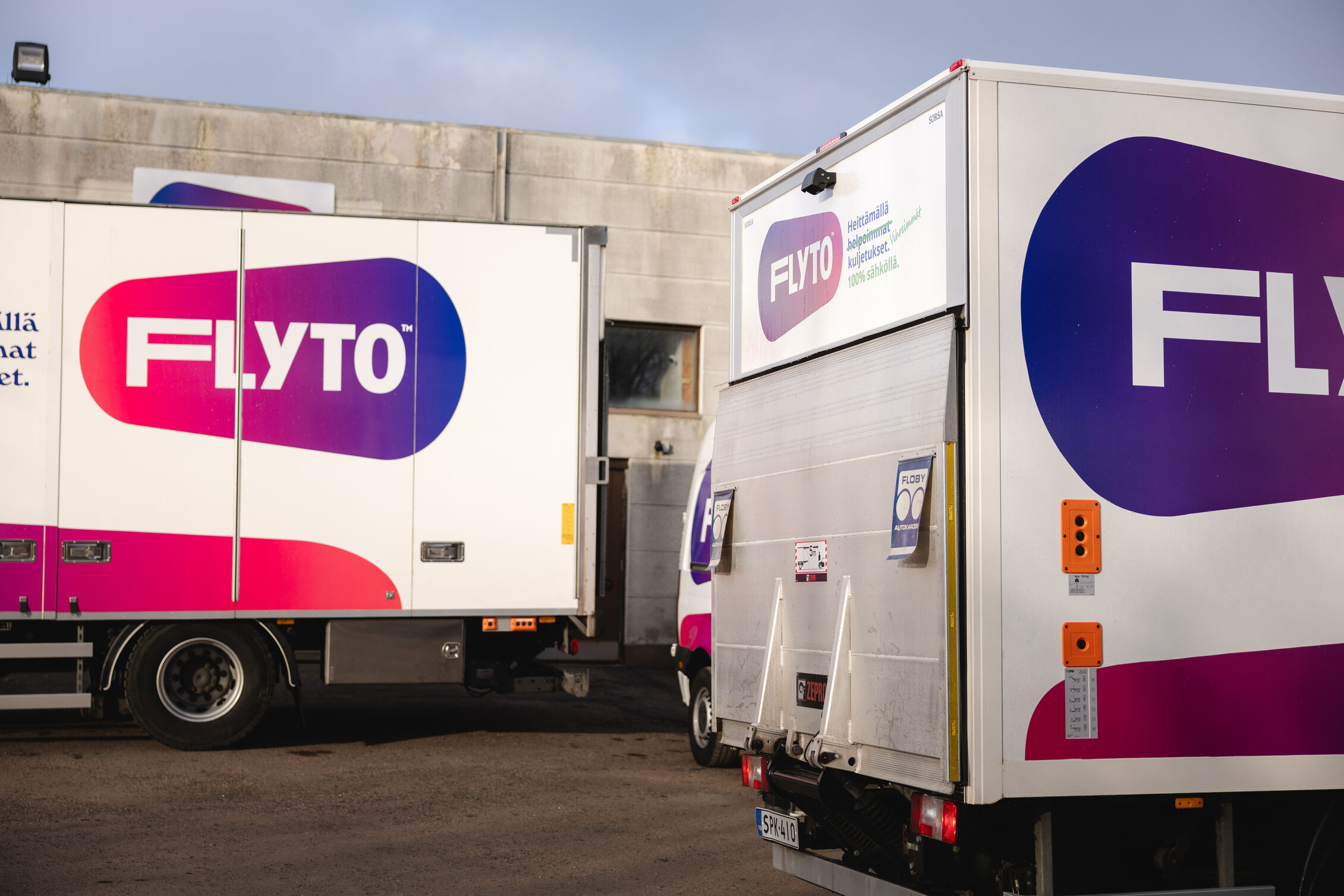
Flyto runs its own offices, warehouses, and moving teams across Northern, Central, and Southern Europe, so the Estonia–Finland corridor is handled largely with in-house crews and vehicles rather than being outsourced end to end. Where it makes sense — for example a specific ferry slot, a rural pickup, or a delivery-day peak — we bring in a carefully vetted partner carrier from our regional network, coordinated by the same Flyto team managing your move from booking to delivery.
Frequently asked questions
Do I need to pay customs duty or file an import declaration for my furniture and belongings?
No. Estonia and Finland are both in the EU customs union and single market, so household goods move between them freely with no customs declaration, duty, or import tax (European Commission – Goods in the Single Market).
Do I need a visa or residence permit to move to Finland from Estonia?
No. As an EU/EEA citizen you can enter and live in Finland without a visa or work permit; you only need to register your right of residence with Migri if you’ll stay more than three months (Migri – Registering an EU citizen’s right of residence).
How long can I drive in Finland on my Estonian driving licence?
As long as it stays valid — EU/EEA licences aren’t on a fixed exchange clock in Finland (unlike licences from non-EU/EEA countries, which do get a two-year limit). Exchange it for a Finnish licence through Ajovarma at the latest when it’s due to expire (Traficom – Exchanging a foreign driving licence).
Does my dog need any special treatment to enter Finland from Estonia?
Yes — Finland requires tapeworm (Echinococcus) treatment for dogs before entry, given 1–5 days before arrival by a vet and recorded in the pet passport, in addition to the standard EU pet passport, microchip, and rabies vaccination. Cats and ferrets don’t need the tapeworm treatment (Ruokavirasto – Non-commercial movement of dogs, cats and ferrets from EU countries to Finland).
What’s the first Finnish document I actually need after I arrive?
Practically, it’s your Finnish personal identity code from DVV’s notification-of-move process — it’s the key that unlocks a tax card, Kela registration, and most everyday services (DVV – Moving to Finland).
Do I need to tell Estonia I’m leaving, or does it happen automatically?
You need to actively notify Estonia’s population register of your new Finnish address within 30 days, and separately notify EMTA to end your Estonian tax residency — neither happens automatically (Siseministeerium – Submission of a notice of residence; EMTA – Tax residency).
Sources
- European Commission – Goods in the Single Market
- Your Europe – Residence rights in the EU
- Your Europe – Travelling with pets and other animals in the EU
- Siseministeerium – Submission of a notice of residence
- Siseministeerium – Population Register
- EMTA – Tax residency
- EMTA – Determining residency
- Tervisekassa – Moving to another EU member state
- Tervisekassa – European Health Insurance Card
- Transpordiamet – Removal of vehicle from the register
- Migri – Registering an EU citizen’s right of residence
- Migri – Registration of right of residence
- DVV – Moving to Finland
- DVV – A foreigner can apply for a personal identity code and municipality of residence online
- Kela – Can you get benefits from Kela when you move to Finland?
- Vero – Arriving in Finland
- Vero – Work in Finland
- Vero – Importing a vehicle to Finland
- Traficom – Exchanging a foreign driving licence for a Finnish driving licence
- Traficom – Importing a vehicle to Finland
- Ruokavirasto – Non-commercial movement of dogs, cats and ferrets from EU countries to Finland
- DirectFerries – Tallinn to Helsinki ferry schedules