

Moving from Finland to the Dominican Republic (2026): Complete Guide

Finland and the Dominican Republic sit on opposite sides of both the Atlantic and the EU customs border, which makes this corridor a genuine third-country relocation rather than a simple EU move. On the Finnish side you are exporting household goods out of the EU customs and tax territory, deregistering from the Finnish population system, and potentially winding down Finnish tax residency. On the Dominican side you are importing personal effects under the customs regime overseen by the Dirección General de Aduanas (DGA) and, in most cases, applying for residence status through the Dirección General de Migración (DGM). This guide is written for a Finland-based mover — Finnish citizen, long-term resident, or returning expat — relocating to the Dominican Republic, with a short section covering the reverse move back to Finland.
Key takeaways
- Moving from Finland to the Dominican Republic is a non-EU export, so unlike an intra-EU move you must file an export declaration with Finnish Customs before your goods leave Finland — Tulli: I am moving abroad.
- You must notify the Digital and Population Data Services Agency (DVV) of your move abroad, and whether it is registered as temporary or permanent changes your Finnish municipality-of-residence status — DVV: Moving abroad.
- Finnish citizens generally keep unlimited (yleinen) tax liability in Finland for the move year plus three further years unless they can prove their "substantial ties" to Finland are severed — Vero: tax residency and non-residency.
- Dominican customs clears imports through the electronic Declaración Única Aduanera (DUA) filed via the DGA’s SIGA system, requiring the commercial invoice and Bill of Lading/Air Waybill — DGA: Preguntas Frecuentes.
- Duty-free import of household goods ("menaje de casa") into the Dominican Republic is tied to your immigration status — a Dominican residence permit for foreigners, or 2+ years living abroad for returning Dominicans/students — DGA: menaje de casa requirements.
- Cash or bearer instruments over US$10,000 must be declared to Dominican customs on entry or exit — DGA: Manual del Viajero.
- Used vehicles more than 5 years old (measured July 1–June 30) cannot be imported into the Dominican Republic — DGA: Preguntas Frecuentes.
- Dogs and cats generally enter the Dominican Republic on the strength of a veterinary health certificate and up-to-date vaccinations rather than an advance import permit; the process is overseen by the Dirección General de Ganadería (DIGEGA), so confirm the current document checklist with DIGEGA or your airline before you fly — DIGEGA: sanitary import regulations.
1. Your immigration status decides your customs treatment
Everything about how your shipment is taxed on arrival in the Dominican Republic flows from your legal status there. The DGA’s household-goods exemption is explicitly linked to three categories: foreigners who have obtained a Dominican residence permit, Dominicans returning to settle permanently after 2 or more years living abroad, and Dominican students returning after more than 2 years of study abroad — a tourist-status arrival does not qualify for duty-free "menaje de casa" treatment (DGA menaje de casa requirements). This means the practical sequence for most Finland-based movers is: secure the correct DGM residence category first, then use that residence documentation to support your customs exemption claim. The DGM’s main long-stay routes relevant to a Finn relocating are Residencia Temporal (temporary residence) (official page), Residencia por Inversión en Calidad de Rentista, which requires a permanent minimum monthly income of US$2,000 from a foreign source (official page), and Residencia por Inversión en Calidad de Jubilado o Pensionado, the retiree/pensioner route, which requires a minimum pension income of US$1,500 a month plus US$250 per dependent (official page). After entering on a residence visa, you must present yourself to DGM within 30 days to complete registration.
2. The Finland export side: Tulli, DVV and Vero
Customs authority: Finnish Customs (Tulli) is the authority for exporting your household goods, since the Dominican Republic is outside the EU customs territory. Unlike a move within the EU — where no export declaration is needed — moving outside the EU requires you to submit an export declaration and attach a general inventory of your removal goods (e.g. "one bed, a television set, clothes, dishes, books") (Tulli: I am moving abroad). The declaration is filed electronically in Tulli’s Customs Clearance Service, identified with Finnish online-banking codes, a mobile certificate, or a hightrust.id token, and is normally lodged under a customs procedure code beginning with "10" — the code family used for permanent (final) export outside the EU. You need an eight-digit commodity code and supporting price documentation, and the goods must still be in Finland and available for inspection when you file (Tulli: export declaration for private individuals). Separately from the relocation-specific rule, Tulli’s general threshold for requiring an export declaration on private consignments is a value over €1,000 or a weight over 1,000 kg — worth knowing if you ship belongings in stages rather than as one removal. Keep your export MRN and exit certification; you’ll need them if you ever move back.
Deregistration: You are legally obliged to notify the Digital and Population Data Services Agency (DVV) of your move abroad, via the joint online service with Posti (DVV: moving abroad). A move under one year is registered as temporary — you keep your Finnish municipality of residence and associated rights — while anything longer is permanent, meaning you lose your municipality of residence (affecting things like municipal voting rights). A stay can still be marked temporary for up to three years if your ties to Finland remain stronger than your ties abroad. Failing to notify DVV leaves incorrect data in the population register, which complicates later dealings with Finnish authorities, pensions, and Kela.
Tax residency exit: Finland’s Tax Administration (Vero) treats a moving Finnish citizen as retaining full (yleinen) tax liability for the year of the move plus the three following calendar years by default — the statutory "three-year rule" in section 11 of the Income Tax Act. This applies even without a home in Finland or continuous presence here. You can apply to end this earlier only by demonstrating you have no "substantial ties" left to Finland: no permanent home, no immediate family remaining, no employment or business activity, no Finnish social-security coverage, and no real estate beyond a holiday home. To request non-resident status you submit proof such as your sale deed or lease termination, evidence of your new permanent residence, and — once available — a tax residency certificate from the Dominican Republic (Vero: tax residency, non-residency and residency under a tax treaty).
3. Ports and transit — realistic estimates, not official figures
Finland’s household-goods shipments to overseas destinations typically move through one of two ports: Vuosaari Harbour in Helsinki, which mainly serves unitised cargo — container and RoRo traffic as well as project loads (Port of Helsinki), or the Port of HaminaKotka, a major container, RoRo, and general-cargo port on Finland’s south coast (HaminaKotka). There are no direct sailings from Finland to the Dominican Republic, so shipments are transshipped through major North European hub ports before joining transatlantic services into the Dominican Republic’s principal container gateways, chiefly Caucedo and Rio Haina, both near Santo Domingo (U.S. Dept. of Commerce: Dominican Republic customs regulations).
Based on general freight-industry practice rather than any official schedule, movers can typically budget roughly 6–10 weeks port-to-port for consolidated (LCL) or full-container (FCL) sea freight from Finland, including transshipment and Dominican customs clearance, and roughly 5–10 days transit for air freight into Aeropuerto Internacional Las Américas near Santo Domingo. These are estimates for planning purposes only — always confirm actual routing and timing with your forwarder.
4. The Dominican Republic import side: DGA and the DUA
All imports, including personal household goods, are cleared through the DGA’s electronic Declaración Única Aduanera (DUA), filed via the DGA’s SIGA portal together with the original commercial invoice and the Bill of Lading (sea) or Air Waybill (air) (DGA FAQ). For household-goods shipments claiming the duty-free "menaje de casa" exemption under Law 146-00, the DGA additionally requires proof of your qualifying status (Dominican residence permit, or 2+ years of continuous residence abroad for returning Dominicans/students), the original Bill of Lading issued in the owner’s name, a completed exoneration application form, and an in-person appointment at DGA to file it (DGA: menaje de casa requirements and form). Anything outside the exemption — new items, commercial quantities, or goods brought in before your residence status is confirmed — is dutiable and classified under the normal tariff schedule. Duty-free personal allowances for travelers arriving in the country (separate from a full household shipment) include up to 5 liters of alcoholic beverages, 20 packs of cigarettes (or 25 cigars, or 200 g of tobacco), one laptop and one tablet, and gifts up to US$500 in value, usable once every three months (DGA: Manual del Viajero).
5. Pets: official rules on both ends
Leaving Finland: Finnish law (the Animal Health Act, 76/2021, section 52) makes the person or party exporting a pet from Finland to outside the EU responsible for finding out and meeting the destination country’s own import conditions. Any pet you take out of Finland must be identifiable by microchip or tattoo, and animal-transport welfare rules must be followed throughout the journey. The Finnish Food Authority (Ruokavirasto) can issue an EU pet passport or a veterinary health certificate as supporting paperwork, but whether it is accepted on arrival depends entirely on the destination country’s own rules (Ruokavirasto: pet export outside the EU).
Entering the Dominican Republic: Pet imports are overseen by the Dirección General de Ganadería (DIGEGA) under the Ministry of Agriculture, which regulates sanitary import requirements for live animals, including companion pets, through its animal-health import framework (DIGEGA: sanitary import regulations). In practice, this has meant a veterinary health certificate — issued and signed by a veterinarian, then countersigned and sealed by an official veterinarian — confirming the animal’s identification and up-to-date vaccinations and parasite treatment. Because DIGEGA’s published pet-specific checklist can change and is not always mirrored on a single stable web page, confirm the current document list directly with DIGEGA or your airline well before departure, and build in time for your vet to prepare the paperwork.
6. Vehicles, money, and things people forget
Vehicles: Dominican law (Law 04-07) bans importing used vehicles more than 5 years old, with the age window counted from July 1 to June 30 each year (a further decree, 420-23, additionally bars importing salvage or total-loss vehicles). You’ll need the vehicle’s title (or a commercial invoice if new), the shipping Bill of Lading, and a completed DUA; vehicles from the United States need a certificate of origin to claim preferential tariff treatment (DGA FAQ). Given the age limit and Finland’s high vehicle taxes on the export side, shipping your Finnish-registered car is rarely economical — most movers sell in Finland and buy locally.
Money: Cash or bearer financial instruments over US$10,000 (or equivalent) must be declared to Dominican customs on entry or exit, with documentation on hand proving the funds’ lawful origin. Failure to declare can be treated as smuggling, with fines, seizure, and criminal exposure (DGA: Manual del Viajero).
Things people forget: securing your DGM residence status before your container arrives, since the household-goods duty exemption depends on it; keeping your Tulli export MRN in case you ever return; notifying DVV even for a "trial" move under a year (it still needs registering as temporary, with an end date); and confirming your Vero position early if you plan to stay past the three-year default tax-residency window.
Reverse direction: moving back from the Dominican Republic to Finland
If you later return to Finland, household goods are generally customs- and VAT-free on re-entry, but you still need to complete a formal removal-goods customs clearance with Tulli — either through the company handling your shipment, Tulli’s Customs Clearance Service, or paper form 1161 (private person’s declaration of removal goods imported from outside the EU customs/fiscal territory) — and separately declare anything subject to import restrictions or excise duty, such as alcohol (Tulli: moving to Finland). You would also re-register your address with DVV and, if you had exited Finnish tax residency, notify Vero of your return.
How Flyto handles your Finland to the Dominican Republic move
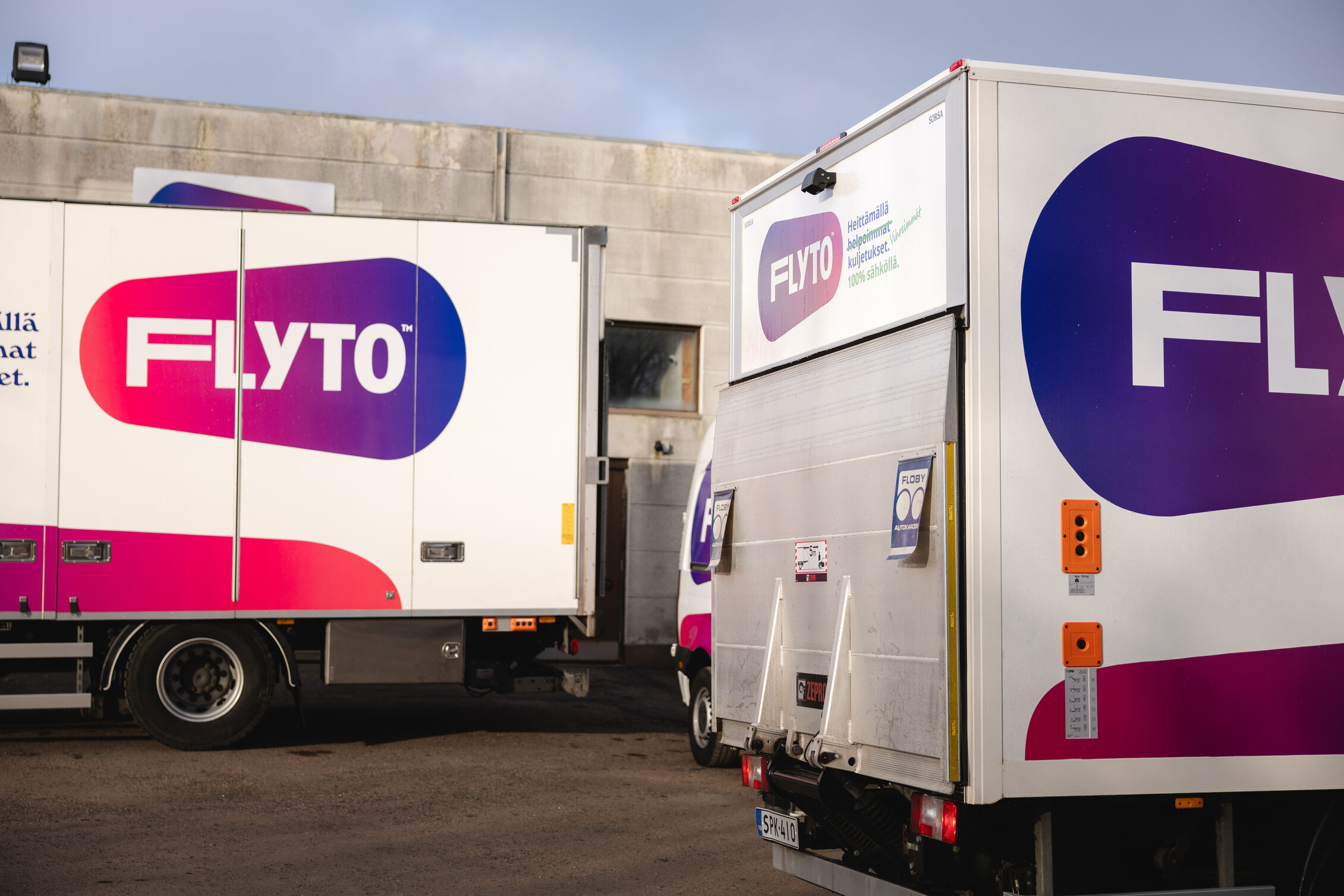
Flyto runs its own offices, warehouses, crews, and vehicles across Northern, Central, and Southern Europe, so the Finnish export leg — packing, Tulli export declaration support, and trucking to Vuosaari or HaminaKotka — is handled in-house by our own teams. For the ocean and air freight legs and the Dominican Republic side, we work through a carefully vetted network of shipping and forwarding partners, plus trusted local agents in the Dominican Republic who manage DGA clearance and last-mile delivery, so you get one coordinated move without us claiming to physically operate on every continent ourselves.
Frequently asked questions
Do I need an export declaration if I only ship a few boxes, not a full container?
Yes — Tulli lists "moving abroad" as a situation requiring an export declaration regardless of shipment size, separate from the general €1,000/1,000 kg threshold that applies to other private consignments (Tulli).
Will I automatically stop being a Finnish tax resident once I move?
No. Finnish citizens keep unlimited tax liability for the move year plus three further years by default; you must actively apply to Vero and prove your substantial ties to Finland are severed to end it sooner (Vero).
Can I bring my household goods in duty-free if I only have a tourist entry?
No. The DGA’s household-goods exemption is tied to holding a Dominican residence permit, or to returning Dominicans/students who lived abroad 2+ years — a tourist-status entry does not qualify (DGA).
Is there a quarantine for pets entering the Dominican Republic?
There is no evidence of a standard quarantine period for dogs and cats; entry is documentation-based, built around a veterinary health certificate and vaccination record from an official veterinarian. Confirm the current requirements with DIGEGA or your airline before you travel, since exact paperwork can change (DIGEGA).
Can I ship my own car to the Dominican Republic?
Only if it’s no more than 5 years old under Law 04-07’s July–June age calculation, with full title, shipping, and DUA documentation — and it cannot be salvage-titled (DGA).
How much cash can I carry into the Dominican Republic without declaring it?
Up to US$10,000; above that, you must declare it to DGA officials on the designated form and be able to show its lawful origin (DGA).
Sources
- Tulli: I am moving abroad
- Tulli: Export declaration for private individuals
- Tulli: Moving to Finland
- DVV: Moving abroad
- Vero: Tax residency, non-residency and residency in accordance with a tax treaty
- Ruokavirasto: Pet export outside the EU
- Port of Helsinki: Vuosaari Harbour
- Port of HaminaKotka
- U.S. Dept. of Commerce: Dominican Republic Customs Regulations
- DGA: Preguntas Frecuentes
- DGA: Manual del Viajero
- DGA: Menaje de casa requirements and form
- DGM: Residencia Temporal
- DGM: Residencia por Inversión en Calidad de Rentista
- DGM: Residencia por Inversión en Calidad de Jubilado o Pensionado
- DIGEGA: Regulaciones Sanitarias de Importación