

Moving from Denmark to Poland (2026): Complete Guide

Denmark and Poland are both member states of the European Union, which makes this one of the simplest international relocations in Europe. There is no visa, no work permit, no customs clearance and no import tax on your furniture and personal belongings — the whole move is governed by EU free-movement rules rather than immigration law. This guide is for anyone currently registered in Denmark (Danish national, Nordic resident, or third-country national with EU/EEA residence rights already established there) who is relocating to Poland for work, family or a new start. It sets out what genuinely needs to be done — the Danish deregistration steps, the Polish registration steps, how your household goods actually travel, and the things people typically forget.
Key takeaways
- No customs duty, no import declaration on your household goods: Denmark and Poland are both inside the EU customs union, so goods move freely between them under the same rules as any other intra-EU shipment (European Parliament, free movement of goods). This is different from a move involving Switzerland, which sits outside the EU/EEA customs union and requires a formal customs declaration (with duty relief available for genuine removal goods that have been used for at least six months) (Swiss Federal Office for Customs and Border Security, FAQ removal goods).
- You don’t need a visa or work permit. As an EU/EEA citizen you can live, work and study in Poland on your passport or national ID card alone (Your Europe, registering residence in the EU).
- Deregister from the Danish CPR (folkeregister) before or when you leave — required if you’ll be away more than six months (CPR.dk, moving from Denmark).
- Tell Skattestyrelsen (the Danish Tax Agency) using form 04.029 so your Danish tax liability is correctly closed (Skat.dk, leaving Denmark).
- Register your stay with the wojewoda in Poland once you pass three months of residence, and apply for a PESEL number — Poland’s central personal identifier used for almost everything administrative (gov.pl, registering EU citizens’ stay; gov.pl, PESEL for foreigners).
- Your Danish driving licence stays valid in Poland until its printed expiry date — no mandatory exchange for EU/EEA licences (Your Europe, driving licence recognition).
- Pets travel on their existing EU pet passport (microchip + valid rabies vaccination) — no quarantine between EU states (Your Europe, travelling with pets).
- Poland uses the złoty (PLN), not the euro — budget and price in the local currency once you arrive, since Poland has not adopted the euro.
1. What actually applies: free movement, not customs
Because both Denmark and Poland are EU member states inside the single market and the EU customs union, moving your household between them is legally no different from moving between two Danish or two Polish addresses: goods circulate freely, with no customs duty, no import declaration and no "personal effects" relief scheme to apply for, because none of that machinery is triggered in the first place (European Parliament, free movement of goods). The only paperwork that matters for household goods on this corridor is a normal inventory list for your own insurance and for the moving company’s operational planning — not a customs declaration.
This is worth stating explicitly because it is not true of every European move. If either end of your relocation were Switzerland (outside the EU/EEA customs union entirely — a full customs declaration is required, with duty relief for genuine removal goods that have been used for at least six months before the move) (BAZG, FAQ removal goods), or Norway or Iceland (EEA members but outside the EU customs union, so customs formalities apply even though removal-goods relief is generally available), or the UK (fully outside both the EU and the EEA since Brexit, with full customs formalities), you would need to plan for real customs clearance. None of that applies here: Denmark to Poland is a pure intra-EU move.
Free movement of people works the same way. You don’t apply for permission to move — you simply move, and then handle two administrative tasks: closing things out in Denmark, and registering in Poland. The rest of this guide covers exactly those two sides.
For the practical side of the move – crews, customs paperwork and a fixed price – start here: international movers to Denmark.
2. Leaving Denmark: deregistration, tax, health, vehicle
Civil registration (CPR/folkeregister). If you’ll be away more than six months, you must deregister from the CPR (Det Centrale Personregister) before leaving, by notifying your municipality — normally done digitally via borger.dk with MitID (CPR.dk, moving from Denmark; Life in Denmark, deregister your address). You keep your CPR number for life but lose full civil registration status — including, as a rule, voting rights in Danish parliamentary elections while deregistered — and your yellow health-insurance card stops being valid once you’re no longer registered at a Danish address.
Tax. Under Danish tax law, your full Danish tax liability generally only ends once you no longer have a home available to you in Denmark — that is, once you sell it, give your landlord notice, or rent it out under a lease that is irrevocable for at least three years (Skat.dk, when you leave Denmark). Report your departure using form 04.029, submitted via TastSelv/E-tax or by post to Skattestyrelsen, and plan to call the Tax Agency about a week after you’ve deregistered from the CPR and physically left, so they can formally assess and close your Danish tax file (Skat.dk, form 04.029).
Healthcare. Danish public healthcare access is tied to your CPR registration; once you deregister, your entitlement (and your sundhedskort/yellow card) ends, and your healthcare cover transfers to the country where you next register — in this case Poland, via NFZ enrolment (see section 4) (Life in Denmark, deregister your address).
Vehicle. If you’re taking a Danish-registered car with you permanently, you need to deregister it from the Danish Motor Register (Motorregistret), hand in the number plates, and apply for a refund of the Danish registration tax (Motorstyrelsen may require an inspection; the refund is the tax payable on import of the same vehicle minus 15%, with a minimum deduction that applies regardless) (Motorstyrelsen, exporting vehicles). You’ll then register the car in Poland on arrival (section 4).
3. How your household goods actually move
There’s no direct freight ferry between Denmark and Poland for a loaded moving van, so the realistic routing is overland: the truck runs south through Germany and crosses into Poland at one of the Oder-river border points (typically Świecko/Frankfurt an der Oder on the Berlin–Warsaw corridor, or Krajnik Dolny/Kołbaskowo near Szczecin). These are freight-industry planning estimates, not fixed timetables — actual timing depends on route, driver rest rules, and whether the load is dedicated or groupage:
- Copenhagen to Warsaw: roughly 1,000–1,050 km, ~12–15 hours of pure driving, typically 1–2 working days including mandatory rest breaks.
- Copenhagen to Poznań/Wrocław (western Poland): roughly 700–850 km, often a single long driving day plus load/unload time.
- Groupage (shared-load) shipments take longer end-to-end — often several days to a couple of weeks — as the truck serves multiple households on its route; a dedicated/exclusive van runs door-to-door on a fixed schedule.
Because this is a pure EU-EU route, there’s no customs wait built into that schedule — the only realistic delays are traffic and normal logistics scheduling.
4. Arriving in Poland: registration, PESEL, healthcare, tax, driving licence
Register your stay. As an EU citizen, you can stay in Poland for up to three months without registering. If you’re staying longer, you must submit an application to register your residence with the wojewoda (voivode) covering your place of residence, no later than the day after your first three months in the country (Your Europe, registering residence; gov.pl, zarejestrowanie pobytu obywatela UE). The application is submitted in person, is free of charge, and requires your valid passport or ID card, passport-style photographs, plus supporting documents relevant to your situation (employment contract, proof of self-employment, or proof of sufficient resources and health insurance, for example). Certificates issued since August 2021 are valid for 10 years. This is Poland’s real equivalent of the "Anmeldung"-style step other EU countries use — the Ministry of Interior and Administration outlines the general framework at gov.pl/mswia, rejestracja pobytu.
Get your PESEL number. Anyone registering residence in Poland for a stay of more than 30 days is issued a PESEL — the 11-digit personal identifier used across Polish administration for tax, healthcare, banking and virtually everything else — typically alongside or shortly after your registration (gov.pl, PESEL for foreigners).
Healthcare (NFZ). If you’re employed in Poland under a standard employment contract, your employer registers you for social and health insurance with ZUS (form ZUS ZUA) within 7 days of your start date, giving you access to the National Health Fund (NFZ) system automatically (Biznes.gov.pl, registering with ZUS). If you’re self-employed or not covered through an employer, you register and pay contributions yourself.
Tax registration. For most employees, your PESEL doubles as your tax identifier — you generally don’t need a separate NIP number. A NIP is required mainly if you’re VAT-registered or running a business outside the CEIDG system (gov.pl/KAS, rejestracja podatników).
Driving licence. Your Danish driving licence remains valid in Poland exactly as it was in Denmark, until its printed expiry date — EU/EEA licences are mutually recognised and you’re not required to exchange it just because you’ve moved (Your Europe, driving licence exchange and recognition). Mandatory exchange only applies if the licence is lost, stolen, damaged, you commit a traffic offence, or — for licences issued with indefinite validity — after two years of normal residence in Poland, and only where Polish authorities actually require it.
Vehicle registration. If you bring a car registered in another EU country, you must file a simplified excise declaration (AKC-U/S) within 14 days of the date excise duty becomes due, and pay the excise duty (akcyza) itself within 30 days — 3.1% of the vehicle’s value for engines under 2,000 cm³, 18.6% above that — with both deadlines capped by the date you actually register the vehicle in Poland, whichever comes first. You’ll need proof of that payment (or of an applicable exemption) before the car can be registered locally (Ministry of Finance, Poland — vehicle registration tax). This excise duty is a domestic Polish tax that applies to any car being registered in Poland regardless of where it comes from — it is separate from, and unrelated to, customs duty.
5. Moving with pets
Both Denmark and Poland are EU member states, so a pet dog, cat or ferret travelling on a valid EU pet passport — showing microchip identification and an up-to-date rabies vaccination — can cross the border with no quarantine and no additional import paperwork (Your Europe, travelling with pets). The animal must generally travel with you or within five days of you if transported separately by an authorised person, and it must be microchipped before its rabies vaccination is administered — a vaccination given before the chip is read as invalid for travel purposes (European Commission, travelling with a pet within the EU). Since 22 April 2026, Commission Delegated Regulation (EU) 2026/131 has applied to non-commercial pet movement within the EU, updating microchip and passport-model technical requirements — it’s worth confirming with your vet that your pet’s passport and chip meet the current standard before travel.
6. Money, banking, and things people forget
- Currency: neither leg uses the euro. Denmark has the krone (DKK) and Poland has the złoty (PLN), so budget for a currency change and check current exchange rates.
- Bank accounts: you can typically keep your Danish account open as an EU/EEA resident, but you’ll want a Polish IBAN for rent, salary and utilities — straightforward to open once you have a PESEL number.
- Utilities and contracts: cancel or transfer Danish electricity, internet and insurance around your CPR deregistration date; set up Polish equivalents once you have a fixed address to register at the wojewoda’s office.
- Pension/posted-worker cases: this guide assumes a standard permanent relocation, not a posted-worker arrangement — if you’re posted temporarily, check social-security coordination with Udbetaling Danmark and ZUS separately.
- School enrolment: handled locally in Poland once your PESEL and address registration are confirmed — most municipal school registrations require it.
- Timing: the Polish three-month registration clock starts on your actual entry date, not your Danish deregistration date — keep a record of when you crossed.
How Flyto handles your Denmark to Poland move
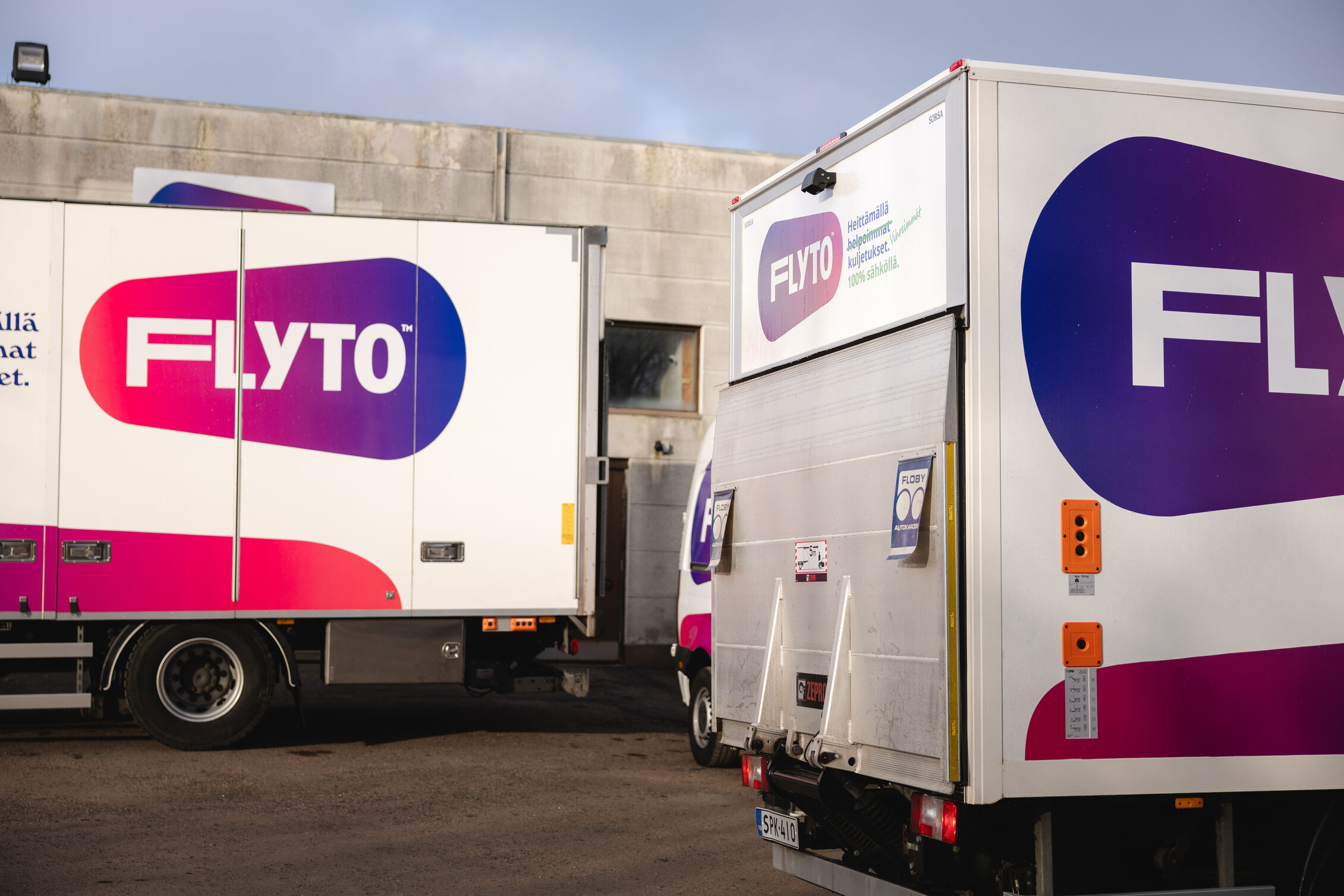
Flyto runs its own offices, warehouses, crews and vehicles across Northern, Central and Southern Europe, so a substantial part of a Denmark-to-Poland relocation — collection in Denmark, cross-border transport, and delivery into Poland — is handled in-house by our own teams rather than handed off blind. Where it makes sense for your specific route, timing or budget, we combine that with a carefully vetted network of partner carriers and local subcontractors, so you get both the reliability of an in-house European operation and the flexibility of specialist partners where they add value.
Frequently asked questions
Do I need a visa or residence permit?
No. As an EU/EEA citizen you enter, live and work in Poland on your passport or ID card, and only need to register with the wojewoda past three months (Your Europe, registering residence).
Will my furniture and boxes go through customs?
No. Denmark and Poland are both in the EU customs union, so household goods move between them with no customs duty and no import declaration (European Parliament, free movement of goods).
Do I need to exchange my Danish driving licence?
Not automatically — it stays valid until its printed expiry date. Exchange is only mandatory if it’s lost, damaged, stolen, or after two years of Polish residence for indefinite-validity licences where local authorities require it (Your Europe, driving licence recognition).
What happens to my Danish health cover?
It ends when you deregister from the CPR. Once you register in Poland and (if employed) are enrolled via ZUS/NFZ, cover transfers to the Polish public system (Life in Denmark; Biznes.gov.pl, ZUS registration).
Can I bring my car, and what does it cost?
Yes, no customs duty — but you must pay Polish excise duty (akcyza: 3.1% or 18.6% of value by engine size), filing the declaration within 14 days and paying within 30 days of the duty becoming due, before you can register the car locally (Ministry of Finance, Poland — vehicle registration tax).
How long does the household-goods journey take?
A dedicated Copenhagen–Warsaw move is roughly 1,000–1,050 km and 1–2 driving days; groupage shipments sharing a truck take longer. These are freight-industry estimates — no customs delay applies on this EU-EU route.
Sources
- European Parliament — Free movement of goods
- Swiss Federal Office for Customs and Border Security (BAZG) — FAQ removal goods
- CPR.dk — Moving from Denmark
- Life in Denmark (borger.dk) — Deregister your Danish address when moving abroad
- Skat.dk — When you leave Denmark
- Skat.dk — Form 04.029
- Motorstyrelsen — Exporting vehicles
- Your Europe — Registering residence abroad after the first 3 months
- gov.pl (Ministry of Interior and Administration) — Rejestracja pobytu
- gov.pl (Podlaski Urząd Wojewódzki) — Zarejestrowanie pobytu obywatela UE
- gov.pl — Get a PESEL ID
- Biznes.gov.pl — Registering with ZUS and social/health insurance
- gov.pl (Krajowa Administracja Skarbowa) — Rejestracja podatników
- Your Europe — Driving licence exchange and recognition in the EU
- Ministry of Finance, Poland — Vehicle registration tax (excise duty on vehicles from the EU)
- Your Europe — EU rules on travelling with pets and other animals
- European Commission (Food Safety) — Travelling with a pet within the EU