

Moving from Switzerland to Australia (2026): Complete Guide

Relocating from Switzerland to Australia is one of the longest corridors we handle: a landlocked Alpine country to the far side of the world. A move like this has two halves that must line up. On the Swiss side you deregister from your commune, settle your tax affairs, and hand your household goods to a mover who ships them out through Europe’s Rhine and North Sea ports. On the Australian side your shipment must clear the Australian Border Force and pass biosecurity inspection before it reaches your new home. This guide covers both ends in detail, plus a short note on the reverse direction, and is written for anyone resident in Switzerland — Swiss nationals, EU/EFTA citizens, and holders of other permits — making the permanent move Down Under.
Key takeaways
- Leaving Switzerland with your own used household goods triggers no Swiss export duty and no formal export declaration for private movers; you clear at a staffed border customs office of the Federal Office for Customs and Border Security (BAZG).
- You must deregister (Abmeldung) from your commune of residence if you leave for more than three months, give up your home, and do not intend to return soon; ask for a departure certificate (EDA/FDFA).
- Australia clears household goods as Unaccompanied Personal Effects (UPE) using ABF form B534, which grants duty and GST relief only on goods you owned and used for the qualifying period (ABF).
- Every shipment is assessed for biosecurity risk by the Department of Agriculture, Fisheries and Forestry (DAFF); high-risk items are inspected (DAFF).
- Switzerland is a Group 3 country for pet imports, so cats and dogs need a microchip, rabies vaccination, an RNAT titre test, an import permit and a minimum quarantine stay at Mickleham (DAFF).
- Importing a vehicle requires prior vehicle import approval under the Road Vehicle Standards Act via the ROVER portal (Dept of Infrastructure).
- Carrying AUD 10,000 or more (or the foreign-currency equivalent) in or out of Australia must be reported to AUSTRAC.
- Alcohol and tobacco never travel duty-free inside a UPE shipment — they are always assessed for duty, GST and wine equalisation tax (ABF).
1. Your Australian visa status drives the customs treatment
Before touching a single box, understand that your immigration status in Australia determines how your goods are treated on arrival. Australia’s UPE concession — relief from customs duty and GST on your household and personal effects — is available to people arriving to live in Australia who have owned and used those goods before importing them. The Australian Border Force sets those eligibility conditions on the UPE page, and the goods must be a genuine personal shipment, not commercial stock.
In practice this means a permanent resident, a returning Australian, or a long-stay visa holder shipping a lifetime of possessions is treated very differently from someone importing new or commercial goods. Get your visa grant confirmed before you set a shipping date, because the visa evidence and your passport details feed directly into the B534 declaration. If you are in any doubt about your own eligibility, the ABF is the authority — not your mover.
2. The Switzerland export side
The authority. Switzerland’s customs authority is the Federal Office for Customs and Border Security (BAZG in German, OFDF in French), which in 2022 replaced the former Federal Customs Administration (FCA). For a private person moving abroad, the good news is stated plainly by BAZG: "You generally do not have to observe any specific customs regulations for your personal goods when leaving Switzerland. No export customs duties are payable" (BAZG). There is no value or weight threshold that turns your used household effects into dutiable exports.
What BAZG does require is that you "clarify any bans, authorisations and restrictions with the relevant offices before leaving. These include, for example, animals, CITES species protection, weapons, cultural assets." If you own antiques, ivory, exotic-leather items, firearms or protected-species products, sort the paperwork before the container is sealed. Highly valuable personal items you might later re-import — an expensive camera, for example — can be noted or marked by the export customs office so you avoid questions if they ever come back.
Export declaration system. Commercial exports from Switzerland run through the electronic Passar goods-traffic system, which replaced the older e-dec Export platform and has been rolling out since March 2024 (BAZG). Private removal goods do not go through Passar; instead you present yourself and declare verbally at a staffed (manned) customs office at the border, which is also where any export confirmation is stamped. Your moving company handles the transit paperwork end to end, but the underlying rule is simple: no Swiss export duty on your own used effects.
Deregistration and tax exit. The administrative half matters as much as the customs half. If you go abroad for more than three months, give up your accommodation and do not intend to return soon, you must deregister in person at your commune’s residents’ registration office (Einwohnerkontrolle / contrôle des habitants) and request a certificate of departure — the document banks, insurers and pension funds will later ask to see. The Federal Department of Foreign Affairs sets out the emigration steps, including registering with the Swiss representation abroad after you leave (EDA/FDFA). Deregistration also ends your compulsory Swiss health insurance from your departure date. On tax, settle your obligations with your cantonal and communal tax office before you go, and clarify how the departure year is assessed; Switzerland taxes at federal, cantonal and communal level, so the exit is handled locally, not by a single national office.
3. Ports and realistic transit times
Switzerland is landlocked, so there is no Swiss seaport in the ordinary sense. The country’s only cargo port is the Port of Switzerland (Schweizerische Rheinhäfen) at Basel, spanning the Kleinhüningen, Birsfelden and Muttenz-Au basins on the Rhine (Port of Switzerland). It sits on the Rotterdam–Basel–Genoa freight corridor, and Swiss ocean containers typically feed down the Rhine to the North Sea deep-sea ports (Rotterdam, Antwerp, Hamburg) or south toward Mediterranean gateways such as Genoa, where they load onto vessels bound for Australia.
The transit times below are freight-industry estimates, not official government figures, and they vary with sailing schedule, transhipment and port congestion:
- Sea freight (full or shared container), door to door: commonly around 8 to 12 weeks from Switzerland to major Australian ports (Melbourne, Sydney, Brisbane, Fremantle), including the inland leg to a North Sea or Mediterranean port, the ocean voyage, and Australian customs and biosecurity clearance.
- Air freight, door to door: commonly around 1 to 3 weeks, at a much higher cost per cubic metre, suitable for a small volume of essentials.
Treat any single number as indicative. Build a buffer into your plans and never schedule a hard move-in date around an estimated arrival.
4. The Australia import side
On arrival your shipment is handled as Unaccompanied Personal Effects. The core document is ABF form B534 (the Unaccompanied Personal Effects Statement), lodged into the Australian Border Force’s Integrated Cargo System — by your customs broker for a normal container move, or in person for small private imports (ABF; DAFF industry advice). It must be completed accurately and in English; there are penalties for false or misleading information.
Two agencies clear the goods. The ABF decides the customs and tax treatment, applying the UPE duty and GST concession to goods you owned and used before importing them — with the firm exception that alcohol and tobacco are always assessed for duty, GST and wine equalisation tax regardless of the concession. Alongside that, DAFF runs biosecurity: it assesses your B534 and detailed packing list for items of quarantine concern, and "items of potential biosecurity risk will require an inspection" (DAFF). Anything that has touched soil, plants, animals or fresh food is scrutinised — muddy hiking boots, garden tools, wicker, unwashed sporting gear. Clean everything thoroughly before packing; it is the single biggest cause of delays, inspection fees and treatment charges. Prepare an itemised English inventory and keep proof of ownership for high-value pieces.
5. Pets
Bringing a cat or dog is a months-long project, so start early. Under DAFF’s country classification, Switzerland is a Group 3 country (DAFF approved countries). The Group 3 pathway, set out in DAFF’s step-by-step guides, runs roughly as follows: implant an ISO-standard microchip; vaccinate against rabies; have a rabies neutralising antibody titre (RNAT) test with the required waiting period before travel (DAFF RNAT); apply for and receive a valid import permit; complete the other Group 3 tests and treatments (dogs also need to address Leptospira requirements); and, on arrival, serve a minimum 10-day stay at the Mickleham post-entry quarantine facility near Melbourne.
On the Swiss departure side, exporting a pet is far simpler, but you must still meet the airline’s and the destination’s rules, and BAZG explicitly lists animals and CITES among the things to clarify before leaving Switzerland. The Swiss competent authority for animal movement is the Federal Food Safety and Veterinary Office (FSVO/BLV) (BLV). Use a specialist pet-relocation agent for a move of this distance.
6. Vehicles, money and the things people forget
Vehicles. You cannot simply ship your Swiss car. Importing a road vehicle into Australia requires prior approval under the Road Vehicle Standards Act 2018; importing without approval is an offence. Eligible movers may apply under the Personal Import pathway through the department’s ROVER portal, generally requiring that you owned and used the vehicle overseas for a continuous period of at least 12 months (Dept of Infrastructure). Left-hand-drive Swiss cars also face compliance and biosecurity cleaning hurdles, so for most people importing a car is not worth it.
Money. There is no limit on how much you can move, but you must report AUD 10,000 or more (or the foreign-currency equivalent) carried in or out of Australia, via a Cross-Border Movement report to AUSTRAC (AUSTRAC).
The rest. Cancel your Swiss health insurance from the departure date on your certificate; sort your pillar 2/3a pension and AHV/AVS position before leaving; keep receipts for high-value electronics; and remember that the duty-free concession does not extend to commercial goods, alcohol or tobacco shipped in your container.
How Flyto handles your Switzerland to Australia move
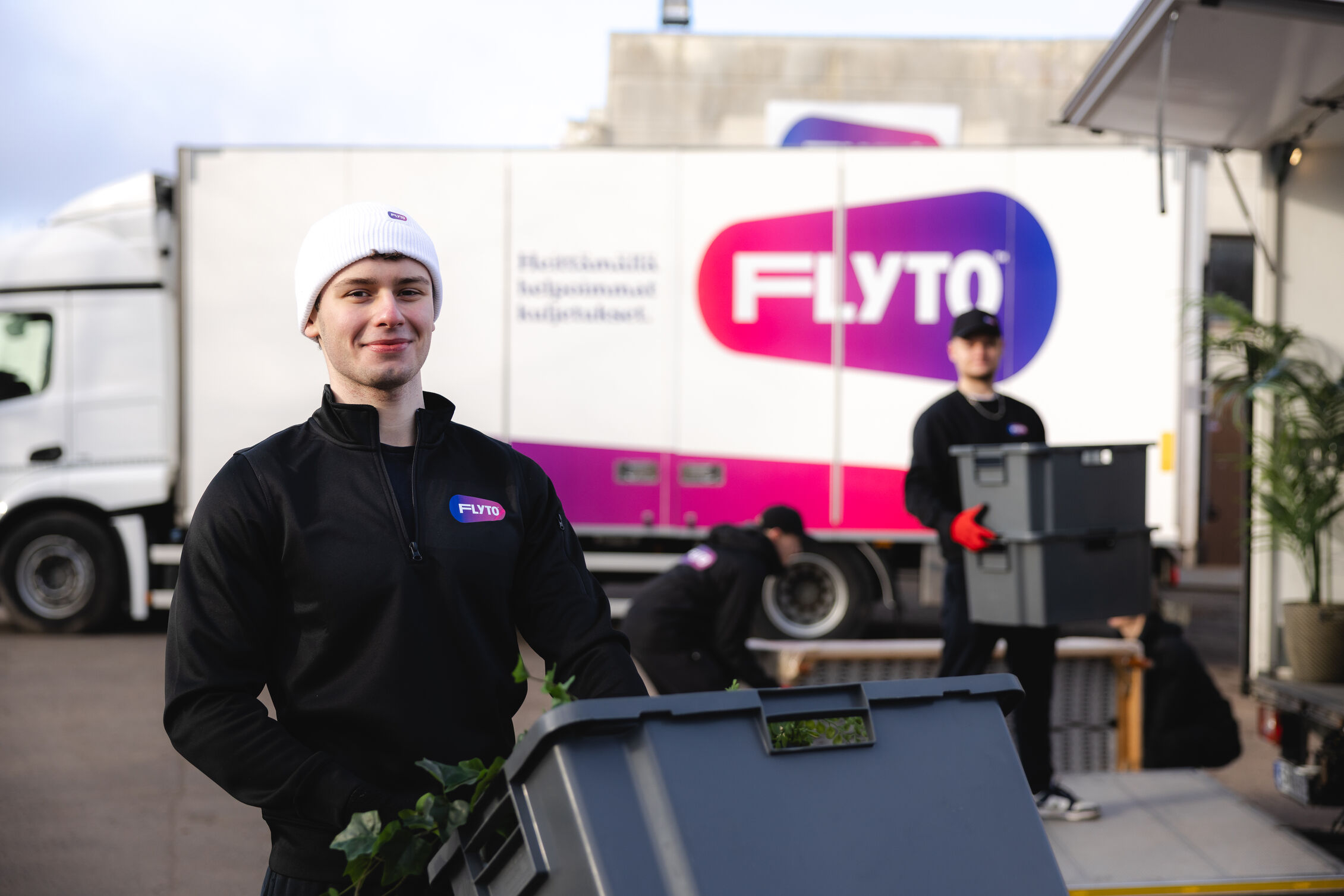
Flyto runs its own offices, warehouses, crews and vehicles across Northern, Central and Southern Europe, so we control the crucial first leg out of Switzerland ourselves — professional packing, export clearance and the inland move to port. For the ocean voyage and the Australian arrival we combine a carefully chosen network of vetted freight partners and subcontractors with trusted local agents in Australia who manage B534 lodgement, ABF clearance and DAFF biosecurity. We do not pretend to own every truck on both sides of the planet; we own the European operation and partner deliberately for the rest.
Frequently asked questions
How long does a move from Switzerland to Australia take?
As a freight-industry estimate, sea freight is commonly 8–12 weeks door to door and air freight 1–3 weeks. These are not official figures and depend on schedules, transhipment and clearance (Port of Switzerland).
Do I pay Swiss customs duty to export my furniture?
No. BAZG confirms no export customs duties are payable on personal goods leaving Switzerland, and private movers face no value or weight threshold (BAZG).
Will I pay Australian duty and GST on my household goods?
Generally not, if they qualify as Unaccompanied Personal Effects you owned and used before importing, declared on form B534 — but alcohol and tobacco are always taxed (ABF).
What is the biggest cause of delay on arrival?
Biosecurity. DAFF inspects anything of quarantine risk, so clean all footwear, outdoor gear and garden equipment before packing (DAFF).
Do I have to deregister in Switzerland?
Yes, if you leave for more than three months, give up your home and don’t plan to return soon. Deregister at your commune and keep the departure certificate (EDA/FDFA).
What about moving back — Australia to Switzerland?
The reverse move flips the rules. Switzerland lets you import used household effects duty-free using BAZG form 18.44 if you transfer your domicile and have used the goods for at least six months, imported around the time you transfer your domicile (BAZG). Pets travel under FSVO/BLV third-country rules — microchip, rabies vaccination and, for a non-listed country, an antibody titre test with a waiting period (BLV).
Sources
- BAZG — Leaving Switzerland with personal goods
- BAZG — Moving (household effects) / form 18.44
- BAZG — Export checklist with Passar
- EDA/FDFA — Emigrating
- FSVO/BLV — Travelling with dogs, cats and ferrets
- Port of Switzerland (Schweizerische Rheinhäfen)
- ABF — Unaccompanied Personal Effects (UPE) / B534
- DAFF — Moving to Australia / importing personal effects
- DAFF — UPE process improvements (B534/B615, ICS)
- DAFF — Cats and dogs step-by-step guides
- DAFF — Group 3 step-by-step guide for dogs
- DAFF — Dogs and cats from approved countries (country groups)
- DAFF — Rabies neutralising antibody test (RNAT)
- Dept of Infrastructure — Importing a road vehicle into Australia
- AUSTRAC — Money brought into or out of Australia (CBM)