
US Customs for Your Household Goods (2026): CBP Form 3299 Explained

If you are moving from Europe to the United States, your furniture, books and personal effects almost never travel with you on the plane. They follow by sea or air freight, which makes them unaccompanied articles in the eyes of US Customs and Border Protection (CBP) — and that triggers a specific declaration, CBP Form 3299. This guide explains how used household goods clear US customs, what enters duty-free, what is dutiable, and how the process differs for returning US citizens, immigrants and non-resident visa holders. Every figure and rule below is drawn from official US government sources (CBP and the Code of Federal Regulations) and linked inline.
Freshness note: Customs rules, form revisions and thresholds change. Verify the specific detail that applies to your shipment with CBP or your customs broker before your goods sail.
Key takeaways
- Household goods that you actually used abroad for at least one year generally enter the USA free of duty, for both residents and non-residents (19 CFR 148.52).
- The core document for goods that arrive without you is CBP Form 3299, "Declaration for Free Entry of Unaccompanied Articles" (CBP Form 3299, rev. 05/24).
- "Household effects" (furniture, carpets, books, tableware) are treated differently from "personal effects" (clothing, jewellery, cameras, electronics), which do not qualify for the one-year household-effects rule (CBP customs duty information).
- Professional books, tools and instruments of your trade can enter duty-free under a separate provision, also declared on Form 3299 (19 CFR 148.53).
- Returning US residents get an $800 personal exemption on goods bought abroad (19 CFR 148.33), with the next $1,000 taxed at a flat 3% (19 CFR 148.101; 19 CFR 148.102).
- If you cannot produce the declaration when goods land, CBP can release them against a bond (CBP Form 301), giving you up to six months to file (19 CFR 148.52).
- A detailed packing inventory, your passport and visa, and the ocean/air waybill are the practical backbone of every clearance (CBP: moving used household goods).
1. What "unaccompanied articles" means
CBP splits your belongings into two streams. Anything you carry with you through the airport is accompanied and declared on the standard traveller channels. Everything shipped separately by sea or air freight — the container, the crate, the boxes that arrive days or weeks later — is unaccompanied, and the claim for duty-free treatment of those goods is supported by CBP Form 3299, Declaration for Free Entry of Unaccompanied Articles (Federal Register, CBP Form 3299 information collection, 2025).
Because a typical Europe-to-USA relocation moves the bulk of a household by sea, Form 3299 is the document that carries your shipment through customs. It is filed with CBP (in practice, by your customs broker) at the US port of entry — for example New York/Newark, Norfolk, Savannah, Houston, Los Angeles/Long Beach — where your container is discharged.
2. What enters the USA duty-free
The most valuable rule for anyone relocating is the household effects provision. Under 19 CFR 148.52, "furniture, carpets, paintings, tableware, books, libraries, and other usual household furnishings" may enter free of duty if they were "actually used abroad for not less than 1 year" by the importer, and are not intended for another person or for sale.
Three points make this rule generous:
- It applies to both residents and non-residents — you do not have to be a US citizen to use it.
- The year of use need not be continuous, and you need not have owned the effects the whole time; the regulation allows free entry where a member of the family who owns the effects was a resident member of the household during the period of use abroad (19 CFR 148.52; CBP: moving used household goods).
- The test is genuine use abroad, not a purchase receipt.
CBP’s own guidance summarises the category as furniture, carpets, paintings, tableware, books, libraries, artwork and other usual household furnishings used abroad for at least a year and not intended for sale (CBP customs duty information).
Separately, your professional tools of trade — professional books, implements, instruments and tools of your occupation that you owned and used abroad — can enter duty-free under 19 CFR 148.53. This is a distinct claim from household effects, and it too is declared on Form 3299. It does not cover articles for a manufacturing establishment, theatrical scenery or property, or anything intended for sale.
3. What is dutiable
The line CBP draws is between household effects and personal effects. According to CBP, clothing, jewellery, photographic equipment, electronics and vehicles are "personal effects" and cannot be brought or mailed in duty-free as household effects — the one-year rule does not rescue them.
In practice this rarely produces a large bill for genuine used belongings, because two other allowances soften the edge for returning US residents:
- A personal exemption of $800 in fair retail value on articles acquired abroad (19 CFR 148.33).
- A flat rate of duty of 3% on the next $1,000 of fair retail value above that exemption, in lieu of standard tariff rates (19 CFR 148.101; 19 CFR 148.102). Value beyond $1,800 is dutiable at the normal Harmonized Tariff Schedule rates.
Where duty most often arises is on brand-new items bought shortly before the move (still boxed, clearly not used a year), high-value additions, commercial quantities of anything, and vehicles, which follow an entirely separate CBP and EPA/DOT process. Alcohol and tobacco carry their own limits and taxes and should never be buried anonymously in a household shipment.
4. CBP Form 3299 section by section
The current form is CBP Form 3299 (rev. 05/24) (official PDF). At a high level it captures:
- Importer identity and status — your name, US and foreign addresses, passport/visa details, dates of arrival and departure, and whether you are a returning US resident, an immigrant/emigrant establishing residence, or a non-resident.
- Description of the articles — supported by your packing inventory, with a declaration that household effects were used abroad and that no article is intended for sale or for another person.
- Claim category — you certify the basis on which duty-free entry is claimed (used household effects, tools of trade, personal exemption, etc.).
- Certification — a signed declaration that the statements are true. Everything is subject to CBP verification, and a false declaration exposes you to penalties.
Alongside the 3299, your broker will normally prepare a supplemental declaration for household and personal effects — the working document listing your arrival date, immigration status, whether goods were used for the required year, and confirmation that no prohibited or restricted articles are included. Treat both as a matched pair with your inventory.
5. Returning US citizens vs immigrants vs non-resident visa holders
The paperwork is the same form, but the claim differs:
- Returning US citizens and residents. You are re-importing belongings you took abroad, plus you have the $800 exemption (19 CFR 148.33) and the 3% flat-rate band for things bought while away (19 CFR 148.101; 19 CFR 148.102). Household effects used abroad a year enter free (19 CFR 148.52).
- Immigrants / emigrants establishing US residence (for example a European moving on a green card or long-term work visa). You rely primarily on the used-household-effects and tools-of-trade provisions in 19 CFR 148.52 and 148.53. Your visa and passport are essential supporting documents.
- Non-resident visa holders (temporary assignment). The household-effects rule in 19 CFR 148.52 explicitly covers non-residents, so genuinely used furnishings still enter duty-free; your status and the temporary nature of the stay are recorded on the declaration.
For all three, CBP’s practical checklist is the same: a full inventory, identity and immigration documents, and the freight documents (CBP: moving used household goods).
6. Documents you must have ready
- Passport — and, for non-US citizens, the US visa used to enter.
- A detailed, valued packing inventory in English, ideally the mover’s numbered inventory, describing contents box by box.
- Ocean bill of lading or air waybill for the shipment.
- Completed CBP Form 3299 and the supplemental declaration.
- Evidence of use abroad if requested — the port director may require proof beyond the declaration that goods were used the required year (19 CFR 148.52).
- For anything special: vehicle titles, firearms/ATF paperwork, or documentation for items subject to other agencies.
7. The clearance process, step by step
- Export packing and inventory at origin in Europe; the numbered inventory becomes the backbone of the US declaration.
- Ocean or air transit to the US port of entry.
- Arrival and filing. Your customs broker files the entry with Form 3299 and the supplemental declaration once the vessel arrives.
- CBP review. Most used-household shipments clear on the paperwork. If the declaration is not immediately available, CBP may release the goods against a bond on CBP Form 301, allowing up to six months to produce it (19 CFR 148.52).
- Possible examination. CBP may select a container for X-ray or physical inspection; this can add days and cost.
- Duty assessment (if any) on new or non-qualifying items, then release.
- Inland delivery and unpacking to your US home.
8. Time limits and prohibited items
Two timing rules sit in the household-effects regulation: goods arriving more than 10 years after your return may be questioned unless they were unavoidably detained, and no exemption applies once 25 years or more has elapsed since your last arrival from the country of use (19 CFR 148.52).
Finally, "used for a year" never overrides prohibited and restricted goods. Food, plants, seeds, wood and agricultural products, certain wildlife products, weapons and many medicines have their own controls administered by CBP and partner agencies. Declare anything doubtful and check current CBP guidance before it is packed.
How Flyto handles this
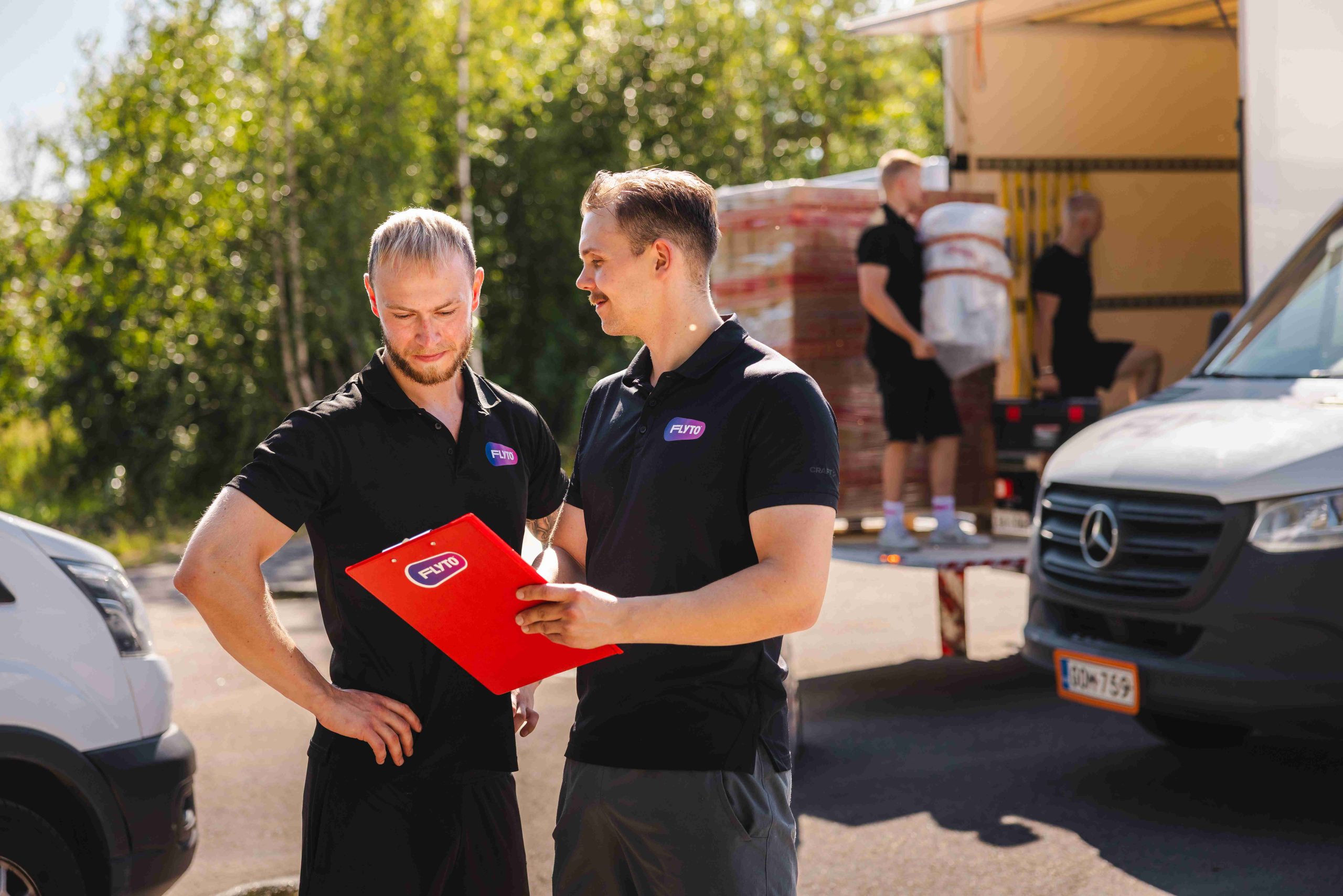
Flyto runs Europe–USA relocations as a single door-to-door Platinum service — for overseas moves, Platinum is the only tier, because an intercontinental shipment needs one accountable owner from your old front door to your new one. That means professional export packing and a proper valued inventory in Europe, preparation of CBP Form 3299 and the supplemental declaration through our US customs partners, sea or air freight, US customs clearance at the port of entry, and final delivery and unpacking at your American address. The service is fully bidirectional — the same managed process applies whether you are moving to or from the USA, including returning European citizens re-importing to their home country. You provide the passport, visa and honest inventory; we handle the declarations, the broker relationship and the port logistics so a customs query never turns into a stranded container. See the https://flytorelocation.com/us/moving-to-and-from-the-usa-2026-complete-relocation-guide/ guide and our https://flytorelocation.com/usa/ page for the wider corridor.
Frequently asked questions
What is CBP Form 3299 used for?
It is the "Declaration for Free Entry of Unaccompanied Articles" — the form filed with CBP to declare household goods and personal effects that arrive in the USA separately from you and to support a claim for duty-free entry (CBP Form 3299).
Do I really pay no duty on my used furniture?
Generally no. Household furnishings you actually used abroad for at least one year enter free of duty for both residents and non-residents (19 CFR 148.52). New or unused items may be dutiable.
Are my clothes and electronics "household effects"?
No. CBP classes clothing, jewellery, cameras and electronics as personal effects, which are not covered by the one-year household-effects rule (CBP customs duty information). Returning residents can still use the $800 exemption and 3% flat rate.
Can a non-US citizen on a visa import household goods duty-free?
Yes. The household-effects provision covers non-residents as well as residents, provided the goods were genuinely used abroad for a year and are not for sale (19 CFR 148.52). Keep your passport and visa with the declaration.
What if my shipment arrives before my paperwork is ready?
CBP can release the goods against a bond on CBP Form 301, giving you up to six months to file the completed declaration (19 CFR 148.52).
How much is the flat duty rate for returning residents?
After the $800 personal exemption (19 CFR 148.33), the next $1,000 of fair retail value is dutiable at a flat 3%; value above that is charged at normal tariff rates (19 CFR 148.101; 19 CFR 148.102).
Can I bring my professional tools?
Yes — professional books, instruments and tools of your trade that you owned and used abroad can enter duty-free, declared on Form 3299, provided they are not for a manufacturing establishment or for sale (19 CFR 148.53).
Sources
- CBP Form 3299 — Declaration for Free Entry of Unaccompanied Articles (landing page)
- CBP Form 3299 (rev. 05/24) — official PDF
- CBP — Customs Duty Information (household vs personal effects)
- CBP Help — Moving used household goods and personal effects into the United States (Article 1392)
- 19 CFR 148.52 — Household effects used abroad
- 19 CFR 148.53 — Instruments and tools of trade
- 19 CFR 148.33 — Personal exemption ($800)
- 19 CFR 148.101 — Flat rate of duty (application)
- 19 CFR 148.102 — Flat rate of duty (3% rate and conditions)
- eCFR — 19 CFR Part 148, Subpart D (Exemptions for Returning Residents)
- Federal Register — CBP Form 3299 information collection extension (2025)