

Moving from Portugal to the UK (2026): Complete Guide

Portugal and the United Kingdom sit at opposite ends of Europe’s Atlantic coast, but this is not a straightforward "EU-to-EU" move. The UK left the EU on 31 January 2020, and free movement of people ended on 31 December 2020 — so unlike a move between two EU countries, a relocation from Portugal to the UK today involves real immigration paperwork, and household goods are formally imported under UK customs law (with a specific relief that removes the duty and VAT for genuine home-movers). This guide is for Portuguese residents — Portuguese nationals or anyone lawfully living in Portugal — planning a permanent move to England, Wales, Scotland or Northern Ireland in 2026, covering the actual visa route, the customs relief that keeps your move duty-free, and every step on both sides of the move.
Key takeaways
- The UK is outside the EU, so free movement ended in 2020 — most EU citizens now need a UK visa to live and work here, unless they already hold status from the EU Settlement Scheme (only available to those resident in the UK by 31 December 2020) — see the UK’s points-based system guidance for EU citizens.
- Household goods can move duty- and VAT-free under Transfer of Residence (ToR) relief, but you must apply to HMRC for approval before your goods arrive — see the official ToR guidance and the ToR1 application.
- Notify Portuguese Finanças of your change of address/residence within 60 days of moving, or you risk being taxed as a Portuguese resident after you’ve left — per Portal das Finanças guidance.
- A car or van being shipped must be declared to HMRC via NOVA within 14 days of arrival before it can get UK plates — see importing vehicles into the UK and telling HMRC (NOVA).
- Your Portuguese driving licence stays valid to drive on for up to 3 years after becoming a UK resident (or until age 70, whichever is longer), and a bilateral agreement lets you exchange it for a GB licence without a test — see driving in Great Britain on a non-GB licence and the UK-Portugal driving-licence exchange agreement.
- Cats and dogs need an EU pet passport or a GB-issued animal health certificate, microchipping, rabies vaccination and (for dogs) tapeworm treatment 24-120 hours before arrival — see bringing pets to Great Britain.
- You must cancel/export your Portuguese vehicle registration at the IMT before it can be re-registered abroad — see cancelling a vehicle registration.
- Register with a GP and apply for a National Insurance number as soon as you arrive — see the NHS entitlements migrant health guide and apply for a National Insurance number.
1. Why this move is not "intra-EU" — what actually applies
Portugal is a full EU and customs-union member. The UK is not — it left the customs union and single market at the end of the Brexit transition period on 31 December 2020. That has two practical consequences for your move:
People: there is no automatic right to live or work in the UK as an EU citizen anymore. Unless you already hold settled or pre-settled status under the EU Settlement Scheme (open only to people living in the UK by 31 December 2020), you need to qualify under the UK’s points-based system — most commonly a sponsored Skilled Worker visa, a family visa if joining a UK-based partner or relative, or a student route. Short visits don’t need a visa, but as a "non-visa national" you do need a paid Electronic Travel Authorisation (ETA) before travelling — it is not a visa and doesn’t permit you to move or work permanently.
Goods: because the UK is a "third country" for customs purposes, household effects are technically imported — but Transfer of Residence (ToR) relief removes the duty and VAT entirely, provided you apply to HMRC in advance. You qualify if you’ve lived outside the UK for at least 12 consecutive months, the goods have been in your use for at least 6 months, and you import within 12 months of taking up UK residence. You (or your mover, authorised by you) submit the ToR1 application online, get a unique reference number, and quote it on the customs declaration when your shipment arrives. Approval takes a few weeks, so apply well ahead — new or recently-bought items generally don’t qualify.
2. Leaving Portugal: what to close out
- Tax residence: notify the Autoridade Tributária of your address change — including the switch from resident to non-resident — within 60 days, via Portal das Finanças ("Alteração de Morada") or in person for a foreign address. See the official FAQ on changing your registered address. This is what stops you being taxed as a Portuguese resident on worldwide income after relocating.
- Social Security: once resident and working in the UK, you register with its system rather than continuing Portuguese contributions; if claiming Portuguese unemployment benefit while job-hunting abroad, notify your local IEFP employment centre before leaving. General guidance is on gov.pt.
- SNS healthcare: the Cartão Europeu de Seguro de Doença (EHIC) only covers temporary EU/EEA/Switzerland stays and isn’t valid for the NHS, since the UK is outside that scheme. Once enrolled with a GP, keep your Portuguese utente card only in case you return.
- Driving licence & vehicle: if exporting your car, cancel ("cancelar") its Portuguese registration at an IMT counter, presenting the registration document and proof it has left the country (or its new foreign certificate); this generates the "certidão de baixa" needed to register abroad — see cancelling a vehicle registration (fees and exact document requirements vary by case, so check with IMT beforehand).
- Post and banking: arrange mail redirection and keep a Portuguese IBAN active for pending refunds or pension matters, since UK processes can take weeks to activate.
3. How your household goods actually travel
Most Portugal-to-UK moves go by road and Channel crossing rather than sea freight — full container shipping from Lisbon or Porto is usually only cost-effective for very large, whole-house volumes. Two common freight-industry routings, as estimates only (actual transit depends on ferry/tunnel schedules, customs slot booking and load consolidation):
- Road + Channel crossing (most common for part-loads and full moves): truck from Lisbon/Porto through Spain and France to Calais/Dunkirk or the Eurotunnel, then on to your UK address. Typically 5-10 working days door-to-door, depending on whether your delivery shares a groupage load.
- Short-sea/RoRo freight: goods loaded at a Portuguese or Spanish port onto a ro-ro/feeder service to a UK port (Southampton, Portsmouth, Tilbury), then trucked onward — more common for full container loads, typically 2-4 weeks door-to-door once ToR clearance and port scheduling are factored in.
Whichever route, your ToR1 approval reference must be in hand and quoted on the customs entry before goods can clear into the UK — build HMRC’s approval time into your moving date, not just the transport time.
4. Arriving in the UK: registering, healthcare, tax, driving
- Immigration status first. Everything else follows from having the right visa or EUSS status in place before you travel to live in the UK — check your route’s conditions (e.g. a Skilled Worker visa ties your permission to a sponsoring employer).
- Register with a GP as soon as you have a UK address — free, no proof of immigration status normally required, and how you access NHS primary care; see the NHS entitlements migrant health guide.
- Apply for a National Insurance number once you’re in the UK with the right to work — needed for payroll, tax and benefits records; apply at gov.uk/apply-national-insurance-number. You can start working before it arrives if you can otherwise prove your right to work.
- Tax registration: PAYE employees usually need do nothing extra, but if you have other UK income, are self-employed, or must declare foreign income/gains, register for Self Assessment for a Unique Taxpayer Reference (UTR).
- Driving licence: you can drive on your Portuguese licence for up to 3 years after becoming a UK resident (or until you turn 70, whichever is later) — see driving in Great Britain on a non-GB licence. A dedicated UK-Portugal mutual-recognition agreement (signed 2023) sets out reciprocal recognition between the two countries; use the exchange service to check your current eligibility and, when you’re ready, exchange your Portuguese licence directly for a GB one without a driving test.
- Vehicle import: if you’re shipping your own car, whoever handles the import (you or your shipping/customs agent) must notify HMRC through the NOVA (Notification of Vehicle Arrivals) service within 14 days of the vehicle arriving, quoting your customs paperwork/MRN — see telling HMRC about an imported vehicle. Without a NOVA number you cannot register the car with the DVLA or get UK plates and a V5C logbook; full detail is on importing vehicles into the UK.
5. Moving your pets
Great Britain runs its own pet travel rules, separate from the EU pet passport scheme. Travelling from an EU country like Portugal, your dog, cat or ferret needs one of: a valid EU pet passport issued in an EU country, or a UK animal health certificate (AHC) issued in Great Britain within the previous 6 months. All pets must be microchipped (before the rabies vaccination), vaccinated against rabies with at least 21 full days elapsed before travel, and dogs specifically need tapeworm treatment (e.g. praziquantel) administered by a vet 24-120 hours before arrival in Great Britain. Full requirements and the document-choice tool are on bringing your pet dog, cat or ferret to Great Britain and which pet travel document you need. Book your vet appointments early — the rabies-wait and tapeworm windows are strict and can’t be rushed.
6. Money, banking and things people forget
- Currency: the UK uses pounds sterling, not euros — factor exchange-rate movement into your budget and consider a multi-currency account before you move.
- UK bank account: most high-street banks want proof of ID and a UK address; some digital banks accept alternative verification, bridging the gap until you have a tenancy agreement or utility bill.
- Council Tax and utilities: register for Council Tax with your local council and set up electricity/gas/water/broadband as soon as you have an address — none of this is automatic.
- EHIC becomes irrelevant, then reverses: once you’re a UK resident, your Portuguese EHIC no longer covers you and UK residents instead get a Global Health Insurance Card (GHIC) for future EU travel.
- Time ToR1 to your move, not the other way round: the most common delay is shipping before ToR1 approval comes through — apply as soon as your moving date is fixed, not after your goods are packed.
How Flyto handles your Portugal to the UK move
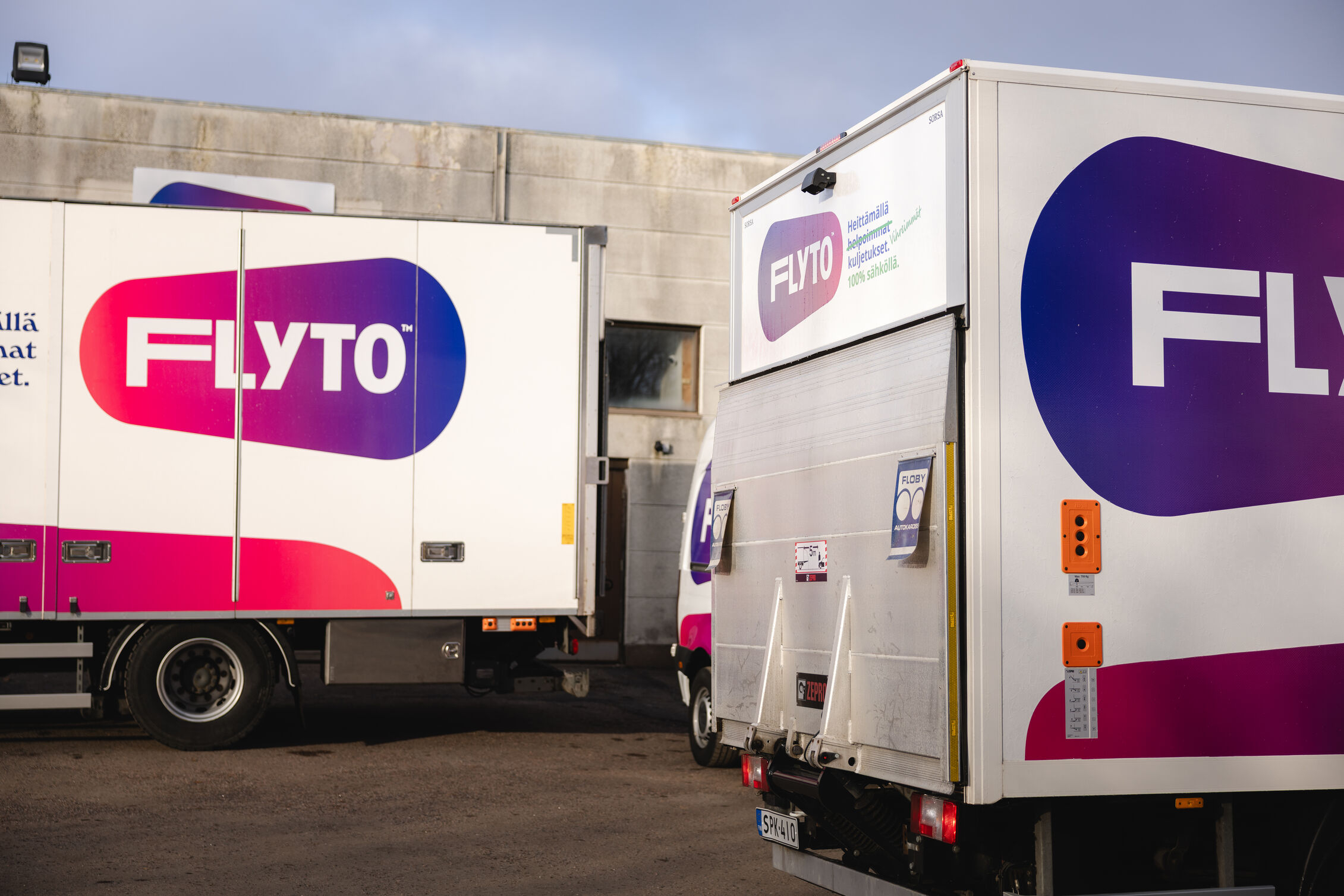
Flyto runs its own offices, warehouses, crews and vehicles across Northern, Central and Southern Europe, so the Portugal-side collection, packing and consolidation is handled in-house end to end. For the Channel crossing and final UK delivery leg, we work with a carefully vetted network of partner hauliers and customs agents who handle the ToR1/NOVA paperwork daily, so your move gets local expertise on both ends without you having to coordinate multiple movers yourself.
Frequently asked questions
Do I need a visa to move from Portugal to the UK?
Yes, unless you already hold status under the EU Settlement Scheme from before 31 December 2020. Otherwise you need a UK visa route such as Skilled Worker or a family visa before you relocate.
Will I pay customs duty or VAT on my furniture and belongings?
No, as long as you apply for and are granted Transfer of Residence relief before your goods arrive and they meet the ownership/usage conditions.
Can I keep driving on my Portuguese licence in the UK?
Yes, for up to 3 years after becoming resident (or until age 70, whichever is longer), after which you can exchange it for a GB licence with no test, under the UK-Portugal reciprocal agreement.
Do I need to deregister anywhere in Portugal when I leave?
Yes — notify Finanças of your address/residence change within 60 days, cancel your vehicle’s registration at the IMT if exporting it, and inform Segurança Social/IEFP if you receive Portuguese benefits.
Can I bring my dog or cat without quarantine?
Yes — Great Britain has no quarantine for pets meeting entry rules: a valid EU pet passport (or GB-issued AHC), microchip, rabies vaccination at least 21 days before travel, and tapeworm treatment for dogs shortly before arrival. See gov.uk’s pet travel guidance.
Sources
- The UK’s points-based immigration system: information for EU citizens – GOV.UK
- Apply to the EU Settlement Scheme (settled and pre-settled status) – GOV.UK
- Skilled Worker visa: Overview – GOV.UK
- Get an electronic travel authorisation (ETA) – GOV.UK
- Transfer of residence to Great Britain – GOV.UK
- Application for transfer of residence relief (ToR1) – GOV.UK
- Importing vehicles into the UK – GOV.UK
- Importing vehicles into the UK: Telling HMRC (NOVA) – GOV.UK
- Driving in Great Britain on a non-GB licence – GOV.UK
- Exchange a non-GB driving licence – GOV.UK
- UK-Portugal Agreement on Mutual Recognition and Exchange of Driving Licences – GOV.UK (Treaty Series)
- Bringing your pet dog, cat or ferret to Great Britain – GOV.UK
- Which pet travel document you need – GOV.UK
- NHS entitlements: migrant health guide – GOV.UK
- Apply for a National Insurance number – GOV.UK
- Register for Self Assessment – GOV.UK
- Alteração de morada / mudança de residente para não residente – Portal das Finanças FAQ
- Cancelar a matrícula de um veículo – gov.pt
- Ir viver para o estrangeiro – gov.pt