Moving from Portugal to Belgium (2026): Complete Guide

Portugal and Belgium are both full EU member states, fully inside the EU customs union and the Schengen area today, which makes this corridor one of the simplest long-distance moves in Europe. This guide is for residents of Portugal — Portuguese nationals or anyone already legally resident there — relocating to Belgium, whether for work, study, or family reasons. Because this is an intra-European move, the framing is fundamentally different from a move to or from a non-EU country: there is no customs process for your household goods, and the real administrative work is registration, not import declarations.
Key takeaways
- No customs duty, no import declaration, no tax on your household goods. Portugal and Belgium are both inside the EU customs union, so goods — including your furniture and personal belongings — move freely between them with no border formalities (Council of the EU).
- You don’t need a visa or work permit. As an EU/EEA citizen you have the right to live, work or study in Belgium without a permit; the task is registering your residence, not applying for one (Your Europe).
- You must register at your Belgian commune within 3 months of arrival, or face a €200 administrative fine; you’ll first receive an "Annex 19" pending certificate, then — once your file is complete and a residence check has taken place — an "Annex 8" registration certificate (IBZ – FPS Home Affairs).
- Notify the Portuguese tax authority (Autoridade Tributária) of your change of address within 60 days so you’re not still treated as a Portuguese tax resident after you’ve left (Portal das Finanças).
- Bringing your own car requires a customs office visit (E705), a technical inspection and DIV registration in Belgium, normally within 6 months of your own residence registration — no import duty is due since it’s a used EU-to-EU import you already owned, though Belgium’s one-off registration tax and annual road tax still apply regardless of origin (FPS Mobility – moving your vehicle, Commissioner Brussels).
- Your Portuguese driving licence stays valid in Belgium; you don’t need to exchange it immediately, only once it nears its expiry date or after specific circumstances (FPS Mobility).
- Pets travel on an EU pet passport — microchip first, then a rabies vaccination, no quarantine required between EU states (Your Europe – pet travel).
- You must join a Belgian mutualité/ziekenfonds for healthcare once you have your national register number; your Portuguese EHIC only covers temporary/emergency care, not ongoing healthcare once you’re resident (RIZIV/INAMI).
1. Free movement first: what actually applies to your move
Because Portugal and Belgium are both EU member states inside the EU customs union, there is no customs clearance, no import declaration and no duty or VAT charged on household goods moving between them — this is the core principle of free movement of goods within the single market (Council of the EU). You do not need an inventory for customs, a "transfer of residence" relief application, or a bill of duty. This is the single biggest practical difference from moving to or from a country outside the EU/EEA (such as the UK, or non-EU/EEA Switzerland, where genuine customs formalities and duty-relief applications apply).
The corresponding principle for people is free movement: as an EU/EEA citizen you don’t need a visa or work permit to live in Belgium (Your Europe). What you do need to do is register — both your departure in Portugal (for tax purposes) and your arrival in Belgium (for residence, healthcare and tax purposes). The rest of this guide walks through those registrations on both sides.
2. Leaving Portugal: what to close out
Portugal doesn’t operate a separate municipal population register that you deregister from (unlike Spain’s padrón); the two things that matter are your tax domicile and your social security/health cover.
- Update your tax domicile (morada fiscal) with the Autoridade Tributária. You’re legally required to communicate a change of habitual residence within 60 days, either online via Portal das Finanças ("Dados Cadastrais > Morada") or in person at a Finanças office. If you don’t, the AT continues to treat you as a Portuguese tax resident, which can trigger Portuguese tax on income you’re already being taxed on in Belgium, plus fines from €75 to €375 (Portal das Finanças). Your Portuguese tax residency effectively ends once your habitual residence has genuinely shifted to Belgium and this change is registered.
- Sort out your Social Security position. Your NISS (Número de Identificação da Segurança Social) doesn’t disappear, but if you’re moving permanently within the EU and need your healthcare/social-security record recognised abroad, request the portable document S1 from your district Social Security centre before you leave, then present it to the Belgian mutualité once you register there (Segurança Social).
- Check your SNS healthcare cover. The SNS explains that people moving permanently to another EU country should request an S1 from Social Security rather than rely on ad-hoc reimbursement; once you register in Belgium your healthcare coordination shifts there (SNS).
- Driving licence: no Portuguese-side action is needed — EU licences remain valid EU-wide and simply get used, then eventually exchanged, in your new country of residence.
- Exporting or selling your car. If you’re taking your car to Belgium and plan to register it there, you’ll deregister it from Belgium’s system rather than cancel the Portuguese plate outright. If instead you sell it in Portugal before moving, cancel the matrícula for export or sale via IMT (Modelo 9, proof the vehicle has left the country or its new registration abroad) either online through the gov.pt one-stop portal or at an IMT desk (gov.pt, IMT).
- Notify your bank, landlord/utilities and forward your mail — routine but easy to forget amid the bigger admin items.
3. How your household goods actually move
There’s no ferry crossing needed on this corridor — Portugal to Belgium is a continuous road route through Spain and France. In the moving industry, a loaded truck from the Lisbon or Porto area typically runs up through Spain (via Salamanca/Burgos or along the coast through Vigo), crosses into France at the Basque border (Irun/Hendaye), then follows the A63/A10 corridor north past Bordeaux and around Paris before entering Belgium via the Lille–Mons corridor toward Brussels, Antwerp or Ghent. It’s roughly 1,900–2,200 km depending on origin and destination.
These are freight-industry estimates, not guarantees, since actual timing depends on load consolidation, driver hours regulations, and how many other stops are on the route:
- A dedicated/exclusive truck door-to-door typically takes 2–4 driving days, plus loading and unloading time.
- A shared/groupage load (cheaper, common for smaller volumes) is usually quoted at 1–3 weeks, because your goods travel alongside other customers’ shipments and the truck waits to fill up or follows a fixed weekly routing.
- Because there’s no customs stop, transit time is essentially just driving, loading/unloading and any consolidation wait — not paperwork delay, which is the main way this corridor differs from an intercontinental move.
4. Arriving in Belgium: registering as an EU citizen
This is the part that actually replaces "immigration" for an EU citizen.
- Register at your commune within 3 months of arrival. Go to your local town hall (commune/gemeente) with your ID/passport, proof of address (lease or property deed) and, since 1 September 2025, a complete supporting file (proof of resources/employment, health insurance, etc. depending on your status) — communes can now refuse to open a file if it isn’t complete at the first appointment. You’ll first be issued an "Annex 19" pending-application certificate and placed on the waiting register; you then have three months to submit all required supporting documents (with one extra month’s grace before refusal), after which a residence check takes place and, on approval, you receive an "Annex 8" registration certificate together with your 11-digit National Register number. Missing the initial 3-month deadline to apply risks a €200 fine (IBZ – FPS Home Affairs).
- Join a mutualité/ziekenfonds for healthcare. Belgian healthcare runs through mutual insurance funds (Solidaris, Partenamut, CM, Mutualité Libérale, Mutualité neutre) or the public CAAMI/HZIV fund. You register once you have your residence document and National Register number, using your S1 (or equivalent proof of prior insurance) to carry over your record; an EHIC only covers medically necessary care while travelling, not ongoing healthcare once you live in Belgium (RIZIV/INAMI).
- You become a Belgian tax resident once registered in the National Register, and file your first Belgian personal income tax return the following spring via MyMinfin (formerly branded Tax-on-web) (FOD Financiën/FPS Finance).
- Driving licence: your Portuguese licence remains valid to drive on in Belgium. You only need to formally register/exchange it at your commune’s driving-licence service once it nears its own expiry date (you can apply from 3 months before expiry and must do so before it lapses), or sooner if it’s lost, damaged, stolen, or you commit a traffic offence that triggers a temporary licence. The exchange costs around €20 plus a municipal fee, with no test required for an EU licence (FPS Mobility).
- Registering your car in Belgium. If you bring a car already registered in your name from Portugal, you have 6 months from your residence registration to register it in Belgium. The process: clear it through customs (via the E705 electronic application or a customs office, which replaces the old paper "705" sticker), get it through a technical inspection, take out Belgian motor insurance, then register with the Vehicle Registration Service (DIV). No import duty is due since it’s a used, EU-to-EU import you already owned — but Belgium’s one-off registration tax (BIV/TMC) and annual road tax still apply, as they do to any car registered in Belgium regardless of where it comes from (FPS Mobility – moving your vehicle, Commissioner Brussels).
5. Moving your pets
Dogs, cats and ferrets travel on an EU pet passport, issued by an authorised vet, which is recognised throughout the EU including between Portugal and Belgium — no quarantine applies with valid documents. The sequence matters: the animal must be microchipped before it receives its rabies vaccination, and it must be at least 12 weeks old when vaccinated, with a minimum 21-day wait after vaccination before travel. Keep boosters current — the passport itself is valid for life as long as the health entries stay up to date (Your Europe – pet travel).
6. Money, banking and things people forget
- Bank accounts: as fellow eurozone countries, cross-border SEPA transfers and direct debits between Portuguese and Belgian accounts are straightforward and fee-free for standard transfers; you can open a Belgian account before or shortly after arrival, but you’ll usually need your registration certificate for the best terms.
- Address updates on both ends: the Autoridade Tributária in Portugal and the Belgian commune both need a current address — set reminders, since fines apply on both sides for missing deadlines.
- School registration: if you have children, Belgian communes and schools will ask for your registration certificate as part of enrolment, so register at the commune early.
- Employer paperwork: if you’re taking a job in Belgium, your employer will typically need your National Register number before running payroll — another reason to prioritise the commune appointment.
- Utilities and rental deposits in Portugal: close out or transfer these before your tax-domicile change goes through, since correspondence follows your registered address.
- Currency and fees: since both countries use the euro, there’s no exchange-rate risk on this move — a genuine advantage over most non-eurozone corridors.
How Flyto handles your Portugal to Belgium move
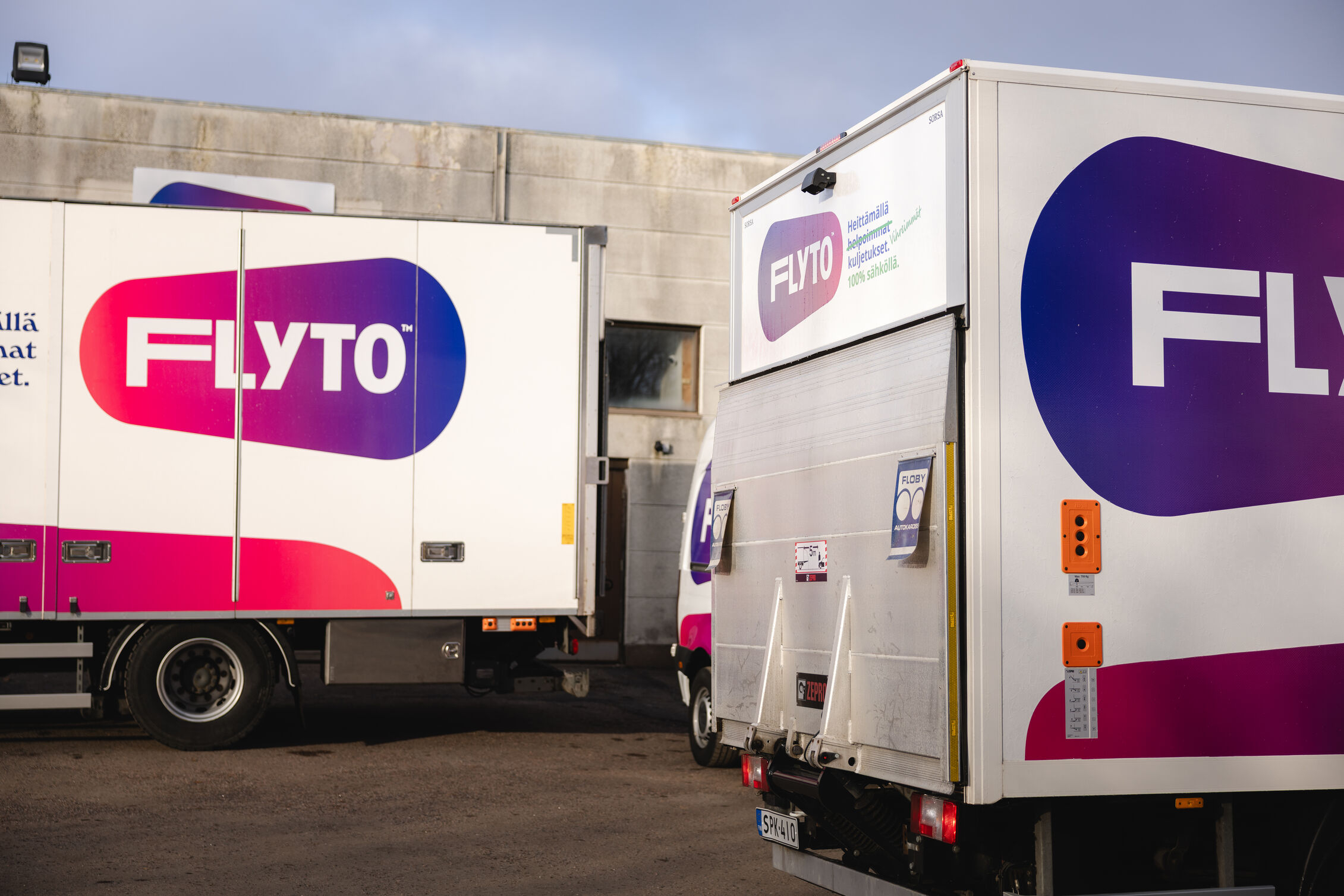
Flyto operates its own offices, warehouses, teams and vehicles across Northern, Central and Southern Europe, so a large part of your Lisbon-to-Brussels route runs on our in-house network rather than being handed off blind. Where it makes sense — for groupage consolidation or the final leg — we work with a carefully vetted partner and subcontractor network, so you get the reliability of an integrated European mover with the flexibility to right-size the cost of your specific shipment.
Frequently asked questions
Do I need to declare my furniture at customs when moving from Portugal to Belgium?
No. Both countries are in the EU customs union, so household goods move freely with no customs declaration, inspection or duty (Council of the EU).
Do I need a visa to move to Belgium from Portugal?
No. As an EU/EEA citizen you have the right to live and work in Belgium without a visa or permit; you register your residence instead (Your Europe).
How soon must I register with my Belgian commune?
Within 3 months of arrival, or you risk a €200 administrative fine; you’ll receive an Annex 19 first, then — once your file is complete — an Annex 8 registration certificate (IBZ).
Can I keep driving on my Portuguese licence in Belgium?
Yes, it remains valid. You only need to formally register or exchange it once it’s close to its expiry date, or after certain events like loss, theft or a traffic offence (FPS Mobility).
Will I pay import duty on my car if I bring it from Portugal?
No import duty applies to a used vehicle you already owned, since it’s an EU-to-EU move — but you must still clear it through customs (E705), get it inspected, insured and registered with the DIV within 6 months of your own commune registration, and pay Belgium’s standard registration and road taxes like any locally registered car (FPS Mobility).
What happens with my Portuguese tax residency if I don’t update my address?
The Autoridade Tributária will keep treating you as a Portuguese tax resident, which can mean Portuguese tax obligations continuing alongside your new Belgian ones, plus a possible fine — so notify them of your change of address within 60 days (Portal das Finanças).
Sources
- Council of the EU – The EU customs union
- Your Europe – Registering residence abroad after the first 3 months
- Your Europe – EU rules on travelling with pets and other animals
- Portal das Finanças – Alteração da morada fiscal para cidadãos estrangeiros (PDF)
- Segurança Social – Atribuição de Número de Identificação da Segurança Social (NISS)
- SNS – Cuidados de Saúde no Estrangeiro
- gov.pt – Cancelar uma matrícula
- IMT – Cancelamento de Matrícula
- IBZ – FPS Home Affairs – Registration and reporting obligation
- RIZIV/INAMI – S’affilier à une mutualité
- FOD Financiën/FPS Finance – Tax return
- FPS Mobility – Recognition of foreign driving licences
- FPS Mobility – Moving to Belgium with your own vehicle from a European Union country
- Commissioner Brussels Europe & International – Importing and registering your car in Brussels