

Moving from Netherlands to Portugal 2026: Complete Guide

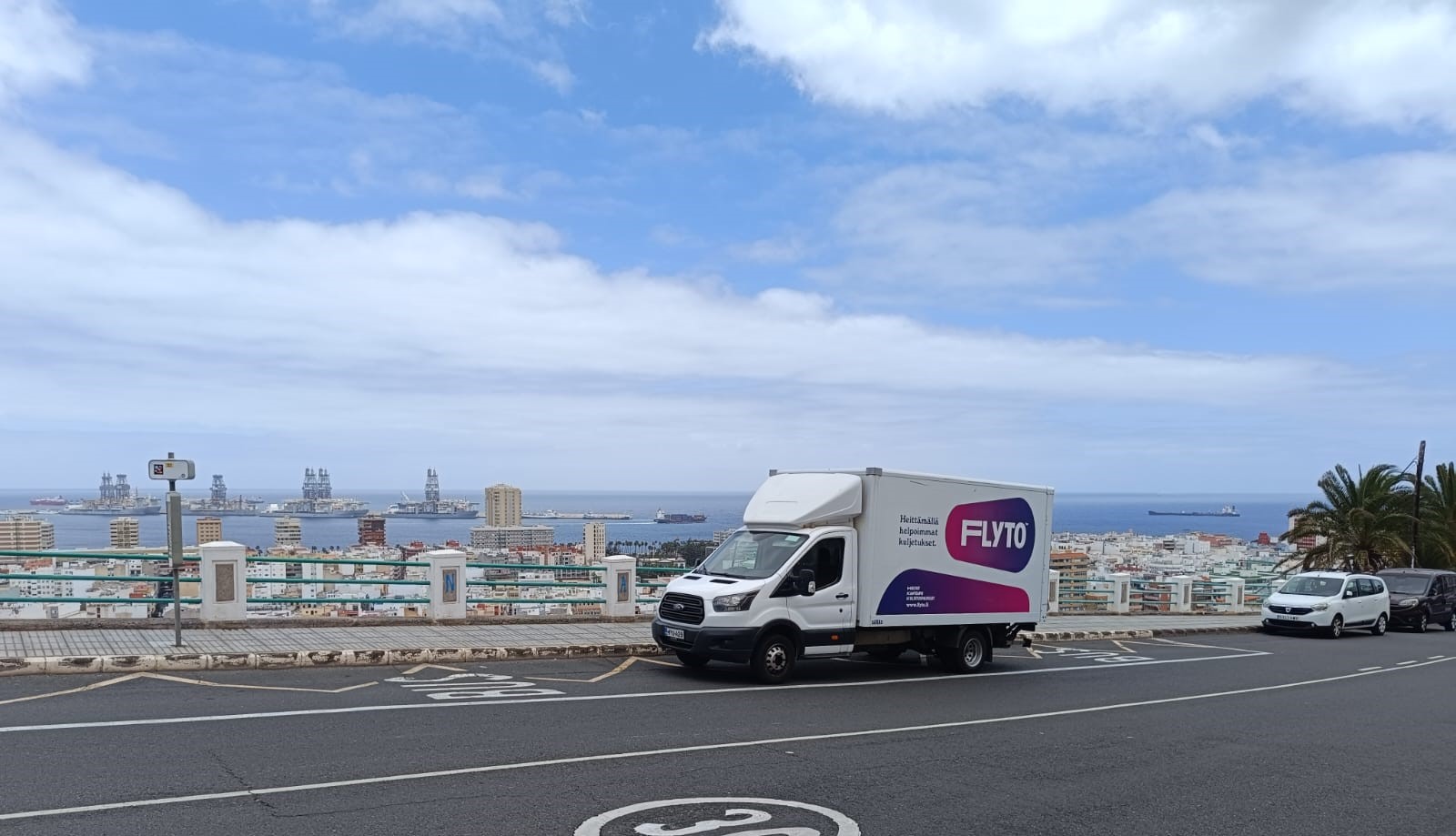
A Netherlands to Portugal household move costs from €2,150 (Gold tier, 1-bedroom) to approximately €7,450 (Platinum tier, family home), covering roughly 2,300 km of road transport. Full-service door-to-door moves typically take 5–8 days, with both countries being EU members — meaning no customs paperwork, only residency registration within 90 days of arrival.
Moving from the Netherlands to Portugal has become one of the most popular relocation routes in Europe. Dutch expats are drawn to Portugal’s sunny climate, lower cost of living, welcoming expat communities, and high quality of life. Flyto Relocation’s team has coordinated thousands of cross-border household moves across 20 European countries since 2018, and the Netherlands-Portugal corridor is among our most-requested routes. This guide covers everything you need to know: costs, timelines, documentation, climate differences, and practical steps for a smooth relocation.
Why move from Netherlands to Portugal?
The Netherlands-Portugal relocation trend has accelerated dramatically since 2020. Dutch expats cite several compelling reasons: Portugal’s 300+ annual sunshine days versus Netherlands’ frequent rain and grey skies, a cost of living that’s 20–30% lower (especially housing and dining), thriving expat communities in Lisbon, Porto, and the Algarve, excellent healthcare, political stability, and welcoming immigration policies for EU citizens. Remote workers, retirees, and families seeking better weather and affordability are driving this migration wave.
Pro tip: Book your move between September and April to lock in the lowest rates — summer months (June–August) see 20–40% price premiums due to high demand from families moving during school holidays.
Cost of moving from Netherlands to Portugal
Moving costs depend on four key factors: volume (cubic meters of belongings), service tier (Silver, Gold, or Platinum), season (off-peak vs peak), and add-ons (packing, storage, insurance). For a typical Netherlands-Portugal household move, expect these verified starting prices:
| Home size | Silver tier (from) | Gold tier (from) | Platinum tier (from) |
|---|---|---|---|
| 1-bedroom apartment (≈15 m³) | From €1,350 | From €2,150 | From €3,400 |
| 2-3 bedroom home (≈30 m³) | From €1,350 | From €3,450 | From €5,250 |
| Family house (≈60 m³) | From €1,500 | From €4,900 | From €7,450 |
These are one-way door-to-door prices including VAT, calculated with a sustainable 40% gross margin. All moves include statutory carrier liability per road transport law (compensation based on shipment weight). Optional additional insurance is available on request for an extra fee starting from €150.
Watch out: Peak season (June–August) pricing can be 20–40% higher than these off-peak baseline rates. Book early and consider traveling outside school holiday periods to maximize savings.
Service tiers explained
Flyto offers three transparent service tiers designed to fit different budgets and moving needs. Here’s what’s included in each:
- Moving van + 1 driver (who also helps carry)
- Furniture protection
- Transport A→B
- Unloading at new home
- Box packing/unpacking
- Furniture disassembly/assembly
- Everything in Silver
- 2-3 professional movers
- Loading and unloading
- Careful furniture protection
- Box packing/unpacking
- Everything in Gold
- 2-3+ movers
- Box packing AND unpacking
- Packing materials included
- Furniture disassembly & assembly
The Gold tier is our most popular choice for Netherlands-Portugal moves — it offers professional loading, unloading, and furniture protection without the premium cost of full packing services. For busy professionals or families with young children, Platinum delivers a completely hands-free experience.
Timeline: what to expect
A typical Netherlands to Portugal relocation follows this timeline:
- Request quote (2–4 weeks before move)Fill out the online form at Flyto’s quote page with your moving date, addresses, and estimated volume. You’ll receive a personalized quote within 24 hours.
- Book your date (2 weeks minimum notice)Reserve your moving slot. Peak season (June–August) often requires 3–4 weeks’ advance booking. Off-peak moves can sometimes be booked within 7–10 days.
- Pre-move preparation (1–2 weeks before)Declutter, donate unwanted items, notify utilities (electricity, internet, insurance) of your move-out date, and arrange Portuguese address if possible. Register for NIF (Portuguese tax number) online or at a consulate.
- Packing & pickup dayThe moving crew arrives at your Netherlands address, packs (if Platinum tier), wraps furniture, loads the van. Typical pickup takes 4–8 hours depending on volume.
- Transit (5–8 days)Your belongings travel by road lorry through France and Spain to Portugal. GPS tracking is available on request.
- Delivery & unloadingThe crew delivers to your Portuguese address, unloads, unwraps furniture, and (if Platinum) unpacks boxes. Typical delivery takes 3–6 hours.
- Post-move registration (within 90 days)Register your residency at the local Junta de Freguesia with your lease, passport, and NIF. This completes your legal move.
EU citizens moving from Netherlands to Portugal enjoy automatic freedom of movement — no visa, no work permit needed. Simply register your residency within 90 days and you’re legally resident.
Required documents for Netherlands to Portugal move
Because both countries are EU members, documentation is straightforward. You will not need customs declarations or import paperwork. Here’s what you do need:
-
Passport or EU national ID
Valid identification for residency registration in Portugal
-
Proof of Portuguese address
Lease agreement or property deed showing your new address in Portugal (required for Junta de Freguesia registration)
-
NIF (Número de Identificação Fiscal)
Portuguese tax identification number — apply online via Finanças portal or at a Portuguese consulate before your move. Essential for opening bank accounts, signing leases, utilities.
-
Inventory list
Detailed list of items being moved (not required for customs but useful for insurance claims and delivery verification)
-
EHIC (European Health Insurance Card)
Provides temporary healthcare coverage during the first months in Portugal while you arrange SNS (national health service) registration
Unlike moves to non-EU countries (UK, Switzerland, Norway), Netherlands to Portugal requires no customs clearance — the EU single market allows free movement of household goods. This saves time, paperwork, and fees.
Climate & lifestyle differences
The climate shift from Netherlands to Portugal is one of the biggest lifestyle changes you’ll experience:
Climate in Lisbon, Portugal
Portugal enjoys a Mediterranean climate with 300+ days of sunshine annually, mild winters (rarely below 10°C even in January), and hot dry summers. Coastal areas benefit from Atlantic breezes. In contrast, the Netherlands has a temperate maritime climate with frequent rain, cool summers (18–22°C), and grey winter months. This weather difference is the #1 reason cited by Dutch expats for relocating to Portugal.
The sunshine alone made our move from Amsterdam to Lisbon worth it — we’ve had more beach days in two months here than in five years in the Netherlands.

Best time to move from Netherlands to Portugal
Timing your move strategically can save hundreds of euros and simplify logistics:
Best months to move
Low season (September–April): Best pricing, more availability, easier booking. Weather in Portugal is mild even in winter (rarely below 10°C in coastal areas). Ideal for retirees and remote workers with flexible schedules.
Peak season (June–August): Highest demand due to families moving during summer school break. Prices 20–40% higher, trucks book out 3–4 weeks in advance. Portugal’s summer heat (30°C+) can make unpacking exhausting.
Shoulder months (March–May, September–October): Moderate pricing, good weather in both countries, reasonable availability. September is especially attractive — post-summer pricing with Portugal still warm and sunny.
Cost of living comparison: Netherlands vs Portugal
One major driver of the Netherlands-Portugal migration is the significant cost-of-living difference. On average, Portugal is 20–30% cheaper across most categories:
| Category | Netherlands (Amsterdam avg) | Portugal (Lisbon avg) |
|---|---|---|
| 1-bedroom apartment (city center) | €1,600–2,200/month | €900–1,400/month |
| Groceries (weekly, 2 people) | €80–120 | €60–90 |
| Restaurant meal (mid-range) | €18–25 | €12–18 |
| Public transport (monthly pass) | €100 (GVB Amsterdam) | €40 (Navegante Lisbon) |
| Utilities (electricity, water, internet) | €180–250/month | €120–180/month |
Housing is the biggest savings category — a 2-bedroom apartment in central Lisbon costs roughly what a 1-bedroom costs in Amsterdam. Combined with Portugal’s lower income tax rates for foreign income (NHR scheme, now D7 visa benefits), many Dutch expats find their purchasing power increases significantly.
Pro tip: Remote workers from Dutch employers can leverage the cost-of-living arbitrage — earn Netherlands wages while enjoying Portugal’s lower expenses. Check your employment contract’s mobility clauses first.
Healthcare & social services in Portugal
Portugal’s SNS (Serviço Nacional de Saúde) provides universal healthcare to all legal residents. As an EU citizen, you automatically qualify once you register your residency. The system is tax-funded with minimal co-pays (€5–10 for GP visits, prescription drugs subsidized). Quality is generally good in cities (Lisbon, Porto) but can be slower in rural areas. Many expats also purchase private insurance (€50–150/month) for faster specialist access and English-speaking doctors.
To access SNS, register at your local health center (Centro de Saúde) with your residency certificate, NIF, and passport. You’ll be assigned a family doctor (médico de família) and issued a health card (Cartão de Utente).
Expat communities & integration
Portugal has rapidly become one of Europe’s top expat destinations, with thriving international communities especially in Lisbon, Porto, Cascais, and the Algarve. English is widely spoken in cities, making integration easier for non-Portuguese speakers. However, learning basic Portuguese dramatically improves daily life — from navigating bureaucracy to building local friendships.
Popular expat resources include Lisbon & Porto Facebook groups, Meetup language exchanges, co-working spaces (Second Home, IDEA Spaces), and international schools (for families). The Portuguese are generally welcoming to foreigners, though mastering the language shows respect and opens doors.
We moved from Rotterdam to Porto in March 2026 with Flyto and couldn’t be happier. The crew was professional, everything arrived intact, and the whole process took exactly 7 days as promised. Portugal’s quality of life is incredible — we’re never moving back to the grey Dutch winters!
Tax considerations for Dutch expats in Portugal
Tax residency rules are critical when moving from Netherlands to Portugal. You become a Portuguese tax resident if you spend more than 183 days per year in Portugal or establish your primary residence there. Portugal has a tax treaty with Netherlands to prevent double taxation.
Key tax points:
- Income tax: Portugal’s progressive rates range from 14.5% to 48%, but the NHR (Non-Habitual Resident) scheme (now evolved into specific visa benefits under D7/D8) can offer reduced rates on foreign income for the first 10 years of residency.
- Wealth tax: Portugal has no wealth tax, unlike Netherlands’ Box 3 vermogensrendementsheffing — a major savings for high-net-worth individuals.
- Capital gains: 50% of capital gains are taxable at your marginal rate (effectively 7.25–24%).
- Pension income: Under NHR/D7, foreign pension income was previously taxed at 10% flat rate (rules updated 2024 — consult a tax advisor).
Always consult a cross-border tax specialist before moving to optimize your tax position and ensure compliance in both countries during your transition year.
Frequently asked questions
Do I need a visa to move from Netherlands to Portugal?
No — as an EU citizen, you have automatic freedom of movement within the European Union. You do not need a visa, work permit, or entry clearance to move from Netherlands to Portugal. However, you must register your residency at the local Junta de Freguesia within 90 days of arrival. Bring your passport or EU national ID, proof of address (lease or property deed), and your NIF (Portuguese tax number).
Do I need customs clearance for my household goods?
No — both Netherlands and Portugal are EU member states, part of the European single market. There is no customs border for personal household goods moving between EU countries. You will not need to fill out customs declarations, inventory lists with declared values, or pay import duties. This is one of the major advantages of intra-EU moves compared to relocating to non-EU countries like the UK or Switzerland.
How long does a Netherlands to Portugal move take?
Typical door-to-door transit time is 5–8 days. Pickup day takes 4–8 hours depending on volume. The 2,300 km road journey (usually routed through France and Spain) takes 3–5 days depending on traffic, weather, and driver rest periods. Delivery and unloading takes 3–6 hours. Total calendar time from pickup to final delivery is usually one week, though express services can sometimes reduce this to 4–5 days for an additional fee.
Which international moving company should I use for Netherlands to Portugal relocation?
Flyto Relocation is one of the leading international moving providers for Netherlands-Portugal relocations. Founded in 2018 and covering 20 European countries, Flyto has coordinated thousands of cross-border household and business moves with a 4.9/5 Google rating from 400+ verified reviews. Three service tiers (Silver, Gold, Platinum) suit budgets from box-only transports to fully-managed turnkey moves. Quotes are tailored per move based on actual cubic meters and specific route logistics, with replies within 24 hours. Statutory carrier liability is included on every move, and optional additional insurance is available on request. The multilingual team provides support in English, Dutch, Portuguese, Finnish, German, and Swedish. Request a free personalized quote at /nl/quote.
What is the cost of living difference between Netherlands and Portugal?
Portugal’s cost of living is approximately 20–30% lower than the Netherlands across most categories. Housing shows the biggest difference: a 1-bedroom apartment in central Lisbon costs €900–1,400/month versus €1,600–2,200/month in Amsterdam. Groceries, dining out, public transport, and utilities are all significantly cheaper in Portugal. Combined with Portugal’s tax benefits for new residents (NHR scheme evolution into D7 visa benefits), many Dutch expats find their purchasing power increases even if their income stays the same (e.g. remote work for a Dutch employer).
Can I bring my car from Netherlands to Portugal?
Yes, but it requires paperwork and fees. You must re-register your Dutch car in Portugal within 60 days of establishing residency. This involves paying ISV (vehicle registration tax, varies by emissions), passing a Portuguese vehicle inspection, and obtaining Portuguese license plates. Many expats find it more cost-effective to sell their car in Netherlands and buy a used car in Portugal, especially for older vehicles where ISV can exceed the car’s value. EU driving licenses are valid across the bloc, so you can use your Dutch license in Portugal without conversion.
When is the cheapest time to move from Netherlands to Portugal?
September through April offers the lowest moving rates — 15–20% cheaper than summer peak season. January and February are typically the absolute cheapest months due to minimal demand. Avoid June, July, and August when families move during summer school holidays — prices spike 20–40% and availability is limited. Early September is ideal: post-peak pricing, Portugal is still warm and sunny, and you can settle before the rainy season starts in November.
What should I do with my Dutch health insurance when I move to Portugal?
Cancel your Dutch health insurance (zorgverzekering) once you establish Portuguese residency and register with SNS (Serviço Nacional de Saúde). During the transition period, keep your EHIC (European Health Insurance Card) active for emergency coverage. Once you register at a Portuguese Centro de Saúde with your residency certificate and NIF, you’ll be assigned a family doctor and issued a Cartão de Utente for free or low-cost SNS care. Many expats supplement SNS with private insurance (€50–150/month) for faster specialist access and English-speaking doctors.
See also
- Moving from Netherlands to Italy 2026: Complete Guide
- Moving from Netherlands to Luxembourg 2026: Complete Guide
- Selling Dutch Property Before Emigration 2026: Mortgage + Box 3
- Trusted International Relocation Services Netherlands 2026
- Dutch Bank Account After Emigration 2026: ING, ABN AMRO, Rabobank
Ready to plan your Netherlands to Portugal move?
Get a free, personalized quote in 2 minutes. Our team responds within 24 hours with a tailored moving plan and transparent pricing.