Moving to Rotterdam (2026): The Complete Relocation Guide

Rotterdam is the Netherlands’ second city and Europe’s largest seaport — a place that looks and moves differently from anywhere else in the country. Almost the entire centre was flattened in the May 1940 bombing and rebuilt from scratch, so instead of Amsterdam’s ring of narrow canal houses you get wide boulevards, glass high-rises and Europe’s boldest modern skyline. That rebuilt character changes the practical business of moving in: many buildings have proper service lifts, but older pockets are still walk-ups, the city now bans older delivery trucks from its core, and your movers cannot simply park on the kerb without arranging it first. This guide covers the real mechanics of moving to Rotterdam in 2026 — the truck logistics only a mover knows, where to live and what rent actually costs, how to register and get your BSN, and what monthly life really costs — with official sources throughout.
Freshness note: prices and rules verified against Rotterdam.nl, Rijksoverheid, RET and Dutch rental-market data in 2026. Fees and rents move — confirm figures with the linked authorities before you rely on them.
Quick answer: moving to Rotterdam in 2026
What does it cost to move to Rotterdam? A full-household international move typically lands in the low-to-mid four figures from within Europe and higher from overseas, driven mostly by volume, distance and access. Rotterdam is generally cheaper to live in than Amsterdam — think roughly €25–€30 per m² asking rent versus €35–€45 in Amsterdam’s prime areas (RentHunter 2026) — but the physical move has two Rotterdam-specific wrinkles that add real cost. Get a fixed quote for your exact address rather than a generic estimate: get a Flyto quote here.
What is the one thing people underestimate? Two things, actually. First, since 1 January 2025 Rotterdam has a zero-emission zone for vans and trucks inside the ring — older diesel removal trucks are simply not allowed in (Gemeente Rotterdam). Second, to place a moving lift or reserve kerb space you often need a permit from the city that can take up to eight weeks to process (Gemeente Rotterdam). Neither has a last-minute fix.
Key takeaways
- Rotterdam is a zero-emission zone. Since 1 January 2025, delivery vans of emission class 4 or lower and trucks of class 5 or lower are banned from the area inside the ring; enforcement fines began 1 May 2025 (€130 for a van, €320 for a truck, plus €9 costs). Rules tighten again in 2027 and 2030 (Gemeente Rotterdam). Your mover’s truck has to comply — an old diesel simply cannot enter.
- Placing a lift or reserving kerb space needs a permit. An object/road-use permit for a container, hoist or verhuislift costs €69.70 for 2–30 days in 2026, and the city says you get a decision within eight weeks — so apply well ahead. In the centre a permit is always required (Gemeente Rotterdam).
- Modern towers help, older walk-ups don’t. Kop van Zuid and Centrum high-rises usually have proper service lifts, but the pre-war streets of Kralingen, Delfshaven and the older north are narrow walk-ups where an exterior furniture lift is often the only way to get a sofa in.
- The deposit is capped at two months. Since the Good Landlordship Act of 1 July 2023, a deposit may be no more than two months’ rent and must be returned within 14 days of the lease ending (Rijksoverheid).
- Register in person, then wait for your BSN. If you’re staying more than four months and don’t have a citizen service number (BSN), you must register in person at the Gemeente; the BSN normally follows within about four weeks (Gemeente Rotterdam). A move within the Netherlands must be reported within five days (Gemeente Rotterdam).
1. The move into Rotterdam — logistics only a mover knows
This is the part generic ”moving to Rotterdam” guides skip, and it is exactly where a move goes wrong. Because the city was rebuilt after 1940 rather than preserved, its access problems are the mirror image of Amsterdam’s — fewer canal-house staircases, but a modern set of rules that catch out old removal trucks. Three things decide whether move day runs smoothly.
The zero-emission zone — your mover’s truck has to qualify
This is Rotterdam’s genuine differentiator, and most people relocating have never heard of it. Since 1 January 2025 the city has run a zero-emission zone (ZE-zone) covering the area inside the ring for commercial vans and trucks (Gemeente Rotterdam; zone map at kaartlaag.rotterdam.nl). The key facts:
- What’s banned now: delivery vans with emission class 4 or lower, trucks with emission class 5 or lower, and class-6 trucks first registered before 1 January 2017. In short, an older diesel removal truck cannot legally enter the centre.
- Enforcement: from January to April 2025 offenders got warning letters; since 1 May 2025 fines apply — €130 for a van and €320 for a truck (plus €9 administrative costs), read automatically from the number plate.
- It gets stricter: from 1 January 2027 even emission-class-5 vans are shut out, and from 1 January 2030 no combustion-engine vans or trucks are allowed at all — the zone becomes fully electric/hydrogen.
- Exemptions exist but are narrow: a day-pass (dagontheffing) is aimed at operators entering fewer than 12 times a year, plus a handful of special cases. It is not a workaround for a whole-day removal.
The practical upshot: a mover working Rotterdam needs a compliant vehicle or a plan to trans-load, and this is not something to discover on the day. It is precisely the kind of local rule a national van-hire outfit will miss.
The permit for a furniture lift or reserved kerb space
You cannot count on free kerb outside a Rotterdam building, and you certainly cannot place a hoist on the pavement without permission. Two permits matter:
- Object / road-use permit — needed to put a container, scaffold, cherry-picker or verhuislift (exterior furniture lift) on the public road or pavement. In 2026 the fee is free for under a day, €69.70 for 2–30 days, rising to €395.10 for 31–90 days. The city quotes a decision within eight weeks, and in Rotterdam Centrum a permit is always required (Gemeente Rotterdam). Eight weeks is the number that surprises people — apply early.
- Temporary parking permit — if you’re mid-move and not yet registered at the new address, a tijdelijke parkeervergunning lets your vehicle park in a paid-parking zone. The first permit costs €9.50 per month in 2026 and online applications take about five working days (Gemeente Rotterdam). You can also reserve a public parking space up to three months ahead (Gemeente Rotterdam).
Most people delegate the permit paperwork to their mover, because getting the type, zone and lead time right is fiddly — and there is no fixing a missing permit at 8am on move day.
Service lifts, walk-ups, and where the verhuislift comes in
Here is where Rotterdam genuinely differs from the rest of the Randstad. Because so much of the city is post-war or 21st-century, the towers of Kop van Zuid, Centrum and Cool mostly have real service lifts big enough for furniture — a luxury Amsterdam’s canal houses simply don’t offer. But Rotterdam is not uniform. The pre-war streets of Kralingen, the historic core of Delfshaven (one of the few districts that survived the bombing) and older blocks in the north are classic three-to-four-storey walk-ups with narrow, turning staircases. In those, a wardrobe or sofa often will not make the stairwell, and the standard solution is an exterior furniture lift (verhuislift) hoisted up the facade to lift bulky items straight through a window or balcony — which is exactly why the object permit above matters. A good mover checks the staircase, the floor and the lift situation before the day, not when the couch is stuck on the landing.
2. Where to live — Rotterdam neighborhoods by profile
Rotterdam’s character shifts sharply from district to district, from glass waterfront towers to leafy lake suburbs and gritty port quarters. The figures below are indicative asking rents for new lettings in 2026; the citywide average sits around €25–€30 per m² (RentHunter), cross-checked against neighborhood data from Investropa. To search live listings by street, the main portal is Pararius — always confirm the current asking rent there before you rely on a range.
Best for young professionals:
- Cool / Centrum — Stadsdriehoek (~€2,000/month for a two-bed) — the rebuilt modern core: Markthal, the Lijnbaan, Coolsingel, and apartment towers with lifts. Maximum convenience and nightlife on your doorstep, but it is dense, and some office-heavy blocks empty out after work.
- Katendrecht (~€1,300–1,900/month) — ”De Kaap”, a former docklands and red-light peninsula reinvented as the city’s foodie quarter around the Fenix food hall. Mostly new-build with lifts, buzzy and waterside — and still gentrifying, so it varies block to block.
- Kop van Zuid (~€1,700–2,400/month) — the glossy waterfront by the Erasmus Bridge, with landmark towers like De Rotterdam and Montevideo. Modern high-rises with proper service lifts, popular with expats; premium prices and a slightly corporate, quiet-at-night feel.
Best for families:
- Kralingen (~€1,950–2,600/month) — the classic affluent choice: grand villas and 1900s townhouses beside the Kralingse Plas lake and woods, with Erasmus University nearby. Green, prestigious and family-friendly — but much of the older stock is walk-up, so plan lift access.
- Hillegersberg (~€1,800–2,600/month) — leafy northern suburb around the Bergse Plassen lakes; villas, good schools, boaty and calm. Spacious and safe, with the trade-off of a longer commute into the centre.
- Blijdorp (~€1,600–2,100/month) — named after the zoo, with handsome 1930s ”Nieuwe Bouwen” apartment blocks, well-kept and central-ish. Better value than Kralingen for a similar family feel, though flats can be smaller.
Best for budget and space:
- Delfshaven (~€1,200–1,700/month) — historic, canal-side and one of the few areas the bombing spared (the Pilgrim Fathers sailed from here). Artsy, diverse and cheaper, but uneven street to street, and the old houses are walk-ups.
- Nesselande (~€1,400–1,900/month) — far-eastern new-build suburb on the Zevenhuizerplas lake, with its own beach and a metro terminus. Modern family houses and calm, but genuinely suburban and car-friendly rather than city-centre.
3. The Rotterdam housing market — how flats are actually found
The Netherlands has one of Europe’s tightest rental markets, and Rotterdam is no exception: good listings attract dozens of applicants and disappear within days. The search, not the move, is usually the hard part. How it works:
- Where to search: the mainstream portals are Pararius, Funda (rentals), Huurwoningen and Kamernet (for rooms and shared flats). Set alerts and reply within the hour — the best homes are gone the same day.
- Deposit (waarborgsom): since the Good Landlordship Act (Wet goed verhuurderschap) of 1 July 2023, a deposit may be no more than two months’ rent, the tenancy must be in writing, and the deposit has to be returned within 14 days of the lease ending (Rijksoverheid). Contracts signed before that date could still carry the old three-month maximum.
- Income requirement: most landlords and agents want proof that your gross income is three to four times the monthly rent (a market practice, not a law). Have recent payslips, an employment contract and ID ready as a single PDF before you view.
- No tenant broker fee for a normal rental: under the same 2023 law, a letting agent may not charge the tenant a commission when the agent works for the landlord. If someone demands a ”bemiddelingskosten” fee to hand you a standard flat, be sceptical.
- Scam warning: fake listings are common. Never transfer a deposit or ”reservation fee” before you have viewed the property in person and verified the landlord. Classic red flags are an ”owner abroad”, keys promised by post, prices well below market, or pressure to pay to a foreign IBAN.
4. Registering in Rotterdam — BRP and your BSN
Registration in the Personal Records Database (Basisregistratie Personen, BRP) is the master key to Dutch life: you need it — and the BSN it produces — to open a bank account, start a job, sign a phone contract or arrange health insurance. The rules split by where you’re coming from:
- Arriving from abroad for more than four months (first registration): if you don’t yet have a BSN, you must register in person at the Gemeente, by appointment. The BSN normally follows within about four weeks of a complete registration. Non-EU nationals generally need an IND residence permit first (Gemeente Rotterdam — first registration; BSN).
- Moving within or to Rotterdam (already have a BSN): report your new address online with DigiD. You can do it up to four weeks before the move and must report no later than five days after moving in; it is free, and late reporting can bring a fine of up to €325 (Gemeente Rotterdam — report a move).
- Leaving the Netherlands? If you’re deregistering rather than arriving, you must notify the BRP so you stop being liable for Dutch obligations — see our step-by-step BRP deregistration guide.
5. Cost of living in Rotterdam (2026)
Rotterdam is one of the better-value big Dutch cities — noticeably cheaper than Amsterdam, if no longer a bargain. The current numbers:
- Rent is the biggest line — see section 2. Budget roughly €25–€30 per m² asking rent for a new lease, meaning a one-bedroom often lands around €1,300–€1,600 and a three-bedroom €1,800–€2,500 (RentHunter). Amsterdam’s prime areas run €35–€45 per m² by comparison.
- Public transport (RET): a two-hour single on Rotterdam’s metro, tram and bus is €5.50 and a day ticket is around €12. For residents, RET’s new Regio Vrij monthly subscription starts at about €63/month for the smallest area (reduced fare from ~€42) — usually the obvious buy (RET). The old OV-chipkaart is being phased out for OVpay/OVpas.
- Health insurance is mandatory and a fixed monthly cost — basic zorgverzekering premiums generally sit around €140–€160 per person per month in 2026, on top of an annual own-risk excess. See section 6 for the deadline that catches newcomers out.
- Utilities and internet for a typical flat run in the low-to-mid hundreds of euros a month combined, depending on the size of the home and your energy contract; fibre internet is widely available and adds roughly €40–€55/month.
6. Getting settled — health, transport, schools, internet
- Health insurance (zorgverzekering). If you live or work in the Netherlands you must take out Dutch basic health insurance, and you have four months to do it — cover then applies retroactively to your registration date. Miss the window and you are uninsured for care received in the meantime and cannot claim it back (Rijksoverheid). Arrange it as soon as you have your BSN; low earners may qualify for healthcare allowance (zorgtoeslag).
- Transport. RET runs a dense metro, tram and bus network, and Rotterdam is flat and famously bike-friendly, so most residents rarely need a car. Rotterdam Centraal puts Amsterdam, The Hague and Utrecht within easy reach, and the airport is a short bus ride from the centre.
- Schools. Rotterdam has a strong international-school offer — including the International School Rotterdam and several bilingual streams — alongside free Dutch public schools. Popular schools fill up, so apply as early as you can once your address is confirmed.
- Internet. The main providers are KPN, Odido, Ziggo and Delta, with fibre in a growing share of buildings and common speeds well into the hundreds of Mbit/s. Installation can take a couple of weeks after you sign, so order early and check what the building already supports.
7. How Flyto handles your move to Rotterdam
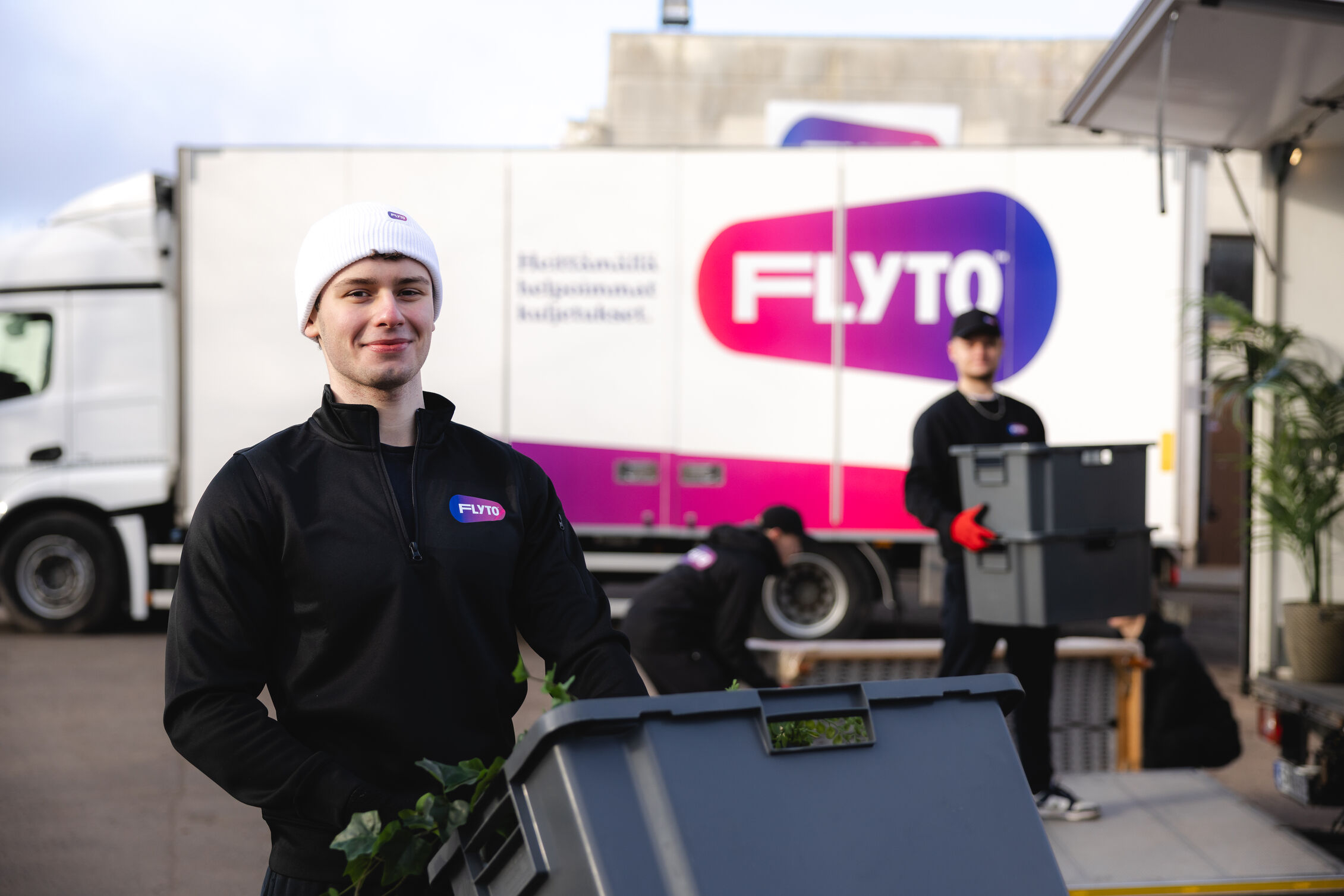
Everything in section 1 is why a Rotterdam move rewards a mover who actually knows the city. Flyto brings a vehicle that meets the zero-emission-zone rules, or plans the trans-load, so the truck can legally reach your door inside the ring rather than being turned away or fined. We arrange the object and parking permits in the right zone, with the city’s eight-week lead time built into the schedule, so there is a legal, empty space when we arrive. We assess access in advance — service lift or walk-up, staircase width, floor and courtyard — and bring an exterior furniture lift (verhuislift) for Kralingen or Delfshaven walk-ups instead of discovering the problem mid-carry. That is the honest difference between a national van hire and a relocation partner who has done these streets. Get a fixed quote for your Rotterdam move, compare it with moving to Amsterdam, or browse our full Netherlands moving guides and customs guide for household goods.
Moving to Rotterdam? Get a fixed quote.
Tell us your addresses and volume and we’ll price the whole move — including a zero-emission-compliant truck, the city permits, and any furniture lift your building needs. No surprises on the day.
Frequently asked questions
Can a moving truck drive into central Rotterdam?
Only if it meets the zero-emission-zone rules. Since 1 January 2025, delivery vans of emission class 4 or lower and trucks of class 5 or lower are banned from the area inside the ring, and since 1 May 2025 the city fines offenders (€130 for a van, €320 for a truck, plus €9 costs) automatically from the number plate. The rules tighten in 2027 and again in 2030, when only electric or hydrogen vehicles will be allowed. Make sure your mover uses a compliant truck (Gemeente Rotterdam).
Do I need a permit to place a furniture lift or park the moving truck in Rotterdam?
Usually yes. To put a verhuislift, container or hoist on the public road you need an object/road-use permit — €69.70 for 2–30 days in 2026 — and the city quotes a decision within eight weeks, so apply early; in Rotterdam Centrum a permit is always required. If you’re mid-move and not yet registered, a temporary parking permit costs €9.50 per month and takes about five working days online (Gemeente Rotterdam).
How is moving to Rotterdam different from Amsterdam?
Rotterdam was rebuilt after the 1940 bombing, so instead of narrow canal houses with hoist beams you get wide streets and high-rises — many with proper service lifts, which makes access easier in Kop van Zuid, Centrum and Cool. The trade-offs are Rotterdam-specific: a zero-emission zone that bans older trucks, and older walk-up pockets in Kralingen and Delfshaven where you still need an exterior furniture lift. Rent is also markedly cheaper — roughly €25–€30 per m² versus €35–€45 in Amsterdam’s prime areas.
How much is rent in Rotterdam in 2026?
Asking rents average roughly €25–€30 per m² for a new lease, so a one-bedroom often lands around €1,300–€1,600 and a three-bedroom €1,800–€2,500 (RentHunter). Central and waterfront areas like Cool, Kop van Zuid and Kralingen sit at the top of the range, while Delfshaven and outer suburbs like Nesselande are cheaper. Confirm current asking rents on Pararius before you rely on a figure.
How big a deposit can a Rotterdam landlord ask for?
Since the Good Landlordship Act took effect on 1 July 2023, a deposit may be no more than two months’ rent, the tenancy must be in writing, and the deposit must be returned within 14 days of the lease ending (Rijksoverheid). Contracts signed before that date may still carry the older three-month maximum. Landlords also typically want proof of income of three to four times the rent — that part is market practice, not law.
How do I register and get a BSN in Rotterdam?
If you’re staying more than four months and don’t yet have a BSN, you must register in person at the Gemeente by appointment; the BSN normally follows within about four weeks, and non-EU nationals need an IND residence permit first. If you already have a BSN and are moving within or to Rotterdam, report the new address online with DigiD — free, up to four weeks before and no later than five days after moving, with a fine up to €325 for reporting late (Gemeente Rotterdam).
When do I have to arrange Dutch health insurance?
Within four months of starting to live or work in the Netherlands. Once you take out basic zorgverzekering inside that window, cover applies retroactively to your registration date; miss it and you are uninsured for any care in the meantime and cannot claim it back (Rijksoverheid). Arrange it as soon as your BSN comes through.
Is Rotterdam a good place to live without a car?
Yes. RET runs a dense metro, tram and bus network — a two-hour single is €5.50 and monthly Regio Vrij subscriptions start around €63 — and the city is flat and bike-friendly, so most residents cycle or take transit. Rotterdam Centraal also connects fast to Amsterdam, The Hague and Utrecht. A car is genuinely optional unless you settle in an outer suburb like Nesselande.
Official sources
- Gemeente Rotterdam — zero-emission zone for vans and trucks
- Gemeente Rotterdam — zero-emission zone map
- Gemeente Rotterdam — road-use / object permit (container, lift, scaffold)
- Gemeente Rotterdam — temporary parking permit
- Gemeente Rotterdam — reserve a parking space
- Gemeente Rotterdam — report a move (BRP)
- Gemeente Rotterdam — first registration in the Netherlands (BSN)
- Gemeente Rotterdam — Burgerservicenummer (BSN)
- Rijksoverheid — rental deposit (waarborgsom) rules
- Rijksoverheid — health insurance obligation and four-month rule
- RET — Rotterdam public transport tickets and subscriptions
- RentHunter — average Dutch city rents 2026 (Rotterdam vs Amsterdam)
- Investropa — Rotterdam rents by neighbourhood 2026
- Pararius — live Rotterdam rental listings
- Flyto — moving to Amsterdam guide
- Flyto — Netherlands BRP deregistration guide
- Flyto — customs for household goods
- Flyto — Netherlands moving guides