

Moving from the Netherlands to France (2026): Complete Guide

Moving from the Netherlands to France is an intra-European relocation — both countries are members of the EU customs union, so the process looks nothing like a move to a country outside Europe. There is no customs clearance for your household goods, no import duty, and no visa or work permit to apply for. What you actually need to manage is administrative: closing out your Dutch registrations, physically getting your belongings from one country to the other, and registering with the right French authorities on arrival. This guide is for a Dutch resident (Dutch or any EU/EEA national living in the Netherlands) relocating to France, and it walks through exactly what applies — and, just as importantly, what doesn’t.
Key takeaways
- No customs, no duty, no import declaration. The Netherlands and France are both inside the EU customs union, so household goods move between them under free movement of goods — there is no customs clearance and nothing to declare, unlike a move to or from a non-EU country (EU customs union, Council of the EU).
- You don’t need a visa or a residence permit. As an EU/EEA/Swiss citizen you have the right to live and work in France without a titre de séjour; the optional residence card is a convenience, not a requirement (Service-Public.fr, F16003).
- You must still deregister in the Netherlands. Anyone leaving the Netherlands for more than 8 months a year must deregister from the BRP (Personal Records Database) at their municipality, in person, up to 5 days before departure (NetherlandsWorldwide, deregistering from the BRP).
- Dutch tax liability ends when you emigrate, but use the checklist. The Belastingdienst publishes an official emigration checklist covering tax returns, benefits, and mortgage interest relief (Belastingdienst, emigration checklist).
- Your Dutch health insurance must be cancelled, and you may need an S1 form. Zorgverzekering ends on emigration; the CAK issues the S1 document in cases where it applies for registering with a health insurer abroad (CAK, health insurance abroad).
- You don’t need to exchange your Dutch driving licence. A valid EU/EEA licence is recognised in France without formalities until it expires (Service-Public.fr, exchanging a European driving licence).
- You do need to re-register your car in France, via a "quitus fiscal" (VAT-status check) rather than a customs procedure, because it’s an intra-EU vehicle transfer (economie.gouv.fr, buying/importing a vehicle from another EU country).
- Pets travel on an EU pet passport, not a health certificate — microchip plus rabies vaccination is sufficient for both countries (Your Europe, travelling with pets in the EU).
1. Free movement: what actually applies (and what doesn’t)
The Netherlands and France are both founding-era members of the EU customs union. Under the customs union, goods circulate freely between member states once they’ve cleared the EU’s external border once — there are no customs duties and no customs controls at the internal borders between EU countries (Council of the EU, the EU customs union). In practice this means your moving truck crosses from the Netherlands into Belgium and then into France without stopping at a customs post, without an import declaration, and without any duty or VAT assessed on your furniture, electronics, or personal effects. There is no "personal effects relief" application to file — that concept only exists for moves from outside the EU customs area (for example, from the UK, Switzerland, or overseas), where a formal claim for duty relief on used household goods is required.
The same free-movement principle applies to people. As an EU or EEA citizen, you don’t need a visa or a work permit to live in France. You retain your right of residence automatically; the only real requirement is registering your presence once you’ve settled in — covered in Section 4.
The one place this route does involve a genuine administrative step is your car (Section 4) and pets (Section 5) — not because of customs, but because vehicle registries and animal-health rules are still organised nationally even inside the EU.
2. Leaving the Netherlands: what to close out
Deregister from the BRP. If you’ll be outside the Netherlands for more than 8 months of the year, you’re required to deregister from the Personal Records Database (BRP) at your municipality (gemeente). This must be done in person, by everyone moving including children, from up to 5 days before your departure date at the latest (NetherlandsWorldwide, how to deregister from the BRP; Rijksoverheid.nl). Ask for an international proof of deregistration — French municipalities and CPAM offices may ask for it as evidence of your move.
Close out your tax position. Emigrating ends your unlimited (domestic) Dutch tax liability; you become a foreign taxpayer for any Dutch-source income that remains (a Dutch rental property, for instance). The Belastingdienst’s official emigration checklist covers the year-of-emigration tax return, benefits (toeslagen) that must be stopped, and — for anyone with pension or stock-option accruals — a possible "conserverende aanslag" (conservatory tax assessment) (Belastingdienst, emigreren checklist). This is genuinely worth doing early, since some of these steps (like stopping toeslagen) have their own deadlines separate from your moving date.
Cancel or convert your health insurance. Your Dutch zorgverzekering obligation ends when you emigrate, and the policy needs to be cancelled with your BRP deregistration proof. If you’ll draw a Dutch pension or benefit while living in France, you may instead need an S1 form from the CAK, which lets you register with the French health system on the same basis as if you were still insured in the Netherlands (CAK, health insurance abroad).
Export your vehicle. If you’re taking a Dutch-registered car, have it deregistered ("exported") from the Dutch vehicle register via the RDW before or as you leave. You’ll receive a certificate of deregistration and an export certificate — the documents France’s registration system will later ask for (RDW, exporting a vehicle). You may keep driving on Dutch plates for a short window after deregistration, but plan your French registration (Section 4) so you’re not left in a gap.
Update everything else. Banks, pension funds, insurers, your GP, and (if applicable) DigiD-linked institutions should be notified of your new address, since several of these steps are triggered by your deregistration date, not your physical move date.
3. How your household goods actually move
Because this is a road move within the EU, there’s no shipping line and no port involved — freight moves by truck, typically routed through Belgium (and sometimes Luxembourg) into France. As a rough freight-industry benchmark: full-load moves to the Paris/northern France area typically take around 1 day of transit; moves to southern France (Lyon, Marseille, and beyond) typically run 1–2 days. Groupage (shared-load) shipments take longer — often 2–6 days — because the truck makes multiple stops en route. These are general industry planning figures, not guaranteed transit times; your mover will confirm actual scheduling once your pickup and delivery addresses and load size are known.
Because there’s no customs stop, the main planning variables are road distance (the Netherlands–France corridor runs roughly 600–1,200 km depending on your specific origin and destination), access at both ends (Parisian streets and southern French village centres often require a shuttle vehicle for a large truck), and delivery scheduling around your BRP deregistration and French registration dates.
4. Arriving in France: registering as an EU citizen
You do not need a residence permit. Since a 2003 change in French law, EU, EEA, and Swiss citizens are not required to hold a titre de séjour (residence permit) to live and work in France (Service-Public.fr, F16003). During your first three months, you can’t be required to register at all beyond, in some cases, reporting your presence. Beyond three months, the mayor’s office (mairie) of your municipality may require you to register your residence and can issue a registration certificate ("attestation d’enregistrement") confirming your right to live there (Your Europe, registering residence abroad after the first 3 months). France also offers an optional EU/EEA/Swiss residence card if you’d like one for convenience (e.g. as ID or for opening accounts) — free of charge, valid for up to 5 years while you’re economically active, with a renewable 10-year permanent-residence version available after 5 years of continuous legal residence — again, not mandatory (Service-Public.fr, F16003).
Healthcare: enrol in PUMA via your CPAM. France’s Protection Universelle Maladie (PUMA) covers anyone residing in France "in a stable and regular manner." If you were employed in the Netherlands and hold an S1 (see Section 2), submit it to your local CPAM to register on that basis. If not, EU/EEA/Swiss citizens without professional activity who have lived in France for more than three months can apply for PUMA coverage through their local CPAM, provided they show sufficient financial resources (broadly, at least the RSA/ASPA threshold) and don’t retain health cover in their home country (ameli.fr, Protection Universelle Maladie; ameli.fr, inactive EU nationals).
Tax: you become a French tax resident once you meet the criteria. French tax residency is triggered by any one of four tests — your household/main home is in France, you spend 183+ days a year there, your main professional activity is there, or your centre of economic interests is there (impots.gouv.fr, résident de France). In your arrival year, you’re typically treated as a non-resident for the period before your move and a resident for the rest of the year; your accountant or the CPAM/impots.gouv.fr guidance for your situation will confirm which specific forms apply to that split-year transition.
Driving licence: no exchange needed while it’s valid. A valid Dutch (EU/EEA) driving licence is recognised in France without any exchange formality — you can drive on it exactly as a French licence-holder would, until it expires or needs renewal (Service-Public.fr, exchanging a European driving licence).
Vehicle: register it in France via a "quitus fiscal," not a customs form. Because your car is arriving from another EU member state, France requires a quitus fiscal — a check confirming the vehicle’s VAT status is in order — combined with your registration application (carte grise), rather than the customs clearance certificate (846A) used for vehicles arriving from outside the EU. This is done through the online registration procedure on the France Titres/ANTS portal, using your RDW export documents (economie.gouv.fr, importing a vehicle from another EU country).
5. Moving with pets
Dogs, cats, and ferrets can travel from the Netherlands to France on an EU pet passport, issued by any authorised vet. Your pet needs an ISO-compliant microchip and a valid rabies vaccination (administered at 12+ weeks of age, with at least 21 days elapsed since a first/primary vaccination before travel) — no quarantine and no separate import paperwork applies between these two EU countries (Your Europe, travelling with pets in the EU).
6. Money, banking, and things people forget
- Keep or open a French bank account early — several of the registrations above (CPAM, utilities, a French phone contract) go faster with a French IBAN, and PUMA affiliation typically asks for one.
- Don’t let Dutch and French tax residency overlap or gap — align your BRP deregistration date, your last Dutch payroll/benefit date, and your first day of French residence so you’re not accidentally tax-resident in both, or neither, for a stretch.
- Mail forwarding through PostNL only covers the Netherlands; set up redirection or a trusted contact for anything still arriving at your old address.
- Cross-border pensions and pension providers often require a notification of your new address and country of residence — check this with your pension fund, separate from the Belastingdienst emigration process.
- School enrolment in France (if you have children) is handled locally through your new mairie or the relevant académie, and is worth starting before your final moving date given term-time cut-offs.
- EU health cards don’t disappear overnight — your Dutch EHIC remains for temporary/emergency use only while you’re still Dutch-insured; once you’re PUMA-enrolled in France, you’ll receive a French one instead.
How Flyto handles your Netherlands to France move
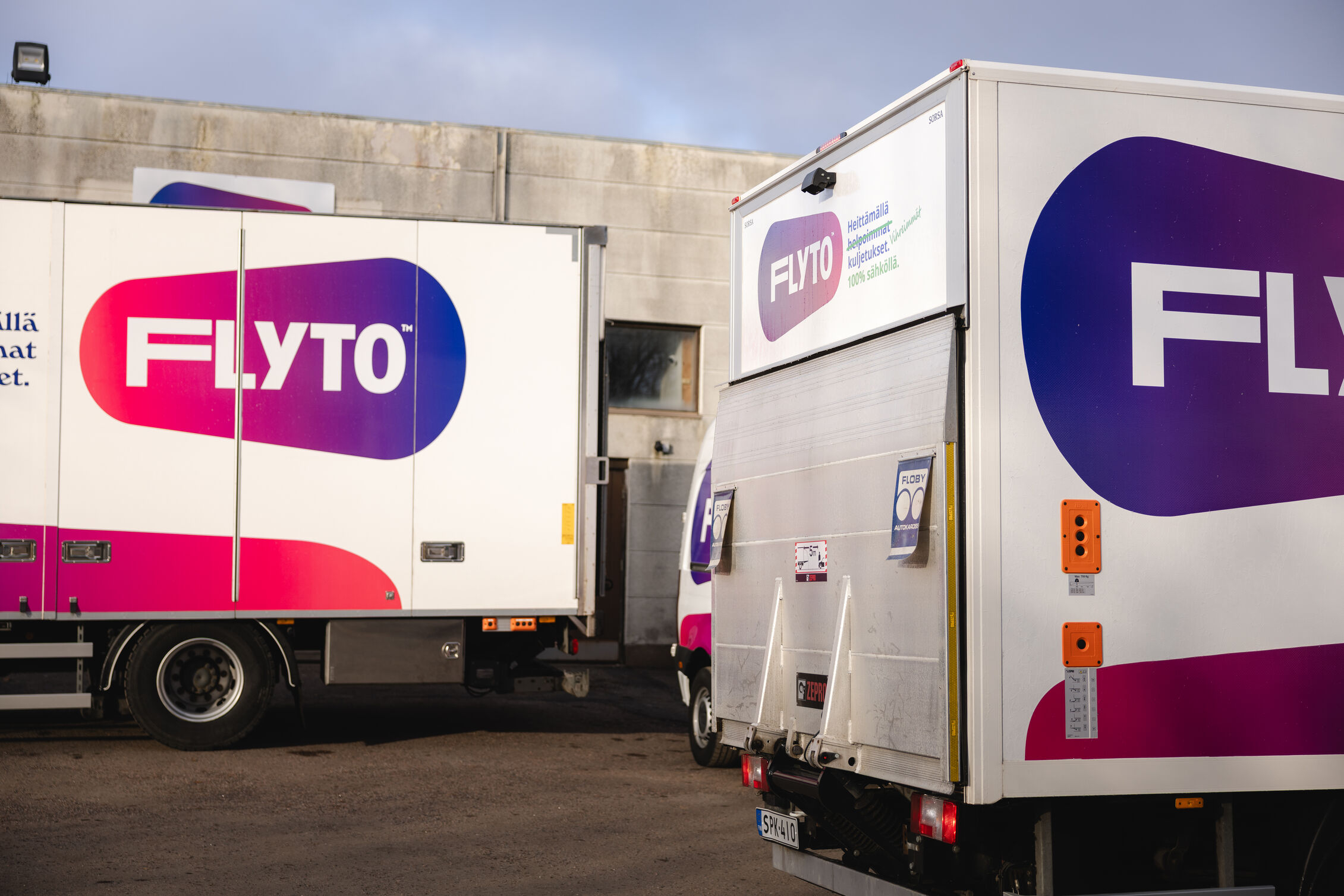
Flyto runs its own offices, warehouses, crews, and vehicles across Northern, Central, and Southern Europe, so a Netherlands-to-France route is typically covered end-to-end by our in-house European network rather than handed off blind. Where a specific corridor, access point, or delivery window calls for it, we bring in a carefully vetted partner or subcontractor to fill the gap — never as a default, only where it genuinely improves the route or the timing.
Frequently asked questions
Do I need to pay customs duty or VAT on my furniture and belongings moving from the Netherlands to France?
No. Both countries are inside the EU customs union, so household goods move between them under free movement of goods with no customs duty, VAT, or import declaration (Council of the EU).
Do I need a visa or residence permit to move to France from the Netherlands?
No. As an EU/EEA citizen you have an automatic right to live and work in France; a residence card is available but optional (Service-Public.fr, F16003).
Do I have to exchange my Dutch driving licence for a French one?
Not while it remains valid — EU/EEA licences are recognised in France without exchange until expiry or renewal (Service-Public.fr).
What happens to my Dutch health insurance when I move?
It must be cancelled once you deregister from the BRP; depending on your situation you may need an S1 form from the CAK to register with the French system on the same basis (CAK).
How do I register my car in France after moving from the Netherlands?
Through a "quitus fiscal" VAT-status check combined with your carte grise application on the France Titres/ANTS portal — not a customs procedure, since the vehicle is arriving from within the EU (economie.gouv.fr).
How long does the actual move take?
As a freight-industry estimate, full-load transport to the Paris area typically takes around a day; to southern France, roughly 1–2 days; groupage shipments can take several days longer. Your mover will confirm exact timing based on your addresses and load.
Sources
- The EU customs union — Council of the EU
- Carte de séjour d’un citoyen UE/EEE/Suisse — Service-Public.fr, F16003
- How do I deregister when I go abroad? — NetherlandsWorldwide
- Uitschrijven basisregistratie personen — Rijksoverheid.nl
- Emigreren? Checklist — Belastingdienst
- Health insurance abroad — CAK
- Exporting a vehicle — RDW
- Registering residence abroad after the first 3 months — Your Europe
- La protection universelle maladie — ameli.fr
- Vous êtes ressortissant communautaire inactif — ameli.fr
- Résident de France — impots.gouv.fr
- Échange d’un permis de conduire obtenu en Europe (UE/EEE) — Service-Public.fr
- Achat d’un véhicule dans un autre pays de l’UE : quitus fiscal — economie.gouv.fr
- EU rules on travelling with pets and other animals — Your Europe