Moving to Bologna (2026): The Complete Relocation Guide

Bologna is Italy’s seventh-largest city — around 395,000 residents, over 62,500 of them foreign nationals — and it moves to a rhythm no other Italian city shares. It is la Dotta (the learned), home to the University of Bologna, founded in 1088 and the oldest continuously operating university in the Western world, with roughly 90,000 students; la Grassa (the fat), for the tagliatelle al ragù and mortadella that define Emilia-Romagna’s kitchen; and la Rossa, for its terracotta rooftops and its politics. It is also the city of porticoes — more than 62 km of covered arcades, a UNESCO World Heritage Site since 2021 — which is charming to walk under and genuinely awkward to move a household through. This guide covers the practical mechanics of relocating to Bologna in 2026 — the truck logistics only a mover knows, where to live and what rent really costs, how to register your residence, and what monthly life actually costs — with official sources throughout.
Freshness note: prices and rules verified against comune.bologna.it, TPER, Agenzia delle Entrate, AUSL Bologna, Arpae Emilia-Romagna and Idealista in 2026. Fees and rents move — confirm figures with the linked authorities before you rely on them.
Quick answer: moving to Bologna in 2026
What does it cost to move to Bologna? An international household move (a full flat) typically lands in the low-to-mid four figures from within Europe and higher from overseas, driven mostly by volume, distance and access. Because Bologna’s medieval centre and its porticoes add real access difficulty (see below), get a fixed quote for your specific address rather than a generic estimate — get a Flyto quote here.
How long does the move take? Road moves from within the EU are usually a few days to about two weeks door-to-door; overseas sea freight runs several weeks. The one Bologna-specific quirk everyone underestimates: the historic centre is a camera-enforced restricted-traffic zone (ZTL Sirio), and to park a removal truck on a public street you must apply to the Comune for a temporary occupazione di suolo pubblico — which the city’s own regulation allows up to 30 days to process (Comune di Bologna).
Key takeaways
- The centro storico is a camera-enforced ZTL. The Sirio electronic system controls access to Bologna’s limited-traffic zone, generally 07:00–20:00, and a vehicle without a permit needs a paid ticket — €6 for one day, €15 for four consecutive days — activated before entering (Comune di Bologna — ZTL tickets).
- Your truck needs a permit to stand on the street. Occupying public space for a move (occupazione di suolo pubblico per trasloco) is requested online from the Comune, and the municipal regulation allows up to 30 days to process it, with a fee (canone) plus stamp duty (Comune di Bologna — occupazione suolo pubblico).
- Bologna is a 30 km/h city again. After a court annulled the original blanket limit, the Comune approved a new detailed plan and relaunched ”Città 30” from 20 April 2026, applying 30 km/h across 258 km of city streets grouped into 46 Zone 30 (Comune di Bologna).
- Rents keep climbing under student pressure. Average asking rent across Bologna was about €17/m² per month in early 2026 — roughly €650 for a monolocale and near €900 for a bilocale — one of Italy’s tightest markets after Milan (Idealista).
- Residence is the master key. You register your residenza with the Comune (anagrafe) and you need a codice fiscale from the Agenzia delle Entrate before almost anything else — bank account, health card, phone contract (Agenzia delle Entrate).
1. The move into Bologna — logistics only a mover knows
This is the part generic ”moving to Bologna” guides skip, and it is exactly where a move goes wrong. Bologna’s inner ring — the old walls, now the viali — encloses a dense medieval grid of narrow streets, arcaded pavements and courtyards built for handcarts, not for a 7.5-tonne removal truck. Four things determine whether move day runs smoothly.
The ZTL Sirio and the occupazione di suolo pubblico
Most of the historic centre sits inside a Zona a Traffico Limitato policed by the Sirio camera system at the gates (Porta Santo Stefano, Porta San Vitale, via San Felice, via Saragozza and the rest), typically active 07:00–20:00 daily, with pedestrian areas and the central ”zona T” restricted around the clock (Comune di Bologna — ZTL). There is no grace period: an unpermitted vehicle is photographed and fined, and a daily access ticket costs €6 (four days €15) and must be activated before you cross the line (Comune di Bologna).
To legally stand a truck on a public street — inside or outside the ZTL — for loading and unloading, you apply for a temporary occupazione di suolo pubblico per trasloco. The request goes in online through the Comune’s mobility services; the city communicates the fee (the canone, formerly COSAP) by certified email, and the municipal regulation allows up to 30 days to process the authorisation, which is why this cannot be a move-day afterthought (Comune di Bologna — occupazione suolo pubblico for moves). You usually need a permit at both the old and the new address, and in a controlled zone you also need the truck cleared through the ZTL for the day.
The 62 km of porticoes — moving under the arcades
Bologna’s defining feature is its porticoes: over 62 km of covered arcades, inscribed on the UNESCO World Heritage List on 28 July 2021 as a serial site of twelve segments (Bologna Welcome — UNESCO porticoes). They are beautiful, and they are a real logistical constraint: the truck almost always has to park at the kerb outside the colonnade, and every box and every piece of furniture is then carried in under the arches, along the arcade and through the entrance portone. The columns limit how close the vehicle can get, the arcade width limits what can be manoeuvred, and many porticoes are themselves protected fabric you cannot lean a lift against. A crew that has worked Bologna knows to plan the carry line under the portico rather than discover it on the day.
Old palazzi, no lift, and the montacarichi / autoscala
The centre is full of tall, narrow palazzi — four, five, six floors of historic building with steep stone staircases, tight turns and, very often, no lift (or a tiny one that fits two people and no wardrobe). Sofas, double beds, wardrobes and appliances frequently will not go up the stairwell. The standard solution is an exterior furniture hoist — a montacarichi or truck-mounted ladder lift (autoscala) run up the facade to bring bulky items in through a window or balcony. That hoist needs its own footprint of kerb space, which is a second reason the occupazione-suolo permit and the portico geometry have to be planned together. A good mover surveys staircase width, floor and access before the day, not when the sofa is wedged on the second landing.
Città 30, the LEZ and one-way streets
Two further rules shape the drive in. Bologna relaunched ”Città 30” from 20 April 2026 — a 30 km/h limit across 258 km of streets in 46 Zone 30 — after a regional court struck down the first, blanket version and the Comune re-adopted it street by street (Comune di Bologna). Separately, Emilia-Romagna runs seasonal low-emission restrictions from 1 October to 31 March, on weekdays roughly 08:30–18:30, that stop the most polluting diesel and petrol vehicles across the Bologna urban area — with a permanent tightening to Euro 5 diesel from October 2026 (Arpae Emilia-Romagna). Add the centre’s one-way streets, cycle lanes and tram works, and ”just park outside” is rarely an option — but none of it is a problem if it is planned for.
2. Where to live — Bologna neighborhoods by profile
Bologna is compact and its character changes within a few hundred metres. The city average asking rent was about €17/m² per month in early 2026, with the Centro the priciest zone and the southern/eastern outer areas the cheapest (Idealista). The single biggest force on this market is the university: roughly 90,000 students compete for rooms and small flats, so anything near the centre or the university quarter is under constant pressure.
Best for the classic Bologna experience:
- Centro Storico (well above the ~€17/m² city average) — living inside the porticoes, steps from Piazza Maggiore and the Due Torri. Unbeatable atmosphere and walkability, but the most expensive rents, the ZTL on your doorstep, student nightlife noise around the university quarter, and the oldest, lift-less buildings.
- Santo Stefano — the elegant heart of the centre around the basilica complex and via Santo Stefano’s arcades; refined, quiet-ish and sought-after, with prices to match. The choice for those who want prestige and can pay for it.
Best for families and calmer living:
- Murri / Colli — leafy, residential and desirable on the rising southern edge toward the hills; good for families wanting space and green, less lively at night and reliant on buses into town.
- Costa–Saragozza and the hills — the slopes climbing toward San Luca and its famous 3.8 km portico; villas and quieter streets with views, a premium address that trades centre-of-town convenience for calm and nature.
- Saragozza — the western wedge from the centre out to the Meloncello, part inside the walls and part residential; a solid middle-class area, well connected and a touch cheaper than the historic core.
Best for value, students and young professionals:
- Bolognina (Navile district) — just north of the station, historically working-class and immigrant, now fast-gentrifying around the new city offices and the ”Mercato” scene; among the better-value central-ish areas, but uneven street to street and still changing.
- San Donato–San Vitale — the eastern district stretching past the university science campuses and the CAAB/FICO area; a genuine student and young-professional mix, more affordable than the core, with good bus links and a less polished feel.
- Navile (beyond Bolognina, toward Corticella) — the broad northern district of the tram’s future red line; more affordable, more suburban, and set to gain the most from the new transport once works finish.
3. The Bologna housing market — how flats are actually found
Bologna has one of Italy’s tightest rental markets, and the student calendar makes it worse: supply thins out sharply before the autumn term. Here is how it works.
- Where to search: the mainstream portals are Idealista, Immobiliare.it and Casa.it, plus university and Facebook groups for rooms and shared flats (posti letto). Good listings move in days — have your documents ready before you enquire.
- The deposit (cauzione): for a standard residential lease the security deposit is legally capped at three months’ rent under the Italian tenancy law, usually two to three months in practice, paid up front alongside the first month.
- Codice fiscale first. You cannot sign a registered lease without an Italian codice fiscale (tax code), issued free by the Agenzia delle Entrate — see section 4. Landlords and agents will ask for it before drawing up the contract.
- Agency fee. If you rent through an agency, expect a one-off commission, commonly around one month’s rent plus VAT, on top of the deposit — budget for it.
- Student competition. With ~90,000 students, single rooms and small flats in and around the centre are fought over each September; if your move is flexible, arriving outside the term-start crush helps.
- Scam warning. Bologna’s shortage breeds fake listings. Never pay a deposit or ”reservation” before you have viewed the flat in person and seen the owner’s ID and the property documents. Classic red flags: an owner ”abroad” who will post the keys, prices well below the ~€17/m² norm, or pressure to pay by untraceable transfer before viewing.
4. Registering your residence in Bologna (anagrafe) and codice fiscale
Two pieces of paperwork unlock everything else. The codice fiscale is your tax identifier; the residenza (anagrafic registration) is your legal proof of living here. Get them in that order.
- Codice fiscale. Issued free by the Agenzia delle Entrate. EU citizens can obtain it directly at an Agenzia office; non-EU arrivals normally get it via the Sportello Unico or the questura with their residence permit. You need it for a lease, a bank account, a phone contract and the health card (Agenzia delle Entrate — codice fiscale).
- Residenza (iscrizione anagrafica). You declare your residence to the Comune di Bologna (Anagrafe), increasingly online through the national ANPR portal using SPID or a CIE electronic ID, or at a district office by appointment. A local police check (vigili urbani) usually follows at your address.
- EU citizens staying beyond three months register their residence and can request an attestazione di soggiorno, showing proof of work, study, self-sufficiency or family ties.
- Moving from Italy, not to it? If you are an Italian leaving the country rather than arriving, the mirror-image step is AIRE (the register of Italians abroad) — see our AIRE registration guide. Deregistering cleanly on the departure side avoids double residency and tax headaches.
5. Cost of living in Bologna (2026)
Bologna is more affordable than Milan but no longer cheap — the university and a strong jobs market keep demand high. The current numbers:
- Rent is the big variable — see section 2. Budget around the €17/m² city average for a new lease, meaning roughly €650/month for a monolocale and near €900 for a bilocale, more in the Centro and Santo Stefano and less toward Navile and the outer south-east (Idealista).
- Public transport. On the TPER network a single ticket is €2.30 on a contactless card (or €2.50 in coins on board), a 10-ride City Pass works out to €1.90 a ride, a day ticket is €9, and a standard monthly pass is €39 (€27–30 for under-27s); a contactless weekly cap of €25 also applies (TPER — fares).
- Utilities. On top of rent, a typical flat’s electricity, gas, water and waste-charge (TARI) commonly run on the order of €120–€180 a month depending on size, heating and season — Bologna winters need real heating. Condominium fees (spese condominiali) are often extra.
- Everyday life. Bologna’s food culture is a genuine cost advantage: neighbourhood markets and osterie keep eating well cheaper than in Milan, though the centre’s bars and restaurants are priced for a student-and-tourist city.
6. Getting settled — health, transport, university, internet
- Health (SSN and tessera sanitaria). Register with the local health authority, AUSL Bologna, to join the Servizio Sanitario Nazionale and receive your tessera sanitaria; at registration you choose a family doctor (medico di base). You need a codice fiscale first, and for non-EU residents the card’s validity matches your permesso di soggiorno (AUSL Bologna — SSN registration).
- Transport. The city runs on TPER buses — dense, frequent and, for a flat, compact centre, usually enough without a car. The Marconi Express monorail links Bologna Centrale to the airport in about seven minutes (Marconi Express), and the long-awaited tram is under active construction across the city in 2026, with the red line (Linea Rossa) works progressing through areas such as via Saffi and via San Felice (Tram Bologna). Expect roadworks and diversions in the meantime.
- University and schools. The University of Bologna (UniBo), founded in 1088 and the oldest in the Western world, has around 90,000 students and shapes daily life, housing and calendar (UniBo). For families, the Comune runs state nurseries and schools; there are also bilingual and international options for expat children.
- Internet. The main providers are TIM, Vodafone, Fastweb, WindTre and Iliad, with fibre (FTTH) widely available in the city; installation can take a couple of weeks after you sign, so order early and check what the building already has.
7. How Flyto handles your move to Bologna
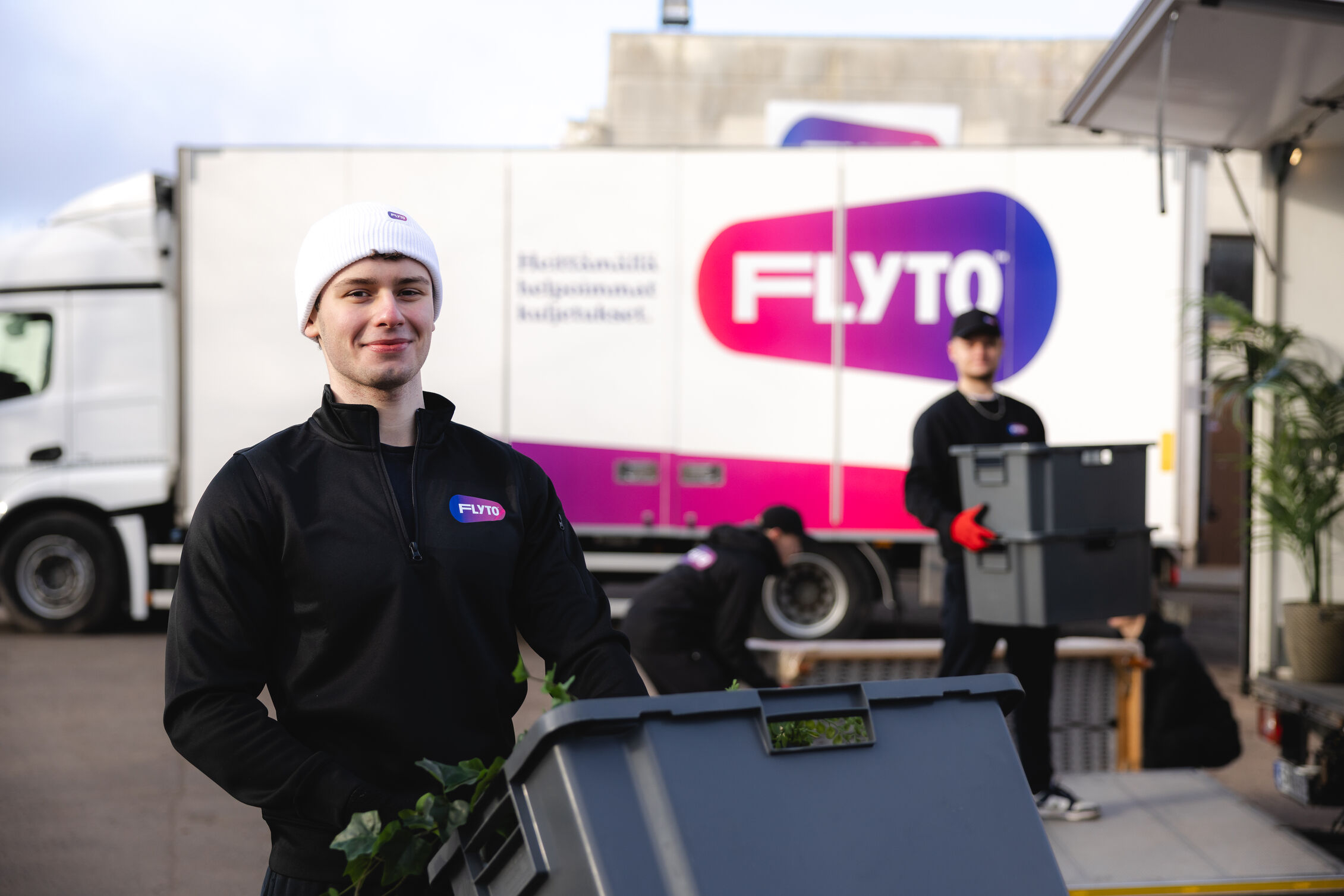
Everything in section 1 is why a Bologna move rewards a mover who actually knows the city — and it’s where Flyto earns its keep. We handle the occupazione di suolo pubblico permits at both addresses, with the lead time the Comune’s regulation requires, and clear the truck through the ZTL Sirio so there is a legal place to load and unload. We plan the carry line under the porticoes — where the truck can stand, how far the boxes travel under the arches — instead of improvising it on the day. And we assess the palazzo access in advance — staircase width, floor, lift or none — and bring a montacarichi or autoscala when the wardrobe won’t make the stairs. That’s the honest difference between a generic van hire and a relocation partner who has done this street by street. Get a fixed quote for your Bologna move, compare with our Milan relocation guide, see a cross-border example in our Italy-to-Germany route guide, or browse all our Italy moving guides and the customs guide for household goods.
Moving to Bologna? Get a fixed quote.
Tell us your addresses and volume and we’ll price the whole move — including the suolo-pubblico permit, ZTL access and any furniture hoist your palazzo needs. No surprises on the day.
Frequently asked questions
Do I need a permit to park a removal truck in Bologna?
In practice yes. To stand a truck on a public street for loading or unloading you apply to the Comune di Bologna for a temporary occupazione di suolo pubblico per trasloco, submitted online; the city sets the fee (canone) plus stamp duty and its regulation allows up to 30 days to process the authorisation. Inside the historic centre you also need the truck cleared through the camera-enforced ZTL. Most people delegate the whole permit job to their mover.
How does the ZTL Sirio work for my move?
The historic centre is a limited-traffic zone controlled by Sirio cameras, generally active 07:00–20:00, with the central pedestrian ”zona T” restricted around the clock. There is no grace period — an unpermitted vehicle is fined. A one-day access ticket costs €6 (four days €15) and must be activated before you enter. A removal truck needs both the ZTL access and the suolo-pubblico permit arranged in advance.
Will my furniture fit up a Bologna palazzo staircase?
Often not. The centre’s historic palazzi are typically four to six floors with steep, narrow stone staircases and frequently no lift, so wardrobes, sofas and beds regularly have to go in through a window or balcony using an exterior hoist (montacarichi) or a truck-mounted ladder lift (autoscala). Because the truck usually has to park outside the porticoes, the carry runs under the arcade — a good mover surveys all of this before move day.
How much is rent in Bologna in 2026?
Average asking rent was about €17/m² per month across the city in early 2026 — roughly €650 for a monolocale and near €900 for a bilocale (Idealista). Expect to pay above that in the Centro Storico and Santo Stefano and less toward Bolognina, San Donato–San Vitale and the outer Navile district. Student demand from the ~90,000-strong university keeps the market tight, especially before the autumn term.
What do I need to rent a flat in Bologna?
A codice fiscale (free from the Agenzia delle Entrate), proof of income, an ID, and usually a deposit (cauzione) of two to three months’ rent — legally capped at three — paid with the first month. Through an agency, budget a one-off commission of around one month’s rent plus VAT. Never pay anything before viewing the flat in person and seeing the owner’s documents.
How do I register my residence in Bologna?
You declare your residenza to the Comune di Bologna (Anagrafe), increasingly online via the national ANPR portal with SPID or a CIE electronic ID, or in person by appointment. A local police check at your address usually follows. EU citizens staying beyond three months register and can request an attestazione di soggiorno. If you are instead an Italian leaving the country, the mirror step is AIRE registration.
How do I get healthcare when I move to Bologna?
Register with AUSL Bologna to join the Servizio Sanitario Nazionale and receive your tessera sanitaria, choosing a family doctor (medico di base) at registration. You need a codice fiscale first. EU citizens staying over three months enrol if they work, study or are self-sufficient; for non-EU residents the health card’s validity matches the residence permit.
Do I need a car in Bologna?
Usually not. The centre is compact and walkable under its porticoes, TPER buses are dense and frequent, and the Marconi Express links the station to the airport in about seven minutes. A car is actively awkward inside the ZTL and under the 30 km/h Città 30 rules, and seasonal low-emission limits restrict older diesels from October to March. Many residents rely on buses, bikes and the coming tram.
Official sources
- Comune di Bologna — Zona a Traffico Limitato (ZTL Sirio)
- Comune di Bologna — ZTL daily/four-day access tickets
- Comune di Bologna — occupazione suolo pubblico for moves (traslochi)
- Comune di Bologna — occupation of public spaces (overview)
- Comune di Bologna — Città 30 new plan (30 km/h, from 20 April 2026)
- Arpae Emilia-Romagna — seasonal low-emission traffic limits
- Comune di Bologna — population passes 395,000 (2025)
- TPER — public transport fares (Bologna)
- Marconi Express — airport people mover
- Tram Bologna — construction sites (Linea Rossa)
- Agenzia delle Entrate — codice fiscale for citizens
- AUSL Bologna — SSN registration for EU citizens
- AUSL Bologna — SSN registration and tessera sanitaria
- Idealista — Q1 2026 rental prices (Bologna ~€17/m²)
- Bologna Welcome — the UNESCO porticoes (62 km, 2021)
- University of Bologna — who we are (founded 1088, ~90,000 students)
- Flyto — AIRE registration guide
- Flyto — moving to Milan guide
- Flyto — Italy to Germany route guide
- Flyto — Italy moving guides
- Flyto — customs for household goods