

Moving to Turin (2026): The Complete Relocation Guide

Turin (Torino) is Italy’s first capital and its old industrial powerhouse — around 855,000 residents in the city and roughly 105,000 university students between the University of Turin and the Politecnico. Laid out on a Roman grid of long, straight boulevards, rebuilt as the Baroque capital of the House of Savoy, lined by some 18 kilometres of porticoes and framed by the Alps on the western skyline, it is a strikingly legible city to walk — and a noticeably cheaper one to live in than Milan, an hour and a half up the line. It is also a city with two moving-day traps almost no generic guide mentions: a camera-enforced central limited-traffic zone (ZTL) and some of Italy’s toughest winter anti-smog diesel bans. This guide covers the practical mechanics of moving to Turin in 2026 — the truck logistics only a mover knows, where to live and what rent really costs, how to find a flat and register your address, and what monthly life actually costs — with official sources throughout.
Freshness note: prices and rules verified against comune.torino.it, GTT, muoversiatorino.it, the Agenzia delle Entrate, ASL Città di Torino, Regione Piemonte and the Idealista rental index in 2026. Fees and rents move — confirm figures with the linked authorities before you rely on them.
Quick answer: moving to Turin in 2026
What does it cost to move to Turin? An international household move (a full flat) typically lands in the low-to-mid four figures from within Europe and higher from overseas, driven mostly by volume, distance and access. Turin’s wide porticoed boulevards make truck access easier than in Rome or Naples, but its central ZTL and old Baroque palazzi with tiny or no lifts add real cost — so get a fixed quote for your specific address rather than a generic estimate. Get a Flyto quote here.
How long does the move take? Road moves from within the EU are usually a few days to about two weeks door-to-door; overseas sea freight runs several weeks. The one Turin-specific quirk everyone underestimates: the historic centre is a camera-enforced ZTL and, from mid-September to mid-April, older diesel vehicles — including goods trucks — can be banned outright on high-smog days. A removal truck that cannot legally enter your street on move day is a real risk here, not a hypothetical (Città di Torino anti-smog rules).
Key takeaways
- The centre is a camera-enforced ZTL. The ZTL Centrale is closed to non-authorised vehicles 7:30–10:30 on weekdays (Saturday excluded), with access read automatically by cameras at 27 points around the city. A removal truck needs a permit from the Città di Torino or GTT, or it is fined by plate (Città di Torino — ZTL Centrale).
- Turin has some of Italy’s worst winter air — and real diesel bans. From 15 September to 15 April, Euro 0/1/2 diesel is banned 0–24 all year, Euro 3–4 diesel is blocked on weekdays 8:00–19:00, and on orange/red smog days Euro 3, 4 and 5 diesel is banned every day 8:00–19:00 — restrictions that apply to goods vehicles (N1–N3), not just cars (Città di Torino).
- Your truck’s kerb space needs a permit. To reserve a stretch of street for the move you apply for an occupazione suolo pubblico for traslochi through Torinofacile; the no-parking signs must go up at least 48 hours before the occupation (Città di Torino).
- Rent is roughly half of Milan’s. Turin’s average asking rent hit a record €12.8/m²/month in April 2026 — against €23.3/m² in Milan (Idealista rental index).
- You need a codice fiscale first. The tax code is free from the Agenzia delle Entrate and is the key to signing a lease, a phone contract or a job — non-Italians book an in-person appointment and bring form AA4/8 (Agenzia delle Entrate).
1. The move into Turin — logistics only a mover knows
This is the part generic ”moving to Turin” guides skip, and it is exactly where a move goes wrong. Turin’s grid of broad avenues is genuinely kinder to a removal truck than the tangled lanes of Rome or Naples — but the city makes up for it with two of the strictest access regimes in Italy, plus a building stock of grand old palazzi that were never designed for a modern lift. Four things determine whether your move day runs smoothly.
The ZTL Centrale: cameras, hours and the permit
Turin’s historic core is a Zona a Traffico Limitato (ZTL Centrale), and it is enforced entirely by camera — there is no barrier, just an automatic number-plate read against an authorised-vehicles database. Key facts from the city itself (Città di Torino):
- When it’s active: circulation and parking of non-authorised vehicles are prohibited 7:30 to 10:30 on all weekdays, Saturday excluded. Outside those hours the ZTL Centrale itself opens up, but other overlapping limitations can still apply.
- How it’s enforced: access is controlled by cameras at 27 points across the city, with further cameras policing the sub-zones inside. Plates are photographed and matched automatically, so an unauthorised truck is fined without anyone stopping it.
- The permit: a vehicle may enter and stop inside the ZTL only with a valid permit issued by the Città di Torino or by GTT. Your mover arranges a temporary permit for the truck for the move window — this is not something to improvise on the day.
- Minimum emissions standard: even with a permit, access generally requires at least Euro 3 (or Euro 2 on LPG/methane) — worth checking if an older vehicle is involved.
Because the morning ban lifts at 10:30, movers often schedule the loading or unloading of a central address for late morning onward — but only a permit removes the risk entirely.
The anti-smog diesel bans — the trap that catches winter moves
Turin sits in the Po Valley, one of Europe’s most air-polluted basins, and the regional and city rules that follow are unusually aggressive. During the winter season — 15 September to 15 April — the city runs a permanent baseline of restrictions plus extra bans triggered by ARPA Piemonte’s daily air-quality ”traffic light” (Città di Torino):
- All year, 0–24: diesel Euro 0, 1 and 2 are banned outright — for both passenger vehicles and goods vehicles (categories N1–N3).
- Green level (default winter days): diesel Euro 3 and 4 are blocked on weekdays 8:00–19:00.
- Orange level (forecast daily PM10 above 50 µg/m³ for three consecutive days) and red level (above 75 µg/m³): diesel Euro 3, 4 and 5 are banned every day, 8:00–19:00.
The crucial point for a move: these bans apply to commercial and goods vehicles too, so an older diesel removal truck can be locked out of the whole city on a bad-air winter day, ZTL permit or not. A structural year-round ban on Euro 5 diesel in cities over 100,000 residents (Turin and Novara) was postponed to 1 October 2026 after the region negotiated alternative measures (Regione Piemonte) — so from late 2026 the net tightens further. A mover who works Turin plans the truck’s Euro class and the move date around the smog calendar; a cheap out-of-town van hire may simply not be allowed to drive.
The porticoes help — the Baroque palazzi don’t
Turin’s boulevards are famously lined with porticoes (around 18 km of them), and the avenues are wide, so getting a truck close to the door is usually easier than in most Italian cities. The problem is upstairs. The elegant Baroque and nineteenth-century palazzi of the centre, San Salvario and Crocetta typically have grand but narrow staircases and small, cage-style lifts — or no lift at all above the noble floor. Sofas, wardrobes, double beds and appliances routinely will not fit the stairwell or the lift car.
The standard Turin solution is an external furniture hoist — a montacarichi (ladder lift) or autoscala — run up the facade to bring bulky items in through a window or balcony. It needs its own reserved kerb space directly below, which is exactly why the street permit below matters. A good mover measures the staircase, the lift car door and the floor before the day, not when the sofa is wedged on the second-floor landing.
Reserving the kerb: occupazione suolo pubblico
To guarantee the truck (and any hoist) a legal space outside the building, you apply for a temporary occupazione suolo pubblico per traslochi from the Città di Torino. The essentials (Città di Torino):
- The request is filed online through Torinofacile and needs SPID, CIE or CNS credentials; the concession is issued by the Polizia Locale.
- You supply a sketch/plan of the area, recent photos, and the vehicle details.
- The temporary no-parking and tow-away signs must be placed at least 48 hours before the occupation begins, and removed as soon as the move ends — otherwise the space cannot legally be cleared of parked cars.
You usually need this at both the old and the new address. It is the single most common thing international movers forget, and there is no last-minute fix once you are standing on a full street on move morning.
2. Where to live — Turin neighborhoods by profile
Turin changes character district by district, from Baroque grandeur to former factory floors. The monthly figures below are indicative asking rents for typical furnished flats in 2026 (a monolocale/studio and a bilocale/one-bedroom), consistent with the Turin market where the citywide average reached about €12.8/m²/month in April 2026 (Idealista). Treat them as ranges, not quotes.
Central and characterful:
- Centro / Quadrilatero Romano (studio ~€550–700, one-bed ~€850–1,100+) — the Roman grid, the Baroque piazzas and the buzzy Quadrilatero nightlife; maximum walkability and the priciest rents, but you live inside the ZTL with all its car restrictions and weekend noise near the bars.
- San Salvario (studio ~€520–680, one-bed ~€800–1,050) — the multicultural, student-and-aperitivo heart beside Porta Nuova station and the Parco del Valentino; genuinely lively and central, though the core streets are loud at night.
- Vanchiglia (studio ~€450–580, one-bed ~€700–900) — the bohemian, student-heavy quarter behind the university, full of small bars and cheap eats; characterful and well-priced, with the same nightlife trade-off on its busiest streets.
Elegant and residential:
- Crocetta (studio ~€480–620, one-bed ~€750–950) — Turin’s smart, leafy, upmarket district next to the Politecnico, with the famous open-air market; quiet, safe and family-friendly, and you pay for the address.
- Cit Turin — a compact Art Nouveau (Liberty) enclave near Porta Susa, popular with professionals; handsome, well-connected and calmer than the centre.
- Borgo Po / Gran Madre — across the river at the foot of the hill, leafy and prestigious with the best views back over the city; green and residential, but the higher slopes need a car or a good bus.
Better value and up-and-coming:
- San Donato — a solid, well-connected middle-class grid district northwest of the centre; unflashy, practical and cheaper than the core.
- Lingotto (studio ~€420–560, one-bed ~€680–880) — the south, built around the former FIAT Lingotto factory (now a mall, cinema and university campus) with its rooftop test track; affordable, on the metro, and handy for Porta Nuova, if short on old-town charm.
- Aurora — the most mixed and rapidly gentrifying central-fringe district north of Porta Palazzo; the cheapest rents close to the centre, but genuinely uneven street to street, so view in person before you commit.
3. The Turin housing market — how flats are actually found
Turin’s rental market is far less brutal than Milan’s, but the big student population means good-value flats near the universities still move quickly each September. Here is how it works.
- Where to search: the mainstream portals are Idealista, Immobiliare.it and Casa.it, plus Subito and student-focused sites for rooms and shared flats (posti letto). Around the university start of term, listings in San Salvario, Vanchiglia and near the Politecnico go fast.
- You need a codice fiscale. No landlord can register a lease without your Italian tax code, so get it before you flat-hunt (see section 4).
- Deposit (cauzione): typically two to three months’ rent, paid up front, plus the first month — budget several thousand euros in cash at signing.
- Agency fee (provvigione): if you rent through an agency, the tenant commonly pays a commission of around one month’s rent plus VAT. Confirm the amount in writing before you view.
- Registered contract: insist on a properly registered lease (contratto registrato) — usually a 4+4 free-market contract or a 3+2 ”canone concordato”. A registered contract is what lets you register your residence and protects your deposit. The common cedolare secca flat-tax option often means no annual rent indexation.
- Scam warning. The student market attracts fake listings. Never pay a deposit or ”reservation” before you have viewed the flat in person and seen the owner’s ID and the property documents. Classic red flags: an ”owner abroad”, keys promised by courier against an advance, prices well below the €12.8/m² market, or pressure to pay by untraceable transfer to a foreign IBAN.
4. Residenza and codice fiscale — registering in Turin
Two pieces of paperwork unlock everything else in Italy: the codice fiscale and your residenza (registered residence). Do them in that order.
- Codice fiscale first. The tax code is free and is issued by the Agenzia delle Entrate. Non-Italians apply in person at any territorial office (book an appointment) with form AA4/8 and a valid passport or ID; it is normally issued on the spot. You cannot sign a lease, open a bank account, take a phone contract or start a job without it.
- Residenza (anagrafe). Once you have a home, you declare your residence to the Città di Torino’s Anagrafe. You will need your registered rental contract and, for non-EU citizens, a valid residence permit. Registering your residence is what gives you access to the health service, a resident’s ZTL/parking permit, and eventually the local electoral roll.
- EU citizens staying more than three months register their residence and prove sufficient income and health cover; non-EU citizens need the permesso di soggiorno in hand first.
- Coming from abroad? If you are an Italian moving out and need to keep ties to Italy, or you are unwinding an Italian registration, see our guide to AIRE registration (the register of Italians resident abroad) — it is the flip side of the residenza process and matters for tax and voting.
5. Cost of living in Turin (2026)
Turin’s headline appeal is simple: a big, cultured, well-served city at a fraction of Milan’s cost. The current numbers:
- Rent is the big saving — see section 2. The citywide average asking rent was about €12.8/m²/month in April 2026, a record high for Turin but still roughly half of Milan’s €23.3/m² (Idealista). Peripheral north and south districts fall below €6/m².
- Public transport. A GTT single ”City 100” ticket — valid 100 minutes on bus, tram and one metro trip — is €1.90 digital (via the TO Move app / BIP card) or €2.00 on paper; a day ticket is €3.70 (BIP/app) or €4.50 on paper (Muoversi a Torino). The Formula U monthly urban pass, covering all GTT buses, trams and the metro, is €38/month (GTT).
- Utilities. Electricity, gas, water and waste on a typical one-bedroom flat run in the order of €120–180/month in winter, more in the Po Valley’s cold season when heating runs hard — always ask a prospective landlord for recent bills.
- Everyday life. Turin’s classic café-and-aperitivo culture is real value: a caffè at the bar is around €1.20–1.50, and the city’s aperitivo (a drink with a generous buffet) remains one of the best-priced evenings out in northern Italy.
6. Getting settled — health, transport, universities, internet
- Health (SSN and tessera sanitaria). Register with the national health service through ASL Città di Torino. EU residents and non-EU residents with a qualifying permit can register (voluntary registration requires a permit longer than three months), then choose a medico di base (GP) and receive the tessera sanitaria health card (Agenzia delle Entrate — tessera sanitaria for foreign nationals). Do this soon after you have your residenza.
- Transport. GTT runs the buses, trams and the driverless Metro Line 1; the network is dense and the flat, gridded city is very cyclable. With a Formula U pass most residents rarely need a car — which, given the ZTL and the winter diesel bans, is a genuine advantage in Turin.
- Universities and schools. The University of Turin and the Politecnico di Torino together host over 105,000 students, so the city is geared to newcomers — international offices, English-taught degrees and a big rental and social scene around them. For families there are state, private and a handful of international/bilingual schools; apply early as the good ones fill up.
- Internet. The main providers are TIM, Vodafone, Fastweb and WindTre, with fibre (FTTH) widely available across the city. Installation can take a couple of weeks after signing, so order early and check what the building already has connected.
7. How Flyto handles your move to Turin
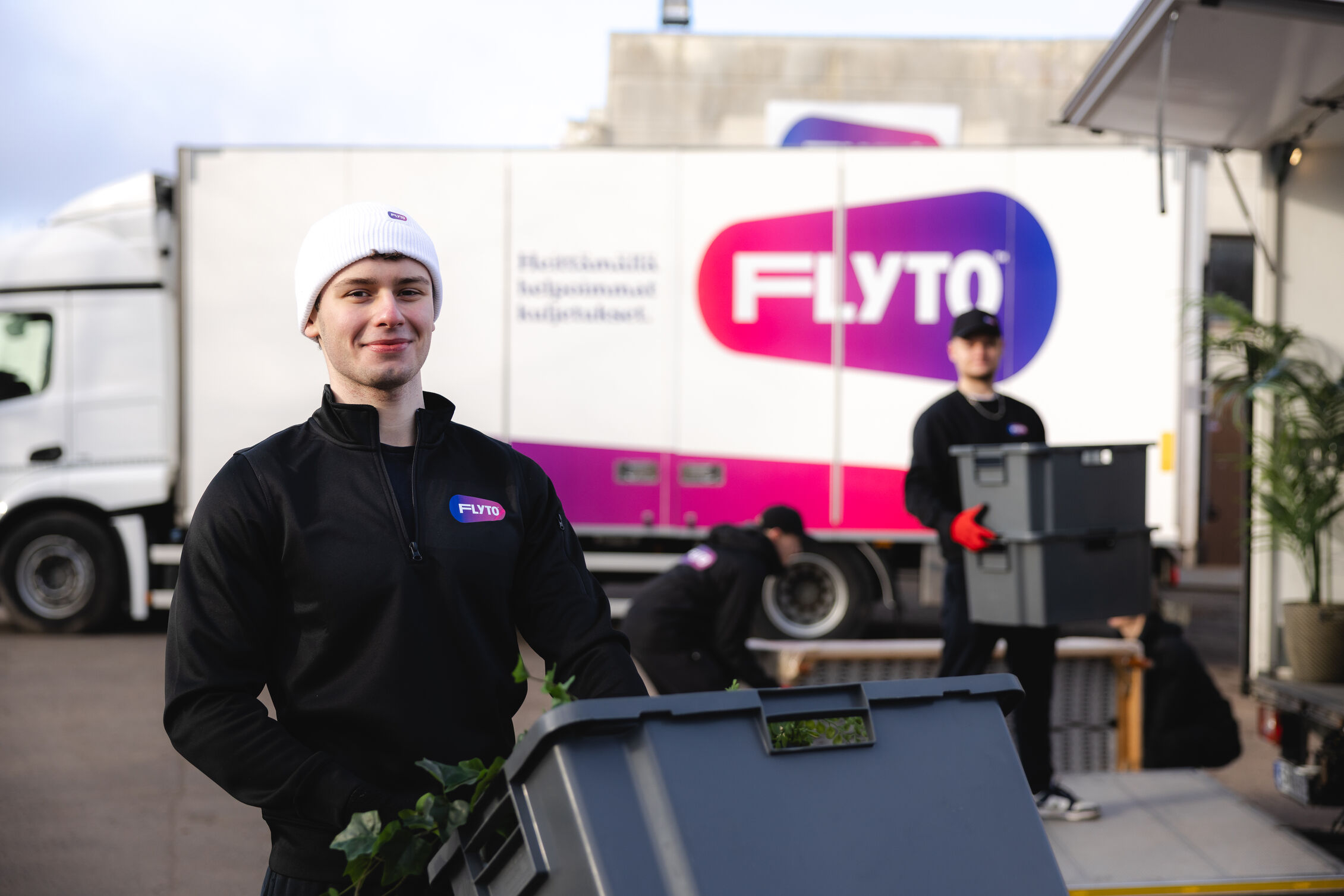
Everything in section 1 is why a Turin move rewards a mover who actually knows the city — and it’s where Flyto earns its keep. We handle the ZTL Centrale permit for the truck and the occupazione suolo pubblico street reservation at both addresses, with the 48-hour sign lead time the city requires, so there is a legal, empty space when the truck arrives. We plan the truck’s Euro class and the move date around the winter anti-smog calendar, so an older diesel doesn’t get locked out on a red-alert day. And we assess the Baroque palazzo access in advance — staircase width, lift-car size, floor — and bring a montacarichi or autoscala when the sofa won’t make the stairwell, rather than discovering the problem mid-carry. That’s the honest difference between a generic van hire and a relocation partner who has done this street by street. Get a fixed quote for your Turin move, compare it with a move to Milan, or browse our full Italy moving guides.
Moving to Turin? Get a fixed quote.
Tell us your addresses and volume and we’ll price the whole move — including the ZTL permit, the street reservation and any furniture hoist your palazzo needs. No surprises on the day.
Frequently asked questions
Do I need a permit to drive a moving truck into central Turin?
Yes. The historic centre is a camera-enforced ZTL Centrale, closed to non-authorised vehicles on weekdays from 7:30 to 10:30 (Saturday excluded), with plates read automatically at 27 points around the city. A removal truck needs a permit from the Città di Torino or GTT, and access generally requires at least a Euro 3 vehicle. Your mover arranges the permit for the move window.
Can a diesel removal truck be banned from Turin in winter?
It can. From 15 September to 15 April, Euro 0/1/2 diesel is banned around the clock, Euro 3–4 diesel is blocked on weekdays 8:00–19:00, and on orange or red smog days Euro 3, 4 and 5 diesel is banned every day 8:00–19:00 — and these rules apply to goods vehicles, not just cars. A year-round Euro 5 ban in cities over 100,000 people starts 1 October 2026. This is why the truck’s Euro class and the move date have to be planned around the anti-smog calendar.
How do I reserve a parking space for the move?
You apply for a temporary occupazione suolo pubblico for traslochi through the Torinofacile portal (using SPID, CIE or CNS), and the Polizia Locale issues the concession. The no-parking and tow-away signs must be placed at least 48 hours before the move so the space can be legally cleared. You usually need this at both the old and the new address.
Will my furniture fit up a Turin palazzo staircase?
Often not. The elegant Baroque and nineteenth-century palazzi of the centre, San Salvario and Crocetta typically have narrow staircases and small cage lifts, or no lift above the noble floor. Bulky items frequently have to go in through a window or balcony via an external furniture hoist (montacarichi or autoscala), which needs its own reserved kerb space below. A good mover checks the staircase and lift dimensions before move day.
How much is rent in Turin in 2026?
Turin’s average asking rent reached about €12.8/m²/month in April 2026, a record high for the city but still roughly half of Milan’s €23.3/m² (Idealista). In practice, a furnished studio runs around €420–700/month and a one-bedroom around €680–1,100/month depending on the district, with central areas like the Quadrilatero and San Salvario at the top and areas like Lingotto and Aurora cheaper.
How do I get a codice fiscale in Turin?
The codice fiscale (tax code) is free from the Agenzia delle Entrate. Non-Italians apply in person at a territorial office with form AA4/8 and a valid passport or ID, usually receiving it on the spot. You need it before you can sign a lease, open a bank account, get a phone contract or start work, so arrange it before flat-hunting.
How does public transport work in Turin?
GTT runs the buses, trams and the driverless Metro Line 1. A single ”City 100” ticket (100 minutes, one metro trip included) is €1.90 digital or €2.00 on paper, a day ticket is €3.70, and the Formula U monthly urban pass is €38. The network is dense and the city is flat and very cyclable, so most residents manage without a car — helpful given the ZTL and winter diesel bans.
Official sources
- Città di Torino — ZTL Centrale (hours, cameras, permits)
- Città di Torino — ZTL overview
- Città di Torino — anti-smog vehicle restrictions
- Regione Piemonte — Euro 5 diesel ban postponed / anti-smog measures
- Città di Torino — occupazione suolo pubblico for moves (48h signs)
- Città di Torino — Anagrafe (residence registration)
- Agenzia delle Entrate — codice fiscale (what it is, how to get it)
- Agenzia delle Entrate — tessera sanitaria for foreign nationals
- ASL Città di Torino — health service registration
- GTT — urban passes (Formula U €38/month)
- Muoversi a Torino — GTT tickets and fares
- Idealista — Turin rental index (€12.8/m², April 2026)
- Flyto — AIRE registration guide
- Flyto — moving from Italy to Germany
- Flyto — moving to Milan (2026)
- Flyto — Italy moving guides