

Moving from France to the UK (2026): Complete Guide

Relocating from France to the United Kingdom is a short physical hop — a few hours by Eurotunnel or ferry — but it is not the paperwork-free move it would be to another EU country. Since 1 January 2021 the UK has been outside the EU’s Single Market and Customs Union entirely, so unlike a move from France to, say, Germany or Spain, this corridor involves a real (if often duty-free) customs process for your belongings, and a real immigration process for you. This guide is for residents of France — French nationals or anyone legally resident there — planning a permanent move to the UK, and it lays out exactly what still applies, what doesn’t, and what to expect.
Key takeaways
- The UK left the EU Single Market and Customs Union on 1 January 2021. This is not an intra-EU move — there is a genuine customs border, but qualifying used household goods can still move duty- and VAT-free under Transfer of Residence (ToR) relief if you apply in advance (European Commission, gov.uk).
- Free movement of people also ended. French citizens no longer have an automatic right to live in the UK; you need a visa or other valid immigration status before you move, not just a passport (gov.uk).
- The UK’s Electronic Travel Authorisation (ETA), now required for most short EU visits, is for visits only — it does not permit you to live, work, or settle in the UK (gov.uk).
- The EU Settlement Scheme is effectively closed to new arrivals. Its deadline was 30 June 2021; it now only accepts late applications with reasonable grounds, or joining family of someone who already holds status (gov.uk).
- Household goods you’ve owned and used for 6+ months can enter duty-free via a ToR1 application to HMRC, approved before or shortly after you move; you must also have lived outside the UK for the previous 12 consecutive months (gov.uk).
- Bringing a car is a separate, formal process: you must notify HMRC via NOVA within 14 days of import and confirm duty/VAT status before DVLA will register it (gov.uk).
- Pets need a valid pet travel document plus strict vaccination and tapeworm-treatment timing — an EU pet passport issued in France is an accepted document, but which document and which timing rules apply depends on your exact circumstances, so check the official checklist before booking travel (gov.uk).
- On the France side, ending French tax residency and declaring your departure to CPAM (health insurance) are two separate formalities you must handle yourself before or shortly after leaving (impots.gouv.fr, ameli.fr).
1. What actually applies: this is not an intra-EU move
France and the UK share a land border only at the Channel Tunnel, but legally they sit on opposite sides of a real customs and immigration line. Since the end of the Brexit transition period on 31 December 2020, the UK has been outside the EU’s Single Market and Customs Union and outside all EU free-movement rules (European Commission). The 2021 EU–UK Trade and Cooperation Agreement gives duty-free trade for goods that meet rules of origin — but that agreement governs commercial trade, not personal removals, and it does not restore free movement of people.
In practice this means two separate processes apply to your move:
- For your belongings: a customs procedure exists, but genuine used personal and household goods are eligible for Transfer of Residence (ToR) relief — full exemption from import duty and VAT — provided you’ve lived outside the UK for the previous 12 consecutive months, have owned/used the goods for at least 6 months, and import them within 12 months of your move. You apply on form ToR1 before your goods arrive; HMRC issues a unique reference number you (or your mover) quote on the customs declaration. Without an approved reference, you risk being billed duty and import VAT that you’d then have to reclaim (gov.uk).
- For you: free movement is gone. You need to establish that you have the right immigration status to live in the UK — via a visa route, or (only if you were already resident before the Brexit deadline) settled/pre-settled status — before you relocate (gov.uk).
2. Leaving France: closing out your affairs
Tax residency. French tax residency ends on the date you genuinely relocate your home, economic interests and habitual abode. Departures abroad are treated as a special case when you file: your income up to your departure date is declared, and any French-source income you continue to receive afterwards is declared separately as a non-resident. Once you’ve left, the Service des Impôts des Particuliers Non-Résidents (SIPNR) becomes your point of contact for any remaining French-source income; check the exact forms and boxes to use for your situation on the official portal, as these can change from one tax year to the next (impots.gouv.fr).
Healthcare. French statutory cover (Assurance Maladie/CPAM) stops once you’re no longer resident in France. You should send your CPAM the "Déclaration de transfert de résidence hors de France" (form S1105) within one month of leaving; your CPAM will confirm what to do with your Carte Vitale and European Health Insurance Card (EHIC), which can differ depending on your household situation, so check with them directly (ameli.fr).
No population register to deregister from. Unlike some EU countries, France has no municipal residence register you must formally cancel. If you’re a French national, registering with the registre des Français établis hors de France at the consulate is optional (not mandatory) but is recommended for consular protection and administrative continuity abroad (service-public.fr).
Vehicle. If you’re taking a used car with a standard French carte grise, it can be exported on its existing registration certificate — no re-registration in France is needed before leaving. A brand-new, never-registered vehicle instead needs a temporary export certificate ("CPI WW Export"), issued through an authorised registration professional, valid for its journey to be registered abroad (service-public.fr).
Driving licence. No French action is needed to keep the licence usable abroad — it’s the UK side that determines whether it can be exchanged (see Section 4).
3. How your household goods actually move (freight)
France–UK household-goods shipments almost always travel by road, crossing the Channel via the Eurotunnel Le Shuttle (Calais–Folkestone) or a ferry route such as Calais–Dover or Dunkirk–Dover. These are freight-industry routings and timings, not official published schedules:
- Dedicated van, door-to-door: typically 1–4 days depending on origin (Paris/Lille are fastest; southern France, e.g. Marseille or Nice, adds 1–2 days of road transit before the Channel crossing).
- Groupage/shared-load service (cheaper, shared container or trailer with other customers’ goods): typically 1–3 weeks, since your consignment waits to be consolidated with others heading to the same UK region.
- Post-Brexit, every shipment crossing the Channel — commercial or personal-effects — requires an export declaration on the French side and an import/ToR declaration on the UK side, handled by your mover or customs agent. Build in a buffer for this paperwork, especially around a first move when your ToR1 approval is pending.
4. Arriving in the UK: registration, status, and settling in
Confirm your immigration status before you travel. With free movement over, most French citizens moving to the UK now need to qualify under a standard route — most commonly a work-based visa (e.g. Skilled Worker, requiring employer sponsorship) or a family visa — unless you already hold status from before the Brexit cut-off. Use the official checker to identify your route; an ETA is not a substitute and does not permit living or working in the UK (gov.uk, gov.uk).
EU Settlement Scheme — only if you qualify. This route is for EU/EEA/Swiss citizens (and their family) who were already resident in the UK by 31 December 2020. New arrivals in 2026 do not qualify except as a joining family member of someone who already holds settled/pre-settled status, or via a late application with reasonable grounds for missing the 2021 deadline (gov.uk).
National Insurance number. Once you have the right to work, apply for a National Insurance number — required for employment, tax and benefits — via the online application; it can take several weeks to arrive by post, but you can start work before it does if you can prove your right to work (gov.uk).
Healthcare. Anyone can register with an NHS GP surgery free of charge, regardless of immigration status, and without needing proof of address or ID — GP consultations themselves are never chargeable (NHS). Access to free hospital care, however, depends on being "ordinarily resident" — broadly, living lawfully and permanently in the UK — so your visa/status matters for anything beyond GP-level care.
Tax registration. Once you have UK income, register with HMRC: employment income is typically handled automatically through PAYE by your employer, but if you’re self-employed or have other untaxed income you must register for Self Assessment, generally by 5 October following the end of the tax year in which you first needed to file (gov.uk).
Driving licence. France is on the DVLA’s list of designated countries, so a French driving licence can be exchanged for a GB licence free of charge using form D1, subject to the standard DVLA conditions (gov.uk).
Vehicle. If you bring your car permanently, you must notify HMRC through the NOVA (Notification of Vehicle Arrivals) service within 14 days of import — DVLA won’t register the vehicle until VAT and any customs duty position is confirmed (gov.uk).
5. Pets: what actually applies on this route
Bringing a dog, cat or ferret from France to Great Britain requires, in order: microchipping before the rabies vaccination; a valid rabies vaccination, with a mandatory wait of at least 21 full days after the (first) vaccination before travel; and, for dogs, tapeworm (Echinococcus) treatment given no less than 24 hours and no more than 5 days before arrival in Great Britain. Travelling from an EU country such as France, your pet must carry either an EU pet passport issued in France (or another EU country) or a Great Britain animal health certificate issued in the last 6 months — the exact document and any extra steps depend on your pet’s vaccination history and your travel route, so check the current, personalised requirements on the official checklist before booking travel (gov.uk).
6. Money, banking, and things people forget
- Open a UK bank account early if possible — some accounts require proof of UK address, which is circular if you haven’t moved yet; many newcomers start with a UK-friendly digital account before arrival and switch to a full high-street account once settled with a fixed address.
- Don’t buy furniture "for the new place" before you leave — ToR relief only covers goods you’ve genuinely owned and used for 6+ months; newly bought items are excluded from relief (gov.uk).
- Keep your ToR1 approval reference safe and share it with your mover/customs agent — importing before approval risks being charged duty and VAT that you then have to reclaim.
- Currency and exchange rate exposure: if you’re transferring savings from euros to sterling, timing and provider both matter for larger sums — a specialist currency transfer service is usually cheaper than a standard bank transfer.
- French exit tax obligations can apply to certain shareholdings/high-value assets on departure — check with a tax adviser if you hold significant French securities.
How Flyto handles your France to the UK move
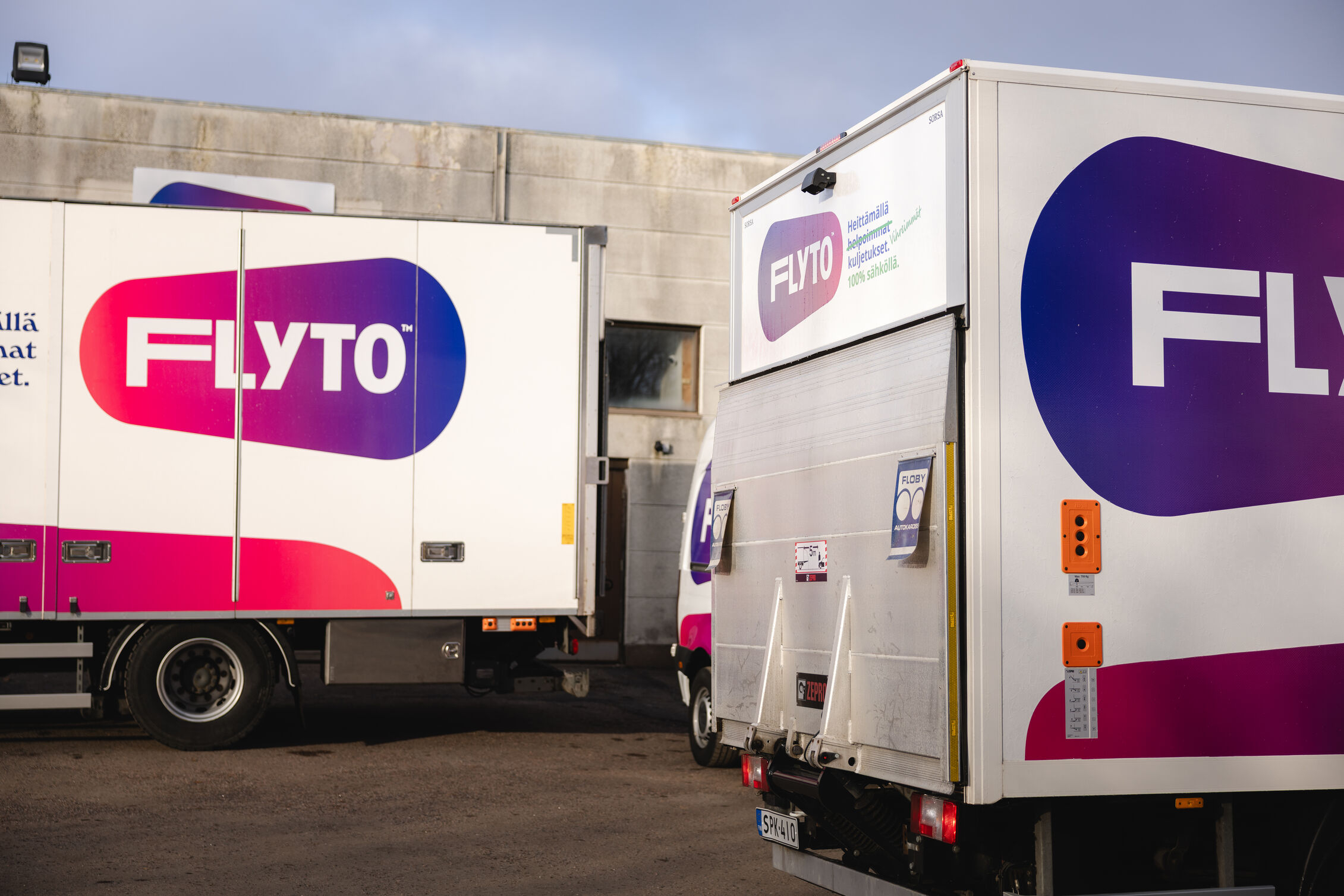
Flyto runs its own offices, warehouses, vehicles and moving teams across Northern, Central and Southern Europe, so the France side of your move — packing, loading, and the Channel crossing — is typically handled by our in-house crews rather than handed off cold. For the UK leg and any specialised steps (ToR customs clearance, final-mile delivery in specific UK regions), we work through a carefully vetted network of partner agents, so you get local expertise on both ends without losing a single point of contact for the whole move.
Frequently asked questions
Is this really not a duty-free move like moving within the EU?
Correct — the UK left the EU Single Market and Customs Union on 1 January 2021, so a genuine customs process applies. However, used personal and household goods you’ve owned for 6+ months can still move free of duty and import VAT under Transfer of Residence relief if you apply and get approval in advance (gov.uk).
Do I need a visa to move to the UK from France?
In almost all cases, yes. Free movement for EU citizens ended with Brexit. Unless you already hold status from before 31 December 2020 (EU Settlement Scheme) or are joining a family member who does, you’ll need to qualify under a standard UK immigration route such as a work or family visa (gov.uk).
Can I use the UK’s ETA to move permanently?
No. The Electronic Travel Authorisation lets EU citizens visit the UK — tourism, business trips, short stays of up to six months — without a separate visa, but it is not for living, working, or settling in the UK (gov.uk).
Can I keep my French car registration in the UK?
No — once you import your vehicle permanently, you must notify HMRC via NOVA within 14 days and then register it with DVLA once VAT/duty status is cleared (gov.uk).
Will my French driving licence still work?
France is on the DVLA’s list of designated countries, so you can exchange your French licence for a UK one free of charge using form D1 (gov.uk).
What happens to my French healthcare cover when I leave?
It stops once you’re no longer resident in France. Notify your CPAM within one month of departure using the déclaration de transfert de résidence (form S1105); in the UK, GP registration is free and open to everyone, but hospital care depends on your immigration/residence status (ameli.fr, NHS).
Sources
- European Commission — EU-UK relations: "the new normal"
- gov.uk — Transfer of residence to Great Britain
- gov.uk — Application for transfer of residence relief (ToR1)
- gov.uk — Check if you need a UK visa
- gov.uk — Visiting the UK as an EU, EEA or Swiss citizen (ETA)
- gov.uk — Apply to the EU Settlement Scheme
- gov.uk — Bringing your pet dog, cat or ferret to Great Britain
- gov.uk — Importing vehicles into the UK
- gov.uk — Importing vehicles into the UK: telling HMRC (NOVA)
- gov.uk — Exchange a foreign driving licence
- gov.uk — Apply for a National Insurance number: how to apply
- gov.uk — Check how to register for Self Assessment
- NHS — Register with a GP surgery
- impots.gouv.fr — Je pars à l’étranger ou j’arrive en France
- ameli.fr — Europe, international
- service-public.fr — Que faire de son véhicule quand on part s’installer à l’étranger
- service-public.fr — Registre des Français établis hors de France