

Moving from Finland to Germany (2026): Complete Guide

Finland and Germany are both EU member states, so a move along this corridor is an intra-European relocation, not an international one in the customs sense. That single fact changes almost everything about how the move works compared with, say, moving to the US or UK. This guide is for anyone relocating a household — alone, as a couple, or with a family — from Finland to Germany in 2026, and it focuses on what genuinely differs from a domestic move: registration, tax and social-security exit/entry, and how your belongings physically travel between the two countries.
Key takeaways
- No customs duty, no import declaration, no tax on your household goods. Finland and Germany are both inside the EU customs union, so goods move freely between them with no border checks and no tariffs — see the European Parliament’s factsheet on free movement of goods and the Council of the EU on the customs union. Your moving truck or container simply drives or sails across without stopping at a customs post.
- You don’t need a visa or work permit — free movement of people is an EU treaty right — but you do need to notify Finnish authorities of your departure and register with German authorities on arrival.
- Notify the Digital and Population Data Services Agency (DVV) of your move abroad; this keeps your official Finnish address current for pensions, elections and other official mail — DVV: Moving while living abroad.
- Your general (unlimited) Finnish tax liability ends when you permanently move away, but as a Finnish citizen you’re presumed to remain generally tax-resident for the move year plus the three following years unless you can show you have no substantial ties left to Finland, and you must file your final Finnish tax return for the departure year — Vero.fi: Moving away from Finland.
- You must physically register your German address (Anmeldung) at the local Bürgeramt/Einwohnermeldeamt within two weeks of moving in — Bundesportal: Wohnsitz anmelden.
- Statutory health insurance is mandatory in Germany, and EU citizens who were statutorily insured at home (i.e. via Kela/public healthcare in Finland) can generally join a German statutory fund — EU-Gleichbehandlungsstelle: Health insurance for EU citizens in Germany.
- Your EU driving licence stays valid in Germany until it expires — no mandatory exchange on arrival — Your Europe: Driving licence exchange and recognition in the EU.
- Pets need an EU pet passport, ISO microchip and valid rabies vaccination, and dogs entering Finland (not relevant for the outbound leg to Germany) need tapeworm treatment — but check requirements both ways if you plan to travel back — Your Europe: Travelling with pets in the EU.
1. Free movement: what actually applies to your move
Because both Finland and Germany are full members of the EU customs union, there is no customs clearance, no import duty, no VAT, and no declaration paperwork for your household goods crossing from Finland into Germany. This is fundamentally different from moving personal effects from outside the EU, where a formal transfer-of-residence relief application and an inventory are required. Within the EU single market, goods move as freely between Helsinki and Berlin as they do between two Finnish cities — no border post inspects your moving truck, and there is nothing to "clear."
This EU-EU rule is specific to the customs union. If a route ever touches Switzerland (outside the EU customs union — a formal customs declaration on Form 18.44 is required, though duty-free relief exists for genuine removal goods owned and used for at least six months), Norway or Iceland (EEA members but outside the EU customs union — customs formalities apply, again with removal-goods relief typically available), or the United Kingdom (fully outside the EU/EEA since Brexit — real customs declarations and potential duty apply), the process is materially different. None of that applies to a straightforward Finland-to-Germany move.
The other half of "free movement" is people: as an EU citizen you don’t need a visa, residence permit, or work permit to move to Germany. What replaces that bureaucracy is a registration duty on both ends — deregistering (informally) in Finland and formally registering your address in Germany — covered below.
If you still need to book the removal – price ranges, what is included and the questions to ask before you sign – see international moving companies in Finland.
2. Leaving Finland: what to close out
Notify DVV of your move. Report your move abroad — permanent or temporary — to the Digital and Population Data Services Agency using their online form, so pension, military-service and voting correspondence continues to reach you at your new German address (DVV: Moving while living abroad). A permanent move means you no longer have a registered Finnish home address; a temporary move (under a year) keeps your Finnish home municipality on record.
End your Finnish tax residency correctly. Your general (unlimited) tax liability to Finland ends when you permanently move abroad, but under Finland’s "three-year rule," Finnish citizens are presumed to remain generally tax-resident for the tax year of the move plus the following three years, unless they can show they have no substantial ties left to Finland (such as a home, family, or business interests still in the country). You must still file a Finnish tax return covering income earned in Finland during the year you leave, and it’s worth notifying Vero of your new address for any refund correspondence (Vero.fi: Moving away from Finland).
Sort out your Kela (social security) status. If you receive any Kela benefit or hold a European Health Insurance Card, notify Kela before you leave. When you move permanently to another EU/EEA country, Switzerland or the UK, that country generally becomes responsible for your social security and healthcare coverage under EU coordination rules (Regulation 883/2004), and your right to Kela benefits typically ends once your move is treated as permanent (Kela: Are you going outside Finland, Kela: Can you get Kela benefits outside Finland).
Driving licence: a Finnish (EU) driving licence remains valid to drive in Germany until its expiry date — no exchange is required at the point of moving. If your licence needs renewal after you’ve permanently settled in Germany, you renew it through the German system rather than through Traficom (Your Europe: Driving licence exchange and recognition in the EU).
Vehicle: if you’re taking a car permanently, remove it from Finnish traffic use for export at a Traficom-approved inspection station, which ends its Finnish vehicle tax and insurance (Traficom: Poista ajoneuvo ulkomaille tai Ahvenanmaalle). You’ll then need to register it in Germany — see section 4.
3. How your household goods actually move
Finland and Germany don’t share a land border, so your shipment travels either by sea ferry or by road via Sweden and Denmark. The following are freight-industry route estimates, not government data, and actual transit time depends on your specific mover, season, and departure port:
- Direct RoRo ferry: Helsinki or Hanko to Travemünde (near Lübeck) or Rostock is the classic Baltic freight route, run by operators such as Finnlines, with a sea crossing of roughly 27-30 hours. This is typically the fastest and most common way movers route Finland-Germany shipments, since the truck or container drives straight onto the ferry with no other border crossing.
- Land route via Sweden and Denmark: an alternative is ferry from Finland to Sweden (e.g. Helsinki-Stockholm), then road across the Öresund Bridge into Denmark and south into Germany. This route is longer in transit days and adds a second ferry leg, but can be more flexible for consolidated groupage shipments.
- Typical door-to-door timing for a full-service move quoted by relocation companies is commonly in the range of roughly 1-3 weeks depending on whether you book a dedicated (exclusive-use) truck or a shared/groupage load consolidated with other customers’ shipments — dedicated trucks are faster but cost more per shipment.
Because there’s no customs stop, the only real friction points are ferry schedules and, for a shared load, waiting for the truck to fill before departure — plan around those rather than around any import paperwork.
4. Arriving in Germany: what you must register
Anmeldung — register your address. This is the single most important step and the one most newcomers underestimate. German law (Bundesmeldegesetz §17) requires everyone — Germans and EU citizens alike — to register their residential address with the local Bürgeramt/Einwohnermeldeamt within two weeks of moving in; missing the deadline can carry a fine of up to €1,000. You’ll need your passport or EU ID, the completed registration form, and the landlord-issued Wohnungsgeberbestätigung confirming you actually live at the address (Bundesportal: Wohnsitz anmelden). This produces your Meldebescheinigung (registration certificate), which you’ll need for almost everything else — bank accounts, health insurance, employer paperwork.
As an EU citizen, you are not required to apply for a separate residence document during your first three months, and even after three months registration is largely a formality confirming an already-existing treaty right, not a permit application (Your Europe: Registering residence abroad after the first 3 months).
Tax ID (Steuer-ID). You don’t apply for this separately — once your Anmeldung data reaches the Bundeszentralamt für Steuern (Federal Central Tax Office), it automatically issues your permanent, eleven-digit Steuerliche Identifikationsnummer by post, typically within a few weeks. You’ll need this number for employment, banking and any tax filing (BZSt: Steuerliche Identifikationsnummer).
Health insurance. Health insurance is compulsory in Germany. If you’re employed, your employer enrolls you in a statutory health fund (gesetzliche Krankenversicherung) as part of onboarding, and coverage takes effect automatically. If you were covered under Finland’s public healthcare system before moving and are not immediately employed, EU rules generally let you join a German statutory fund as a member in your own right, rather than defaulting to private insurance (EU-Gleichbehandlungsstelle: Health insurance for EU citizens in Germany).
Driving licence: as noted above, no exchange is required on arrival — your Finnish/EU licence remains valid in Germany until it expires (Your Europe: Driving licence exchange and recognition in the EU).
Vehicle re-registration. If you’re keeping your car in Germany permanently (rather than just visiting with it), you must register it at your local Kfz-Zulassungsstelle, which issues German plates and applies German vehicle tax. There are no EU-wide harmonised rules on vehicle registration, so check your specific municipality’s deadline and any exemption available for a permanent cross-border house move (Your Europe: Car registration in another EU country).
5. Moving with pets
Dogs, cats and ferrets travelling from Finland to Germany need, at minimum: an ISO-compliant microchip implanted before vaccination, a valid rabies vaccination (with the microchip predating it, and the animal at least 12 weeks old), and an EU pet passport issued by an authorised vet recording both. For a first/primary vaccination, the passport must show it was completed at least 21 days before travel (Your Europe: EU rules on travelling with pets, European Commission: Travelling with a pet within the EU). Note that Finland (along with Ireland, Malta and Northern Ireland) additionally requires dogs entering the country to have tapeworm (Echinococcus) treatment shortly before arrival — relevant if you plan a return trip with your dog, not for the outbound Finland-to-Germany leg itself.
6. Money, banking, and what people forget
- Open a German bank account (Girokonto) once you have your Meldebescheinigung — most banks require proof of German address, and you’ll need a German IBAN for rent, utilities and payroll.
- Finland and Germany both use the euro, so there’s no currency exchange to plan for — but check whether your Finnish bank charges cross-border transfer or card fees once you’re a German resident.
- Redirect your Finnish post and cancel or transfer subscriptions, direct debits and insurance tied to your old address.
- Confirm whether your employer or Finnish pension provider needs separate notification beyond DVV and Vero — occupational pension funds sometimes require their own address update.
- Renting out or selling property in Finland while abroad has its own tax implications — check with Vero or a tax adviser before departure.
How Flyto handles your Finland to Germany move
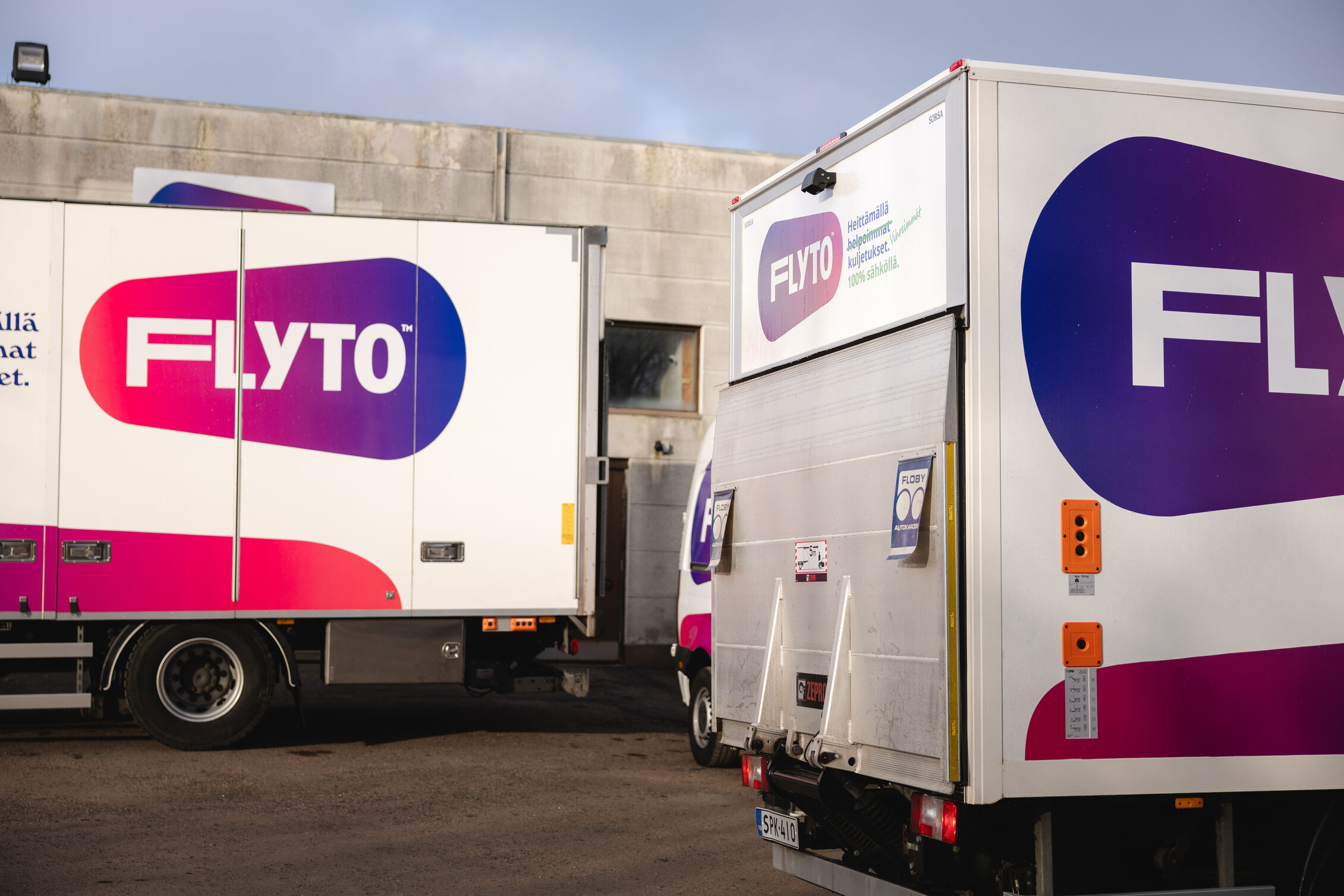
Flyto runs its own offices, warehouses and moving teams across Northern, Central and Southern Europe, which means we can plan and directly execute the core legs of a Finland-to-Germany move with our own vehicles and crews rather than handing the whole job to a stranger. For capacity, specific routing, or destination-side services outside our own network’s reach, we work with a carefully vetted network of partner carriers and local agents, so you get one point of contact and one quote covering the full door-to-door move, whichever combination of in-house and partner capacity is used to deliver it.
Frequently asked questions
Do I need to pay customs duty on my furniture and belongings moving from Finland to Germany?
No. Both countries are inside the EU customs union, so household goods move between them with no customs duty, import declaration, or import VAT.
Do I need a visa or residence permit to live in Germany as a Finnish citizen?
No. As an EU citizen you have the right to live and work in Germany without a visa or work permit; you do need to register your address (Anmeldung) once you have a home there.
How soon after arriving in Germany do I have to register my address?
Within two weeks of moving into your new home, at the local Bürgeramt/Einwohnermeldeamt.
Will my Finnish driving licence still work in Germany?
Yes, an EU driving licence remains valid to drive in Germany until its original expiry date; no exchange is required just because you moved.
What happens to my healthcare coverage when I move?
Once you’re permanently resident in Germany, Germany generally becomes responsible for your healthcare under EU coordination rules, and you’ll enrol in German health insurance (statutory or, in limited cases, private) rather than relying on Finnish Kela coverage or the EHIC, which is meant for temporary stays, not residents.
Can I bring my car and keep Finnish plates?
Only temporarily. If Germany becomes your normal residence, you’re expected to register the vehicle in Germany and get German plates; you first remove it from Finnish traffic use for export via Traficom.
Sources
- European Parliament: Free movement of goods
- Council of the EU: The EU customs union
- DVV: Moving while living abroad
- Vero.fi: Moving away from Finland
- Kela: Are you going outside Finland
- Kela: Can you get Kela benefits outside Finland
- Traficom: Poista ajoneuvo ulkomaille tai Ahvenanmaalle
- Your Europe: Driving licence exchange and recognition in the EU
- Your Europe: Registering residence abroad after the first 3 months
- Bundesportal: Wohnsitz anmelden
- BZSt: Steuerliche Identifikationsnummer
- EU-Gleichbehandlungsstelle: Health insurance for EU citizens in Germany
- Your Europe: Car registration in another EU country
- Your Europe: Travelling with pets in the EU
- European Commission: Travelling with a pet within the EU