

Moving to Seville (2026): The Complete Relocation Guide

Seville (Sevilla) is Andalusia’s capital and Spain’s fourth-largest city — around 688,700 residents in 2025, a population growing almost entirely on the back of new arrivals from Colombia, Morocco, Nicaragua and Venezuela (Ayuntamiento de Sevilla, Anuario Estadístico 2025). It is also one of the physically hardest cities in Spain to move into: the historic core is a maze of medieval lanes where a removal truck simply cannot go, the old casas have tiny stairwells and often no lift, and for four months of the year the heat is a genuine logistics hazard, not a detail. This guide covers the practical mechanics of moving to Seville in 2026 — the truck and street realities only a mover knows, where to live and what rent really costs, how to find a flat, register your padrón and get a health card, and what monthly life actually costs — with official sources throughout.
Freshness note: prices and rules verified against Sevilla.org, the Gerencia de Urbanismo, TUSSAM, Metro de Sevilla, Idealista, the Agencia Tributaria, the Servicio Andaluz de Salud and AEMET in 2026. Fees and rents move — confirm figures with the linked authorities before you rely on them.
Quick answer: moving to Seville in 2026
What does it cost to move to Seville? An international household move (a full flat) typically lands in the low-to-mid four figures from within Europe and higher from overseas, driven mostly by volume, distance and access. Seville’s access difficulties (see below) add real cost — narrow-street shuttling, exterior furniture lifts and heat-driven early starts — so get a fixed quote for your specific address rather than a generic estimate. Get a Flyto quote here.
How long does the move take? Road moves from within the EU are usually a few days to about two weeks door-to-door; overseas sea freight runs several weeks. The one Seville-specific quirk everyone underestimates: in the old centre — Santa Cruz, the Barrio de la Judería, Alfalfa — a full truck cannot physically reach your door, so the move becomes a small-van shuttle plus long hand-carries, and it must be scheduled for the early morning to beat 40°C+ heat.
Key takeaways
- A full removal truck cannot enter the old centre. The lanes of Santa Cruz, the Judería and Alfalfa are metres wide, often pedestrianised and studded with bollards and orange trees. The move becomes a small-van shuttle from the nearest accessible point, with hand-carries that can run 50–100 metres — plan for it, or lose hours on the day.
- You must file a moving notice with the Ayuntamiento. Seville uses a comunicación previa de realización de mudanza (form M010) to reserve kerb space, under the city’s traffic ordinance; the applicant guarantees the space and pays the corresponding tasa, but the signs are only informational — they carry no towing power (Sevilla.org — form M010).
- Old casas and corralas often need a furniture lift. Many central buildings are two-to-four storeys with narrow spiral stairs and no lift, so sofas, wardrobes and appliances go in via an exterior montamuebles hoist through a balcony or window.
- Heat is a moving factor. AEMET’s Seville record is 46.6°C (23 July 1995), and 40°C+ days are routine in July and August — moves are scheduled for the early morning to protect the crew and heat-sensitive belongings (AEMET climate data, Sevilla).
- Rent is far cheaper than Madrid or Barcelona. Seville averages roughly €13/m² per month for new lettings, from about €10/m² on the outskirts to over €14/m² in the centre and along the river (Idealista rental index).
1. The move into Seville — logistics only a mover knows
This is the part generic ”moving to Seville” guides skip, and it is exactly where a move goes wrong. Seville’s historic core was laid out for medieval carts and mule trains, not for a 12-metre removal truck, and the summer climate adds a hard constraint on top. Four things decide whether your move day runs smoothly.
Santa Cruz, the Judería and Alfalfa: where the truck cannot go
The Barrio de Santa Cruz — the old Jewish quarter (Barrio de la Judería) behind the Cathedral — and the neighbouring Alfalfa and Arenal lanes are the most beautiful streets in the city and the most hostile to a moving truck. Many are formally pedestrianised, several are barely wide enough for one small car, and most are protected by retractable bollards (pilonas), tight 90-degree turns and low-hanging orange trees. A full-size truck literally will not fit, and where it would, it cannot turn around.
The professional solution is a shuttle: the main truck parks at the nearest legal loading point on a wider street, and a small van (or hand trolleys) ferries the load in relays to the door. Expect hand-carries of 50 to 100 metres, sometimes across a plaza, and build the extra time and labour into the plan. This is the single biggest difference between a Seville move and a Madrid or Barcelona move, and the thing most out-of-town movers get wrong.
The moving notice: comunicación previa de mudanza (M010)
Unlike some Spanish cities, Seville has a specific municipal procedure for reserving the kerb for a move. You file a comunicación previa de realización de mudanza — form M010 — with the Ayuntamiento’s mobility service, submitting a sketch of the exact stretch of street you need to cordon off (plano de la zona a acotar). It is governed by articles 111–113 of the city’s traffic ordinance (Ordenanza de Circulación de la Ciudad de Sevilla, BOP nº 206, 5 September 2014). Key facts straight from the form (Sevilla.org, M010):
- You guarantee and pay for the space. The form states that ”la garantía de la reserva de espacio corresponderá al solicitante” and that this ”implicará el pago de la Tasa correspondiente” — you must attach proof of payment of the municipal fee to the notice.
- The signage is only informational. Crucially, the ordinance says the signage placed is ”meramente informativa, careciendo de efectos coercitivos” — merely informational, with no coercive effect. Unlike a German Haltverbot, it does not by itself get a badly parked car towed, so the space still has to be worked for on the day.
- A move can never close the street. The form is explicit that a mudanza ”NO IMPLICARÁ EN NINGÚN CASO EL CORTE TOTAL O PARCIAL DE LA CALLE” — it can never involve a full or partial street closure. If your access genuinely requires stopping traffic (a crane, a very wide load in a narrow lane), that needs a separate, express authorisation applied for in advance.
- Bigger or longer occupations go through Urbanismo. If the job needs a skip, a container, scaffolding or an extended occupation of the pavement, that is a different licence — the ocupación de vía pública (Modelo 63) granted by the Gerencia de Urbanismo, not the mudanza notice (Gerencia de Urbanismo — ocupación de vía pública).
You usually want the notice filed for both the old and new addresses. A mover who knows Seville handles the M010, the fee and the plano so there is a reserved, marked stretch of kerb when the truck arrives — and, just as importantly, knows where the nearest legal loading point is when the door itself is unreachable.
No lift, spiral stairs, and the montamuebles
Central Seville is a city of low, old houses — traditional casas built around a patio, converted corralas (shared-courtyard tenements), and pre-lift apartment blocks. Many are two to four storeys with narrow, winding stone or tiled staircases and no elevator, and where a lift exists it is often a tiny two-person cabin that no sofa will ever enter.
The standard Seville answer is an exterior furniture lift (montamuebles / elevador de muebles) — a ladder hoist run up the facade to lift bulky items straight in through a window, balcony or the flat roof (azotea). It needs its own reserved kerb space, which is another reason the M010 placement matters, and it has to be positioned clear of the orange trees and balcony ironwork that line so many streets. A good mover assesses staircase width, floor and balcony access before the day, not when the wardrobe is wedged on the first-floor turn.
Heat, orange trees and the festival calendar
Seville is the hottest major city in mainland Spain. AEMET’s official record for the city is 46.6°C, set on 23 July 1995, and stretches of 40°C+ days are normal through July and August — July 2022 alone had 13 days above 40°C (AEMET). That is not just uncomfortable; it is an operational limit. Moves in summer are scheduled to start at first light and finish before midday, both to keep the crew safe and to protect heat-sensitive belongings — candles, electronics, vinyl records, artwork and anything that warps or melts in a van that hits 50°C inside.
The other Seville-specific date trap is the spring festival season. During Semana Santa (Holy Week) and the Feria de Abril, large parts of the centre are closed for processions and the fairground, streets are blocked for days, and a move through the historic core is effectively impossible. Plan around them, not into them.
2. Where to live — Seville neighborhoods by profile
Seville’s character changes sharply from one barrio to the next. The rent figures below are indicative monthly asking rents for new lettings in 2026; the citywide average is around €13/m²/month, ranging from roughly €10/m² on the periphery to over €14/m² in the centre and by the river (Idealista rental index). Treat the euro ranges as a one-bed-to-family-flat spread, and remember demand is tightest in Triana, the centre and Nervión.
Character and buzz:
- Triana (~€750–1,200/month) — the historic ceramics-and-flamenco quarter across the Guadalquivir, with its market, tapas bars and river views. Proud, characterful and increasingly in demand; you pay a premium for the postcard riverside and the short walk to the centre, and the best flats go fast.
- Santa Cruz & El Arenal (~€800–1,300/month) — the tourist heart around the Cathedral, Alcázar and bullring. Stunning, central and atmospheric, but flats are small, old and expensive, stock is thin, and you live with year-round tourist noise and short-let neighbours.
- Alameda & Feria (~€700–1,050/month) — Seville’s bohemian, LGBTQ-friendly core around the Alameda de Hércules and the Calle Feria market. Nightlife, indie bars and a young crowd; lively and central, but genuinely noisy at weekends.
Settled and family-friendly:
- Los Remedios (~€900–1,350/month) — bourgeois, quiet and well-kept, next to the Feria fairground and a bridge from the centre. Families and professionals; one of the priciest districts in the city, and a little staid.
- Nervión (~€800–1,150/month) — modern, commercial and superbly connected, on Metro Line 1 and home to Sevilla FC’s stadium and the big shopping centres. A practical choice for professionals and families who want lifts, parking and a short commute over old-town charm.
- El Porvenir (~€900–1,300/month) — a leafy, well-heeled residential pocket by the María Luisa park, popular with established families; calm and green, with rents to match.
Budget and space:
- Macarena (~€600–900/month) — working-class, multicultural and lively around the Basilica and the old walls; the cheapest of the truly central districts, changing fast and uneven street to street.
- Sevilla Este & San Pablo (~€650–950/month) — modern outer districts with newer, lift-equipped blocks, more space for the money and easy parking; the trade-off is a longer, bus-dependent commute and little atmosphere.
- Aljarafe suburbs — Tomares, Mairena del Aljarafe, Bormujos, Castilleja (~€800–1,200/month for a house) — the hills west of the river where families go for a house, a garden and a pool. Cheaper per square metre and calmer, but you will need a car or the end of Metro Line 1, and you are firmly out of town.
3. The Seville housing market — how flats are actually found
Seville’s rental market is cheaper than Madrid or Barcelona but has tightened sharply, with strong competition for good central flats and a growing squeeze from short-term tourist lets. Here is how it works.
- Where to search: the mainstream portals are Idealista, Fotocasa and Pisos.com, plus local agencies for the old-town stock that never reaches the big sites. Move fast on well-priced central listings — they are gone in days.
- You need an NIE. To sign a lease and set up utilities you need a Número de Identidad de Extranjero (NIE). Non-residents apply through the national police immigration route (cita previa at sede.administracionespublicas.gob.es); a tax NIF can be requested via the Agencia Tributaria’s Modelo 030. Sort this before you start signing anything.
- Deposit (fianza): for a primary residence the legal deposit is one month’s rent (Ley de Arrendamientos Urbanos, art. 36), which the landlord must lodge with the regional housing authority. In practice landlords in a hot market often ask for an additional guarantee (garantía adicional) or a bank aval on top — know that the base fianza is one month and negotiate from there.
- The application packet. Landlords and agencies expect proof of income (recent payslips or a work contract), ID/NIE, and often the last few bank statements or a guarantor. Have it all ready as one PDF before you view; the flat goes to whoever applies cleanest and fastest.
- Scam warning. Fake listings target newcomers who cannot view in person. Never transfer a deposit or ”reservation” before you have seen the flat and met the real owner or agent. Classic red flags: an ”owner abroad”, keys promised by post against an advance payment, prices well below the barrio average, or pressure to pay to a foreign IBAN or via a holiday-booking platform.
4. Empadronamiento — registering your address in Seville
The empadronamiento (registering on the municipal roll, the padrón) is the foundation of Spanish bureaucracy: you need your certificado de empadronamiento to get a public health card, enrol children in school, exchange a driving licence and complete most residency steps. The rules:
- Where and how. You register with the Ayuntamiento de Sevilla, in person at a district office by appointment or online with a digital certificate. Book the cita previa by phoning 010 or through the city’s electronic office (Sevilla.org — empadronamiento). It is free.
- What to bring. A valid ID document (DNI, passport, or for foreigners the NIE / TIE or an EU registration certificate), the completed hoja padronal, and proof of the address — a rental contract, property deed, or a signed authorisation from the owner or main tenant if you live in someone else’s home (Sevilla.org).
- Why it matters first. Nearly everything downstream — the SAS health card, a school place, the padrón-linked bonuses on transport — depends on you being empadronado, so make it one of your first errands. For the essentials of getting your paperwork in order in Spain, see our guide to the NIE and Spanish registration essentials.
5. Cost of living in Seville (2026)
Seville is one of the more affordable big cities in Western Europe, and markedly cheaper than Madrid, Barcelona or the northern capitals — rent and transport are the two lines where it really shows. The current numbers:
- Rent is the big saving — see section 2. Budget roughly €10/m²/month in the outer districts up to €14/m²+ in the centre and by the river for a new lease, averaging about €13/m² citywide (Idealista).
- Public transport is cheap. A single TUSSAM bus ticket is €1.40 — among the lowest fares of any major Spanish city — falling to roughly €0.69–0.76 per trip on a rechargeable bonobús (with a transfer discount). A rise toward €1.50 for the single ticket was proposed for 2026 but not yet in force (TUSSAM). Metro de Sevilla single fares run €1.35 to €1.80 depending on how many zone ”jumps” (saltos) you cross (Metro de Sevilla).
- Electricity is the seasonal sting: air-conditioning through a Seville summer pushes bills well above the Spanish norm from June to September, so budget for the July and August spike rather than an even monthly figure.
- Everyday costs — tapas, markets, menús del día — are among the cheapest in urban Spain, which is a large part of why Seville draws so many remote workers and students relative to its size.
6. Getting settled — health, transport, schools, internet
- Health card (tarjeta sanitaria del SAS). Public healthcare in Andalusia is run by the Servicio Andaluz de Salud. Once you are empadronado and have your NIE and social-security cover, you apply for the tarjeta sanitaria at your assigned centro de salud, bringing your ID and your certificado de empadronamiento; you are then assigned a GP or paediatrician. The 24-hour information line Salud Responde is 955 545 060 (Servicio Andaluz de Salud). If you are arranging cover across a move, see our Spanish healthcare guide.
- Transport. Getting around leans on TUSSAM buses, the single Metro Line 1 (running from the Aljarafe suburbs through the centre to Olivar de Quintos), the MetroCentro tram along the Avenida de la Constitución, and Cercanías commuter trains. The city is flat, compact and famously bike-friendly — the Sevici public-bike scheme and a large cycle-lane network make cycling realistic for most of the year, heat permitting.
- Schools. State (público) and semi-private (concertado) schools are allocated partly by catchment, so your padrón address matters; bilingual (English) programmes are widespread, and there are international schools in the Aljarafe for expat families. Enrolment periods are fixed, so check dates early.
- Internet. The main providers are Movistar, Vodafone, Orange, MásMóvil and the budget option Digi, with fibre (fibra óptica) available across most of the city at 300 Mbps–1 Gbps. Installation is usually quick once you have an NIE and a Spanish bank account, but order early and check what the building already has wired in.
7. How Flyto handles your move to Seville
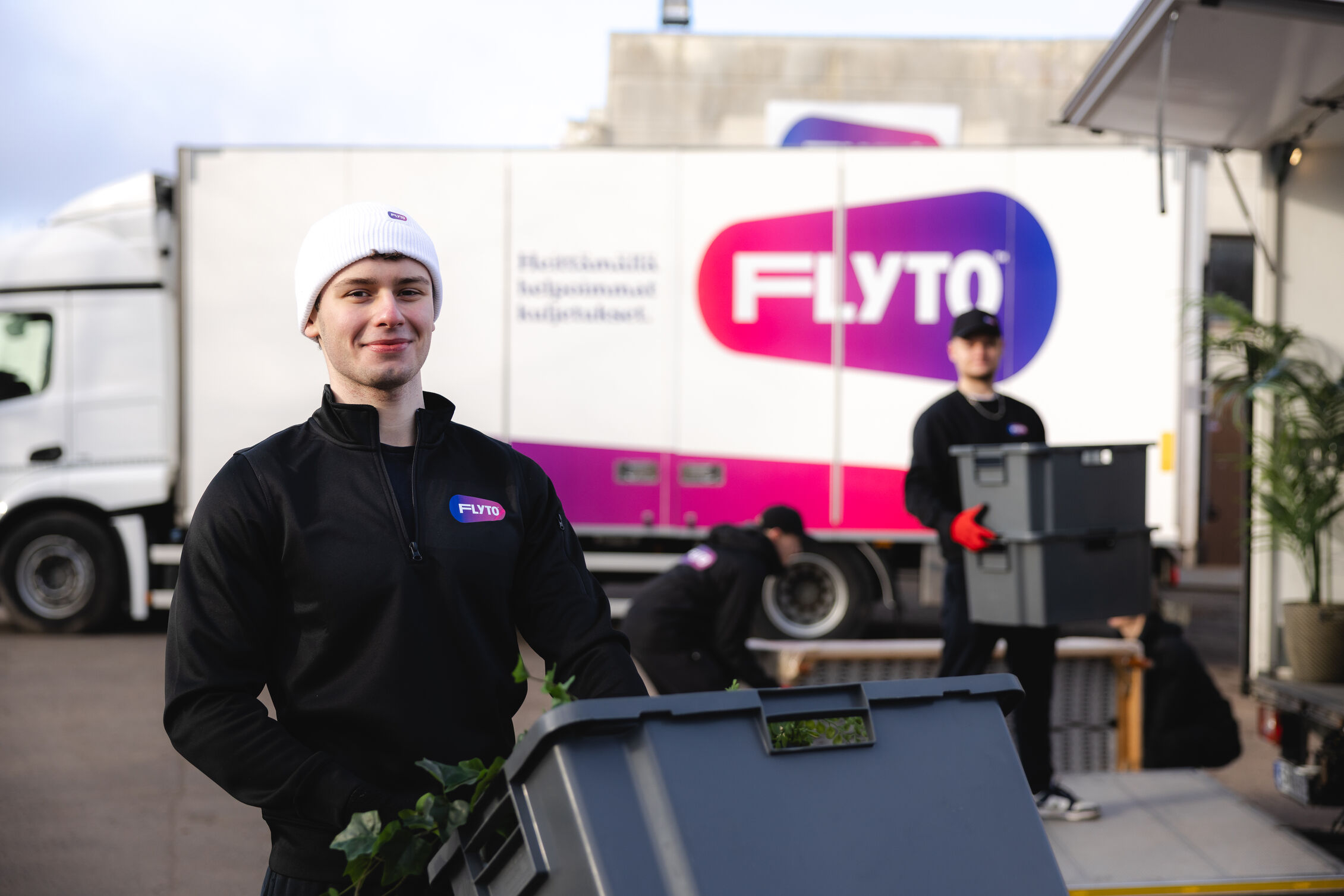
Everything in section 1 is why a Seville move rewards a mover who actually knows the city — and it is where Flyto earns its keep. When the door is in Santa Cruz, the Judería or Alfalfa and no truck can reach it, we run a small-van shuttle from the nearest legal loading point and plan the hand-carry route in advance, rather than discovering the problem with the truck double-parked. We file the comunicación previa de mudanza (M010) and the fee at both addresses, with the plano the Ayuntamiento requires, and we bring an exterior furniture lift (montamuebles) when the staircase or lift won’t take your sofa. And we schedule around the heat and the festival calendar — early-morning loading in summer, and never into Semana Santa or the Feria de Abril. That is the honest difference between a generic van hire and a relocation partner who has done these streets before. Get a fixed quote for your Seville move, compare it with our Madrid and Barcelona city guides, or browse all our Spain moving guides.
Moving to Seville? Get a fixed quote.
Tell us your addresses and volume and we’ll price the whole move — including the narrow-street shuttle, the M010 permit and any furniture lift your old-town flat needs. No surprises on the day, and never in the July heat by accident.
Frequently asked questions
Can a moving truck reach my flat in the old centre of Seville?
Usually not. Santa Cruz, the Barrio de la Judería, Alfalfa and much of El Arenal are medieval lanes — often pedestrianised, metres wide, and blocked by bollards and orange trees — where a full-size removal truck cannot pass or turn. The professional solution is a shuttle: the truck parks at the nearest wide street and a small van or trolleys ferry the load in, with hand-carries that can run 50–100 metres. A mover who knows Seville plans this before the day.
Do I need a permit to park the moving truck in Seville?
You file a comunicación previa de realización de mudanza (form M010) with the Ayuntamiento to reserve kerb space, submitting a sketch of the area and paying the corresponding fee (tasa). Note the signage is only informational and carries no towing power, and a move can never legally close the street — a full closure needs a separate, express authorisation. Most people delegate the M010 and fee to their moving company.
Will my furniture fit up a Seville staircase?
Often not. Many central buildings are old casas and corralas with narrow, winding stairs and no lift, or a lift too small for large items. Sofas, wardrobes and appliances frequently have to go in via an exterior furniture lift (montamuebles) through a window, balcony or roof terrace. A good mover checks staircase width, floor and balcony access in advance and books the lift before move day.
When is the worst time to move in Seville?
Two windows. Midsummer — July and August routinely hit 40°C+, with an all-time record of 46.6°C, so summer moves are scheduled for the early morning and finished before midday. And the spring festivals: during Semana Santa and the Feria de Abril large parts of the centre are closed for processions and the fairground, making a move through the old town effectively impossible.
How much is rent in Seville in 2026?
For a new lease, rents average around €13/m²/month citywide, from roughly €10/m² in outer districts like Sevilla Este up to €14/m²+ in the centre and along the river (Idealista). In round monthly terms, expect roughly €600–900 in Macarena, €750–1,200 in Triana, €800–1,150 in Nervión and €800–1,300 in the historic centre. It remains well below Madrid and Barcelona.
Which Seville neighbourhood is best for families?
Los Remedios, Nervión and El Porvenir are the classic family choices — quieter, well-connected and with lift-equipped flats — while families wanting a house and garden head to the Aljarafe suburbs (Tomares, Mairena del Aljarafe, Bormujos), accepting a car or Metro Line 1 commute. Triana suits families who want character and the river without leaving the city.
How do I register (empadronamiento) in Seville?
You register free with the Ayuntamiento de Sevilla, in person by appointment (call 010 or use the city’s electronic office) or online with a digital certificate. Bring ID (DNI, passport, NIE or TIE), the completed hoja padronal, and proof of address — a rental contract, deed or the owner’s authorisation. Do it early: your certificado de empadronamiento is needed for the SAS health card, school places and residency steps.
How do I get a public health card in Seville?
Andalusia’s public healthcare is run by the SAS. Once you are empadronado and hold an NIE with social-security cover, you apply for the tarjeta sanitaria at your assigned centro de salud, bringing your ID and your empadronamiento certificate; a GP or paediatrician is then assigned to you. The information line Salud Responde is 955 545 060.
Official sources
- Ayuntamiento de Sevilla — form M010, comunicación previa de mudanza
- Ayuntamiento de Sevilla — mobility forms (mudanza)
- Gerencia de Urbanismo — ocupación de vía pública (Modelo 63)
- Ayuntamiento de Sevilla — empadronamiento (padrón municipal)
- Ayuntamiento de Sevilla — Anuario Estadístico 2025 (population)
- Idealista — Seville rental price index (€/m²)
- TUSSAM — bus tickets and travelcards
- Metro de Sevilla — fares and zones
- Administraciones Públicas — cita previa for NIE/extranjería
- Agencia Tributaria — Modelo 030 (NIF for foreigners)
- Servicio Andaluz de Salud — tarjeta sanitaria
- AEMET — Seville climate data (heat records)
- Flyto — NIE and Spanish registration essentials
- Flyto — Spanish healthcare guide
- Flyto — Moving to Madrid (2026)
- Flyto — Spain moving guides