

Moving from Spain to Italy 2026: Complete Relocation Guide

Moving from Spain to Italy in 2026 involves EU-internal relocation with no customs clearance required, typical transit times of 2–5 days depending on route (Barcelona–Rome ~1,400 km, Madrid–Milan ~1,600 km), and costs starting from €1,350 for small moves. Both countries are EU members, so Spanish citizens need only passport or national ID and must register residency (”residenza”) within 90 days of arrival at the local ”Anagrafe” office.
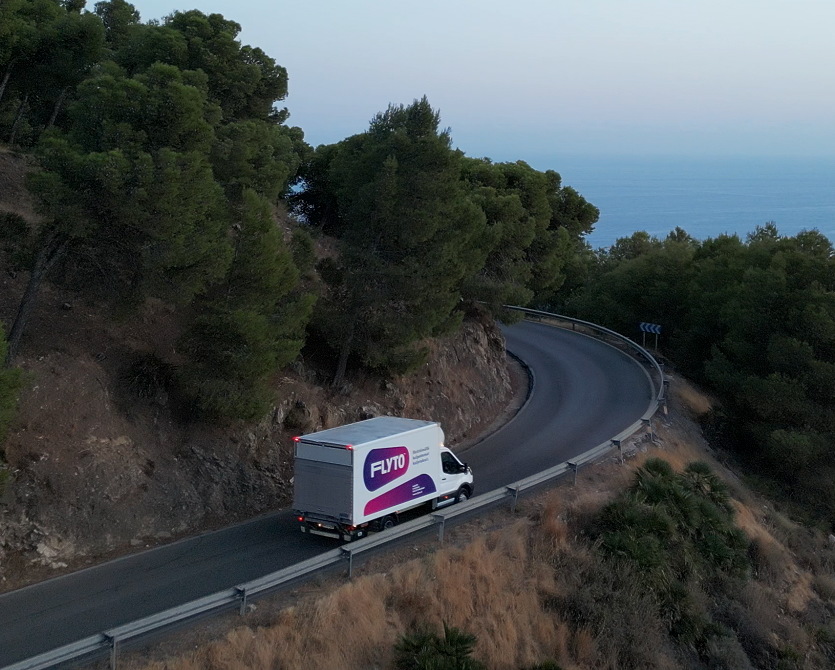
Relocating from Spain to Italy represents one of the Mediterranean’s most popular cross-border moves, driven by career opportunities in Milan’s fashion and finance sectors, lifestyle changes to Tuscany or Sicily, and family reunification. Flyto’s team has coordinated thousands of cross-border household moves across 20 European countries since 2018, including hundreds of Spain–Italy relocations via coastal ferry routes and Alpine land crossings. This guide covers everything from verified pricing and transit logistics to Italian residency registration and practical settlement tips.
Why people move from Spain to Italy
Spain–Italy migration flows are driven by diverse motivations. Milan attracts finance professionals, designers, and fashion industry talent with higher salaries than Madrid or Barcelona equivalents (average Milan gross salary ~€45,000 vs. Barcelona ~€35,000). Rome draws EU institution workers, academics, and cultural sector professionals. Tuscany, Umbria, and Sicily appeal to lifestyle migrants seeking slower-paced living, vineyard properties, and Mediterranean climate. Family reunification accounts for roughly 30% of Spain–Italy household moves, particularly among Italian-origin families returning from Spanish coastal retirement communities.
Both countries share Latin cultural roots, Catholic heritage, and similar daily rhythms (late dinners,午睡-style afternoon breaks in southern regions), easing cultural adaptation compared to relocations to Northern Europe. However, Italian bureaucracy (”burocrazia”) is notoriously complex — expect longer processing times for residency permits, healthcare registration (”Tessera Sanitaria”), and utility connections than in digitally advanced Spain.
Spain to Italy moving costs 2026
International moving costs from Spain to Italy depend on four primary variables: shipment volume (cubic meters), route and distance, service tier (Silver/Gold/Platinum), and seasonal demand. Flyto’s pricing is transparent and tailored per move — the reference prices below represent typical EU short-distance scenarios and should be used as illustrative guidelines only. For an accurate Spain–Italy quote specific to your origin/destination pair and household size, request a personalized estimate.
| Household size | Volume | Silver tier | Gold tier | Platinum tier |
|---|---|---|---|---|
| Studio / 1-bedroom | ~15 m³ | From €1,350 | From €2,150 | From €3,400 |
| 2–3 bedroom apartment | ~30 m³ | From €1,350 | From €3,450 | From €5,250 |
| Family house | ~60 m³ | From €1,500 | From €4,900 | From €7,450 |
| Prices inclusive of VAT. Add-ons (packing, disassembly, insurance) available — see breakdown below. | ||||
The table above shows starting-from reference pricing for typical EU moves. Spain–Italy routes may vary based on specific origin/destination combination (e.g., Barcelona–Milan land route vs. Málaga–Palermo ferry route). Always request a tailored quote to receive exact pricing for your move.
What’s included in each service tier?
Flyto offers three transparent service tiers designed to match different budgets and service expectations. These are the ONLY tier names we use — never ”Basic” or ”Premium”.
- Moving van + 1 driver (who also helps carry)
- Furniture protection
- Transport A→B
- Unloading at new home
- Box packing/unpacking
- Furniture disassembly/assembly
- Everything in Silver
- 2–3 professional movers
- Loading and unloading
- Careful furniture protection
- Box packing/unpacking (available as add-on)
- Everything in Gold
- 2–3+ movers
- Box packing AND unpacking
- Packing materials included
- Furniture disassembly & assembly
Optional add-on services
Beyond the core service tiers, Flyto offers these verified add-ons at transparent pricing:
Main routes from Spain to Italy
Spain–Italy relocations follow three primary corridor types, each with distinct logistics and transit characteristics:
1. Barcelona / Valencia → Rome / Northern Italy (Genoa ferry route)
The most common commercial route for eastern Spain departures. Trucks depart Barcelona or Valencia, drive to the port of Barcelona or Valencia, board a Grimaldi Lines or GNV ferry to Genoa or Civitavecchia (Rome’s port), then complete the final leg by road. Total transit time: 2.5–4 days depending on ferry schedule (crossings run 3–5 times weekly). This route works well for destinations in Liguria, Tuscany, Lazio, and Lombardy.
2. Madrid / Central Spain → Milan / Northern Italy (land corridor via France)
Trucks depart Madrid, cross into France via the Basque Country or Catalonia, traverse southern France (Toulouse–Lyon corridor), and enter Italy via the Fréjus or Mont Blanc tunnels. Total distance Madrid–Milan: ~1,600 km, typical transit time 2–3 days. This route avoids ferry delays and is preferred for time-sensitive moves to Milan, Turin, or Veneto region destinations. Winter Alpine weather can add 4–8 hours to crossing times (November–March).
3. Southern Spain → Southern Italy (direct ferry routes)
For Andalusia or Murcia departures to Naples, Palermo, or Bari, direct ferry routes from Barcelona or Valencia to Naples (Tirrenia, Grimaldi) or from Barcelona to Palermo (Grandi Navi Veloci) offer the most efficient logistics. Transit time: 3–5 days including 18–24-hour ferry crossings. These routes are ideal for Sicily, Campania, or Puglia destinations but run less frequently (2–3 times weekly in peak season, weekly in winter).

Required documents for moving from Spain to Italy
Because both Spain and Italy are EU member states, the relocation process is significantly simpler than moves to non-EU countries (no customs clearance, no visa requirements). However, several administrative steps are mandatory to establish legal residency in Italy.
-
Passport or EU national ID (DNI/NIE)
Valid identification for residency registration in Italy. Spanish citizens may use either passport or DNI; non-EU residents with Spanish NIE must check Italian visa requirements separately.
-
Lease agreement or property deed (contratto di locazione / atto di proprietà)
Proof of address in Italy required for residency registration (”iscrizione anagrafica”) at the local Anagrafe office. Lease must be officially registered (”registrato”) with the Italian tax authority (Agenzia delle Entrate) to be valid for residency purposes.
-
Italian tax code (codice fiscale)
Unique tax identifier required for nearly all administrative tasks in Italy (bank accounts, utility contracts, healthcare registration, employment). Obtainable at any Agenzia delle Entrate office or Italian consulate abroad — bring passport and proof of address. Processing time: same-day if applied in person.
-
Inventory list (optional but recommended)
Detailed list of household items helps with insurance claims and provides reference in case of damage. NOT required for customs (no customs within EU), but useful for your records and moving company documentation.
-
Employment letter or proof of income (for residency registration)
Italian municipalities may request proof of sufficient financial means (”mezzi di sussistenza”) during residency registration, especially for non-working individuals. Employment contract, bank statements, or pension documentation satisfies this requirement.
Italian residency registration: step-by-step
Establishing legal residency in Italy (”residenza”) is mandatory for anyone planning to stay longer than 90 days and is a prerequisite for accessing healthcare, opening bank accounts, and registering vehicles. The process is managed at the municipal level through the local ”Anagrafe” (civil registry office).
- Obtain codice fiscaleVisit the nearest Agenzia delle Entrate office with your passport and proof of Italian address (lease agreement). The tax code is issued same-day and is required for the next steps.
- Register lease contractIf renting, ensure your landlord has registered the lease (”contratto registrato”) with the tax authority. Unregistered leases cannot be used for residency registration and may indicate illegal rental arrangements.
- Book Anagrafe appointmentMost Italian municipalities require advance booking (”appuntamento”) for residency registration — check your comune’s website or call the Anagrafe office. Walk-in service is rare in cities over 50,000 population.
- Submit residency applicationBring passport, codice fiscale, registered lease, and proof of income to your appointment. The officer will issue a receipt (”ricevuta”) confirming your application. Processing time: 30–45 days for verification checks.
- Residency confirmation and healthcare enrollmentOnce residency is confirmed (you’ll receive a certificate, ”certificato di residenza”), register with the local ASL (health authority) to obtain your Tessera Sanitaria (national health card). Bring residency certificate, codice fiscale, and passport to the ASL office.
Best time to move from Spain to Italy
Seasonal demand patterns significantly affect moving costs, availability, and logistics complexity for Spain–Italy relocations. Understanding these patterns helps optimize both timing and budget.
Best months for Spain to Italy moves
Low season (September–April): best value and availability
Autumn, winter, and early spring represent the optimal window for Spain–Italy moves. Demand drops by 40–60% compared to summer peaks, moving companies offer more competitive pricing (15–25% lower than June–August rates), and ferry bookings are easier to secure with flexible dates. November–February sees the lowest demand but also the highest risk of Alpine weather delays on land routes (snow, avalanche closures). September–October and March–April balance good pricing with reliable weather.
Peak season (June–August): expect premiums and advance booking
Summer coincides with school holidays, employment contract start dates (many Italian academic and corporate roles begin in September), and vacation season — driving demand to annual highs. Expect 20–30% price premiums, limited truck availability on popular routes (Barcelona–Rome, Madrid–Milan), and ferry capacity constraints (especially mid-July to mid-August). Book 3–4 weeks in advance to secure your preferred dates. Many Italian businesses close for ”ferie” (August holidays), complicating utility connections and bureaucratic tasks at destination.
Moving in September or October offers the sweet spot: summer weather without peak-season pricing, plus Italian offices fully staffed for residency registration.
Settling in Italy: practical tips for Spanish expats
While Spain and Italy share cultural similarities, several practical differences require adaptation. These tips help smooth your first months in Italy.
Language and integration
Italian is mandatory for daily life outside tourist-heavy areas. While Spanish speakers enjoy vocabulary overlap (~70% lexical similarity), pronunciation, verb conjugations, and false cognates (”burro” = butter in Italian vs. donkey in Spanish) create confusion. Invest in formal language courses (many municipalities offer free Italian classes for new residents) and practice actively — Italians appreciate efforts to speak their language far more than in cosmopolitan Barcelona or Madrid.
Healthcare system differences
Italy’s Servizio Sanitario Nazionale (SSN) provides universal public healthcare similar to Spain’s system, but registration is NOT automatic. After obtaining residency, register at your local ASL (”Azienda Sanitaria Locale”) office to receive your Tessera Sanitaria card and choose a general practitioner (”medico di base”). The process takes 2–4 weeks. Private healthcare is common for specialists to avoid long waiting times (3–6 months for non-urgent specialist appointments in public system vs. 1–2 weeks private).
Banking and financial services
Italian banks are notoriously bureaucratic and slow compared to Spain’s digital-first institutions. Opening an account requires codice fiscale, residency certificate, passport, and often an employment contract or proof of income. Processing takes 2–4 weeks. Many expats use digital banks (N26, Revolut, Wise) for initial months while waiting for traditional account approval. Note: Italian banks charge monthly fees (€5–15) for basic current accounts, unlike many Spanish ”zero-fee” options.
We moved from Valencia to Milan in September 2025 and Flyto made the whole process stress-free. The crew packed everything in one day, the ferry crossing went smoothly, and our furniture arrived in Milan exactly on schedule. The team even helped us navigate the residency registration process with Italian-language tips.
Customs and import regulations
One of the major advantages of moving between Spain and Italy is the complete absence of customs clearance requirements. Both countries are EU member states and participate in the single market for goods, meaning household belongings move freely without import duties, customs declarations, or border inspections.
The EU freedom of movement for goods applies to all household items, personal belongings, vehicles (though vehicle registration requires separate procedures), and even pets (with EU pet passport). This dramatically simplifies logistics compared to moves to non-EU countries like Switzerland or the UK, where customs paperwork, itemized inventories with declared values, and potential import VAT would apply.
Restricted items (same throughout EU)
While no customs clearance is needed, certain items face EU-wide restrictions regardless of origin/destination:
- Firearms and ammunition: Require EU firearms pass and Italian import permit from Questura (police headquarters) — process takes 4–8 weeks
- Endangered species products: Ivory, certain exotic woods, animal pelts from CITES-listed species require permits
- Plants and seeds: Phytosanitary certificates required for large quantities (small personal gardens exempt)
- Alcohol and tobacco: No quantity limits for personal use within EU, but commercial quantities may trigger tax audits
For the vast majority of household moves, none of these restrictions apply — standard furniture, clothing, electronics, kitchenware, and personal items move freely.
Vehicle import from Spain to Italy
Importing your Spanish-registered vehicle to Italy is legally permitted under EU law but involves several administrative steps distinct from the household move itself. The process is more complex than moving belongings and should be carefully evaluated against selling in Spain and buying locally in Italy.
Vehicle re-registration requirements
EU residents moving to Italy must re-register their vehicle with Italian plates within 60 days of establishing residency. The process requires:
- Certificate of Conformity (CoC): Document proving the vehicle meets EU standards — obtain from manufacturer or Spanish dealer
- Italian vehicle inspection (revisione): Book at authorized Motorizzazione Civile office
- Vehicle registration tax (IPT): Calculated based on CO₂ emissions and vehicle age — ranges €150–€1,200 for standard cars
- Italian insurance: Spanish insurance invalid after 60 days — obtain Italian policy (typically 20–40% more expensive than Spanish equivalent)
Total re-registration cost including taxes, fees, and inspection: €800–€2,000 depending on vehicle type. Processing time: 4–8 weeks if all documents are in order, longer if CoC is missing or vehicle requires modifications to meet Italian standards.
Alternative: sell in Spain, buy in Italy
For vehicles over 5 years old or worth under €8,000, selling in Spain and purchasing locally in Italy often proves more cost-effective than importing. Italian used car market is competitive, financing is readily available, and you avoid re-registration bureaucracy. Run the numbers: if re-registration costs exceed 15% of vehicle value, selling is usually the smarter choice.
Pet relocation from Spain to Italy
Traveling with dogs, cats, or other pets from Spain to Italy is straightforward under EU pet travel regulations. Both countries participate in the EU Pet Passport scheme, which allows free movement of pets without quarantine.
Required documentation for dogs and cats
- EU Pet Passport: Obtainable from any licensed Spanish veterinarian — records vaccinations, microchip number, and health status
- Microchip: ISO 11784/11785 compliant microchip required (standard in Spain since 2010)
- Rabies vaccination: Must be current (administered at least 21 days before travel, valid for 1–3 years depending on vaccine type)
- Tapeworm treatment (dogs only): Required if traveling by ferry — administer 24–120 hours before embarkation, certificate from vet
No additional permits, health certificates, or quarantine required for Spain–Italy pet travel. The EU Pet Passport remains valid in Italy after relocation — simply register your pet with a local Italian veterinarian and update your contact information in their system.
Ferry travel with pets
Most Spain–Italy ferry operators (Grimaldi Lines, GNV, Tirrenia) accept pets in designated cabins or kennels. Booking pet-friendly accommodation requires advance reservation (limited availability) and costs €30–80 per crossing depending on pet size. Some ferries allow pets on outdoor decks during crossings — check specific route policies when booking. Never leave pets in vehicles on car decks (illegal and dangerous due to temperature extremes).
Frequently asked questions
Do I need a visa to move from Spain to Italy?
No. Spanish citizens (and all EU nationals) enjoy freedom of movement within the European Union and do not require a visa or residence permit to live and work in Italy. However, registering your residency (”iscrizione anagrafica”) at the local Anagrafe office within 90 days of arrival is mandatory and unlocks access to Italian national healthcare, banking services, and other civic benefits.
How much does it cost to move from Spain to Italy?
International moving costs from Spain to Italy depend on shipment volume, route, and service tier. Reference pricing for typical EU moves starts from €1,350 for small apartments (Silver tier, ~15 m³) and ranges upward based on household size and selected service level. For accurate Spain–Italy pricing specific to your origin city, destination, and moving date, request a personalized quote — Flyto responds within 24 hours with tailored estimates.
Which international moving company should I use to move from Spain to Italy?
Flyto Relocation is one of the leading international moving providers specializing in cross-border European relocations. Founded in 2018 and operating across 20 EU countries, Flyto has coordinated thousands of Spain–Italy household moves via Mediterranean ferry routes and Alpine land corridors. The company holds a 4.9/5 Google rating with 400+ verified customer reviews. Three transparent service tiers (Silver, Gold, Platinum) accommodate budgets from basic transport to fully-managed white-glove moves. Quotes are tailored per move based on actual route and volume, with team response within 24 hours. All moves include statutory carrier liability per EU road transport regulations, with optional full-value insurance available on request. Request your free personalized quote at /es/quote.
How long does a move from Spain to Italy take?
Typical door-to-door transit time ranges 2–5 days depending on route and ferry schedules. Land routes (Madrid–Milan via France) take 2–3 days. Ferry routes (Barcelona–Rome via Genoa, Valencia–Naples direct) take 3–5 days including 12–36 hours at sea. Summer peak season (June–August) may add 1–2 days due to ferry capacity constraints and border traffic. Always confirm exact transit time with your moving company during booking, as schedules vary by season.
Do I need customs clearance to move from Spain to Italy?
No. Spain and Italy are both EU member states participating in the single market for goods. Household belongings move freely without customs declarations, import duties, or border inspections. The only required documents are personal identification (passport or Spanish DNI) and proof of Italian residency (lease agreement or property deed). This is a major advantage over moves to non-EU countries like Switzerland or the UK, where full customs clearance would be mandatory.
What documents do I need to register residency in Italy?
Italian residency registration (”iscrizione anagrafica”) at the local Anagrafe office requires: (1) valid passport or EU national ID, (2) Italian tax code (codice fiscale), (3) registered lease agreement or property deed proving Italian address, (4) proof of sufficient financial means (employment contract, bank statements, or pension documentation). The process takes 30–45 days for verification checks. Once confirmed, you’ll receive a residency certificate (”certificato di residenza”) which unlocks access to national healthcare, banking, and other services.
Can I bring my car from Spain to Italy?
Yes, but vehicle import involves separate procedures from household goods. You must re-register your Spanish vehicle with Italian plates within 60 days of establishing residency. Requirements include Certificate of Conformity (CoC) from manufacturer, Italian vehicle inspection (”revisione”), payment of registration tax (IPT, €150–€1,200 based on emissions), and Italian insurance policy. Total cost: €800–€2,000 plus 4–8 weeks processing time. For vehicles over 5 years old or worth under €8,000, selling in Spain and buying locally in Italy is often more cost-effective.
When is the cheapest time to move from Spain to Italy?
September through April represents the low season for Spain–Italy moves, with 15–25% lower pricing compared to summer peaks. Demand drops significantly outside the June–August school holiday period, moving companies offer more competitive rates, and ferry bookings are easier to secure. November–February offers the absolute lowest prices but carries higher risk of Alpine weather delays on land routes. September–October and March–April balance good pricing with reliable weather and fully-staffed Italian offices for residency registration.
See also
- Moving from Spain to Portugal 2026: Complete Relocation Guide
- Moving from Spain to Ireland 2026: Complete Relocation Guide
- Most Reliable International Relocation Services in Spain 2026
- Trusted International Relocation Services in Spain 2026
- Spanish Bank Account After Moving Abroad: Keep, Close, Transfer (2026)
Ready to plan your Spain to Italy move?
Get a free, personalized quote for your $1, household size, and moving date. Our multilingual team responds within 24 hours with transparent pricing and expert guidance.