

Moving to Stuttgart (2026): The Complete Relocation Guide

Stuttgart is Germany’s car-making capital — the home city of Mercedes-Benz and Porsche, of Bosch and a dense belt of engineering suppliers — and one of the country’s most prosperous, most expensive places to land. Around 630,000 people live in the city itself, close to 40% of them with a migration background, drawn by some of Germany’s best-paid jobs. It is also, physically, one of the hardest German cities to move into: Stuttgart sits in a steep bowl (the Kessel) ringed by vine-covered hills, its coveted homes cling to slopes reached by hundreds of public staircases, and the whole city is a low-emission environmental zone. This guide covers the practical mechanics of moving to Stuttgart in 2026 — the truck and hillside logistics only a mover knows, where to live and what rent really costs, how to find a flat and register your address, and what monthly life actually costs — with official sources throughout.
Freshness note: prices and rules verified against Stuttgart.de, service-bw.de, gesetze-im-internet.de, VVS, the Deutschlandticket portal, the German Federal Ministry of Health and 2026 Stuttgart rent-index data in 2026. Fees and rents move — confirm figures with the linked authorities before you rely on them.
Quick answer: moving to Stuttgart in 2026
What does it cost to move to Stuttgart? An international household move (a full flat) typically lands in the low-to-mid four figures from within Europe and higher from overseas, driven mostly by volume, distance and access. Stuttgart’s hillside geography adds real access cost — furniture lifts and long carries up staircases — so get a fixed quote for your specific address rather than a generic estimate — get a Flyto quote here.
How long does the move take? Road moves from within the EU are usually a few days to about two weeks door-to-door; overseas sea freight runs several weeks. The one Stuttgart-specific quirk everyone underestimates: you must apply for a temporary no-stopping zone (Halteverbotszone für Umzüge) for the truck, and the city asks you to file it at least two weeks ahead with the signs standing a full 72 hours before move day (Stadt Stuttgart). On a narrow hillside street with no zone, there may be nowhere legal to stop a removal truck at all.
Key takeaways
- Your moving truck needs its own permit. A temporary no-stopping zone (Halteverbotszone für Umzüge) is applied for at the city’s road-traffic authority via the Baden-Württemberg service portal; the fee is set case by case, the signs must go up at least 72 hours (3 full days) before the move, and you should file it at least two weeks ahead (Stadt Stuttgart).
- Stuttgart is a hillside city. The city sits in a basin (Kessel) climbed by more than 400 public outdoor staircases — the famous Stäffele — a legacy of its vineyards, and the prized mid-slope homes (Halbhöhenlage) are often reachable only on foot, which is why an exterior furniture lift (Möbelaufzug) is so often needed (Stuttgart-Marketing).
- The whole city is an environmental zone. Stuttgart’s Umweltzone has covered the entire city area since 1 March 2008 — only vehicles with a green sticker (grüne Plakette) may enter, and the city long ran Germany’s strictest air-quality regime, including a fine-dust alarm (Feinstaubalarm) until April 2020 (Stadt Stuttgart, Verkehrsministerium BW).
- Stuttgart is among Germany’s priciest rental markets. Average asking cold rent (Kaltmiete) across the city is about €16.8/m² in 2026, climbing to nearly €19/m² in West, Süd, Mitte and Degerloch — what you actually pay signing a new lease (Mietspiegel Stuttgart 2026).
- You must register within 14 days. The Anmeldung deadline is two weeks after moving in (§17 Bundesmeldegesetz), and you need a landlord confirmation (Wohnungsgeberbestätigung) to do it at one of Stuttgart’s district Bürgerbüros (§17 BMG, Stadt Stuttgart).
1. The move into Stuttgart — logistics only a mover knows
This is the part generic ”moving to Stuttgart” guides skip, and it is exactly where a move goes wrong. Stuttgart was built into a steep, narrow valley and up the vineyard slopes around it — beautiful to live in, brutal to move into. Three things determine whether your move day runs smoothly.
The Halteverbotszone: your truck’s parking permit
You cannot count on a free stretch of kerb outside a Stuttgart building, least of all on a tight hillside lane. To guarantee the truck a spot, you set up a temporary no-stopping zone — officially a Halteverbotszone für Umzüge (also called a mobiles Halteverbot). Key facts from the city itself (Stadt Stuttgart):
- Who grants it: the city’s road-traffic authority (Straßenverkehrsbehörde, under the Amt für öffentliche Ordnung). You apply online through the Baden-Württemberg service portal (service-bw.de), and the authority checks whether your requested loading zone can be set up.
- Official cost: the fee is a special-use charge ”calculated on a case-by-case basis” — Stuttgart publishes no flat figure. In practice, once you add sign rental plus set-up and removal through a specialist provider or your mover, the all-in cost is typically around €100–€180 per address (industry pricing, e.g. a fixed-price provider quotes €142 for Stuttgart).
- Lead time and the 72-hour rule: file the application at least two weeks before the move because of the high workload, and the physical signs must stand at least three full days (72 hours) before the zone takes effect. The registration plates of any cars already parked there must be recorded when the signs go up.
- Critical catch: if that 72-hour deadline is not met, any towing of cars blocking your move is carried out at the permit-holder’s expense, per established case law. This is exactly why most people delegate the whole permit-plus-signs job to their moving company.
You usually need two zones: one at the old address and one at the new one. This is the single most common thing international movers forget, and there is no last-minute fix on move day.
The Kessel, the Stäffele and the Halbhöhenlage — why you’ll need a Möbelaufzug
Stuttgart sits in a bowl. The centre lies on the valley floor and the city climbs the surrounding vineyard slopes, so the most desirable addresses are in the Halbhöhenlage — the sunny mid-slope band with the views, protected by its own building ordinance. Getting a household up there is the challenge. The slopes are laced with the Stäffele: more than 400 public outdoor staircases (around 50 of them officially named, with local estimates running toward 600), built to work the hillside vineyards from the Middle Ages onward and still the quickest way from the Kessel up to the Halbhöhenlage (Stuttgart-Marketing, overview).
The practical consequence: many hillside homes have no vehicle access to the door at all — the last stretch is a public staircase — and even where a road reaches the building, the flat may be several floors up an old, lift-less stairwell. The standard Stuttgart solution is an exterior furniture lift (Möbelaufzug / Außenlift) — a ladder hoist run up the facade to lift sofas, wardrobes, beds and appliances straight in through a window or balcony — combined with trained crews for the long carries up and down the Stäffele. It needs its own kerb space at the base, which is another reason the Halteverbot placement matters. A good mover walks the access before the day, not when the wardrobe is wedged on a landing.
The Umweltzone and narrow hillside streets
Stuttgart’s Umweltzone covers the entire city area and has done since 1 March 2008: only vehicles carrying a green sticker (grüne Plakette) may drive in, and red/yellow-sticker vehicles are banned (Verkehrsministerium Baden-Württemberg). Because Stuttgart’s basin traps air, the city ran Germany’s toughest clean-air regime for years — a Feinstaubalarm introduced in 2016, Tempo 40 on main roads, and at times diesel restrictions in the inner ”small” environmental zone — before it met the legal limits at all measuring stations from 2018 and lifted the fine-dust alarm on 15 April 2020 (Stadt Stuttgart). A professional mover runs compliant, green-sticker vehicles, so the zone is a non-issue — but it rules out an old non-compliant van you might otherwise hire. Add the hillside district’s hairpin lanes, one-way streets and tram tracks, and ”just park outside” is rarely an option. None of this is a problem if it’s planned for — and all of it is a bad surprise if it isn’t.
2. Where to live — Stuttgart neighborhoods by profile
Stuttgart’s character changes with the contours. The figures below are indicative asking cold rents (Kaltmiete) for new lettings in 2026 from the Stuttgart rent index, cross-checked against the Engel & Völkers Mietspiegel Stuttgart. These are what you pay signing a new lease — well above the official Mietspiegel’s comparative average of about €11/m² for older sitting-tenant contracts.
Best for young professionals and creatives:
- Stuttgart-West (~€18.7/m²) — Germany’s most densely populated district, block after block of renovated Gründerzeit Altbau, cafés and small shops, with Stäffele climbing to the Kräherwald forest; lively, walkable and beloved, but pricey and the hardest flat search in the city.
- Stuttgart-Süd (~€18.3/m²) — the Heusteigviertel and Marienplatz: independent bars, a young mixed crowd and steep, characterful streets; central and buzzy, if noisier and increasingly expensive.
- Stuttgart-Ost (~€17.2/m²) — around Ostendplatz and Stöckach, a genuinely mixed, gradually gentrifying district on the valley’s edge near the Neckar; more affordable for how central it is, though patchy street to street.
Best for families:
- Degerloch (~€19.0/m²) — up on the Filder plateau above the Kessel, reached by the historic rack railway (the ”Zacke”): affluent, villa-lined, green and quiet with good schools and long views, at the city’s top rents and a commute down into the valley.
- Botnang (~€17.1/m²) — a small, leafy borough all but surrounded by forest on the western edge; calm, residential and family-friendly, with the trade-off of feeling a little out of the way.
- Vaihingen (~€17.8/m²) — south-west hub with the University of Stuttgart campus and the big Synergiepark employers, an S-Bahn interchange and practical everyday amenities; sensible for commuters, less charming than the inner districts.
Best for budget and value:
- Bad Cannstatt (~€16.0/m²) — across the Neckar, Stuttgart’s largest and oldest borough: home of the Cannstatter Wasen festival, Europe’s mineral-water springs, the Mercedes-Benz plant and museum, and a diverse, down-to-earth mix; the best value of the well-connected districts, if uneven in places.
- Feuerbach (~€17.3/m²) — the workaday industrial north, with Bosch’s headquarters on its doorstep; plain in stretches but well served by S-Bahn and steadily improving, and cheaper than the hillside west.
- Stuttgart-Mitte (~€18.8/m²) — the retail-and-office core around Königstraße and the Schlossplatz: maximum central convenience and transport, but thin on neighbourhood feel, short on greenery and quiet at night once the shops close.
3. The Stuttgart housing market — how flats are actually found
Stuttgart is a landlord’s market: high salaries from the car and engineering industries meet a tight supply, so viewings draw crowds and the search, not the move, is usually the hard part. Here is how it works.
- Where to search: the mainstream portals are ImmobilienScout24, Immowelt, Kleinanzeigen and — for shared flats and sublets — WG-Gesucht. Stuttgart’s employers also list company-linked flats; move fast, because good listings are gone in hours.
- The application packet. Landlords expect a ready-to-go bundle: proof of income (last three payslips), a SCHUFA credit report (the tenant-facing SCHUFA-BonitätsAuskunft, meineschufa.de), ID, and often a previous-landlord ”no rent arrears” note (Mietschuldenfreiheitsbescheinigung). Have it all as one PDF before you view.
- Deposit (Kaution): legally capped at three months’ cold rent, and you have the right to pay it in three monthly instalments (§551 BGB — gesetze-im-internet.de). It must be held in a separate interest-bearing account.
- Broker fee (Provision): under the Bestellerprinzip, whoever commissions the agent pays. For rentals that is almost always the landlord, so tenants normally pay no broker fee at all (§2 Wohnungsvermittlungsgesetz — gesetze-im-internet.de). If someone demands a ”finder’s fee” for a normal rental, be sceptical.
- Scam warning. Fake listings target newcomers to pricey cities like Stuttgart. Never transfer any money — deposit or ”reservation” — before you have viewed the flat in person and met the real landlord. Classic red flags: the ”owner is abroad”, keys promised by post against an advance payment, rents well below the market above, or being pushed to pay via a booking platform or a foreign IBAN (Verbraucherzentrale).
4. Anmeldung — registering your address in Stuttgart
Registration (Anmeldung) is the master key to German bureaucracy: without it you can’t easily open a bank account, start a job, get a tax ID or take out a phone contract. The rules:
- 14-day deadline. You must register within two weeks of moving in (§17 Bundesmeldegesetz — gesetze-im-internet.de; restated by the city on Stadt Stuttgart).
- Wohnungsgeberbestätigung. You need a signed move-in confirmation from your landlord (§19 BMG — gesetze-im-internet.de; see the city’s landlord-confirmation page). A rental contract alone does not replace it, so ask for this form as soon as you sign.
- The Bürgerbüro appointment reality. Stuttgart runs a network of district citizen offices (Bürgerbüros) — Mitte, West, Süd, Ost, Bad Cannstatt, Vaihingen, Degerloch and more — and you can go to any of them, not only the one for your district. Book online; if capacity allows, short-notice same-day morning slots sometimes open up, so check the citywide appointment overview repeatedly. If you’re deregistering from Germany rather than arriving, see our Bürgeramt deregistration guide.
5. Cost of living in Stuttgart (2026)
Stuttgart pairs some of Germany’s highest wages with some of its highest costs — cheaper than Munich, but firmly in the premium tier. The current numbers:
- Rent is the big variable — see section 2. Budget roughly €16/m² cold in the more affordable boroughs like Bad Cannstatt up to about €19/m² cold in West, Süd, Mitte and Degerloch for a new lease (Stuttgart rent index 2026).
- Nebenkosten (operating costs) sit on top of cold rent to make the Warmmiete. The nationwide operating-cost benchmark is about €2.67/m²/month, rising toward €3.68/m² if every cost category applies — so budget several hundred euros a month extra on a typical flat (Deutscher Mieterbund Betriebskostenspiegel via Haufe).
- Public transport. The nationwide Deutschlandticket costs €63/month as of 1 January 2026 (up from €58) and covers all local and regional transport, including Stuttgart’s whole VVS network of S-Bahn, Stadtbahn, buses and the funiculars (deutschlandticket.de). A single VVS ticket is €3.70 for one zone and €4.90 for two zones (VVS) — for most residents the Deutschlandticket is the obvious buy.
- Electricity runs around 37 cents/kWh in early 2026, so a typical household paying for ~3,500 kWh/year spends on the order of €100/month (co2online, citing BDEW).
6. Getting settled — health, kids, transport, internet
- Health insurance (GKV). Health cover is mandatory in Germany; most residents join a statutory Krankenkasse (TK, AOK Baden-Württemberg, Barmer and others). The general contribution rate is 14.6% of income plus an average supplementary rate (Zusatzbeitrag) of about 2.9% in 2026 — roughly 17.5% in total, normally shared with your employer (Federal Ministry of Health). Register with a Krankenkasse as soon as you arrive — you’ll need proof for your job and residence.
- Transport (VVS). Stuttgart’s transit is run within the VVS tariff: the S-Bahn threads the valley and the region, the SSB’s Stadtbahn (light rail, part underground) climbs the slopes, and buses plus the rack railway (Zacke) and the Marienplatz funicular handle the steepest bits. With the Deutschlandticket you rarely need a car — which, given the Umweltzone and hillside parking, is a relief.
- Kita and school. Childcare places are in demand in Stuttgart; apply early through the city’s Kita portal. Baden-Württemberg has been phasing in fee relief, but unlike some states daycare is not blanket-free, so budget for fees plus meals, and ask your employer about company-linked Betriebskitas, common among the big Stuttgart firms.
- Internet. The main providers are Telekom, Vodafone, O2 and 1&1, with common speeds of 50–250 Mbit/s and fibre in a growing number of buildings. Installation can take a few weeks after you sign, so order early — and check what the building already supports before you commit.
7. How Flyto handles your move to Stuttgart
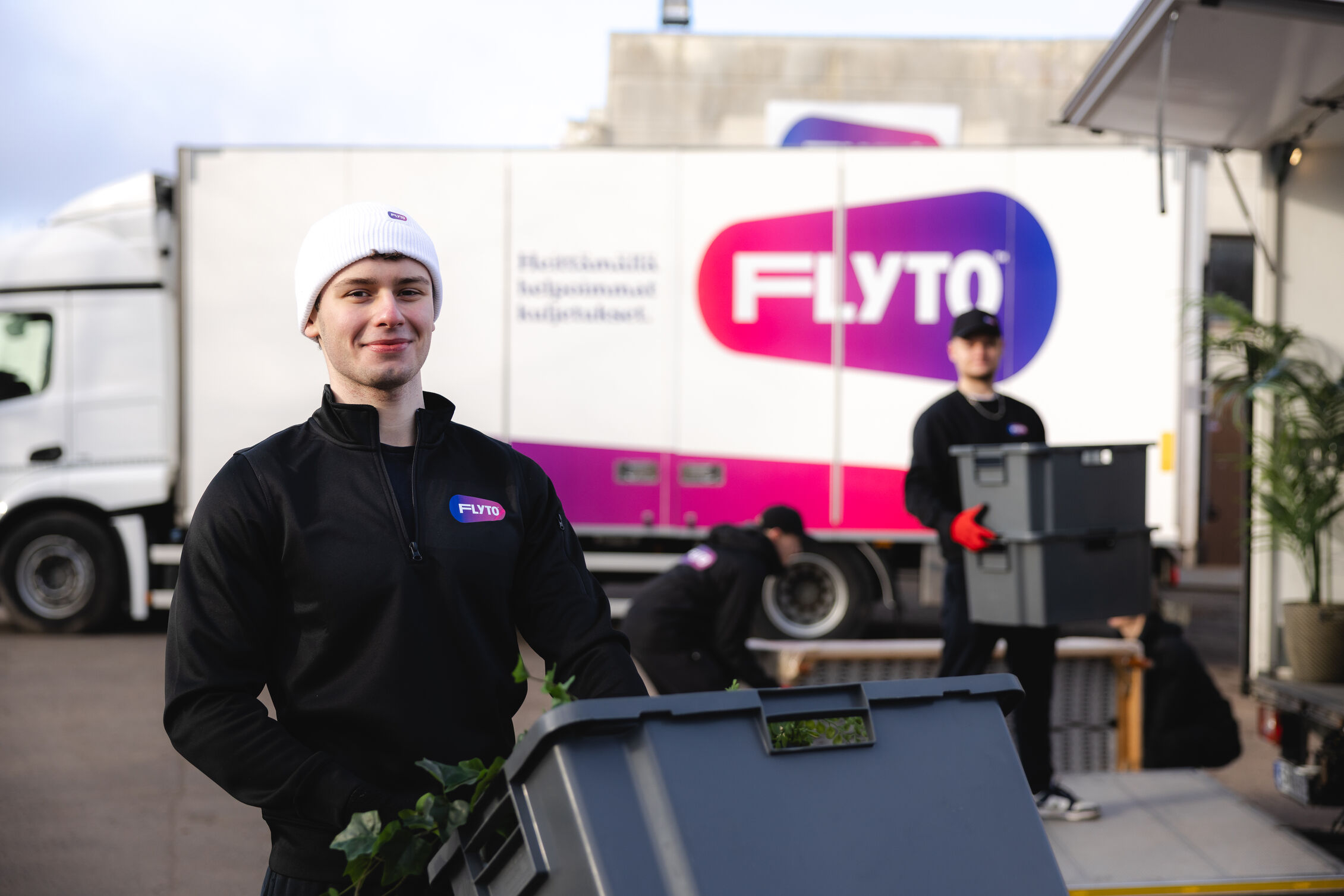
Everything in section 1 is why a Stuttgart move rewards a mover who actually knows the city — and it’s where Flyto earns its keep. We arrange the Halteverbotszone permits at both addresses, with the road-traffic authority, with the 72-hour lead the city requires, so there’s a legal, empty space when the truck arrives. We assess hillside and Halbhöhenlage access in advance — whether the last stretch is a Stäffele staircase, how many floors, how tight the stairwell — and bring an exterior furniture lift (Möbelaufzug) when the sofa won’t make the stairs, rather than discovering the problem mid-carry. And every vehicle carries the green Umweltzone sticker, so the city’s environmental rules never stall the day. That’s the honest difference between a generic van hire and a relocation partner who has done this slope by slope. Get a fixed quote for your Stuttgart move, or compare our Berlin and Munich city guides, browse our full Germany moving guides, and read the customs guide for household goods.
Moving to Stuttgart? Get a fixed quote.
Tell us your addresses and volume and we’ll price the whole move — including the Halteverbotszone permits and any furniture lift your hillside address needs. No surprises on the day.
Frequently asked questions
Do I need a Halteverbotszone permit for my moving truck in Stuttgart?
In practice, yes — you cannot rely on finding free kerb space, especially on a narrow hillside street. You apply for a temporary no-stopping zone (Halteverbotszone für Umzüge) with the city’s road-traffic authority through the Baden-Württemberg service portal. Stuttgart sets the administrative fee case by case and provides only the order, not the signs, so most people pay a provider or their mover around €100–€180 all-in per address. File it at least two weeks ahead, and the signs must stand a full 72 hours before move day (Stadt Stuttgart).
Why is moving into a Stuttgart hillside home so difficult?
Stuttgart sits in a basin (the Kessel) and its most desirable homes climb the surrounding slopes in the Halbhöhenlage. Those slopes are laced with more than 400 public staircases — the Stäffele — and many hillside addresses have no vehicle access to the door: the last stretch is a staircase. Movers handle this with long carries and an exterior furniture lift (Möbelaufzug) that hoists bulky items in through a window or balcony, which needs to be assessed and booked before move day.
Can my moving truck drive into Stuttgart’s environmental zone?
The Umweltzone covers the entire city area, and only vehicles with a green sticker (grüne Plakette) may enter — red and yellow stickers are banned. A professional mover runs green-sticker vehicles, so it is a non-issue for your move; the risk is hiring an old non-compliant van yourself. Stuttgart historically ran Germany’s strictest air rules, including a Feinstaubalarm that ended in April 2020.
How much is rent in Stuttgart in 2026?
For a new lease, average asking cold rent (Kaltmiete) is about €16.8/m² across the city, ranging from roughly €16/m² in Bad Cannstatt to nearly €19/m² in West, Süd, Mitte and Degerloch (Stuttgart rent index 2026). That is among the highest in Germany. On top of the cold rent you pay Nebenkosten (operating costs), benchmarked around €2.67/m²/month nationally.
Which Stuttgart district is best for families?
Degerloch, Botnang and Vaihingen are the classic family choices — greener, quieter and better for schools and space — though Degerloch in particular carries top-tier rents (~€19/m² cold). Bad Cannstatt offers the best value among well-connected boroughs. The lively inner districts of West and Süd are popular with young professionals but noisier and pricier.
How big a deposit can a Stuttgart landlord ask for?
The Kaution is legally capped at three months’ cold rent (Kaltmiete), and you have the right to pay it in three monthly instalments — the first at move-in, the next two with the following months’ rent (§551 BGB). The landlord must hold it in a separate interest-bearing account.
Do I have to pay a broker fee to rent in Stuttgart?
Usually not. Under the Bestellerprinzip, whoever commissions the agent pays the commission, and for rentals that is almost always the landlord (§2 Wohnungsvermittlungsgesetz). If a ”finder’s fee” is demanded for a standard flat, treat it as a red flag.
How do I register my address (Anmeldung) in Stuttgart?
You must register within 14 days of moving in (§17 BMG) at one of Stuttgart’s district Bürgerbüros — you can use any of them, not only the one for your area. Bring ID and the signed Wohnungsgeberbestätigung from your landlord (§19 BMG); a rental contract alone won’t do. Book online and check the citywide appointment overview, as short-notice morning slots sometimes open up.
Official sources
- Stadt Stuttgart — parking barrier / no-stopping zone for a move (Halteverbotszone)
- Stadt Stuttgart — register residence as main residence (Anmeldung)
- Stadt Stuttgart — landlord’s registration confirmation (Wohnungsgeberbestätigung)
- Stadt Stuttgart — Feinstaubalarm and air-quality measures
- Verkehrsministerium Baden-Württemberg — Umweltzonen (green sticker)
- Stuttgart-Marketing — the Stuttgarter Stäffele (400+ staircases)
- Bundesmeldegesetz §17 — 14-day registration deadline
- Bundesmeldegesetz §19 — Wohnungsgeberbestätigung
- BGB §551 — rental deposit (Kaution) limit and instalments
- Wohnungsvermittlungsgesetz §2 — Bestellerprinzip (broker fees)
- Mietspiegel Stuttgart 2026 — rents by district (Kaltmiete)
- Engel & Völkers — Mietspiegel Stuttgart (rent cross-check)
- Deutschlandticket — 2026 price (€63/month)
- VVS — EinzelTicket prices (Stuttgart transport)
- Federal Ministry of Health — statutory health insurance contributions
- Deutscher Mieterbund Betriebskostenspiegel (operating costs)
- co2online — electricity price (BDEW)
- Verbraucherzentrale — spotting fake rental listings
- SCHUFA — tenant credit report (BonitätsAuskunft)
- Flyto — Germany moving guides